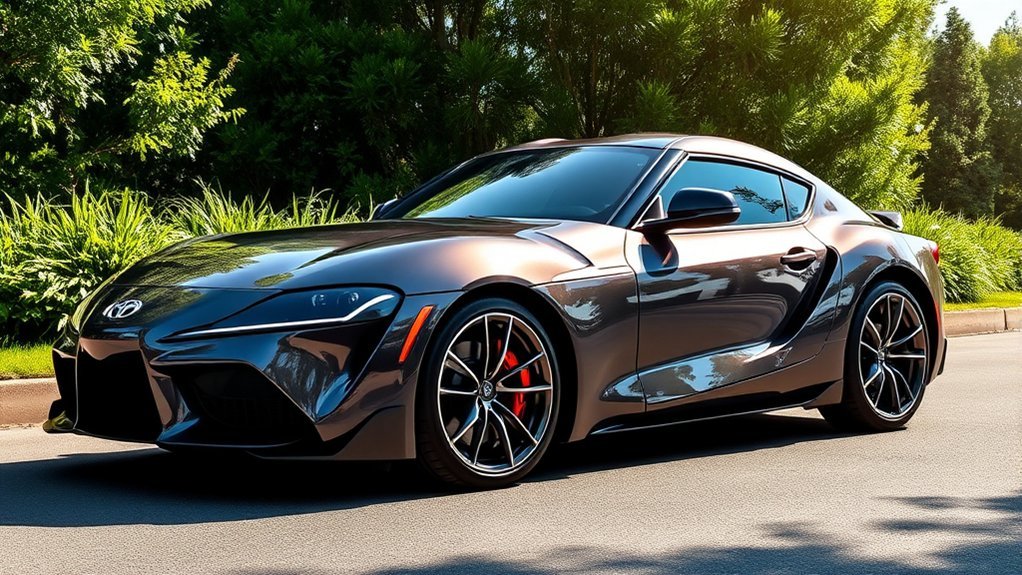
Toyota Supra fuel economy depends on the engine and transmission. For the 2023 and 2024 model years the EPA rates the GR Supra at 25 city / 31 highway / 27 combined mpg with the 2.0 automatic, 23 / 31 / 26 with the 3.0 automatic, and 19 / 27 / 21 with the 3.0 six-speed manual. Premium fuel is required, and real-world mpg varies with speed, traffic and driving mode.
This guide covers the ratings, estimated range, what changes your mileage, and practical ways to improve it. It is about the current GR Supra (A90), not the older Mk4.
Toyota Supra Fuel Economy Ratings by Engine

| Version | City | Highway | Combined | Power | Rough range* |
|---|---|---|---|---|---|
| 2.0 (4-cyl turbo), 8-speed automatic | 25 | 31 | 27 | 255 hp / 295 lb-ft | about 370 mi |
| 3.0 (6-cyl turbo), 8-speed automatic | 23 | 31 | 26 | 382 hp / 368 lb-ft | about 355 mi |
| 3.0 (6-cyl turbo), 6-speed manual | 19 | 27 | 21 | 382 hp | about 290 mi |
*Estimated from a tank of about 13.7 gallons multiplied by the combined EPA rating. Actual range depends on how you drive. Ratings shown are for the 2023 and 2024 model years; earlier years (2020 to 2022) can differ slightly, so look up your exact year and trim in the EPA listing.
The 3.0 manual is rated lower than the automatic because of its gearing and shift program, not because it is a less capable car. For a full comparison of the two gearboxes, see our manual vs automatic Supra guide. If you are choosing an engine, our inline-six vs inline-four Supra comparison covers the rest.
What Changes Your Supra’s Real-World MPG
EPA numbers come from standard lab tests. Your results will differ, and owners report a wide spread depending on how and where they drive.
- Speed: steady highway cruising is where the Supra does best. Faster speeds use more fuel.
- Traffic: stop-and-go driving and short trips lower mpg, especially on a cold engine.
- Driving style: hard acceleration and heavy braking use more fuel.
- Drive mode: Sport mode sharpens throttle response and tends to use more fuel. See how to use Sport mode and how to change driving modes.
- Hills and weather: climbs, headwinds and cold weather all reduce mpg.
- Tune or modifications: a tune or aftermarket parts can raise or lower fuel use.
When you compare numbers, note the source. The trip computer is convenient, but a hand calculation from fill-ups is more reliable (miles driven divided by gallons added).
How to Improve Supra Fuel Economy

- Drive smoothly. Accelerate gradually and look ahead so you can coast instead of braking hard.
- Use the default mode for commuting. Keep Sport mode for when you want the response.
- Set tire pressure to the placard. Use the pressure on the driver-door jamb label and check it monthly. Cold weather lowers pressure, as covered in our winter tire pressure guide.
- Keep up with maintenance. Follow the intervals in your manual for oil and air filters. See when to change oil and when to replace the engine air filter.
- Cut idle time. The Supra has an auto start-stop system, covered in our start-stop guide. Avoid long warm-up idling.
- Remove extra weight. Take out cargo you do not need.
- Combine short trips. A warm engine uses fuel more efficiently than several cold starts.
Fuel Grade: Premium Is Required
Recent GR Supras are listed as requiring premium unleaded gasoline. Premium is not a fuel economy trick. It is the grade the turbocharged engines are designed for, and using lower octane can limit performance and is not recommended. Check the fuel door and owner’s manual for the exact octane number, and read our fuel octane requirement guide and premium vs regular fuel comparison for more.
Frequently Asked Questions
How fuel efficient is the Toyota Supra?
In the 2023 and 2024 model years the EPA rates the GR Supra at 25/31/27 mpg (city/highway/combined) for the 2.0 automatic, 23/31/26 for the 3.0 automatic and 19/27/21 for the 3.0 six-speed manual. Ratings differ slightly by model year, so check the EPA listing for your exact car.
How many miles can a Supra go on a tank?
With a fuel tank of about 13.7 gallons, the combined EPA ratings work out to roughly 290 to 370 miles per tank, depending on engine and transmission. Steady highway driving can stretch that, while hard driving shortens it. Treat these as rough estimates, not guarantees.
Does the Supra need premium gas?
Recent GR Supras are listed as requiring premium unleaded gasoline, and both the 2.0 and 3.0 are turbocharged. Check your fuel door and owner’s manual for the exact octane number, and do not expect regular fuel to improve fuel economy or save money safely.
Does the 2.0 Supra get better mpg than the 3.0?
Yes, slightly, on paper. The EPA rates the 2.0 automatic at 27 mpg combined versus 26 for the 3.0 automatic, and the 3.0 manual at 21. The 3.0 makes much more power (382 hp versus 255 hp), so real-world differences depend heavily on how you drive.
Does Sport mode or a tune change Supra mpg?
Sport mode sharpens throttle response and shift behavior, which tends to encourage more fuel use. A tune can change fuel and boost behavior as well, so mileage varies by tuner and driving style. If efficiency matters, use the default mode for commuting.
How do I see average mpg on a Supra?
The trip computer in the instrument cluster can show average fuel economy, and you can reset it from the trip or driver-information controls. Steps vary by model year and display, so follow the trip computer section of your owner’s manual.
Bottom Line
The Supra is not a fuel-sipper, but its EPA numbers are reasonable for a turbocharged sports coupe, with the 2.0 automatic rated highest and the 3.0 manual lowest. Plan on roughly 300 to 370 miles per tank, use premium fuel, and drive smoothly to get the best result.