What’s in This Article
- What Underinflated Tires Mean and Why PSI Matters
- Where to Find the Correct Tire Pressure for Your Vehicle
- How Low Tire Pressure Cuts Gas Mileage
- How Low Tire Pressure Harms Handling, Braking, and Crash Risk
- How Underinflation Causes Uneven Wear and Shortens Tire Life
- When TPMS Helps and Why You Still Need Manual Checks
- Monthly Tire Pressure Check Routine You Can Do Now
- Best Tire Pressure Tools: Gauges, Portable Compressors, and Key Features
- Frequently Asked Questions
Low tire pressure does not look dramatic at first. But it can make your vehicle harder to stop, harder to steer, and more costly to drive. When your tires fall below the vehicle maker’s recommended pounds per square inch (PSI), the tires flex more, build heat, wear unevenly, and use more fuel. This guide explains how underinflated tires affect safety, miles per gallon (MPG), tire life, and the simple checks you can do each month.
Quick Answer
Underinflated tires reduce safety because they flex more, heat up faster, and wear unevenly. They can also lower fuel economy. The U.S. Department of Energy says under-inflated tires can lower gas mileage by 0.2% for every 1 PSI drop in all four tires. Check your tires cold at least once a month and before long trips.
Key Takeaways
- Use the PSI on your driver-side door label or owner’s manual, not the tire sidewall number.
- Check tire pressure when the tires are cold for the most accurate reading.
- Tire Pressure Monitoring System (TPMS) alerts help, but they do not replace monthly manual checks.
- Low pressure can reduce fuel economy, shorten tire life, and raise blowout risk.
- A good gauge and portable inflator make tire pressure checks fast and repeatable.
What Underinflated Tires Mean and Why PSI Matters
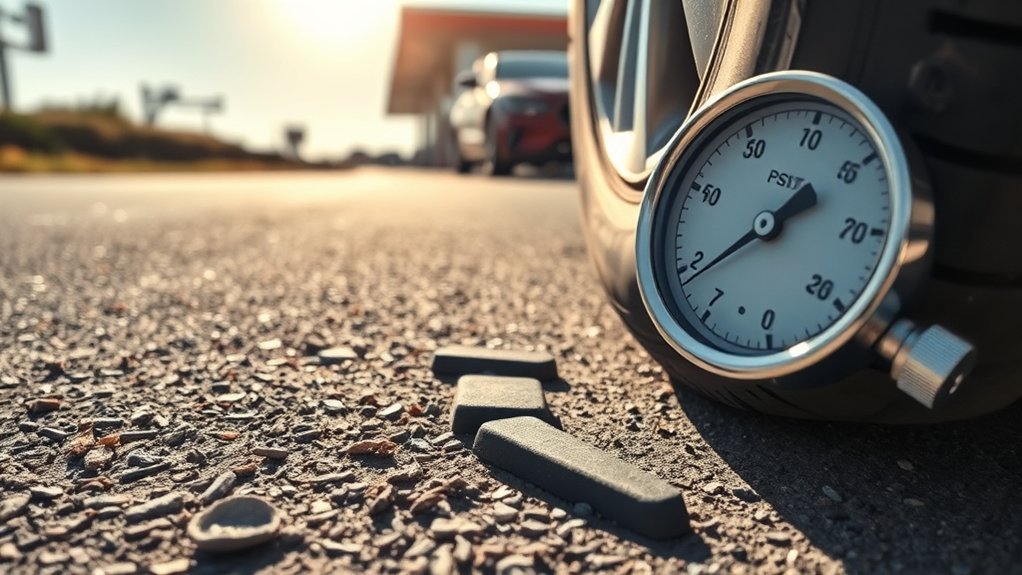
A tire becomes underinflated when its internal air pressure drops below the vehicle manufacturer’s recommended cold tire pressure. Many passenger vehicles use a range near 30 to 35 PSI, but your exact number depends on your vehicle, tire size, and load rating.
Low pressure changes the tire’s shape on the road. The sidewalls flex more, the tread contacts the road unevenly, and the tire creates more rolling resistance. That mix can hurt steering, braking, fuel economy, and tire life.
According to the National Highway Traffic Safety Administration (NHTSA), proper tire pressure affects safety, tire durability, and fuel use. NHTSA also says you should check all tires, including the spare, at least once a month when the tires are cold.
Where to Find the Correct Tire Pressure for Your Vehicle
You can find the correct tire pressure on the Tire and Loading Information Label on the driver’s side door edge or doorjamb. Your owner’s manual should list it too. Use that number because the vehicle maker sets it for your car’s weight, tire size, and handling needs.
Do not use the maximum PSI printed on the tire sidewall as your normal target. That number shows the tire’s maximum cold pressure, not the recommended pressure for your vehicle. If your front and rear tires need different PSI, follow the label for each axle.
How Low Tire Pressure Cuts Gas Mileage
Low tire pressure makes the engine work harder because the tires create more rolling resistance. The U.S. Department of Energy says proper tire inflation can improve gas mileage by 0.6% on average and up to 3% in some cases. It also says under-inflated tires can lower gas mileage by 0.2% for every 1 PSI drop in all four tires.
That may sound small, but slow leaks add up. If all four tires run 10 PSI below the correct pressure, you could lose about 2% in fuel economy based on that DOE estimate. Over many miles, that means more fuel stops and more cost.
NHTSA also notes that properly inflated tires can save fuel and extend average tire life by thousands of miles. Keep the pressure right, and you reduce waste without changing how you drive.
Note: A small pressure drop matters most when it affects all four tires, so check the full set instead of only the tire that looks low.
How Low Tire Pressure Harms Handling, Braking, and Crash Risk
Underinflated tires flex too much during turns, lane changes, and hard stops. That extra movement can make the vehicle feel slow to respond. It also increases heat and stress inside the tire.
NHTSA warns that poor tire maintenance, including low air pressure, can lead to flat tires, blowouts, or tread separation. You reduce that risk when you keep each tire at the correct cold PSI and replace tires with unsafe tread or visible damage.
Warning: If a tire looks very low, has sidewall damage, or keeps losing air, do not ignore it. Have a tire shop inspect it before you keep driving.
Impaired Steering Response
Underinflation increases sidewall flex and makes the contact patch less stable. You may feel delayed turn-in, vague steering feedback, or more understeer during sharp turns.
Treat tire pressure as a key part of vehicle control. Correct inflation helps the tire keep its intended shape, which supports clean steering response and better cornering stability.
- You may feel delayed steering when you turn into a curve.
- You may struggle to correct your path during an emergency swerve.
- You may notice more understeer at higher cornering loads.
- You may lose confidence when you need to avoid a hazard fast.
Maintain the specified PSI to restore predictable handling and reduce avoidable risk.
Longer Braking Distances
Low pressure can reduce braking control because the tire shape changes under load. The tread may not press into the road as the vehicle maker intended, especially during hard braking or wet-road stops.
You should not rely on a fixed stopping-distance number for every vehicle. Tire model, tread depth, speed, road surface, load, and weather all change the result. Still, NHTSA notes that underinflation may affect handling and stopping ability, so proper pressure remains a basic safety step.
Higher Blowout Risk
Underinflated tires create more heat because the sidewalls flex more with every rotation. That heat can stress the tire structure and raise the chance of tire failure, especially at highway speed or under heavy loads.
If a tire blows out, NHTSA advises you to keep the vehicle balanced, avoid panic braking, release the accelerator gradually, and steer to a safe place. Better pressure checks help you avoid that moment in the first place.
- Check pressure before highway trips and heavy-load drives.
- Inspect sidewalls for cuts, bulges, cracks, or exposed cords.
- Replace tires that show unsafe damage or very uneven wear.
- Ask a qualified technician to inspect any tire that loses air often.
How Underinflation Causes Uneven Wear and Shortens Tire Life
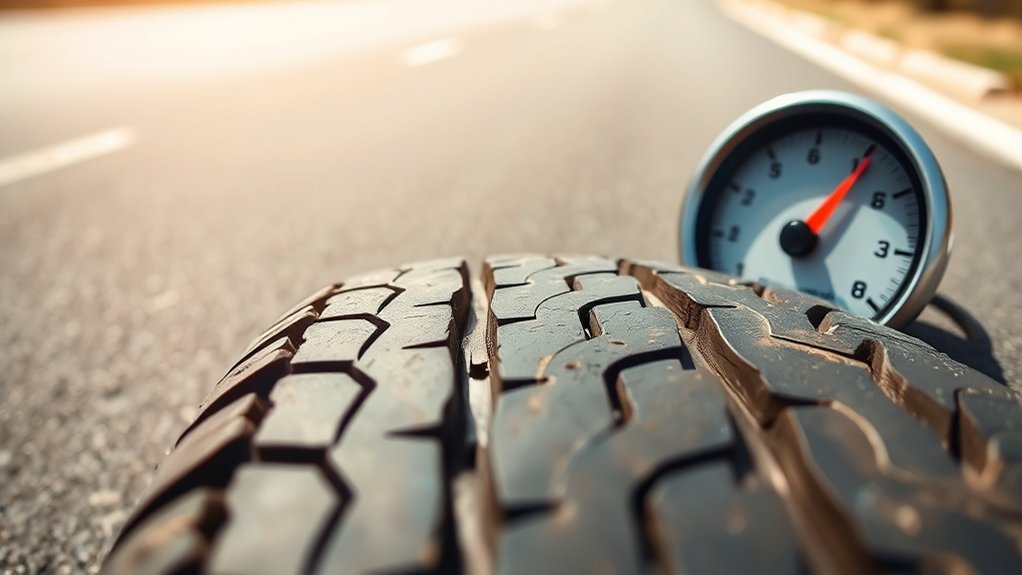
Underinflated tires often wear faster on the outer shoulders because the tire’s shape spreads load toward the edges. The extra flex also creates more heat inside the tire. Over time, heat and uneven loading can shorten service life and raise repair costs.
NHTSA says proper tire inflation can extend the average life of a tire by 4,700 miles. That makes pressure checks one of the cheapest tire care habits you can keep.
Edge Tread Wear
Tire underinflation increases sidewall flex and loads the outer tread shoulders. You may see faster wear on both outer edges, while the center tread looks less worn.
This uneven wear reduces traction and can shorten tire life. Measure tread depth across the tire, not only in the center. If the shoulders wear much faster than the middle, check pressure, alignment, and suspension parts.
- Look for shoulder wear on the inner and outer edges.
- Compare tread depth across the same tire.
- Check all four tires for matching pressure and wear patterns.
- Schedule alignment service if uneven wear keeps coming back.
Increased Heat Buildup
Low pressure makes the tire flex more as it rolls. That flex creates heat, and heat stresses the rubber, belts, cords, and sidewall. The Federal Register discussion of TPMS rules notes that pressure loss can bring a tire closer to heat buildup and possible tire failure.
You can lower that risk by checking cold pressure, correcting low readings, and watching for heat-related warning signs. These signs include a hot rubber smell, bulges, cracks, or a tire that loses pressure again after inflation.
How Low Pressure Speeds Up Structural Fatigue
When pressure stays below the recommended PSI, the sidewall bends more with every wheel rotation. Those repeated stress cycles can weaken the tire over time.
Uneven tread wear, shoulder cupping, sidewall bulges, and repeated air loss all deserve attention. Correct the pressure right away, but do not treat air as a repair for tire damage.
- Spot the hazard by checking pressure and tread wear.
- Inflate each tire to the vehicle maker’s cold PSI.
- Recheck the tire after driving and again the next day.
- Replace or repair tires that show damage or keep losing air.
When TPMS Helps and Why You Still Need Manual Checks
A Tire Pressure Monitoring System (TPMS) helps because it warns you when one or more tires have become significantly underinflated. Federal Motor Vehicle Safety Standard No. 138 requires many passenger vehicles to alert you when pressure falls 25% or more below the vehicle maker’s recommended cold pressure, or below the minimum level in the rule.
That warning matters, but it does not catch every small loss. NHTSA says newer vehicles have TPMS, but you should still conduct a monthly pressure check. A slow leak, cold weather, or small pressure drop can hurt fuel economy and tire wear before the warning light turns on.
Check pressure with a gauge even if the dashboard light stays off. If the TPMS light turns on and off during cold mornings, inspect the tires and check pressure as soon as you can.
Monthly Tire Pressure Check Routine You Can Do Now
A monthly tire pressure check takes about five minutes when you keep a gauge in the vehicle. Check the tires before you drive for the day, or wait at least three hours after parking. Also check before long trips and after major temperature swings.
AAA notes that tire pressure can drop about 1 PSI for every 10°F drop in temperature. That means a tire that looked fine in warm weather can read low after a cold night.
- Find the recommended PSI on the driver-side label or in your owner’s manual.
- Remove the valve cap and press the gauge firmly onto the valve stem.
- Measure each tire, including the spare if your vehicle has one.
- Add air until each tire reaches the correct cold PSI.
- Recheck the pressure and replace each valve cap tightly.
- Write down the date, outside temperature, and any tire that needed air.
Pro tip: Keep the same digital gauge in your glove box so your readings stay consistent from month to month.
If one tire keeps losing more air than the others, look for a nail, valve leak, cracked sidewall, or bent wheel. Have a tire shop inspect it because repeated air loss often points to a real problem.
Best Tire Pressure Tools: Gauges, Portable Compressors, and Key Features
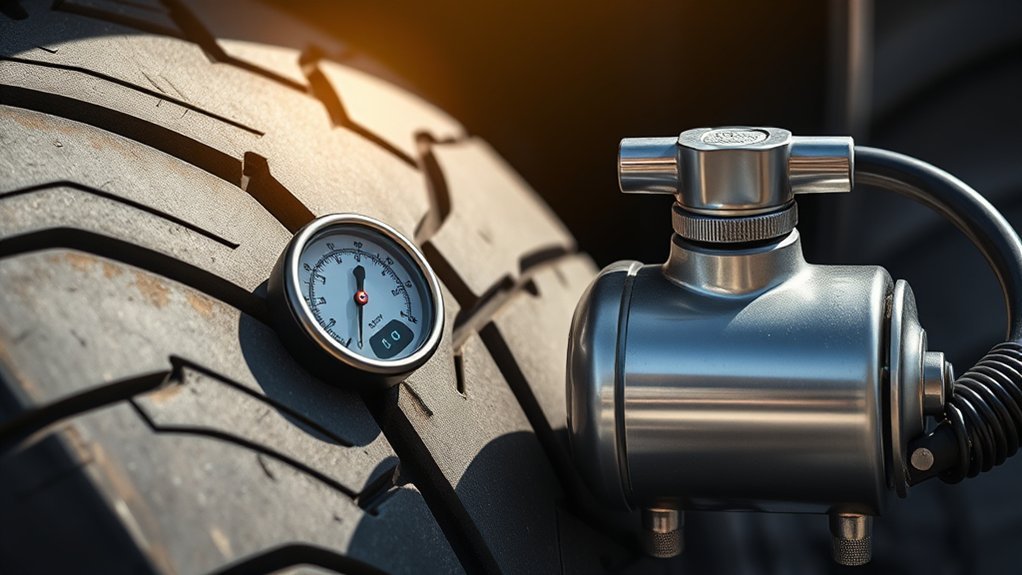
A good tire pressure kit should include an accurate gauge, a portable compressor, and spare valve caps. Choose a digital or dial gauge that reads clearly and matches the PSI range your vehicle uses. Many drivers prefer a gauge with 1 PSI accuracy because small changes can affect fuel economy and wear.
A portable compressor helps you fix a low reading at home, at work, or on the road. Look for automatic shutoff, a clear display, a hose that seals well, and enough power for your tire size. Compact storage also matters because the best tool helps only when you keep it in the vehicle.
Overinflation can also harm handling and wear. Set the compressor to the vehicle maker’s cold PSI, stop when you reach the target, and recheck with your gauge.
Frequently Asked Questions
Can Underinflation Affect My Tire Warranty Coverage?
Yes, it can. Many tire warranties exclude damage linked to improper inflation, poor maintenance, road hazards, or irregular wear. Keep pressure records, rotation receipts, and inspection notes if you may need a warranty claim.
Can Cold Weather Cause a Sudden PSI Drop While Driving?
Cold weather can lower PSI before you start driving. AAA says tire pressure can drop about 1 PSI for every 10°F decrease in temperature. Check pressure on cold mornings, especially after a sharp temperature drop.
Do Underinflated Tires Increase Road Noise Significantly?
They can, but noise alone does not confirm low tire pressure. Underinflation can change the tire’s road contact and may create more rumble or vibration. Use a gauge instead of sound to confirm the pressure.
Can Slight Underinflation Damage Modern Run-Flat Tires?
Yes, low pressure can still damage run-flat tires. Their stiffer sidewalls may hide the problem from your eyes, so TPMS alerts and manual gauge checks matter. Follow the tire maker’s limits for speed and distance after pressure loss.
How Often Should Tire Pressure Be Checked Before Long Trips?
Check tire pressure before every long trip and at least once each month. Check again after major temperature changes or heavy loads. Use the vehicle maker’s cold PSI, then inspect tread and sidewalls before you leave.
Safety Disclaimer: This article gives general tire safety information. It does not replace your owner’s manual, tire maker instructions, or advice from a qualified tire technician. If you see tire damage, repeated air loss, vibration, or handling problems, have a professional inspect your vehicle before you keep driving.
Conclusion
Correct tire pressure gives you safer handling, better fuel economy, and longer tire life. Start with the PSI on your vehicle’s door label, then check all tires cold at least once a month. Treat TPMS alerts as urgent warnings, but do not wait for the light before you act.
Keep a reliable gauge and portable inflator in your vehicle so you can fix small pressure problems early. That simple habit helps you protect your tires, your budget, and everyone riding with you.
References
- Tire Safety Ratings and Awareness, TireWise, National Highway Traffic Safety Administration.
- Consumer Guide to Fuel Economy, U.S. Department of Energy, 2021.
- Federal Motor Vehicle Safety Standards, Tire Pressure Monitoring Systems, Federal Register, 2005.
- Understanding Tire Pressure and Temperature Change, AAA, 2025.