
Toyota Supra OBD2 codes come from the car’s on-board diagnostic system, and you read them by plugging a scanner into the 16-pin port under the driver-side dashboard, turning the ignition on and noting each code the scanner shows. Look the code up, check the simple causes first, and see a mechanic if it keeps returning or involves safety systems.
This guide covers where the port is, how to use a scanner, what the most common codes mean and when to stop and get help.
What the Toyota Supra OBD2 System Does
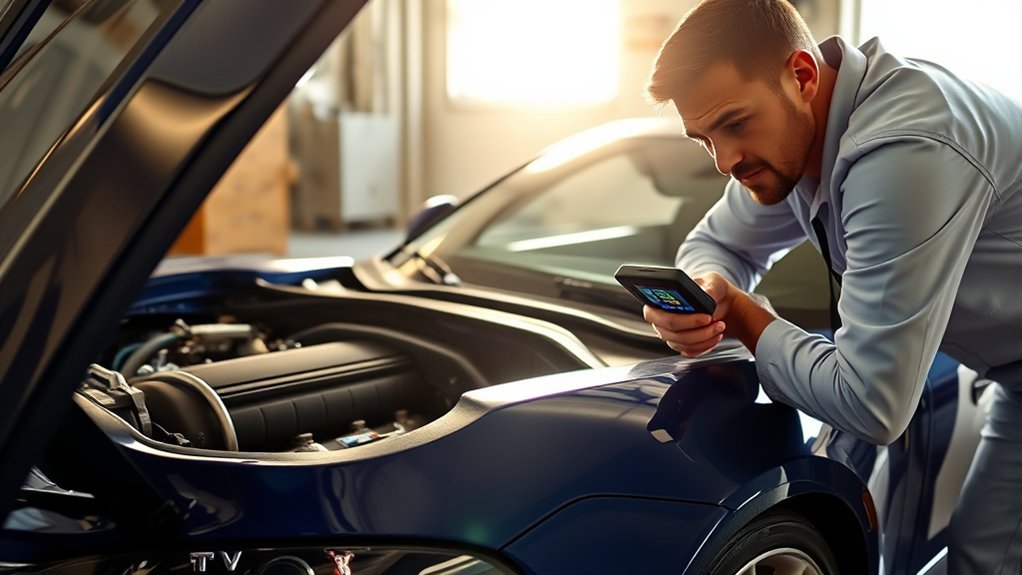
The OBD2 system monitors engine and emissions parts and stores a diagnostic trouble code (DTC) when it sees a fault. It also turns on the check engine light (MIL) for most emissions-related faults.
Model generation matters:
- GR Supra (A90, current generation): has a standard OBD2 connector for generic scan tools.
- Mk4 (A80): US cars from the 1996 model year onward are OBD2. Earlier cars use Toyota-specific diagnostics instead, so a standard scanner will not plug in.
Codes begin with a letter: P for powertrain (engine and transmission), C for chassis (brakes, ABS, stability control), B for body and U for network communication. For deeper background see our engine codes guide and chassis codes guide.
How to Locate the OBD2 Port in Your Supra
On OBD2-equipped Supras the port is a trapezoid-shaped 16-pin connector under the dashboard on the driver side, near the steering column and pedal area. Sit in the driver seat and look up and to the left of your knees. Some cars have a small cover over it; if you cannot find it, check your owner manual, because placement and covers can differ by generation and trim.
- Switch the car off and remove the key or fob from the cabin area if you can.
- Look under the driver-side dash for a 16-pin connector, moving any cover aside.
- Line up the scanner plug with the pins and push it in firmly, without forcing it.
Using an OBD2 Scanner: Steps to Follow
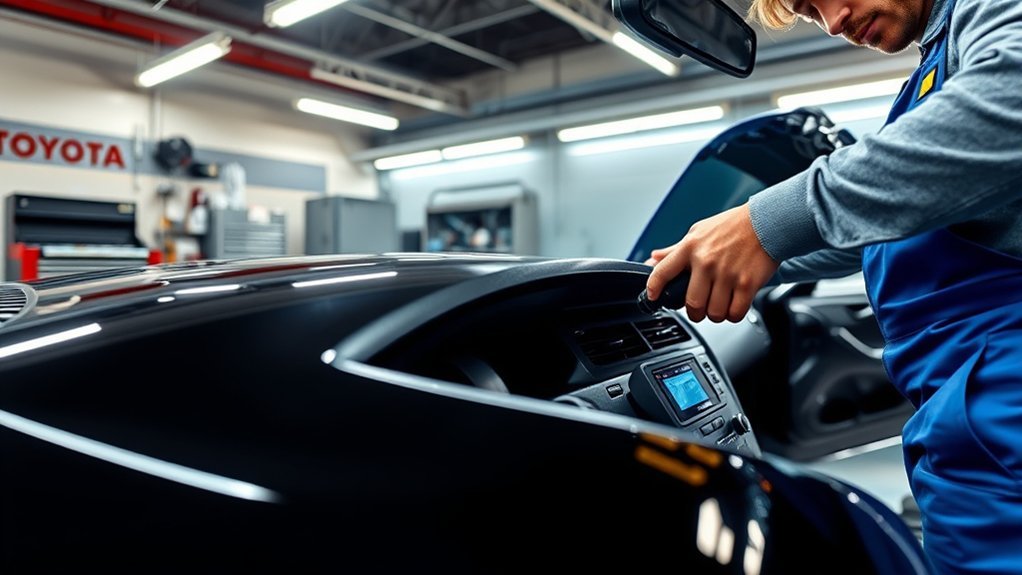
- Connect the scanner to the port with the car parked and the parking brake on.
- Turn the ignition to ON without starting the engine. On a push-button car, press Start without pressing the brake pedal.
- Enter any vehicle details the scanner asks for, or let it read the VIN.
- Read the stored and pending codes and write down every code, plus the freeze-frame data (engine speed, temperature and load when the fault was logged).
- Look up each code and fix the most likely simple cause first.
- Clear codes only after the repair, then drive normally and confirm the light stays off.
Do not clear a code just to turn the light off. Clearing wipes the freeze-frame data a mechanic would want and resets emissions readiness monitors.
Common Toyota Supra OBD2 Codes and What They Mean
These are standard generic codes. The definitions are the same on any OBD2 car, but the likely cause depends on the engine and your Supra.
| Code | Meaning | Start by checking |
|---|---|---|
| P0300 | Random or multiple cylinder misfire | Spark plugs, ignition coils, fuel quality |
| P0301 and up | Misfire in a specific cylinder (P0301 is cylinder 1, and so on) | Coil and plug on that cylinder |
| P0171 | System too lean, Bank 1 | Vacuum or intake leaks, boost leaks, airflow sensor |
| P0420 | Catalyst system efficiency below threshold, Bank 1 | Exhaust leaks, oxygen sensors, misfires, then the converter |
| P0441 | EVAP system incorrect purge flow | Purge valve and hoses |
| P0455 | EVAP system large leak | Fuel cap seal, then EVAP hoses |
Troubleshooting the Most Common Codes
- Misfire codes (P0300, P0301 and up): inspect spark plugs and ignition coils. A flashing check engine light means an active misfire that can damage the catalytic converter, so avoid hard driving. See our guide to diagnosing a Supra misfire and the misfire at idle quick fixes.
- Lean codes (P0171): look for vacuum or intake leaks first. On turbocharged Supras also consider a boost leak; see how to diagnose a vacuum leak and how to diagnose a boost leak.
- EVAP codes (P0441, P0455): tighten or replace the fuel cap and clear the code, then see whether it returns. If it does, the purge valve or an EVAP hose may be at fault.
- Catalyst code (P0420): rule out misfires, exhaust leaks and faulty oxygen sensors before paying for a new converter.
If the light is on and you are not sure what it means, our check engine light troubleshooting guide and dashboard warning light meanings can help.
When to Call a Mechanic: Signs You Need Professional Help
- The check engine light is flashing, or the car runs rough, loses power or overheats.
- The same code comes back after you clear it.
- You see several unrelated codes at once.
- Codes involve brakes, ABS, stability control, airbags or other safety systems.
- The car is under warranty or an emissions warranty, where a dealer or authorized shop is the safer route.
A scanner tells you which system reported a fault, not always which part has failed. Treat the code as a starting point, and follow your owner manual for service and safety guidance.
Toyota Supra OBD2 Codes: Frequently Asked Questions
Where is the OBD2 port on a Toyota Supra?
On most OBD2-equipped Supras the 16-pin port sits under the dashboard on the driver side, near the steering column and pedals. Exact placement and any cover differ between the older Mk4 (A80) and the current GR Supra (A90), so check your owner manual if you cannot see it.
Do all Toyota Supras have an OBD2 port?
No. OBD2 became mandatory on US cars from the 1996 model year, so the 1993-1995 Mk4 and earlier Supras use older Toyota-specific diagnostics. The 1996-1998 US Mk4 and the GR Supra have the standard OBD2 connector.
Can a generic OBD2 scanner read Toyota Supra codes?
A generic scanner can read standard P-codes such as P0300 or P0420 and show freeze-frame data. Manufacturer-specific codes and body or chassis modules may need a more capable tool, so check the scanner compatibility list for your exact Supra generation.
Is it safe to clear codes myself?
It is safe to clear a code after you have written it down and fixed the cause, but clearing it does not repair anything. Clearing also resets emissions readiness monitors, so a car may need to be driven for a while before it can pass an emissions inspection.
What does a flashing check engine light mean?
A flashing check engine light usually means an active engine misfire that can overheat and damage the catalytic converter. Reduce load, avoid hard driving, and have the car checked as soon as possible instead of simply clearing the code.