
Your Supra chassis code can tell you more than the badge on the trunk. It helps you identify the generation, engine family, body platform, and parts fitment before you buy parts or compare models. This guide explains the main Toyota Supra chassis codes, what they mean, and how you can use them when researching, maintaining, or modifying your car.
Quick Answer
Toyota Supra chassis codes identify the platform and, in many cases, the engine family used in a specific Supra model. Common examples include A40/A50, A60, A70, A80, JZA80, and the modern A90/A91 naming used by many owners. Knowing the code helps you choose compatible parts, compare generations, and talk clearly with other Supra owners.
Key Takeaways
- Supra chassis codes help you identify the generation, platform, and parts family.
- A40/A50 and A60 models came from the Celica Supra era.
- A70 marked the Supra’s move into a more separate performance identity.
- JZA80 refers to the fourth-generation Supra with the JZ engine family.
- A90 and A91 usually refer to the fifth-generation GR Supra in enthusiast use.
What Are Toyota Supra Chassis Codes and Why Do They Matter?

When you research a Toyota Supra, the chassis code gives you a more exact way to identify the car. Names like Mk3, Mk4, and Mk5 help in casual talk, but codes such as MA70, JZA80, and A90 help you narrow down the model more clearly.
A Toyota chassis code can point to the platform, engine family, and production generation. For example, JZA80 connects the fourth-generation Supra with the JZ engine family and the A80 platform. It does not mean the car is an “8th generation” Supra.
These codes matter most when you compare parts, trims, engines, and tuning paths. A part that fits one chassis may not fit another, even if both cars carry the Supra name.
How Supra Chassis Codes Changed Through Each Generation
The Supra story started with the Celica Supra in the late 1970s. The first cars used A40 and A50 platform codes and shared close roots with the Toyota Celica. They gave Toyota a larger, smoother grand touring coupe with inline-six power.
The second-generation A60 Celica Supra sharpened the formula with stronger styling and better performance. It still carried the Celica Supra name, but it pushed the car closer to the sports coupe role that later Supras became known for.
The A70 generation arrived for the 1986 model year and gave the Supra its own identity apart from the Celica. This generation brought turbocharged options, more advanced suspension design, and a stronger focus on performance.
The A80 generation became the most famous Supra platform. The JZA80 code, often linked with the twin-turbo 2JZ-GTE engine, helped make the Mk4 Supra a favorite among tuners.
The fifth-generation GR Supra returned for the 2020 model year. Owners often call it the A90 or A91 Supra, although BMW-style internal platform naming also appears because the car shares major engineering with the BMW Z4.
Detailed Breakdown of Chassis Codes for Each Supra Generation
Each Supra generation uses codes that help you separate the model, platform, and engine family. The table below gives you a simple view of the most common codes you’ll see in owner groups, parts listings, and buying guides.
| Generation | Common Chassis Codes | Common Name | Key Notes |
|---|---|---|---|
| First generation | A40 / A50 | Celica Supra | Early long-nose Celica-based Supra with inline-six engines |
| Second generation | A60 | Celica Supra | Sharper styling and stronger performance focus |
| Third generation | MA70 / GA70 / JZA70 | Mk3 Supra | Independent Supra identity with several engine families |
| Fourth generation | JZA80 | Mk4 Supra | A80 platform with JZ-series engines |
| Fifth generation | A90 / A91 | Mk5 GR Supra | Modern GR Supra with BMW-sourced turbo engines |
The first two generations used the Celica Supra name, so you may see them grouped with Celica records and parts. The later generations stand more clearly on their own as Supra models.
You may also see engine-specific prefixes in some older Toyota codes. For example, “MA70” points to an A70 Supra with an M-series engine, while “JZA70” points to an A70 car with a JZ-series engine.
Note: Market, engine, and trim details can vary by country, so check your vehicle identification plate before buying parts.
How Chassis Codes Influence Your Supra’s Performance and Parts Choices
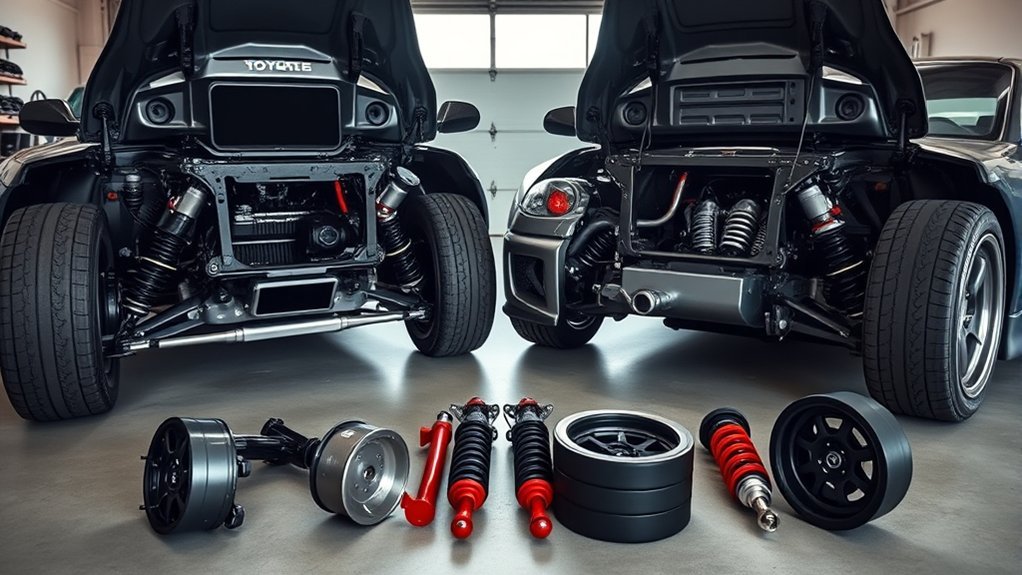
Knowing your Supra’s chassis code helps you avoid poor-fit parts and wasted money. Suspension parts, body panels, engine mounts, cooling parts, exhaust parts, and interior pieces can change across generations.
The code also helps you choose a realistic upgrade path. A JZA80 Supra has a very different tuning base from an MA70 Supra or an A90 GR Supra. Each platform has its own strengths, limits, and common weak points.
Chassis codes can also help you compare related Toyota models. Some Toyota sedans and coupes share similar engine families, which matters when you research swaps, drivetrain parts, or tuning methods.
Pro tip: Match parts by chassis code, engine code, model year, and market before you place an order.
Where to Find Your Toyota Supra Chassis Code
You can usually find your Supra’s chassis details on the vehicle identification plate, registration documents, import papers, or service records. On older Japanese-market cars, the frame code may appear in a format such as JZA80 followed by a serial number.
For U.S. market cars, the vehicle identification number (VIN) also helps confirm the model year, body type, and engine details. If you’re buying an imported Supra, ask for clear photos of the chassis plate and paperwork before you make a decision.
Do not rely only on badges, body kits, or seller claims. Engine swaps and exterior conversions can make one Supra look like another.
Warning: Always verify the chassis code before buying an imported Supra, because paperwork errors can cause registration problems.
Common Mistakes People Make With Supra Chassis Codes
Many new owners mix up generation names, chassis codes, and engine codes. Mk4, A80, JZA80, 2JZ-GE, and 2JZ-GTE do not all mean the same thing.
Another common mistake involves assuming every Mk4 Supra has the twin-turbo 2JZ-GTE engine. Some fourth-generation Supras came with the naturally aspirated 2JZ-GE engine, depending on trim and market.
Some owners also call every fifth-generation Supra an A90. In enthusiast use, A90 often refers broadly to the Mk5 platform, while A91 commonly appears with later special editions and updates.
Why Toyota Supra Chassis Codes Matter in the Enthusiast Community
Chassis codes help Supra owners speak the same language. If you say you own a JZA80, other owners know you’re talking about a fourth-generation Supra with the JZ engine family.
That shared language makes forum posts, parts listings, build threads, and tuning advice easier to follow. It also helps you avoid advice meant for a different generation.
Chassis codes also connect each car to the larger Supra timeline. They show how Toyota moved from the Celica Supra era to the A80 icon and then to the modern GR Supra.
Frequently Asked Questions
How do you read a Toyota Supra chassis code?
Start by separating the platform part from the engine-family prefix. In a code like JZA80, “JZ” points to the JZ engine family, while “A80” points to the fourth-generation Supra platform.
What is the chassis code for the Mk5 Supra?
Most owners refer to the fifth-generation GR Supra as the A90 or A91 Supra. The A90 name usually covers the modern Mk5 platform, while A91 often refers to later updates or special trims in common enthusiast use.
What is the chassis code for the Mk4 Supra?
The best-known chassis code for the Mk4 Supra is JZA80. This code links the fourth-generation Supra with the JZ engine family and the A80 platform.
Is JZA80 the same as A80?
They are closely related, but they are not exactly the same. A80 describes the fourth-generation platform, while JZA80 gives a more specific Toyota-style code tied to the JZ engine family.
Which Supra is the rarest?
Rarity depends on the market, trim, transmission, color, and factory options. Limited-production Mk4 Turbo models, special editions, and clean unmodified examples often attract the most attention from collectors.
Conclusion
Toyota Supra chassis codes give you a clear way to identify the car behind the name. Before you buy parts, compare models, or follow tuning advice, confirm your exact chassis and engine code. That simple check can save money and prevent fitment problems. Once you know the code, you can understand your Supra’s place in the full history of the model.