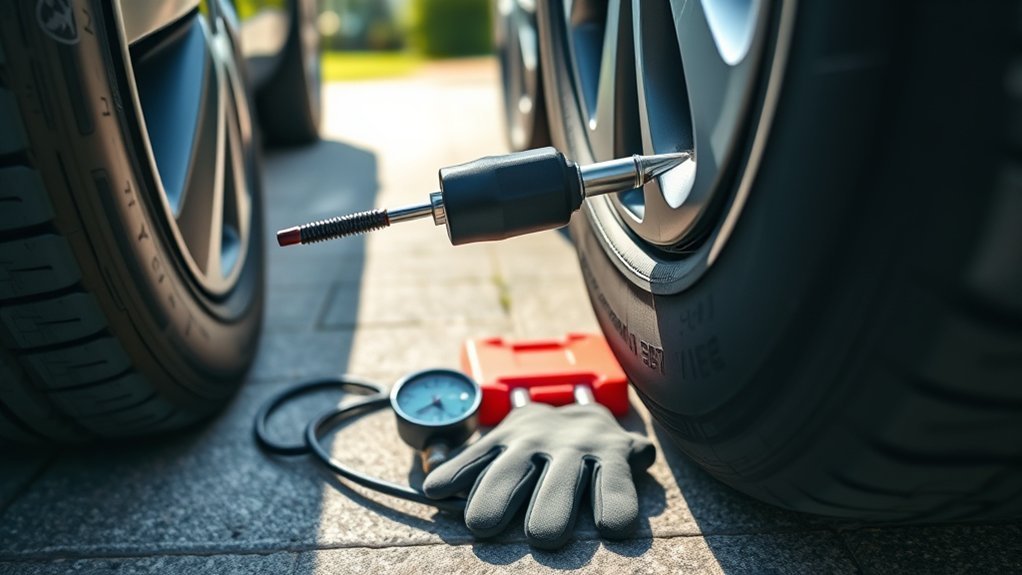
The short answer on how to release air from a tire: Use the tire pressure printed on your vehicle door-jamb label or in the owner manual for your exact vehicle, check it when the tires are cold, and follow the tire and equipment maker limits. Do not rely on a generic number from an article.
How to release air from a tire explained
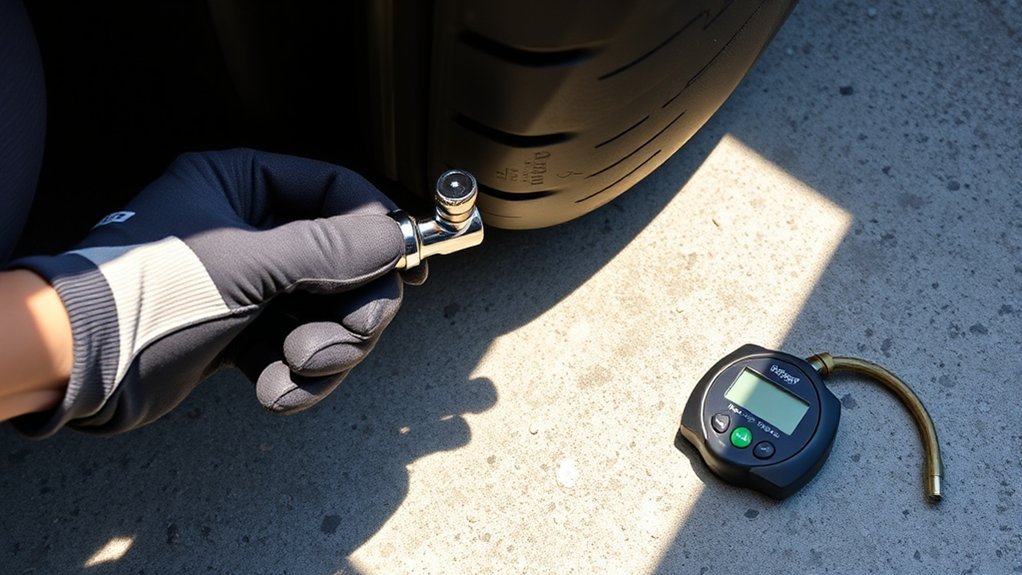
Start by locating the valve stem, unscrew the cap, and check the current PSI with a tire pressure gauge so you know how much air to let out. You’ll position yourself so you can reach the valve stem, then press the center pin with a finger or small tool to release air while listening for the hiss as air escapes. Keep the tire pressure gauge handy and check the pressure every few seconds so you don’t deflate a tire past the recommended tire pressure. Aim for the setting that keeps the tire properly inflated for safety and freedom on the road. If you need to make small adjustments, tap the pin briefly, then check the pressure again. Work calmly and deliberately; rushing risks underinflation. When the gauge shows the recommended tire pressure, stop releasing air and securely replace the cap so the valve stays sealed and the tire maintains integrity.
Tools You Need and How to Use Them
A few basic tools will make releasing air from a tire faster, safer, and more accurate: keep a reliable tire pressure gauge, a valve core removal tool, and a simple implement (like a flathead screwdriver or ballpoint pen) for manual pin depression. You’ll use the tire pressure gauge to check current air pressure and confirm the recommended PSI as you deflate tires. A valve core tool lets you remove the valve core for quicker release when appropriate; use it deliberately and replace the core after adjusting pressure. For gradual releasing air, press the valve stem pin with a flathead screwdriver or pen tip to bleed air in short bursts while monitoring PSI. Carry a tire deflator when you need repeatable, precise settings—set it to the target PSI and attach to the valve stem. A portable air compressor belongs in your kit too: it restores pressure after adjustments. These tools give you control, speed, and accuracy so you can manage tire pressure confidently.
Two Safe Ways to Release Air (Valve-Pin vs. Remove Valve Core)
Two safe ways to release air from a tire are pressing the valve-pin for controlled, small adjustments and removing the valve core for faster, larger releases—choose the method based on how much pressure you need to lose and monitor PSI with a gauge as you go. For small tweaks, press the valve-pin on the valve stem with a fingernail or tool to let air escape in controlled bursts; this lets you adjust tire pressure precisely and avoid overshooting the manufacturer’s recommended level. Use a tire gauge frequently to check tire pressure as you deflate. For larger reductions, use a valve core removal tool to unscrew the valve core and let air exit more quickly—ideal when you need to lower pressure for different terrain. Work deliberately, watching the tire gauge so you don’t underinflate. When finished, reinstall the valve core, tighten and replace the valve cap to keep dirt out, and re-check tire pressure to verify you’ve safely deflated and adjusted tire settings.
Monitor Tire Pressure and Target PSI (Avoid Underinflation)
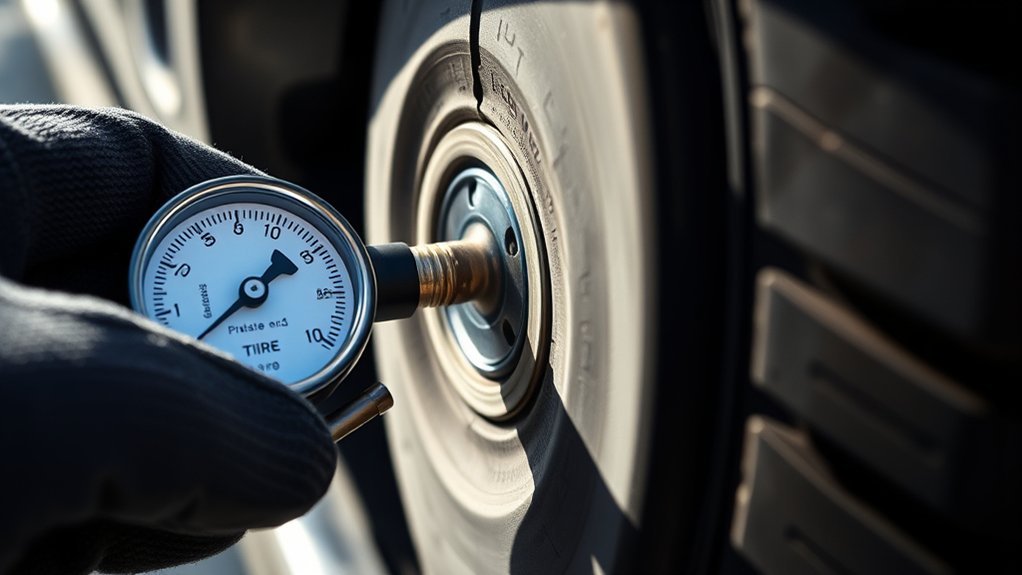
Because temperature and driving conditions change, you should check tire pressure with a reliable gauge at least once a month and before long trips to avoid underinflation. Underinflation raises rolling resistance, harms fuel economy, accelerates tire wear, and weakens vehicle handling.
When you check the tire pressure, remove the valve stem cap and press the gauge firmly to get a steady reading. If a tire is an overinflated tire, release air until you reach the target PSI; if you need to deflate your tires quickly, use the valve pin or core method described earlier but recheck pressure after. Keep a small, accurate tire gauge with you so you can keep freedom on the road and extend tire life.
Safety Checks, Common Mistakes, and When to Get Help
When you’re about to release air, wear safety goggles and gloves, check your vehicle’s recommended PSI, and work on a flat, stable surface with the parking brake set to avoid slips or sudden movements. For safety, inspect the valve stem and surrounding tire for damage before you deflate the tire. Use a tire gauge to check tire pressure, compare with the recommended PSI in the owner’s manual, and mark the target reading.
Avoid common mistakes: don’t over-deflate the tire, don’t forget to replace the valve cap, and don’t rely on guesswork when checking pressure. Release air from a tire slowly, in short bursts, rechecking with the tire gauge until you hit the target. If you encounter a damaged valve stem, uncertain pressure readings, or difficulty keeping steady PSI, stop and seek assistance. Knowing when to consult a professional preserves freedom on the road and prevents unsafe driving conditions.
Related reading:
- How to Inflate Car Tires at Home: Tools, Steps, and Safety Checks
- What Is PSI? Tire Pressure Meaning & Safety Guide
- Effects of Underinflated Tires: Safety, Wear, and Fuel Economy
Frequently Asked Questions
How to Take Air Out of a Tire With a Tool?
You’ll use a valve core removal tool or press the manual tire valve pin, monitoring with air pressure gauges and tire pressure monitoring; follow tire deflation techniques, emergency tire tools and valve stem removal steps for safe tire handling, DIY tire repair.
How to Safely Release Tire Pressure?
You’ll gently free excess air: park level, remove valve cap, press the valve stem pin while watching a tire gauge, monitor pressure often, re-cap, use air compressor or inflation tips as needed for tire safety, maintenance, driving performance.
How to Release Air From a Tire With a Screwdriver?
Like opening a stuck door, you’ll use the screwdriver technique: remove the cap, press the pin briefly, monitor tire pressure with tire pressure tools, follow tire deflation methods, air release precautions, DIY tire maintenance, vehicle safety tips, tire care advice.
Conclusion
You’ve got the basics to safely let air out: use the right tool, watch the valve, and stop at the target PSI. Remember that tire pressure affects fuel economy Check pressure with a gauge as you go, avoid over-releasing, and don’t drive on underinflated tires. If you’re unsure or the valve’s damaged, get professional help to stay safe.