Airing down can improve traction and ride comfort on sand, snow, mud, loose gravel, and slow rocky trails. However, lowering pressure also increases sidewall flex and the risk of tire, wheel, or bead damage. The safe method is to choose a conservative target, release air in small steps, drive gently, and carry a reliable way to restore normal road pressure.
Quick Answer
Park on firm, level ground, confirm a conservative trail target, attach an inflator that has a bleed button or deflate valve, and release air in short bursts. Check with an accurate gauge after each burst. Drive slowly off-road, avoid sharp turns, and restore the door-placard pressure before pavement.
Key Takeaways
- Confirm that your inflator has a bleed, deflate, or pressure-release feature. Many inflators only add air.
- There is no universal off-road PSI. Vehicle weight, tire construction, wheel design, load, speed, and terrain all matter.
- Start conservatively and lower pressure in small steps while watching tire shape and vehicle response.
- Drive slowly and avoid sharp turns, abrupt braking, and heavy side-loading while the tires are aired down.
- Reinflate to the vehicle manufacturer’s recommended pressure before normal pavement driving.
At a Glance
| Time Required | About 10 to 20 minutes for four tires, plus reinflation time |
| Difficulty | Beginner, when using a bleed valve and pressure gauge |
| Tools Needed | Accurate gauge, inflator or deflator with a bleed feature, and a portable compressor |
| Cost | No consumables; equipment cost varies by gauge, deflator, and compressor |
What’s in This Article
- Why Air Down Tires Off-Road?
- How to Choose a Safe Target Pressure
- Tools and Supplies
- Prepare the Inflator and Check Starting PSI
- Step-by-Step Air-Down Process
- How to Monitor Pressure
- How to Drive Safely While Aired Down
- Common Problems and Troubleshooting
- Reinflate and Inspect the Tires
- Frequently Asked Questions
Why Air Down Tires Off-Road?
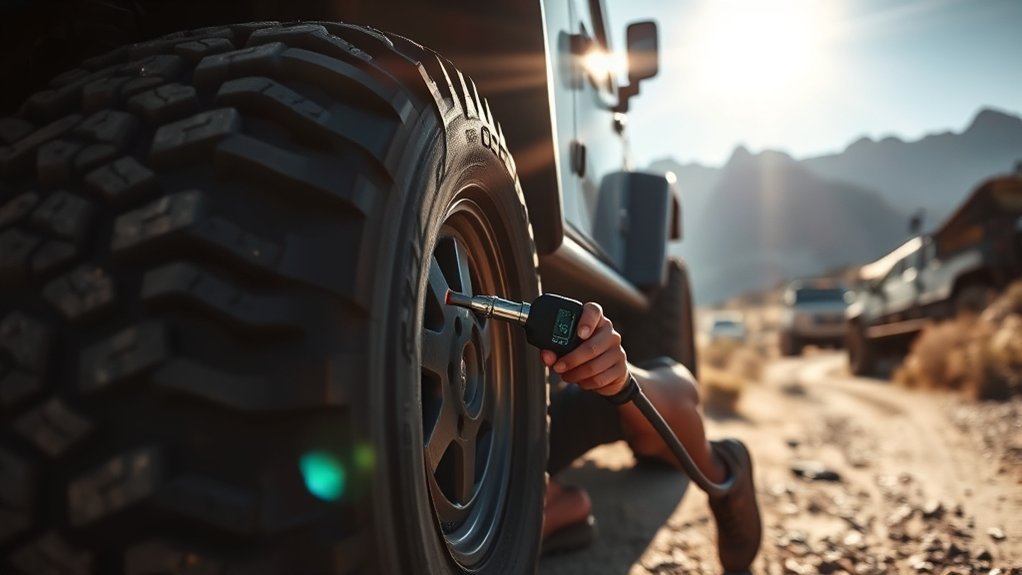
Reducing pressure allows a tire to flex more and form a longer footprint. This can help the vehicle float over soft sand or snow and let the tread conform more closely to rocks and uneven ground.
BFGoodrich’s off-road guidance explains that airing down can improve traction and ride comfort, but it also states that there is no universal pressure for every vehicle, tire, and trail.
Lower pressure has tradeoffs. Extra sidewall movement creates more heat, exposes the sidewall and wheel to impacts, and reduces the force holding a tubeless tire bead against a standard wheel. Going too low can allow the bead to leak or unseat.
Note: This guide applies to conventional passenger vehicles and light trucks with pneumatic tires, Schrader valves, and one-piece wheels. Motorcycles, bicycles, commercial-truck assemblies, split rims, agricultural tires, and specialty competition setups require equipment-specific procedures.
How to Choose a Safe Target Pressure
Set a target before opening a valve, but do not treat a number from another vehicle as automatically safe for yours. Start higher than you think you may need, test the vehicle at low speed, and reduce pressure only in small steps if more flotation or compliance is necessary.
The normal road-pressure reference is the Tire and Loading Information label on the driver-side door edge or doorjamb, or the vehicle owner’s manual. NHTSA advises using the vehicle manufacturer’s pressure, not the pressure molded into the tire sidewall, for normal road operation.
| Factor | How It Affects the Target |
|---|---|
| Vehicle weight and cargo | Heavier vehicles and loaded axles generally need more pressure to protect the tire and wheel. |
| Tire construction | Load range, casing stiffness, sidewall height, and tire size change how much the tire flexes. |
| Wheel design | Standard wheels depend on air pressure to help retain the bead. Beadlock systems have different limits and instructions. |
| Terrain | Soft sand or deep snow may benefit from more flotation. Sharp rocks and hard impacts usually call for more wheel protection. |
| Driving speed | Higher speed creates more heat and sidewall movement, so deeply reduced pressure is limited to slow trail use. |
| Front and rear loads | Do not force all tires to one number if the vehicle or tire guidance specifies different axle pressures. |
Low-profile tires, oversized wheels, heavy towing loads, or unusually heavy cargo leave less room for pressure reduction. Use tire-manufacturer, wheel-manufacturer, and vehicle-manufacturer guidance when available. Ask a qualified tire professional when those limits are unclear.
Warning: Do not use an internet PSI chart as a guarantee that a pressure is safe for your vehicle. Very low pressure on a standard wheel can let the bead leak or unseat, especially during a sharp turn, side-slope maneuver, or sidewall impact.
Tools and Supplies You Need
Gather every tool before releasing air. You need an accurate pressure gauge, a controlled way to bleed pressure, and a working method of reinflation.
| Tool | Purpose | Important Detail |
|---|---|---|
| Tire pressure gauge | Measures starting and final PSI | A separate gauge is useful for checking an inflator’s built-in readout. |
| Inflator with bleed feature | Adds air and releases it through a button or valve | Confirm the control before attaching it. Many basic inflators only add air. |
| Tire deflator | Provides controlled air release | Use this when the inflator has no deflate function. |
| Portable air compressor | Restores road pressure | Confirm that it can reach the pressure and duty cycle required by your tires. |
| Valve-core deflator | Speeds up pressure release | Optional advanced tool. A design that captures the core is safer than removing a loose core by hand. |
Gloves, a flashlight, spare valve caps, a full-size spare, and a tire-repair kit are also useful trail equipment. A repair kit does not make sidewall cuts, exposed cords, bulges, or bead damage safe to drive on.
Prepare the Inflator and Check Starting PSI
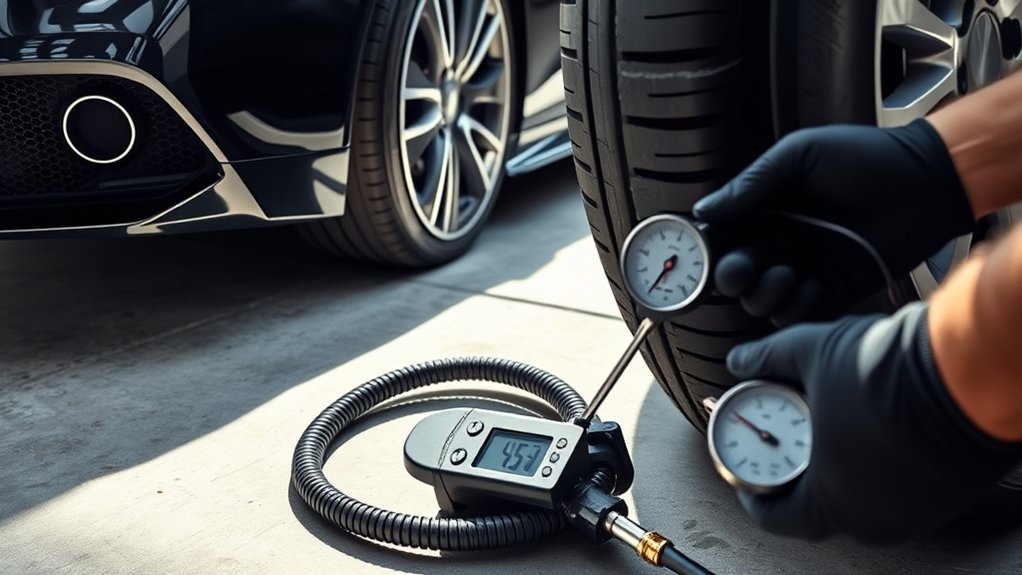
Park on firm, level ground away from traffic and sharp debris. Apply the parking brake and keep the compressor, gauge, valve caps, and spare within reach.
Inspect the Inflator and Connections
Check the hose, chuck, gauge, power lead, and fittings. Do not use a cracked hose, damaged chuck, unreadable gauge, or loose electrical connection.
Read the inflator instructions and identify its controls. A bleed button or pressure-release valve normally lets air escape while the chuck remains connected. A compressor-only model requires a separate deflator or gauge with a bleed feature.
Check the Current Tire Pressure
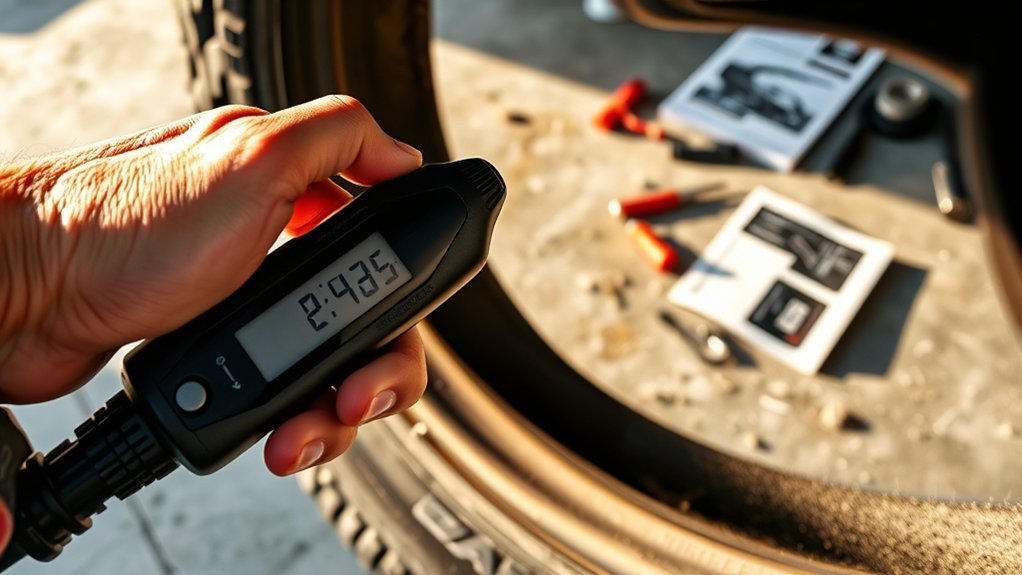
Remove the valve cap and wipe dirt from the stem. Press the gauge squarely onto the valve until the reading stabilizes. Record the pressure at all four tires and note any front-to-rear difference.
A cold reading is the best road-pressure baseline. NHTSA defines a cold tire as one that has generally not been driven for at least three hours. Trail pressure is a separate temporary setting and should not replace the placard specification.
Secure the Valve Connection
Most passenger cars, sport utility vehicles, pickup trucks, and many trailers use Schrader valves. Push or lock the chuck straight onto the stem. A continuous hiss around the connection means the chuck is not seated correctly.
| Check | Normal Condition | Corrective Action |
|---|---|---|
| Valve stem | Straight, clean, and free of cracks | Stop if it is bent, split, loose, or leaking. |
| Chuck fit | Firm connection without continuous leakage | Remove it and reconnect at a straighter angle. |
| Gauge reading | Stable and repeatable | Compare it with a second gauge if the reading jumps or appears unrealistic. |
| Tire condition | No cuts, bulges, exposed cords, or major cracking | Do not air down or continue driving on a visibly damaged tire. |
Step-by-Step: Air Down a Tire With an Inflator
Use the same controlled process at each wheel. Do not rush to reach a low number, and do not assume all four tires must match if the vehicle has different front and rear requirements.
- Park safely. Stop on level, stable ground and apply the parking brake.
- Inspect the tire. Look for cuts, bulges, punctures, exposed cords, severe cracking, or bead damage.
- Confirm the target. Choose a conservative temporary pressure based on the vehicle, tire, load, wheel, terrain, and expected speed.
- Record the starting pressure. Check every tire before releasing air.
- Remove the valve cap. Place it in a clean pocket or container so dirt cannot enter it.
- Attach the chuck. Seat it squarely on the valve and correct any continuous leak.
- Release a short burst. Press the bleed or deflate control briefly, then release it.
- Read the stabilized gauge. Stop airflow before judging the pressure unless the tool is designed to display an accurate live reading while bleeding.
- Repeat gradually. Continue with short releases until you reach the conservative starting target.
- Let the reading settle. Wait several seconds, check again, and add a small amount of air if you went too low.
- Replace the valve cap. Tighten it by hand and repeat the process at the remaining wheels.
- Perform a slow test. Drive a short distance at trail speed, then reassess traction, steering response, tire bulge, and wheel clearance.
Note: A valve-core removal tool can release air quickly, but it is not required for normal airing down. Use a purpose-built deflator that captures the core. Do not leave a loose core in your hand while the tire empties.
Monitor Pressure Until You Reach the Target
Lower pressure in stages rather than running a continuous uncontrolled stream. Briefly release air, stop, read the gauge, and compare the result with your target.
| Action | When to Do It | Reason |
|---|---|---|
| Record road pressure | Before releasing air | Provides a restoration reference. |
| Release a brief burst | During each adjustment | Reduces the chance of overshooting. |
| Read the gauge | After airflow stops | Provides a more stable reading on many tools. |
| Compare axle pressures | After all tires are adjusted | Prevents an accidental imbalance. |
| Recheck after a short trail test | Before entering difficult terrain | Confirms that no tire is leaking or deforming excessively. |
Keep left and right tires on the same axle close to one another unless a vehicle, tire, or specialized off-road setup specifically requires otherwise. Follow any manufacturer-specified difference between the front and rear axles.
Pro Tip: Record the vehicle load, terrain, tire size, weather, starting pressure, and successful trail pressure. This creates a useful reference for your own setup without copying numbers from a different vehicle.
How to Drive Safely While the Tires Are Aired Down
Reduced pressure is intended for slow off-road operation. It is not a normal road setting. According to Ram’s off-road airing-down guidance, drivers should travel more slowly and avoid sharp turns or abrupt maneuvers because reduced pressure increases the risk of tire damage and bead unseating.
- Accelerate, steer, and brake smoothly.
- Avoid sudden steering inputs, especially on side slopes.
- Slow down before rocks, holes, ledges, roots, or washouts.
- Do not allow the wheel rim to strike obstacles.
- Stop if the steering becomes vague or a tire looks excessively folded.
- Recheck pressure if the outside temperature changes sharply.
- Reinflate before sustained pavement travel or normal road speed.
Warning: If a tire bead unseats, the tire suddenly loses pressure, or the wheel contacts the ground, stop driving. Install a suitable spare or obtain professional assistance. Do not attempt to reseat the bead with fire, starting fluid, or another explosive method.
Common Problems and How to Troubleshoot Them
| Problem | Likely Cause | What to Do |
|---|---|---|
| The inflator will not release air | The model only inflates or the wrong control is being used | Check the instructions and use a separate deflator or gauge bleed valve. |
| Air leaks around the chuck | Misaligned connection, dirt, or a damaged chuck | Disconnect it, clean the stem, and reconnect squarely. |
| Air leaks after the tool is removed | Loose or damaged valve core or stem | Stop the trip if the leak continues and have the valve serviced. |
| Gauge readings disagree | Gauge error, poor seal, or pressure still flowing | Stop the airflow, reseat the tool, and compare with a known reliable gauge. |
| Pressure drops below the target | Air was released too long | Add air in short intervals and recheck after each interval. |
| One tire keeps losing pressure | Puncture, bead leak, valve leak, or impact damage | Use the spare or obtain a professional inspection before road driving. |
| The TPMS warning appears | Pressure has dropped below the system threshold | Expect this during some air-down sessions. Use a gauge, reinflate afterward, and consult the owner’s manual if the warning remains. |
Do not continue on a tire that looks flat, has an unseated bead, shows a bulge, exposes cords, or has suffered a hard wheel impact. A tire may have internal damage even when the outside appears to recover after reinflation.
Reinflate and Verify Tire Condition
Reinflate before returning to normal pavement driving. Use the vehicle manufacturer’s pressure on the door placard or in the owner’s manual, not the tire sidewall pressure.
Check and Set Road Pressure
Attach the compressor hose and add air in controlled intervals. Stop regularly and check the pressure with a separate gauge if the inflator’s built-in reading is uncertain.
If the tires are warm and you must drive, inflate them to at least the placard pressure as a temporary setting rather than leaving them significantly underinflated. Recheck and adjust them after the vehicle has been parked for at least three hours.
NHTSA defines a cold pressure reading as one taken after the vehicle has generally been parked for at least three hours.
Do not release air from a hot road tire merely because its pressure is above the cold placard number. Pressure normally rises as a tire warms during operation.
Inspect the Tire and Wheel
Inspect the tread, both visible sidewalls, valve area, and wheel before returning to road speed. Look for punctures, cuts, blisters, cracked rubber, missing tread pieces, exposed cords, bent wheel edges, or a bead that does not sit evenly.
NHTSA recommends monthly pressure and tread inspections. U.S. passenger tires have treadwear indicators at 2/32 inch, but local laws or wet-weather needs may justify replacement sooner.
| Task | Tool | Pass Condition |
|---|---|---|
| Visual tire check | Eyes and flashlight | No cuts, bulges, exposed cords, deep cracks, or missing rubber |
| Wheel and bead check | Eyes and hands | No bent rim, trapped debris, visible gap, or uneven bead seating |
| Tread check | Depth gauge | Above the applicable wear limit and free of damaging punctures |
| Pressure check | Reliable gauge | Matches the appropriate manufacturer specification |
Reinflation Procedure
- Inspect the tire, valve, bead, and wheel for damage.
- Connect the compressor securely to the valve stem.
- Add air in intervals and monitor the pressure.
- Set the front and rear tires to their specified road pressures.
- Check each tire again with a reliable gauge.
- Replace every valve cap snugly by hand.
- Listen for leaks and watch for an uneven bead or abnormal tire shape.
- Recheck the pressure when the tires are cold.
If one tire loses pressure again, do not keep topping it up without finding the cause. Inspect the valve, tread, sidewall, wheel, and bead, then arrange professional service when the leak is not clearly repairable.
Frequently Asked Questions
How do you deflate a tire with an air pump?
Use the pump or inflator only if it has a bleed button, deflate valve, or pressure-release control. Attach the chuck securely, release a brief burst of air, stop the flow, and check the stabilized pressure. Use a separate tire deflator when the pump only adds air.
Can every tire inflator deflate a tire?
No. Many portable inflators only push air into the tire. Check for a labeled bleed button, deflate valve, or two-way function before starting. Otherwise, use a pressure gauge with a bleed control or a purpose-built deflator.
How can you deflate a tire quickly?
A core-removal deflator can release air quickly, but it also makes overshooting easier. Use a purpose-built tool that captures the valve core and shows pressure. For routine adjustments, a bleed button or standard tire deflator provides more control.
What PSI should you use when airing down?
There is no universal PSI. Start conservatively and consider vehicle weight, cargo, tire size, casing stiffness, wheel design, terrain, and speed. Use manufacturer guidance when available, and lower the pressure only in small steps while testing at low speed.
What is the 3% tire rule?
The 3% rule is a common tire-size comparison guideline, not an air-pressure rule or universal safety standard. Replacement tire diameter can affect gearing, clearance, speedometer readings, braking, ABS, and stability-control systems. Use a vehicle-manufacturer-approved size or obtain professional fitment advice.
Will airing down turn on the TPMS warning?
It may. The system can warn when one or more tires fall significantly below the road-pressure threshold. Use a gauge rather than the warning light to manage trail pressure. Reinflate afterward and check the owner’s manual if the warning does not clear.
Do you need to reinflate after airing down?
Yes. Restore the vehicle manufacturer’s recommended pressure before normal pavement driving or higher speeds. Reduced pressure can increase heat, reduce steering stability, accelerate wear, and raise the risk of tire or bead damage.
Safety Disclaimer: This article provides general information for conventional passenger and light-truck tires. Always follow the vehicle, tire, wheel, and equipment manufacturers’ instructions. Stop driving and consult a qualified tire professional when a tire loses its bead, runs flat, develops a bulge, exposes cords, suffers wheel damage, or repeatedly loses pressure.
Conclusion
Safe airing down is a controlled adjustment, not a race to the lowest possible PSI. Confirm that your inflator can release air, choose a conservative target for your specific vehicle and terrain, and measure after every small change. While driving, keep your speed low and your steering smooth. Before returning to pavement, inspect the tires and restore the manufacturer’s road pressure.
Sources
- NHTSA Tire Safety Ratings and Awareness — supports placard pressure, cold-pressure checks, TPMS guidance, monthly inspections, and treadwear indicators.
- NHTSA Summer Driving and Road Trip Tips — supports cold-pressure timing, tire inspection, and use of the vehicle manufacturer’s inflation specification.
- Ram Owner’s Manual: Airing Down for Off-Road Driving — supports gradual pressure reduction, terrain and load differences, low-speed operation, and bead-loss precautions.
- BFGoodrich Off-Road Tire Selection Guide — supports the traction benefits of airing down, the absence of a universal PSI, inspection, and reinflation before pavement.
- Michelin Changing Tire Size or Specifications — supports using approved replacement sizes and explains why diameter changes can affect vehicle systems.