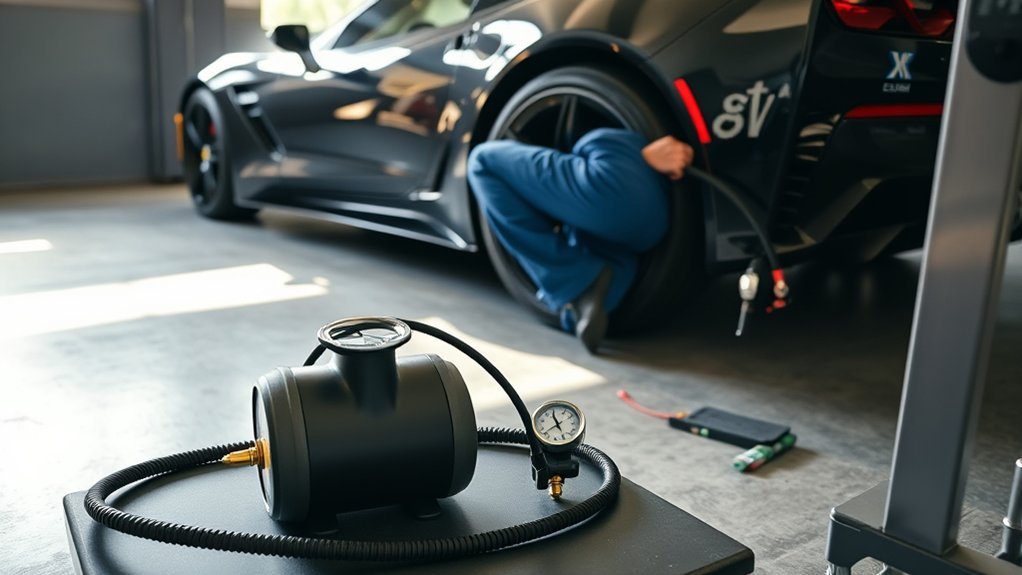
What’s in This Article
- Before You Begin: Tools, PSI, and Tire Condition
- How to Check Tire Pressure Accurately
- How to Inflate Car Tires at Home Safely
- How to Fix Overinflated or Underinflated Tires
- Inspect Tires Visually and Check the Spare
- When to Get Professional Help
- Simple Maintenance Routine to Keep PSI Correct
- Frequently Asked Questions
Low tire pressure can make your car harder to control, wear your tires faster, and waste fuel. You don’t need a shop visit for a basic pressure check, but you do need the right tools and the correct pressure number. This guide shows you how to check and inflate car tires safely at home, step by step.
Quick Answer
Check tire pressure when the tires are cold, which means the car has not been driven for at least three hours. Find the recommended PSI on the driver’s door label or in the owner’s manual. Add air in short bursts, recheck with a gauge, and stop when each tire matches the vehicle maker’s recommended pressure.
Key Takeaways
- Use the PSI on your vehicle label or owner’s manual, not the number on the tire sidewall.
- Check pressure when tires are cold for the most accurate reading.
- Add air in short bursts and recheck often to avoid overinflation.
- Check the spare tire, tread, sidewalls, and valve caps during the same routine.
- Stop and get professional help if you see bulges, deep cuts, exposed cords, or repeated pressure loss.
Before You Begin: Tools, PSI, and Tire Condition
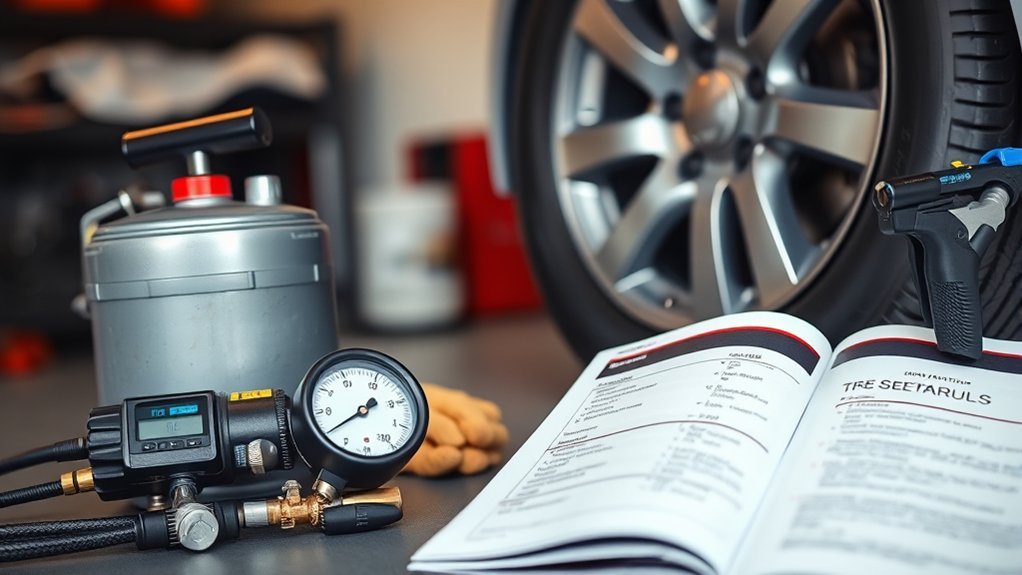
Plan for about 10 to 15 minutes to check and adjust all four tires. You’ll need a reliable tire pressure gauge, an air compressor or portable pump, and your vehicle’s recommended PSI.
Find the recommended tire pressure on the Tire and Loading Information Label on the driver’s door edge or door jamb. You can also check the owner’s manual. According to the National Highway Traffic Safety Administration (NHTSA), the vehicle maker’s recommended pressure is the correct number for your tires.
Do not use the maximum PSI printed on the tire sidewall as your target. That number shows the tire’s maximum limit, not the correct pressure for your vehicle. Check each tire, including the spare, because front, rear, and spare tire pressure can differ.
- Use a digital or quality dial pressure gauge.
- Keep a portable air compressor or pump ready.
- Check tires when they are cold.
- Inspect valve caps before and after inflation.
- Write down each tire reading if you track maintenance.
NHTSA notes that tires lose about 1 psi of pressure each month, so monthly checks help you catch small drops early. Check pressure before long trips, after a major temperature change, and any time the car feels soft, pulls, or handles poorly.
How to Check Tire Pressure Accurately
Use a reliable, calibrated tire pressure gauge to get an accurate reading. Check your tires before driving or after the car has been parked for at least three hours. A cold reading gives you the closest match to the vehicle maker’s pressure setting.
- Park the vehicle on level ground.
- Find the recommended PSI on the door label or in the owner’s manual.
- Remove the valve cap from one tire.
- Press the gauge firmly onto the valve stem until the reading stabilizes.
- Record the reading, then compare it with the recommended PSI.
- Add air if the reading is low, or release air if the reading is high.
- Recheck the tire until it matches the recommended pressure.
- Replace the valve cap tightly before moving to the next tire.
If you hear a hiss while using the gauge, press it straighter onto the valve stem. A poor seal can release air and give you a false reading.
Use a Reliable Gauge
Choose a digital gauge or a quality dial gauge instead of relying only on gas station inflators. Some public inflators take heavy use, and their built-in gauges may not stay accurate.
Remove the valve cap, press the gauge straight onto the valve stem, and hold it steady. Read the number, then compare it with the recommended PSI from your vehicle label or owner’s manual.
Measure When Tires Are Cool
Cold tires give you the best pressure reading. NHTSA defines a cold tire as one that has not been driven for at least three hours.
Driving warms the tires and raises pressure, so a warm reading can look higher than the true cold pressure. If you must add air after driving, use the door label as your target, then recheck the tires later when they are cold.
Note: Tire pressure monitoring systems can warn you when pressure drops a lot, but they do not replace a monthly gauge check.
How to Inflate Car Tires at Home Safely
Before you inflate, check the manufacturer’s recommended PSI on the driver’s door label or in the owner’s manual. Set the vehicle on level ground, remove the valve cap, and inspect the tire for damage, debris, or a loose valve stem.
Attach the compressor chuck securely to the valve stem. Add air in short bursts, then stop and check the pressure with your gauge. Repeat this process until the tire reaches the target PSI.
Do not walk away while the compressor runs. A small tire can gain pressure faster than you expect, and overinflation can reduce ride comfort and increase uneven wear.
After you finish, replace the valve cap tightly. Then inspect the tread, look for slow leaks, and confirm that all tires match their required pressure. If the front and rear tires need different PSI levels, follow the label for each axle.
How to Fix Overinflated or Underinflated Tires
Start with a cold pressure check on each tire. Compare every reading with the recommended PSI on your door label or in the owner’s manual.
If a tire is low, add air in short bursts. Recheck often so you do not pass the target PSI. If a tire has too much air, press the valve stem center for a short moment, then check the pressure again.
Pressure can shift with temperature. Many tire makers note that tire pressure can change by about 1 to 2 psi for every 10°F change in air temperature. Check more often during sharp weather changes.
How to Detect a Pressure Imbalance
A pressure imbalance means one or more tires sit above or below the target PSI. You may notice pulling, uneven steering feel, extra road noise, or uneven tread wear.
Use the same gauge on all tires for a fair comparison. Check the front and rear tire labels carefully because some vehicles use different pressure settings by axle.
How to Fix Common Pressure Problems
If a tire keeps losing pressure after you inflate it, check the valve stem, tread, and sidewall for damage. A nail, cracked valve stem, or bead leak can cause slow pressure loss.
If you overinflate a tire, release air slowly with the valve stem pin. Check again after each short release. Never drive far on a tire that looks damaged, bulged, or partly flat.
Inspect Tires Visually and Check the Spare
Before you inflate, inspect each tire and the spare for nails, screws, glass, sidewall damage, bulges, cuts, and uneven wear. These issues can cause leaks or tire failure.
Check tread depth with the penny test. Place a penny in the tread with Lincoln’s head upside down and facing you. If you can see the top of Lincoln’s head, NHTSA says you should replace the tire.
Run your fingers gently along the tread and sidewall to feel for cuts, raised spots, or damage. Check the spare at least once a month with the other tires, especially before a long trip.
Warning: Do not inflate a tire to hide bulges, deep cuts, exposed cords, or repeated pressure loss.
| Area | What to inspect | Action if found |
|---|---|---|
| Tread | Depth, wear pattern | Replace if worn |
| Sidewall | Bulges, cuts | Do not use |
| Spare | Pressure, integrity | Inflate or service |
When to Get Professional Help
Stop and contact a tire shop or mechanic if a tire loses pressure again soon after inflation. Repeated pressure loss often points to a puncture, valve leak, rim issue, or bead leak.
Get help right away if you see a bulge, deep sidewall cut, exposed cord, or tread separation. These signs can make a tire unsafe even if the gauge shows the correct PSI.
You should also ask a professional to inspect uneven wear, cupping, feathering, or one-sided wear. These patterns can point to alignment, suspension, or balance problems.
Simple Maintenance Routine to Keep PSI Correct
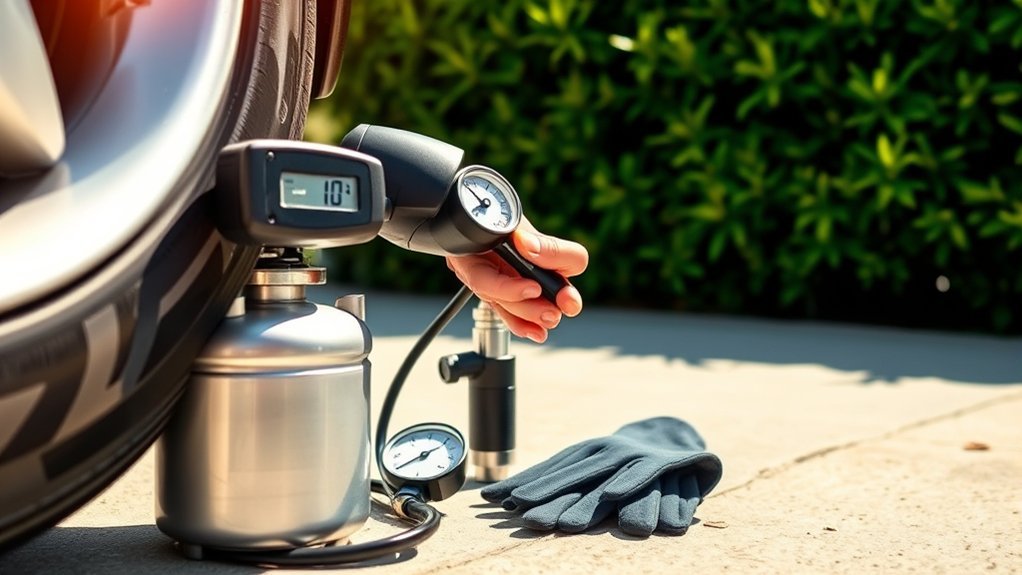
Check tire pressure at least once a month and before long trips. Use the vehicle’s placard or owner’s manual for the correct PSI.
Build a simple routine. Park on level ground, let the tires cool, inspect each tire, then check pressure with your gauge. If a tire is low, use your compressor or portable pump to inflate to spec in short bursts.
Keep a small toolkit in your car with a pressure gauge, valve caps, a clean cloth, and a portable air compressor if you drive often. Write down pressure readings if you want to spot slow leaks early.
Check the spare, valve caps, and tread during the same routine. Consistent tire checks help protect handling, fuel use, and tire life.
Frequently Asked Questions
Can you inflate car tires at home?
Yes, you can inflate car tires at home with a tire pressure gauge and a portable air compressor. Check the recommended PSI first, add air in short bursts, and recheck each tire until it reaches the correct pressure.
What tools do you need to inflate car tires?
You need a reliable tire pressure gauge and an air source, such as a portable compressor, home air compressor, or service station pump. A clean cloth and spare valve caps also help you keep the valve area clean and sealed.
What is the 5 PSI rule?
The 5 PSI rule is a rough idea some drivers use to describe a pressure range near the recommended setting. Do not use it as your main target. Your safest target is the exact cold PSI listed on your vehicle’s door label or in the owner’s manual.
Should you inflate tires to the number on the tire sidewall?
No. The number on the tire sidewall shows the tire’s maximum pressure limit, not your vehicle’s recommended pressure. Use the PSI listed by the vehicle maker on the door label or in the owner’s manual.
How often should you check tire pressure?
Check tire pressure at least once a month and before long trips. You should also check after big temperature changes or when one tire looks lower than the others.
Vehicle Safety Disclaimer: This article is for informational purposes only and does not replace advice from a qualified mechanic or tire professional. If you see tire damage, repeated pressure loss, or unsafe wear, stop driving on that tire and get professional help.
Conclusion
Correct tire pressure starts with the PSI on your vehicle label, a good gauge, and a cold tire reading. Check each tire, add or release air slowly, and inspect tread and sidewalls before you drive.
Your next step is simple: keep a pressure gauge in your car and check all tires once a month. This small habit can help you avoid roadside problems and keep your vehicle safer on every trip.
References
- Tire Safety Ratings and Awareness — National Highway Traffic Safety Administration.
- Tires in the Garage Infographic — National Highway Traffic Safety Administration, 2021.
- Tire Safety Brochure — National Highway Traffic Safety Administration.