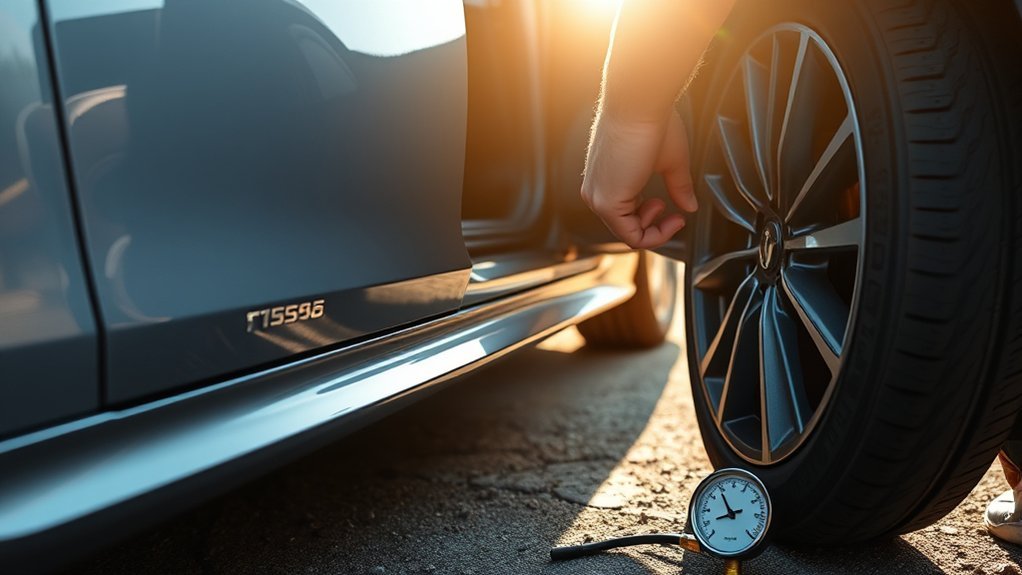
Where to Find Your Recommended Tire Pressure (PSI)
What’s in This Article
- Quick Answer: Where to Find Your Recommended Tire Pressure (PSI)
- Who This Guide Is For and What It Covers
- Find the PSI on Your Car: Doorjamb Sticker and Owner’s Manual
- Tire Sidewall vs. Recommended PSI: What Each Number Means
- What “Cold” Tire Pressure Means and When to Measure
- What You’ll Need to Check and Inflate Your Tires
- How to Check Tire Pressure Step-by-Step (Cold Tires)
- How to Inflate or Release Air Safely: PSI Adjustment Tips
- When to Change Recommended Pressure for Towing or Heavy Loads
- TPMS Alerts and Troubleshooting Common PSI Discrepancies
- Frequently Asked Questions
- Conclusion
Using the wrong tire pressure can make your car harder to control and wear out tires faster. The right number is not on the tire sidewall, even though that number is easy to spot. This guide shows you where to find the correct PSI, when to check it, and how to adjust it safely.
Quick Answer
Find your recommended tire pressure on the sticker inside the driver’s door jamb or in your owner’s manual. Use that cold-tire PSI for normal driving, not the maximum PSI on the tire sidewall. Check pressure after the car has sat for at least three hours, then inflate or release air in small steps.
Key Takeaways
- Use the vehicle placard or owner’s manual for your recommended tire pressure.
- Check pressure when tires are cold for the most accurate reading.
- Treat the tire sidewall PSI as a maximum limit, not a daily target.
- Use a reliable gauge, adjust in short bursts, and recheck each tire.
- Check the spare tire and adjust pressure for heavy loads only as your manual directs.
Quick Answer: Where to Find Your Recommended Tire Pressure (PSI)
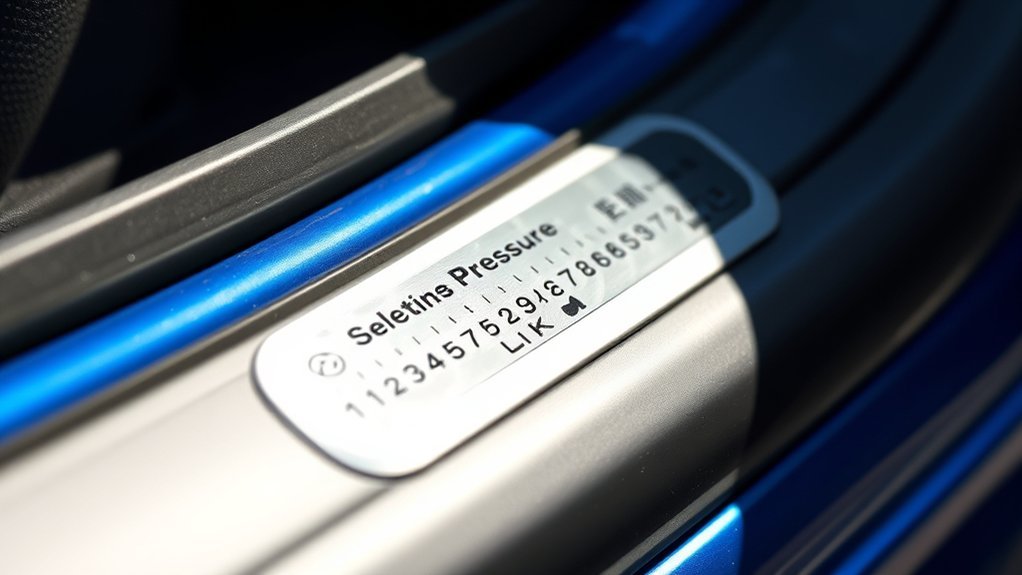
Look first at the sticker on the driver’s door jamb. It lists the recommended tire pressure in pounds per square inch (PSI) for your vehicle’s stock tires and normal load conditions.
If you don’t see the sticker there, check the owner’s manual. Some vehicles also place tire information on the fuel door or glove box door, but the vehicle placard and manual should guide your decision.
Check pressure when tires are cold because driving heats the air inside the tire and raises the reading. Tire pressure can change with tire size, load, or aftermarket wheels, so cross-check the placard, manual, and vehicle maker guidance before you adjust.
Who This Guide Is For and What It Covers
This guide helps you if you own a car and want safer handling, even tire wear, and better fuel use. It also helps if you want to stop guessing at the air pump.
You’ll learn where to find the correct PSI, how to check tires when they are cold, and how to adjust pressure with a gauge and compressor. You’ll also learn why front and rear tire pressures may differ, why the spare matters, and how to respond to tire pressure monitoring system alerts.
Find the PSI on Your Car: Doorjamb Sticker and Owner’s Manual
Check the driver’s door jamb first for the factory tire placard. It lists the recommended cold-tire PSI for your vehicle and often shows front and rear values.
Your owner’s manual gives more detail. It may include notes for different loads, tire sizes, or driving conditions.
Doorjamb Label Location
Your car’s recommended tire pressure usually appears on a label inside the driver’s side door jamb. Use this placard whenever you check or inflate tires.
The label often lists tire size, load details, and the correct cold-tire PSI. Check it before you use the owner’s manual for more technical notes.
| Location | Info Shown | When to Use |
|---|---|---|
| Door jamb (driver’s side) | Recommended tire pressure (PSI) | Routine checks, cold tires |
| Owner’s manual | Full tire specifications | Tire changes, load notes, technical details |
| Tire sidewall | Maximum PSI | Reference only, not recommended pressure |
Use these sources to avoid guesswork and keep your car safer on the road.
Owner’s Manual Guide
Check your owner’s manual when you need model-specific details. It explains recommended pressures for front and rear tires and may note changes for heavy loads or tire options.
Use the door placard for quick checks and the manual for full tire specifications. Tire maker guidance can help with tire-type questions, but your vehicle maker sets the pressure for your car’s load and suspension.
Cold Tire Pressure
Cold tire pressure means the pressure before heat from driving changes the reading. Check it after the car has been parked for at least three hours or driven less than a mile at low speed.
- Find the sticker on the driver’s side door jamb.
- Verify the PSI in your owner’s manual.
- Measure pressure when tires are cold.
- Inflate each tire to the recommended PSI.
Tire Sidewall vs. Recommended PSI: What Each Number Means
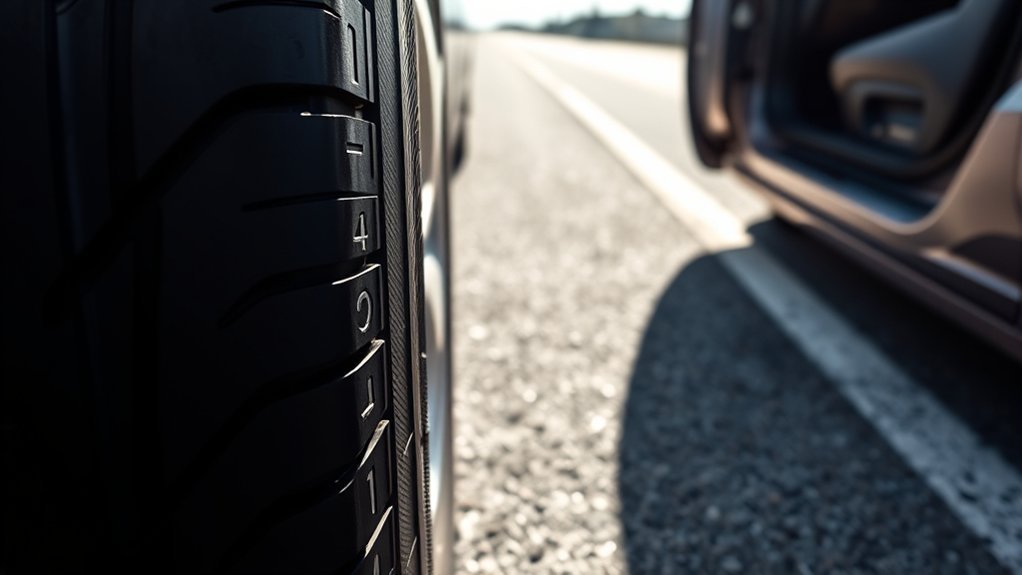
The PSI on your door placard or owner’s manual is the pressure you should use for normal driving. It reflects your car’s weight, handling design, tire size, and load range.
The number on the tire sidewall is different. It shows the tire’s maximum rated pressure, not the best pressure for daily use.
Warning: Don’t inflate tires to the sidewall maximum unless your vehicle maker specifically directs it for that tire and load.
Sidewall Maximum Pressure
A tire’s sidewall maximum pressure shows the highest inflation the tire maker rates that tire to handle. Treat it as a limit, not a goal.
Using the sidewall number for daily driving can hurt comfort, traction, and tire wear. It can also ignore the way your vehicle maker tuned the suspension and load balance.
- Know the difference between sidewall maximum pressure and recommended PSI.
- Don’t use the sidewall number as your daily target.
- Use your vehicle’s recommended tire pressure for handling and safety.
- Check pressure cold and adjust for load only when your manual directs it.
Vehicle Recommended PSI
Your vehicle’s recommended PSI comes from the car maker. It helps support proper handling, tire wear, fuel use, and braking performance.
Use the recommended value when tires are cold. Different tire sizes, loads, or wheel changes can affect the correct pressure, so check the manual or ask a qualified tire technician when your setup changes.
What “Cold” Tire Pressure Means and When to Measure
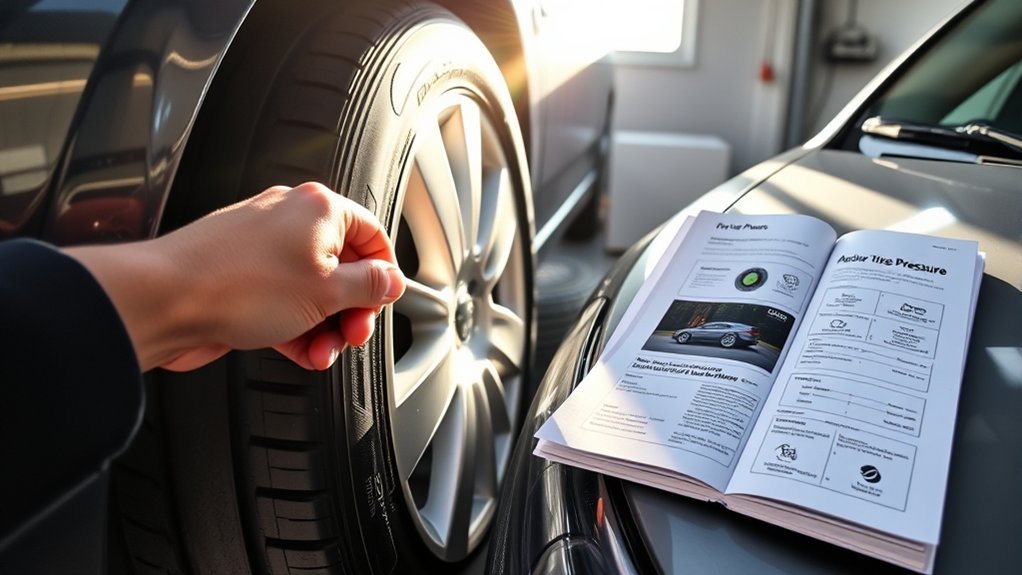
Cold tire pressure means the reading you get before driving heats the tires. Let the car sit for at least three hours before you check.
Driving raises tire temperature and can raise PSI. A hot reading can make an underinflated tire look closer to normal than it really is.
- Check pressure before driving when the car has sat for several hours.
- Use the cold reading to match the door placard or manual.
- Recheck after major temperature changes because air pressure can drop in cold weather.
- Treat cold pressure as your baseline for routine tire care.
What You’ll Need to Check and Inflate Your Tires
You need a reliable tire pressure gauge, an air source, and your vehicle’s recommended PSI. Most checks take about 10 to 15 minutes for all four tires and the spare.
- A calibrated digital or analog tire pressure gauge
- An air compressor with a controllable hose and chuck
- Your owner’s manual or the driver’s door jamb placard
- Valve caps for any tire that has a missing or damaged cap
Don’t rely on a visual check. A tire can look normal while it still has low pressure.
Pro tip: Keep a small gauge in your glove box so you can confirm pump readings anywhere.
How to Check Tire Pressure Step-by-Step (Cold Tires)
Check tire pressure when tires are cold. Start before driving, or wait at least three hours after your last trip.
- Park the vehicle on level ground and find the recommended PSI on the door placard or owner’s manual.
- Remove the valve cap from the first tire and keep it where it won’t roll away.
- Press the gauge straight onto the valve stem until the hissing stops.
- Read the PSI and compare it with the recommended cold pressure.
- Repeat the check on all four tires and the spare if your vehicle has one.
- Inflate or release air as needed, then recheck each tire.
- Replace each valve cap firmly after the pressure is correct.
Check When Tires Are Cold
Cold readings give you the most useful result because heat from driving raises tire pressure. Check before your first drive of the day when you can.
If you must drive to an air pump, drive less than a mile at low speed if possible. Then check and adjust with care.
Use a Reliable Gauge
Choose a sturdy tire pressure gauge that gives clear readings. Digital gauges are fast, while analog gauges often last longer.
Press the gauge firmly and evenly on the valve stem. A poor seal lets air escape and can skew the reading.
Inflate and Recheck Pressure
If a tire is low, attach the compressor and add air in short bursts. Stop often and check the pressure with your gauge.
- Read the current PSI with your gauge.
- Compare it with the recommended PSI on the placard or manual.
- Add air in short bursts with the compressor.
- Recheck until the tire reaches the correct cold pressure.
- Replace the valve cap after the final check.
How to Inflate or Release Air Safely: PSI Adjustment Tips
Adjust pressure in small steps. This helps you avoid overshooting the target PSI.
To add air, press the compressor chuck firmly onto the valve stem and inflate in short bursts. To release air, press the small pin in the valve stem gently and check the gauge often.
Never use a hot reading as your main guide. If you checked after driving, let the tires cool and confirm the pressure again.
When to Change Recommended Pressure for Towing or Heavy Loads
Heavy loads and towing can require different tire pressure. Check your owner’s manual before you raise PSI.
Your vehicle maker may list a higher pressure for towing, full cargo loads, or sustained highway driving. Underinflated tires under heavy load can build heat, wear faster, and raise the risk of failure.
- Find the towing or load pressure in your manual or on the vehicle placard.
- Set pressure before you leave while the tires are cold.
- Recheck pressure during long trips when the tires have cooled enough for a useful reading.
- Reduce pressure back to the normal setting when the heavy load is gone, if your manual directs it.
TPMS Alerts and Troubleshooting Common PSI Discrepancies
Your tire pressure monitoring system (TPMS) can warn you when pressure drops too low or when the system has a fault. Treat the warning as a reason to check the tires, not as a substitute for a gauge.
A steady TPMS light usually means one or more tires have low pressure. A blinking light often points to a system problem, such as a sensor fault or signal issue.
If your gauge readings match the placard but the light stays on, check for slow leaks, damaged valve stems, or sensor issues. A tire shop or dealer can test the sensors when the warning will not clear.
Frequently Asked Questions
Where can I find my tire PSI recommendation?
Check the driver’s door jamb sticker first. If the sticker is missing or hard to read, check your owner’s manual for the same tire pressure information.
How do I find out what PSI my tires need?
Find the recommended cold-tire PSI on the vehicle placard or in the owner’s manual. Then check each tire with a reliable gauge before driving.
How do you figure out your tire pressure?
Remove the valve cap, press a tire pressure gauge straight onto the valve stem, and read the PSI. Compare that number with the recommended pressure on your vehicle placard.
Is 40 PSI too high for car tires?
It can be too high for many passenger cars, but some vehicles may call for pressure near that range. Always follow your vehicle’s placard or owner’s manual instead of guessing.
Should front and rear tires have the same PSI?
Not always. Some vehicles list different front and rear pressures because weight balance and handling needs differ by axle.
Conclusion
The safest tire pressure is the cold PSI your vehicle maker lists on the door jamb placard or in the owner’s manual. Check it with a reliable gauge before driving, then adjust each tire in small steps.
Make tire pressure checks part of your regular vehicle routine. That simple habit helps protect handling, fuel use, tire life, and your confidence on the road.