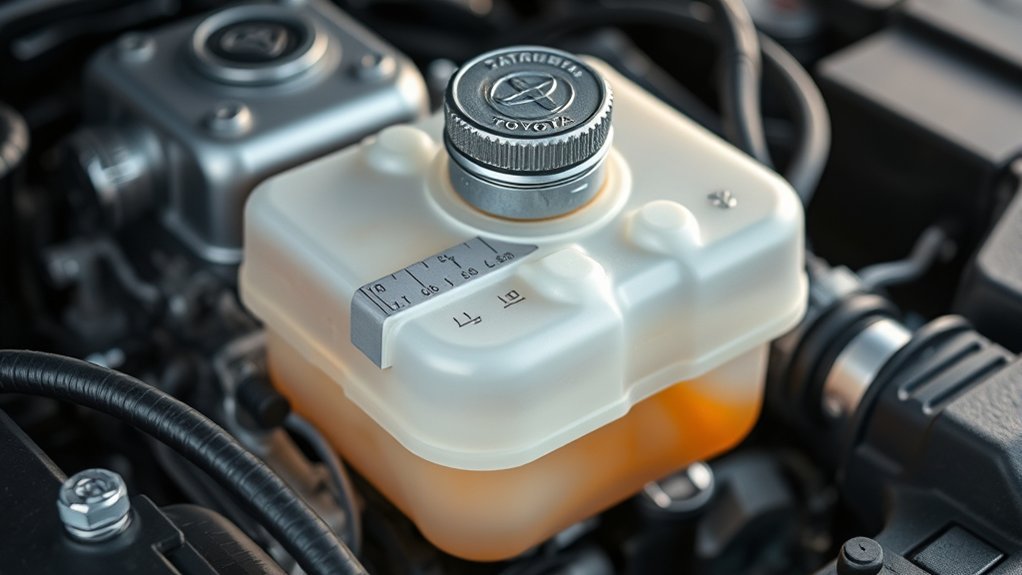
To check the brake fluid in your Toyota RAV4, locate the translucent reservoir on the driver’s side of the engine compartment. Inspect the fluid level between the marked maximum and minimum lines. If it’s low, it could indicate worn brake pads or leaks, so you’ll need to investigate further. If necessary, add the correct type of brake fluid—DOT 3 or DOT 4. Keep an eye out for unusual brake performance, which may signal deeper issues. More details follow.
How to Check Brake Fluid in Your Toyota RAV4
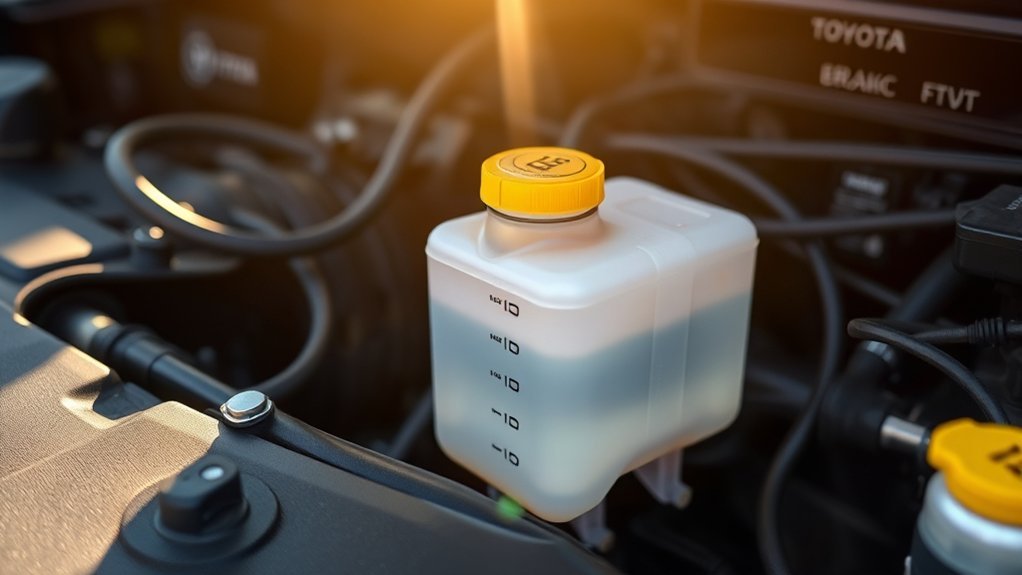
How often should you check the brake fluid in your Toyota RAV4? Regular checks are essential to guarantee your brake system operates safely and efficiently. Open the hood and locate the brake fluid reservoir on the driver’s side. Observe the maximum and minimum level lines; the fluid should sit comfortably between these indicators. If it’s low, you might be facing worn brake pads or even leaks within the system, which warrants immediate attention.
When adding brake fluid, make sure you use only DOT 3 or DOT 4 fluid. Before opening the reservoir cap, wipe it clean with a cloth to avoid contamination. This small action can prevent significant issues down the line. By routinely checking your brake fluid, you’re not just maintaining your Toyota RAV—you’re also empowering yourself to drive with confidence, knowing your vehicle is in prime condition.
How to Locate the Brake Fluid Reservoir
To locate the brake fluid reservoir on your Toyota RAV4, head to the driver’s side of the engine compartment, typically near the back. Look for a translucent container with a cap that’s easy to identify. You’ll also see marked lines on the reservoir indicating the maximum and minimum fluid levels, which are essential for proper brake function.
Driver’s Side Location
Located on the driver’s side of the engine bay, the brake fluid reservoir in a Toyota RAV4 is easily accessible near the back of the engine compartment. To effectively locate and maintain the reservoir, follow these steps:
- Open the hood of your vehicle.
- Identify the translucent plastic container labeled for brake fluid.
- Check the minimum and maximum level lines marked on the side.
- Verify the area around the reservoir is clean to mitigate fluid contamination risks.
Regularly monitoring brake fluid types is essential for reservoir maintenance. By staying vigilant, you can avoid potential braking issues and maintain your vehicle’s performance.
Identifying Reservoir Cap
Identifying the brake fluid reservoir cap on your Toyota RAV4 is vital for maintaining ideal braking performance. You’ll find the reservoir on the driver’s side of the engine compartment, near the back. The cap is typically labeled with a brake fluid symbol and specifies the required fluid types, such as DOT 3 or DOT 4. To access it, lift the cap straight up without twisting, using a clean cloth to wipe it before opening. This translucent reservoir allows for easy visual inspection of fluid levels. For effective reservoir maintenance, securely replace the cap after checking to prevent contamination and address common leaks promptly. Keeping an eye on these details guarantees your braking system stays reliable.
Recognizing Fluid Level Marks
When you check the brake fluid in your Toyota RAV4, you’ll want to focus on the fluid level marks on the reservoir. Located on the driver’s side near the back of the engine bay, the reservoir has clear max and min lines for easy identification. Here’s what to look for:
- Fluid Level: Verify the fluid sits between the max and min lines.
- Fluid Color Changes: Fresh brake fluid is typically clear or light amber; dark fluid indicates contamination.
- Brake Fluid Types: Know the type required for your RAV4 to maintain peak performance.
- Common Leaks: If fluid is consistently below the min line, inspect for worn brake pads or leaks in the system.
Brake Fluid Level Indicators
To guarantee your Toyota RAV4’s braking system functions effectively, regularly monitoring the brake fluid level is vital. The brake fluid reservoir, located on the driver’s side, features clear maximum and minimum level indicators. Maintaining fluid between these lines is essential; low levels can signal worn brake pads or leaks. If you notice the fluid consistently dropping, inspect for leaks and evaluate your brake pads’ condition.
For brake system maintenance, always use the recommended DOT 3 or DOT 4 brake fluid types. Using incompatible fluids, like DOT 5, can lead to severe brake system damage. Additionally, be aware of fluid contamination risks, as dirt or moisture can compromise braking efficiency. Keeping an eye on these indicators not only guarantees peak performance but also enhances your safety on the road. Regular checks empower you to stay in control and keep your RAV4’s braking system in top shape.
Steps to Take When Brake Fluid Is Low?
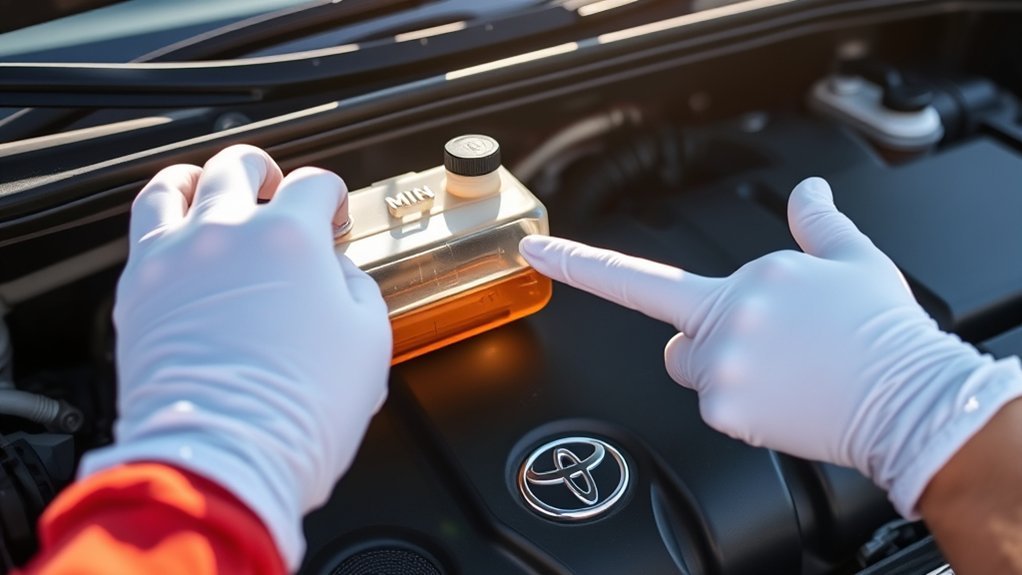
If you notice low brake fluid levels in your Toyota RAV4, take immediate action to guarantee your safety and the proper functioning of the braking system. Follow these steps:
- Conduct a brake pad inspection: Check for wear on the brake pads as low fluid may indicate they need replacement.
- Look for visible leaks: Inspect around the brake fluid reservoir and brake lines to spot any potential leaks that could compromise your system.
- Add brake fluid: Carefully pour the appropriate fluid (DOT 3 or DOT 4) into the reservoir, ensuring it’s just below the maximum line to maintain ideal brake system maintenance.
- Consider fluid contamination risks: Always use fluid from an unopened container to prevent moisture contamination, which can damage brake components.
If low fluid levels persist after adding, consult a mechanic for a thorough inspection of your braking system. Your safety depends on it!
How to Properly Add Brake Fluid
Adding brake fluid to your Toyota RAV4 is a straightforward process that requires attention to detail to confirm your braking system functions efficiently. First, verify the reservoir cap is clean by wiping it with a cloth to prevent fluid contamination. Only use the correct brake fluid types, specifically DOT 3 or DOT 4, as DOT 5 is incompatible and can damage your braking system.
Carefully remove the reservoir cap by lifting it straight up without twisting, which protects the seal. Slowly add the brake fluid, making sure the level reaches just below the maximum line marked on the reservoir. After adding the fluid, securely replace the cap to prevent moisture ingress and maintain a proper seal. Remember, proper storage techniques for your brake fluid are essential; keep it in a cool, dry place, away from direct sunlight, to maintain its effectiveness for your RAV4’s braking performance.
Proper Brake Fluid Handling for Your RAV4
Proper handling of brake fluid is essential for maintaining the integrity of your Toyota RAV4’s braking system. Follow these guidelines to guarantee peak performance:
- Use Unopened Containers: Always use brake fluid from an unopened container to avoid moisture contamination, which can damage your brake lines.
- Select the Right Fluid Type: Confirm you’re using the correct specification, typically DOT 3 or DOT 4, as DOT 5 is incompatible with most systems.
- Maintain Cleanliness: Before adding fluid, wipe the reservoir cap with a clean cloth. This helps prevent dirt and debris from entering the system.
- Seal the Reservoir: After adding brake fluid, verify the cap is securely sealed to prevent moisture ingress and maintain system integrity.
When to Seek Professional Help for Brake Issues
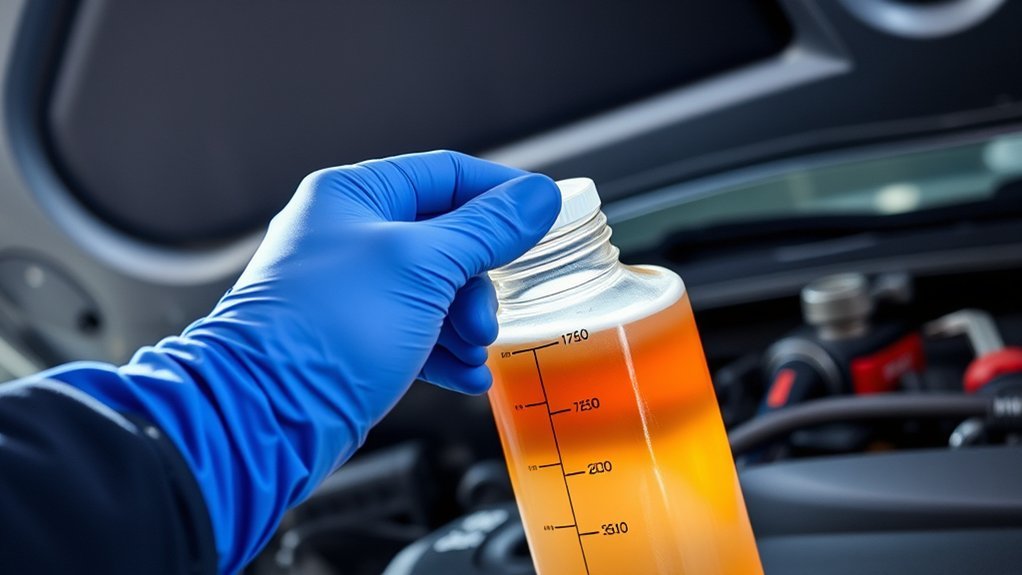
If you notice consistently low brake fluid levels, it’s time to consult a mechanic, as this may indicate a leak or worn components. Additionally, any unusual noises or vibrations when braking should prompt immediate professional evaluation. Addressing these issues early can prevent serious safety risks and guarantee your RAV4 operates smoothly.
Persistent Low Fluid Levels
When brake fluid levels consistently drop below the minimum line, it’s critical to take immediate action, as this may indicate a leak or worn brake pads. Ignoring this could lead to serious safety concerns while driving. Here are some maintenance tips to take into account:
- Check for leaks: Regularly inspect brake lines and calipers for any signs of fluid leakage.
- Monitor fluid levels: Keep a close eye on fluid levels; frequent topping off signals a problem.
- Evaluate brake pads: Worn pads may absorb fluid, leading to low levels.
- Consult a mechanic: If levels remain low despite checks, seek professional evaluation to prevent brake system failure.
Prioritize these steps for effective leak detection and guarantee your safety on the road.
Unusual Brake Performance Issues
Persistent low brake fluid levels can lead to a range of unusual brake performance issues that demand immediate attention. If you notice brake pedal softness, it may indicate low fluid levels or air trapped in the brake lines, requiring urgent inspection. Additionally, unusual brake noises like grinding or squeaking suggest worn brake pads, which can lower brake fluid levels and necessitate professional evaluation. A warning light on your dashboard signifying a brake issue is another critical indicator—don’t ignore it. If you experience a braking responsiveness decrease or longer stopping distances, consult a mechanic immediately, as these symptoms often signify low brake fluid or more serious problems. Regular fluid checks can prevent these issues, ensuring your safety on the road.
Frequently Asked Questions
How to Check Toyota RAV4 Brake Fluid?
To check your Toyota RAV4’s brake fluid, open the hood, locate the reservoir, and inspect fluid levels. Confirm it’s between max and min lines, using DOT 3 or DOT 4 for maintenance, avoiding DOT 5.
Where Is the Brake Fluid Located on a Toyota RAV4?
Ah, the elusive brake fluid—it’s nestled on the driver’s side of your Toyota RAV4, near the master cylinder. For maintenance tips, consult the location guide and keep that fluid level where it should be!
How Do I Know if Brake Fluid Is Low?
You’ll know brake fluid is low if you see warning lights, notice decreased braking performance, or find fluid levels below the minimum mark. Regular fluid maintenance is essential for your vehicle’s safety indicators and performance.
Can I Just Add Brake Fluid if It’s Low?
If your brake fluid’s low, you can add some, but first, check for leaks or worn pads. Follow adding fluid tips and perform regular brake system checks for ideal brake fluid maintenance and safety.
Conclusion
Just like a ship needs its anchor to stay steady in turbulent waters, your RAV4 relies on proper brake fluid levels for safe driving. Regularly checking and maintaining the brake fluid guarantees your vehicle navigates the roads smoothly. If you notice low levels, don’t hesitate to refill or seek assistance. Remember, keeping an eye on this essential fluid helps you steer clear of potential troubles, letting you enjoy every journey with confidence and peace of mind.