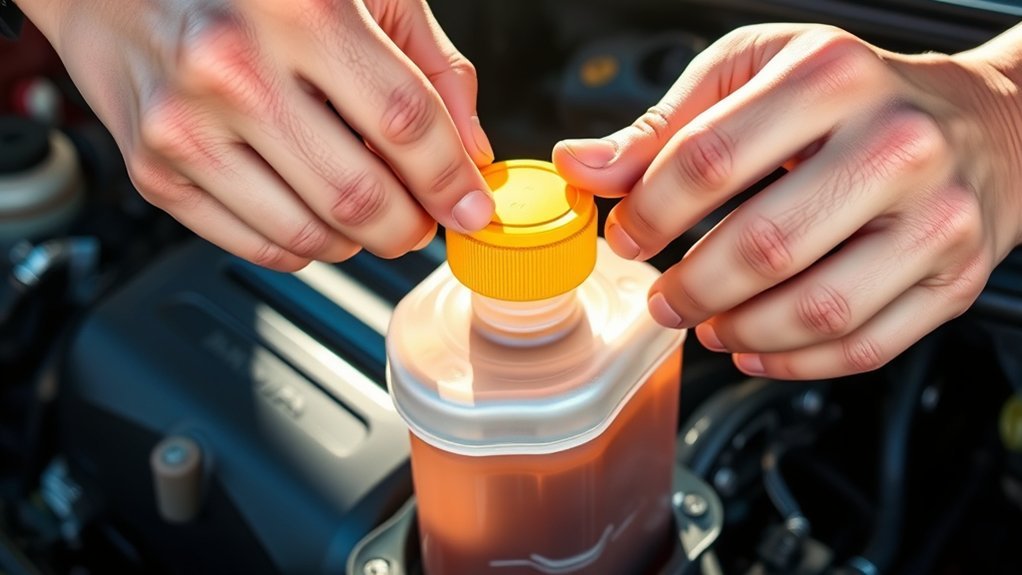
Checking power steering fluid in a Toyota RAV4 starts with one important question: does your exact model have hydraulic power steering? Older RAV4s may have a fluid reservoir, while Toyota introduced electric power steering with the third-generation RAV4 for the 2006 model year. Confirm the system before opening or adding anything under the hood.
Quick Answer
First confirm that your RAV4 has hydraulic power steering. A 2002 U.S.-market RAV4 has a reservoir and specifies Dexron II or III ATF, while Toyota introduced electric power steering for the third-generation RAV4 in 2006. On a hydraulic model, park level, read the matching HOT or COLD range, add the specified fluid slowly, and inspect for leaks.
Key Takeaways
- Confirm the model year and steering system before looking for a reservoir.
- Toyota introduced electric power steering on the third-generation RAV4 for 2006, so later models do not use hydraulic steering fluid.
- The 2002 U.S. owner’s manual specifies Dexron II or III automatic transmission fluid, but other years and markets should follow their own manuals.
- Use the COLD range after the vehicle has sat and the HOT range only when the fluid is properly warmed.
- A repeatedly falling level, foam, debris, a burnt smell, or unsafe steering needs diagnosis rather than repeated top-offs.
At a Glance
| Time Required | 5–10 minutes for an inspection; longer for a reservoir exchange |
| Difficulty | Easy for a level check; moderate to advanced for fluid replacement |
| Tools Needed | Owner’s manual, clean lint-free rag, gloves, flashlight, funnel, and the exact specified fluid |
| Cost | Usually no cost to inspect; top-off or exchange cost depends on the specified fluid and tools |
What’s in This Article
- Which RAV4 Models Have Power Steering Fluid?
- Before You Begin
- Understanding Power Steering Fluid
- Signs of Contaminated or Problem Fluid
- How to Check RAV4 Power Steering Fluid
- What to Do If the Fluid Is Contaminated
- Power Steering Fluid Exchange
- Tools for Power Steering Service
- Top 5 Mistakes to Avoid
- How Often to Inspect the Fluid
- Benefits of Regular Maintenance
- How to Keep the System Healthy
- Frequently Asked Questions
- Conclusion
- Sources
Which Toyota RAV4 Models Have Power Steering Fluid?
The fluid-checking steps in this guide apply only to a RAV4 with a hydraulic power steering reservoir. Toyota’s 2002 RAV4 owner’s manual includes a hydraulic reservoir and specifies Dexron II or III automatic transmission fluid.
Toyota introduced a newly developed electric power steering system with the third-generation RAV4 for the 2006 model year. Later generations continued to use EPS, which provides steering assist with an electric motor instead of a hydraulic pump, hoses, reservoir, and fluid.
Note: Model years, production dates, and equipment can vary by market. Use the owner’s manual for your exact vehicle as the final authority.
| RAV4 Example | Steering Type | Fluid Reservoir? |
|---|---|---|
| 2002 U.S.-market RAV4 | Hydraulic power steering | Yes |
| Third-generation RAV4 introduced for 2006 | Electric power steering | No traditional hydraulic reservoir |
| 2018 and 2020 RAV4 | Electric power steering | No |
A RAV4 can have power-assisted steering without having power steering fluid. EPS models use an electric motor instead of a hydraulic pump and reservoir.
Before You Begin
Park the RAV4 on firm, level ground, set the parking brake, and switch off the engine. Open the owner’s manual and confirm that the vehicle has a hydraulic power steering reservoir and which fluid specification it requires.
For a basic inspection, gather a flashlight, gloves, and a clean lint-free rag. Keep a clean funnel nearby only when the level is low and the correct fluid has been confirmed.
Warning: Do not add fluid to an unfamiliar reservoir. Brake fluid, engine coolant, washer fluid, and transmission fluid reservoirs serve different systems and are not interchangeable. Stop driving and arrange an inspection if the steering suddenly becomes unsafe, the vehicle loses assist, or a large leak is visible.
Understanding Power Steering Fluid and Its Importance
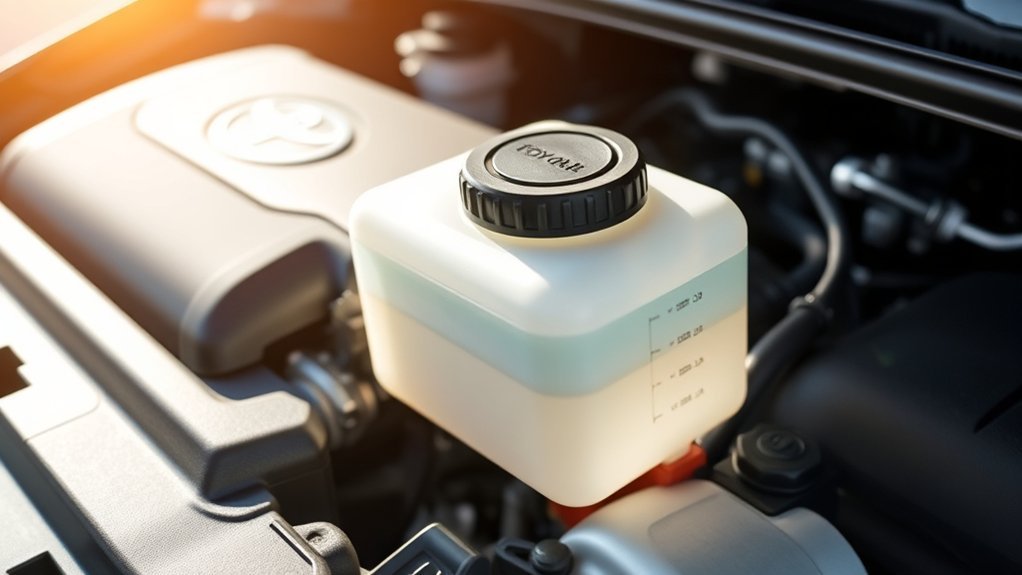
Hydraulic power steering fluid transfers pressure from the pump to the steering gear so the driver can turn the wheels with less effort. The fluid also lubricates and cools the pump, valves, seals, hoses, and steering gear.
For the 2002 U.S.-market RAV4, Toyota specifies automatic transmission fluid meeting Dexron II or III. Do not use that statement as a universal specification for every RAV4. Read the reservoir cap and the owner’s manual for your exact model before adding anything.
New Dexron ATF is commonly red, but color alone does not prove that the fluid is good or bad. Judge the condition by comparing it with new fluid of the same specification and checking for a burnt smell, suspended debris, foam, milkiness, recurring level loss, pump noise, and changes in steering effort.
Identifying Signs of Contaminated or Problem Power Steering Fluid
One unusual observation does not automatically mean the steering system has failed. Several symptoms together provide a more useful diagnosis.
- Low level: The fluid sits below the correct COLD or HOT range.
- Recurring level loss: The level falls again after a correct top-off, which usually indicates leakage.
- Foam or persistent bubbles: Air may be entering through a low reservoir, loose connection, damaged hose, or improper bleeding.
- Milky appearance: The fluid may contain moisture or severe aeration.
- Burnt odor: The fluid may have overheated or deteriorated.
- Grit or metallic material: Internal wear or outside contamination may be present.
- Whining or groaning: Low fluid, air, pump wear, or another steering fault may be responsible.
- Heavy or jerky steering: The system needs prompt inspection, especially when the condition appears suddenly.
Darkening by itself is not a complete diagnosis. Look at the fluid condition, level history, leaks, noise, and steering behavior together.
How to Accurately Check Toyota RAV4 Power Steering Fluid
Use these steps only on a RAV4 that has a hydraulic power steering reservoir.
- Choose a HOT or COLD check: Do not compare a warm reservoir reading with the COLD range. For the 2002 RAV4, Toyota defines a cold check as fluid near room temperature after the engine has not run for about five hours. Toyota describes a hot check after approximately 20 minutes of driving near 50 mph, with additional warm-up time in very cold weather.
- Park on level ground: Set the parking brake and turn off the engine.
- Locate the reservoir: Use the owner’s manual illustration. The hydraulic reservoir should have COLD and HOT level ranges or equivalent markings.
- Clean around the cap: Wipe away dust and grit before opening the reservoir. This prevents debris from falling into the system.
- Read the level: Look through the reservoir and use the range that matches the fluid temperature. Do not use the HOT mark for cold fluid or the COLD mark for hot fluid.
- Inspect the fluid: Check for foam, debris, milkiness, burnt odor, or an unusual difference from fresh fluid of the same specification.
- Top off only when needed: Add the exact specified fluid in small amounts. Pause and recheck after each addition.
- Secure the cap: Reinstall it fully and wipe away spilled fluid.
- Inspect for leakage: Look around the reservoir, pump, hose connections, and steering gear for dampness, staining, or fresh drips.
Pro Tip: Photograph the level before adding fluid and again after the final check. The images can help you confirm whether the level is falling over the next several days.
Warning: Do not overfill the reservoir. Toyota warns that overfilling can damage the power steering system. Fluid that expands when hot may also escape from an overfilled reservoir.
What to Do If the Power Steering Fluid Is Contaminated
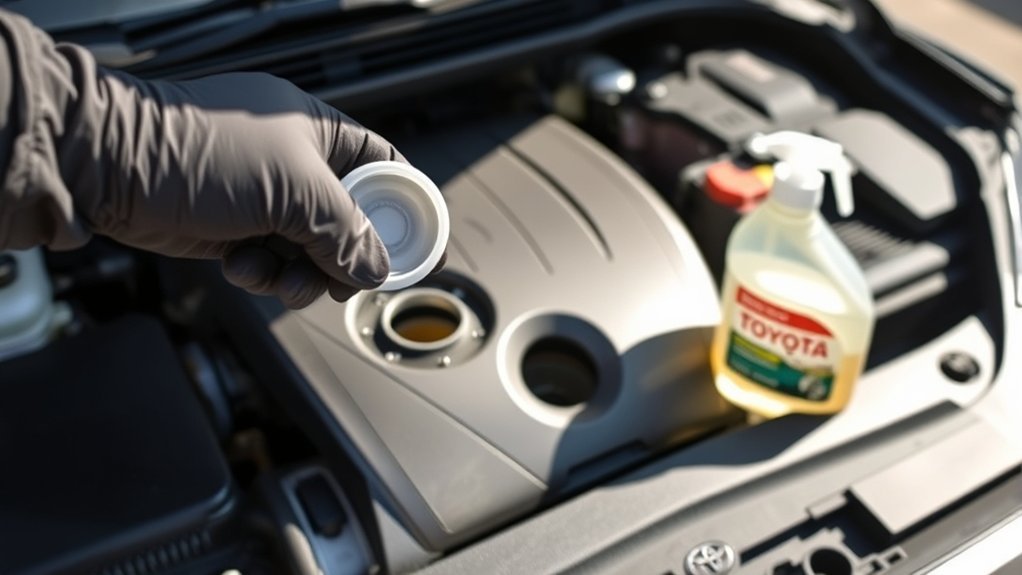
Before replacing fluid, determine why it became low, foamy, burnt, or contaminated. Adding fresh fluid without correcting a leak or air-entry problem may hide the symptom for only a short time.
Identify the Source of the Problem
- Inspect the reservoir cap and seal for damage or poor fit.
- Check hose ends, clamps, the pump body, and the steering gear for damp areas.
- Look for cracked, hardened, swollen, or rubbing hoses.
- Check whether an incorrect fluid or additive was previously installed.
- Note whether bubbles return after the engine starts or the steering moves.
- Listen for whining that changes with engine speed or steering input.
A hydraulic steering system does not normally consume fluid like fuel. A level that continues to fall indicates a leak or another fault that must be repaired.
Choose the Correct Service
| Condition | Reasonable Next Step | Important Note |
|---|---|---|
| Slightly low, no obvious contamination | Top off with the exact specified fluid | Recheck soon for leakage |
| Old-looking fluid with no major symptoms | Consider a conservative reservoir exchange | Color alone is not a diagnosis |
| Foam or persistent bubbles | Find the air-entry point and bleed correctly | Do not keep driving with severe noise or loss of assist |
| Burnt smell, grit, metal, or severe contamination | Professional diagnosis and complete service | Internal wear may be present |
| Fluid level repeatedly falls | Repair the leak | Repeated top-offs are not a repair |
Flushing Power Steering Fluid: A Safer Step-by-Step Approach
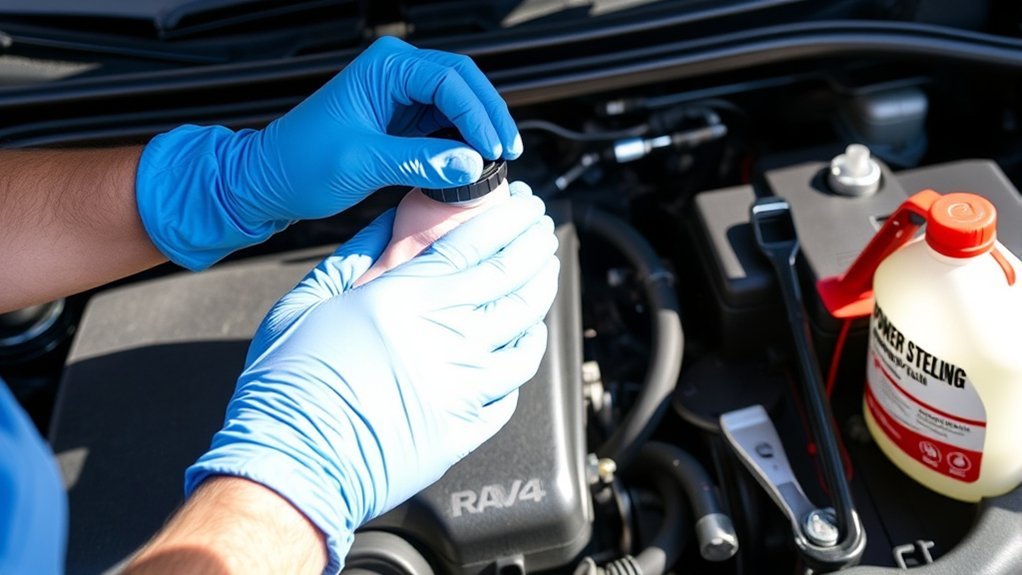
A reservoir exchange removes part of the old fluid without disconnecting hydraulic hoses. It is not the same as a complete system flush, but it is the safer general DIY option when the system has no major leak, noise, debris, or mechanical fault.
Note: A complete flush may require hose disconnection and a model-specific bleeding procedure. Use the correct Toyota repair information or have a qualified technician perform that service.
- Confirm the steering system and fluid: Verify that the RAV4 has hydraulic steering and identify the exact fluid specification.
- Cool and secure the vehicle: Park level, set the parking brake, switch off the engine, and allow hot components to cool.
- Protect the work area: Cover nearby painted surfaces and place a drain pan and absorbent material below the reservoir area.
- Clean the reservoir exterior: Remove dirt before opening the cap.
- Extract reservoir fluid: Use a clean fluid extractor or suction pump reserved for compatible automotive fluids. Do not allow the tool to damage an internal screen or filter.
- Refill to the correct COLD range: Add the specified fluid slowly. Do not overfill.
- Circulate the fluid carefully: Start the engine only after the reservoir is filled. Turn the steering wheel slowly in both directions without holding it against either stop.
- Switch off and recheck: Let bubbles settle, then confirm the level and inspect for leaks.
- Repeat only when appropriate: A second reservoir exchange can dilute more old fluid. Stop if foam, noise, leakage, metal, or abnormal steering appears.
- Dispose of used fluid correctly: Store it in a sealed, labeled container and take it to an approved automotive-fluid collection or recycling location. Never pour it onto the ground or into a drain.
Warning: Never run the engine with an empty hydraulic reservoir. Do not disconnect pressure or return hoses unless you have the correct service procedure, tools, and experience.
What Tools Do You Need to Check or Exchange Power Steering Fluid?
A basic level inspection requires only a few clean tools:
- Owner’s manual for the exact model year and market
- Clean lint-free rag or shop towel
- Flashlight
- Nitrile or fluid-resistant gloves
- Small clean funnel when a top-off is required
- Correctly specified power steering fluid or ATF
For a reservoir exchange, add a clean suction pump or fluid extractor, drain pan, absorbent pads, eye protection, and a sealable waste-fluid container. Keep tools used for brake fluid, coolant, or other chemicals separate to prevent cross-contamination.
Do not scrape the inside of a plastic reservoir with metal tools. Do not remove the reservoir or hoses unless the repair manual provides the procedure and you are prepared to replace damaged seals or clamps and bleed the system correctly.
Top 5 Mistakes to Avoid While Checking Power Steering Fluid
- Checking the wrong vehicle system: EPS-equipped RAV4s do not have hydraulic power steering fluid.
- Using the wrong temperature range: A HOT reading and a COLD reading are not interchangeable.
- Adding an unverified fluid: Similar-looking fluids can use incompatible chemistry and additives.
- Overfilling the reservoir: Add small amounts and recheck after each addition.
- Ignoring recurring loss or foam: A top-off cannot repair a leak, worn hose, air-entry point, or failing component.
Another common mistake is judging the system by fluid color alone. A meaningful inspection considers level, smell, debris, bubbles, leakage, noise, and steering feel together.
How Often Should You Inspect Power Steering Fluid?
Toyota does not provide one universal power-steering-fluid inspection or replacement interval for every RAV4. Follow the maintenance guide for the exact model year and inspect a hydraulic reservoir during routine under-hood checks.
Check the fluid sooner when:
- The steering becomes heavier, noisier, or less consistent
- You notice fluid beneath the front of the vehicle
- A hose, steering component, or drive belt has been serviced
- The reservoir was recently topped off
- You are preparing an older vehicle for a long trip
- The vehicle has been stored for an extended period
EPS-equipped RAV4s do not need hydraulic fluid inspections. Pay attention instead to the EPS warning indicator, charging-system condition, unusual steering effort, intermittent assist, noises, and diagnostic trouble codes.
Benefits of Regular Power Steering Maintenance
Regular inspection helps an older hydraulic RAV4 steer consistently and makes developing problems easier to catch.
- Earlier leak detection: A falling level can reveal a hose, pump, seal, or steering-gear leak before the reservoir runs dry.
- Lower contamination risk: Cleaning around the cap keeps outside dirt from entering the system.
- Better pump protection: Maintaining the correct level reduces the chance of the pump drawing air.
- More reliable diagnosis: Tracking the level, noise, and fluid appearance makes recurring problems easier to explain to a technician.
- Safer steering: Prompt attention to heavy, jerky, or inconsistent steering reduces the chance of continuing to drive an unsafe vehicle.
How to Keep Your Power Steering System Healthy
Use the following guide for a RAV4 with hydraulic power steering:
| Observation | Recommended Action |
|---|---|
| Correct level, no noise, no leaks | Continue routine inspection |
| Slightly low level | Top off with the exact fluid and monitor for leakage |
| Dark fluid without other symptoms | Compare with new fluid and consider a reservoir exchange |
| Foam or persistent bubbles | Check for low fluid, air entry, leakage, or improper bleeding |
| Burnt odor, grit, or metal | Stop routine DIY servicing and arrange professional diagnosis |
| Level falls after a top-off | Locate and repair the leak |
| EPS warning on a later RAV4 | Diagnose the electrical steering system; do not search for fluid |
Avoid holding the steering wheel hard against full lock. This places unnecessary load on a hydraulic pump and can also strain an EPS motor. Keep the steering system dry, clean, and free from rubbing hoses or damaged wiring.
Frequently Asked Questions
Does the 2020 Toyota RAV4 have power steering fluid?
No. The 2020 RAV4 uses electric power steering and does not have a traditional hydraulic pump or power steering fluid reservoir. Heavy steering or an EPS warning requires electrical and mechanical diagnosis rather than a fluid top-off.
Does the 2018 Toyota RAV4 have power steering fluid?
No. Toyota lists the 2018 RAV4 with vehicle-speed-sensitive rack-and-pinion electric power steering. It does not use a conventional hydraulic reservoir.
Do 2006 and newer RAV4 models have power steering fluid?
Toyota introduced electric power steering with the third-generation RAV4 for the 2006 model year. Later RAV4 generations also use EPS, although owners should still confirm the exact vehicle specification for their market and production date.
How can I tell if hydraulic power steering fluid is low?
Check the reservoir on level ground and compare the fluid with the matching COLD or HOT range. Low fluid may also cause pump whining, bubbles, inconsistent assist, or heavy steering. A level that falls again after refilling indicates leakage.
What power steering fluid does a 2002 RAV4 use?
Toyota’s U.S. owner’s manual specifies automatic transmission fluid meeting Dexron II or III. Verify the manual and reservoir instructions before servicing a vehicle from another year or market.
What happens if I use the wrong power steering fluid?
An incompatible fluid can alter lubrication, damage seals, create noise, or cause poor steering operation. Do not mix products based only on color. Confirm the required specification before adding fluid.
Can overfilling power steering fluid cause problems?
Yes. Fluid expands as it warms, and an overfilled reservoir may leak or aerate. Toyota specifically warns against overfilling the hydraulic reservoir. Add only small amounts and recheck the matching temperature range.
How often should RAV4 power steering fluid be changed?
There is no single replacement interval for every RAV4. Follow the maintenance information for the exact model and service the hydraulic system when fluid condition, leakage, repairs, contamination, or steering symptoms justify it. EPS-equipped RAV4s have no hydraulic fluid to replace.
Safety Disclaimer: This article provides general vehicle-maintenance information and does not replace the owner’s manual, Toyota repair information, or an inspection by a qualified technician. Stop driving when steering feels unsafe, assist suddenly disappears, or a major leak is present.
Conclusion
Checking Toyota RAV4 power steering fluid is straightforward only after you confirm that the vehicle has a hydraulic system. The 2002 U.S. RAV4 uses a reservoir and specifies Dexron II or III ATF, while Toyota introduced EPS for the third-generation RAV4 in 2006.
On a hydraulic model, park level, choose the correct HOT or COLD range, clean around the reservoir, add only the specified fluid, and avoid overfilling. Treat recurring level loss, foam, debris, a burnt smell, severe noise, or unsafe steering as a repair issue rather than a reason to keep topping off the reservoir.
Sources
- Toyota 2002 RAV4 Owner’s Manual and Scheduled Maintenance Guide — hydraulic reservoir, Dexron II or III specification, HOT and COLD ranges, leak inspection, and overfilling warning
- Toyota: The New RAV4, February 9, 2006 — introduction of electric power steering on the third-generation RAV4
- Toyota USA Newsroom: 2017 RAV4 — confirms EPS and the absence of hydraulic fluid to check or change
- Toyota USA Newsroom: 2018 RAV4 — vehicle-speed-sensitive rack-and-pinion electric power steering
- Toyota USA Newsroom: Fifth-Generation RAV4 — rack-mounted electric power steering used by the generation that includes the 2020 model
- U.S. Environmental Protection Agency: Motor Vehicle Waste Disposal Wells — environmental risks from improper disposal of power steering and other automotive fluids

1 thought on “How To Check Power Steering Fluid Toyota RAV4”