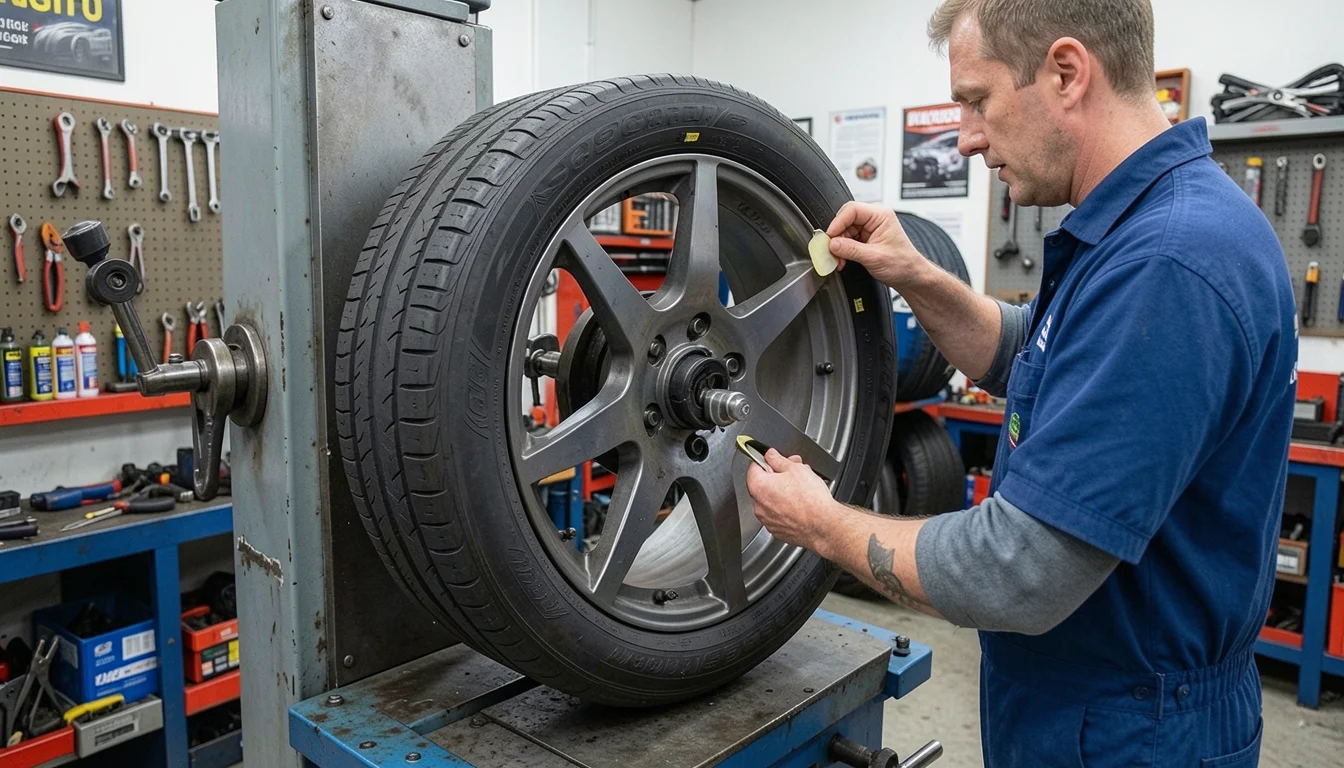
Most tire retailers recommend balancing your tires about every 5,000 to 6,000 miles, which usually means with every tire rotation, though recommendations range from roughly 3,000 to 7,500 miles depending on the source. Balancing is always done when new tires are mounted, and again after a tire repair or whenever you feel vibration. This guide explains the schedule, the signs that you are overdue and the situations that call for an extra balance.
How Often Should Tires Be Balanced?
| Source | Suggested interval |
|---|---|
| Firestone Complete Auto Care | Every 5,000 to 6,000 miles |
| America’s Tire | Every 6,000 miles |
| SimpleTire | Every 5,000 to 7,500 miles |
| Big O Tires | Every 4,000 to 6,000 miles, and after any replacement or patch |
| Continental Tires | Every 3,100 to 6,200 miles, or every 1 to 2 years |
There is no single legal or universal standard, and some drivers go much longer without trouble. A fleet-maintenance source notes that tires should be balanced at installation, and after that there is no fixed mileage, with rebalancing needed when a weight is missing or symptoms appear. A practical approach is to have the balance checked every time you rotate the tires, as described in how often to rotate tires.
When to Balance Tires Right Away
- New tires. Balancing is part of mounting. See how much it costs to mount and balance tires.
- After a tire repair. Patches and plugs change the weight slightly, so retailers recommend rebalancing.
- When you feel vibration. A shake in the steering wheel, seat or floor, usually starting above about 40 to 50 mph, is the classic sign.
- After hitting a pothole or curb hard enough to bend a wheel or knock off a weight.
- After a wheel weight falls off. You may see a clean spot on the rim where it was.
- When a tire has been in storage and developed a flat spot, or after switching seasonal sets.
Signs Your Tires Are Out of Balance
- Vibration in the steering wheel, seat or floorboard at certain speeds. It is often worst around 55 mph and can fade at higher speeds.
- Uneven or cupped tire wear.
- Reduced fuel efficiency and less responsive handling.
- Seat vibration, which usually points to the rear tires, and steering wheel vibration, which usually points to the front tires.
If your car pulls to one side rather than shakes, you probably need an alignment instead. Read tire balancing vs. alignment to tell the difference.
Does Rotating Tires Require Balancing?
Rotation does not itself change a tire’s balance, but tires can drift out of balance over the miles between rotations as the tread wears. Many shops check balance with each rotation, and some include it for free. Toyota advises balancing after a tire rotation, after a flat repair or during routine scheduled maintenance. Unless you notice a problem, a check every other rotation can also be reasonable.
What Does Balancing Cost?
A standalone balance typically costs about $10 to $20 per tire, and road-force balancing can cost a bit more. It is usually included when you buy tires from the retailer. For price details, see our guide to mount and balance costs.
Can Unbalanced Tires Cause Damage?
Yes. Left alone, an imbalance can cause uneven tire wear, put extra stress on suspension and steering parts and make the car less comfortable. The cost of a balance is small compared with the cost of replacing worn tires early. Check your tread with the quarter test in 4/32 tire tread if you suspect uneven wear.
Quick Vibration Checklist Before You Pay for Balancing
Not every vibration comes from a tire that needs balancing. Run through this checklist first:
- Is the vibration in the steering wheel (usually the front tires) or in the seat (usually the rear)?
- Does it appear at a certain speed range, such as 50 to 70 mph?
- Are the tires worn unevenly, bulging or damaged? See bubble in tire sidewall.
- Are the lug nuts tight and the pressures correct?
- Did the vibration start after hitting a pothole? That can point to alignment or a bent wheel instead. Read tire balancing vs. alignment.
If the checklist does not explain the problem, a shop can balance the wheels on a machine and look for other causes.
How Often to Balance Tires FAQs
Do I need to balance tires every time I rotate them?
Not strictly, but many shops recommend it and some include it free. It is worth checking if you feel vibration.
How long do wheel weights last?
They can last the life of the tire, but they can fall off after impacts or when the adhesive fails.
Can I balance tires myself?
Not accurately. You need a balancing machine and a method to fit the weights.
Do new tires need to be balanced?
Yes. It is a standard part of mounting new tires.
Do I need to balance tires after an alignment?
Not necessarily. Alignment does not affect balance. Do it if you have symptoms or have not had it done recently.
Bottom Line
Balance your tires whenever they are mounted or repaired, and check them about every 5,000 to 6,000 miles or when you feel vibration. It is a quick service that protects your tires and your ride.