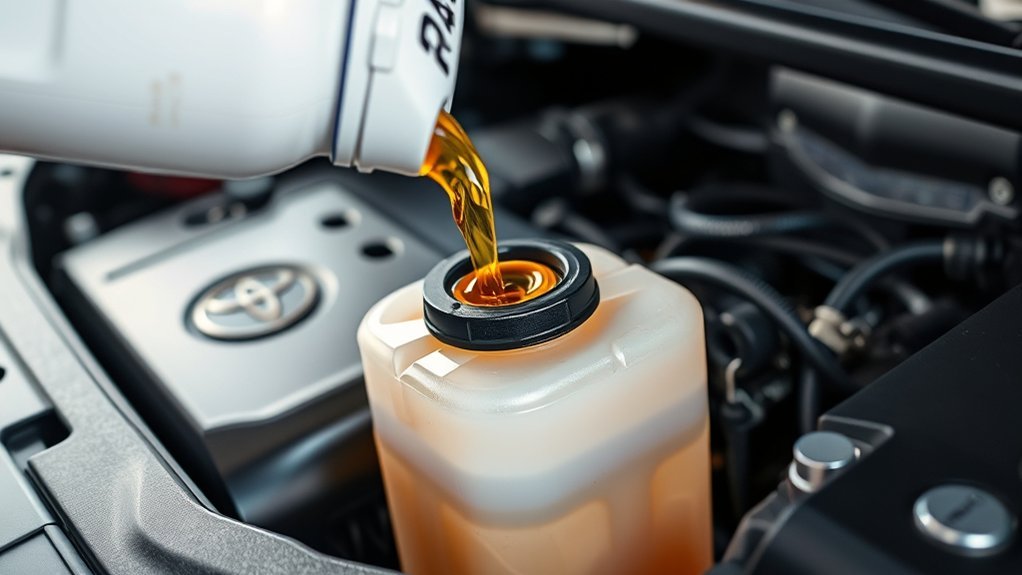
Low brake fluid can turn a normal stop into a longer, less controlled one. Before you add any fluid to your Toyota RAV4, check the reservoir level, confirm the correct fluid type on the cap, and inspect for signs of leaks or worn brake pads. This guide shows you where to find the reservoir, how to top it off safely, and when to get a mechanic involved.
Quick Answer
To add brake fluid to your Toyota RAV4, open the hood and find the translucent reservoir on the driver’s side near the back of the engine bay. Clean the cap, open it carefully, and add the brake fluid type listed on the cap until the level sits just below the MAX line. If the fluid keeps dropping, don’t keep topping it off. Have the brake system checked for leaks or worn parts.
Key Takeaways
- Use only the brake fluid type listed on your RAV4 reservoir cap or owner’s manual.
- Keep the brake fluid level between the MIN and MAX marks on the reservoir.
- Clean the reservoir cap before opening it so dirt can’t enter the brake system.
- Never use DOT 5 fluid unless Toyota specifically calls for it on your model.
- Get a mechanic to inspect the system if the fluid level drops again after topping off.
Why Checking Your Brake Fluid Level Matters
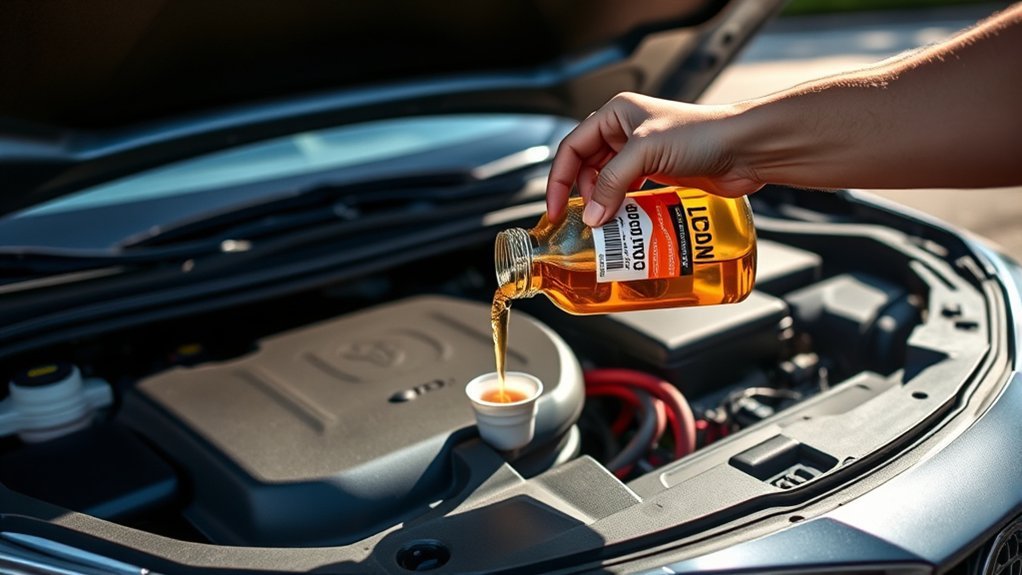
Your Toyota RAV4 needs the right brake fluid level to transfer pedal force to the brakes. If the level drops too low, the pedal may feel soft and the vehicle may take longer to stop.
Low brake fluid can point to worn brake pads, a leak, or another brake system problem. Keep the fluid between the MIN and MAX marks, and don’t ignore a level that keeps falling.
Brake fluid also absorbs moisture over time. Moisture can lower braking performance and may damage brake parts, so you should follow Toyota’s service schedule for inspection and replacement.
How to Locate the Brake Fluid Reservoir in Your RAV4
Open the hood and stand at the front of your Toyota RAV4. Look toward the driver’s side near the back of the engine bay for a translucent plastic reservoir.
The reservoir usually has MIN and MAX marks on the side. The cap should list the brake fluid type your vehicle requires, such as DOT 3 or DOT 4.
Identify Driver’s Side Location
Find the brake fluid reservoir on the driver’s side of the engine bay. It sits near the firewall, behind other engine components in many RAV4 models.
Use the translucent plastic body to check the fluid level without opening the cap. This reduces the chance of dirt or moisture entering the brake system.
Recognize Reservoir Markings
Look for the MAX and MIN marks molded into the reservoir. The fluid should sit between these two marks when the vehicle rests on level ground.
If the fluid sits below the MIN line, inspect the area around the reservoir, brake lines, calipers, and wheels for leaks. Low fluid can also mean the brake pads have worn down.
Before You Begin
Gather everything you need before you open the brake fluid reservoir. Brake fluid can damage paint, and dirt in the reservoir can harm brake components.
- Fresh, unopened DOT 3 or DOT 4 brake fluid, based on your RAV4 cap or owner’s manual
- Clean lint-free cloth or shop towel
- Nitrile gloves and safety glasses
- Flashlight for checking the reservoir and nearby brake parts
- Water and a clean cloth for wiping any spills from painted surfaces right away
Estimated total time: About 10 to 15 minutes if you only need to check and top off the fluid.
Warning: Brake fluid can damage paint and irritate skin, so wipe spills right away and wash your hands after handling it.
Step-by-Step Guide to Adding Brake Fluid
Use these steps only if the brake fluid level sits below the proper range. If your brake pedal feels soft, the brake warning light stays on, or you see a leak, have the vehicle inspected before driving.
- Park on level ground. Turn off the engine, set the parking brake, and let the engine bay cool.
- Open the hood. Locate the brake fluid reservoir on the driver’s side near the back of the engine bay.
- Check the level. Read the fluid level through the side of the reservoir and compare it with the MIN and MAX marks.
- Clean the cap. Wipe the reservoir cap and the area around it with a clean cloth before opening it.
- Confirm the fluid type. Read the cap and owner’s manual, then use only the specified DOT 3 or DOT 4 brake fluid.
- Add fluid slowly. Pour a small amount at a time until the level sits just below the MAX line.
- Secure the cap. Close the cap firmly so moisture and dirt stay out of the brake system.
- Check for problems. Look for leaks, warning lights, or a brake pedal that still feels soft before you drive.
Do not overfill the reservoir. Too much fluid can spill when brake parts heat up or when a technician compresses the calipers during service.
Which Brake Fluid Should You Pick?
Your Toyota RAV4 reservoir cap and owner’s manual give the final answer on brake fluid type. Many RAV4 models call for DOT 3 or DOT 4 brake fluid, but you should verify your exact model before adding any fluid.
Use fluid from a sealed container. Once you open a bottle, brake fluid can absorb moisture from the air, which reduces its performance over time.
DOT 3 Vs DOT 4
DOT 3 and DOT 4 brake fluids differ mainly in boiling point and moisture handling. DOT 4 usually offers a higher dry boiling point than DOT 3, which can help under higher heat.
| Feature | DOT 3 | DOT 4 |
|---|---|---|
| Typical dry boiling point | About 401°F (205°C) | About 446°F (230°C) |
| Common use | Many everyday brake systems | Many ABS and higher-heat systems |
| Best choice | Use only if your cap or manual allows it | Use only if your cap or manual allows it |
Do not choose a fluid by price alone. Match the specification on the cap because the wrong fluid can reduce braking performance or damage system parts.
Avoid DOT 5 Fluid
Do not add DOT 5 fluid to your Toyota RAV4 unless Toyota specifically states that your model uses it. DOT 5 uses a silicone base and does not mix with conventional glycol-based DOT 3 or DOT 4 fluids.
Mixing incompatible brake fluids can harm braking performance and may damage components. When in doubt, stop and check the owner’s manual before you open the bottle.
Symptoms of Low Brake Fluid and Their Implications
Low brake fluid often gives you warning signs before the problem gets worse. Treat these signs as a safety issue, not as routine maintenance.
- Soft or spongy brake pedal: Air or low fluid pressure may affect the brake lines.
- Brake warning light: The system may detect low fluid or another brake fault.
- Longer stopping distance: The brakes may not build pressure as well as they should.
- Visible fluid near wheels or brake lines: A leak may need immediate repair.
- Fluid level that keeps dropping: Worn pads or leaks may require service.
If you notice any of these symptoms, avoid long trips or heavy traffic until you identify the cause. A mechanic can pressure-test the system and inspect the pads, calipers, lines, and master cylinder.
How to Handle and Store Brake Fluid Safely
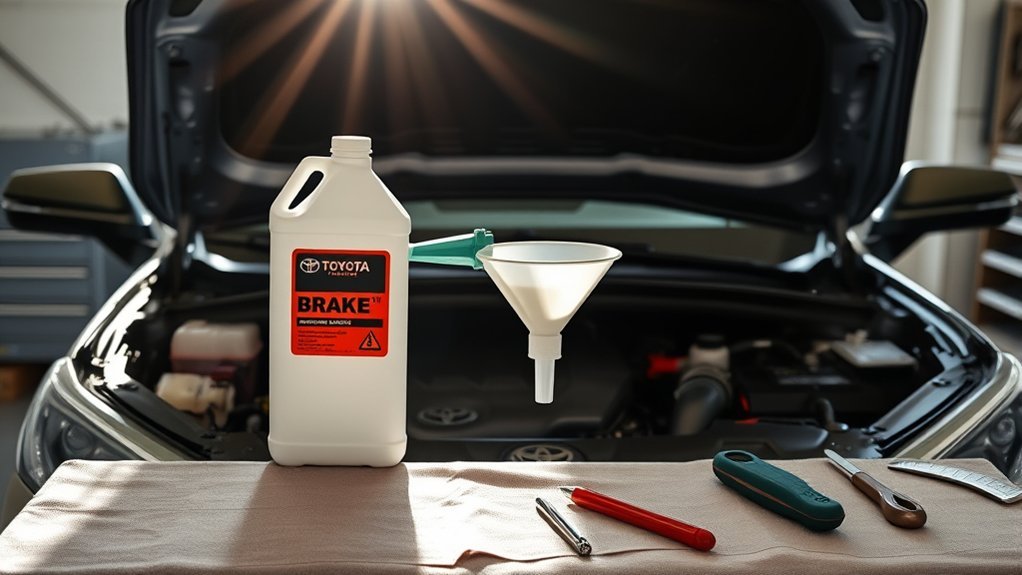
Brake fluid needs clean, dry storage because it absorbs moisture from the air. Store it in its original container with the cap tightly sealed.
Keep brake fluid in a cool, dry place away from direct sun and children. Label each container clearly so you don’t mix DOT 3, DOT 4, or other fluids.
| Best Practices | Why It Matters |
|---|---|
| Use an unopened container | Helps prevent moisture contamination |
| Store in a cool, dry place | Helps protect fluid quality |
| Keep the cap tightly sealed | Limits air and moisture exposure |
| Label the container type | Reduces the risk of using the wrong fluid |
Dispose of old or contaminated brake fluid through a local hazardous waste program or auto service center. Do not pour it onto the ground, into a drain, or into household trash.
What Should You Do If Brake Fluid Levels Are Low?
If the fluid sits below the MIN line, first look for signs of leaks around the reservoir, brake lines, calipers, and wheels. A wet, oily spot near brake parts needs prompt attention.
Next, consider brake pad wear. As pads wear down, caliper pistons move farther out, and the reservoir level may drop.
If you see no obvious leak and the brakes feel normal, add the correct fluid to bring the level just below the MAX line. If the level drops again, schedule a brake inspection before you keep driving as usual.
Common Mistakes to Avoid When Adding Brake Fluid
A small mistake with brake fluid can create a bigger brake problem. Avoid these errors when you check or top off your RAV4 reservoir.
- Opening the cap before cleaning it: Dirt can enter the reservoir and contaminate the system.
- Using the wrong fluid: Brake systems need the exact fluid type listed by Toyota.
- Overfilling the reservoir: Extra fluid can spill and damage nearby painted surfaces.
- Ignoring repeated low levels: A falling level may signal leaks or worn brake parts.
- Driving with a soft pedal: A soft pedal can point to air, leaks, or low hydraulic pressure.
Tips for Regular Brake System Maintenance
Check your brake fluid level during routine maintenance or before long drives. Keep the fluid between the MAX and MIN marks, and note any sudden drop.
Inspect your brake pads, rotors, and lines on a regular schedule. Worn pads, corroded lines, or leaking calipers can affect both fluid level and stopping power.
Follow Toyota’s service schedule for brake fluid inspection and replacement. Ask a professional mechanic to inspect the system if the brake warning light comes on or the pedal changes feel.
Frequently Asked Questions
Where Is the Brake Fluid on a Toyota RAV4?
The brake fluid reservoir sits on the driver’s side of the engine bay, often near the back by the firewall. Look for a translucent plastic container with MIN and MAX marks.
Can I Just Add Brake Fluid to My Reservoir?
You can add brake fluid if the level sits below the proper range and you use the correct type. Don’t treat topping off as a permanent fix if the level keeps dropping.
Can I Fill up My Brake Fluid Myself?
Yes, you can top off the brake fluid yourself if you follow safe steps and use the right fluid. Stop and get help if the brake pedal feels soft, the warning light stays on, or you see a leak.
Where Is the Brake Fluid Located on a Toyota RAV4?
The brake fluid reservoir sits under the hood on the driver’s side. It usually has a labeled cap and a translucent body so you can check the level without opening it.
How Often Should You Check RAV4 Brake Fluid?
Check the brake fluid during routine maintenance and before long trips. Also check it any time the brake pedal feels different or the brake warning light appears.
Safety Disclaimer: This article gives general information and does not replace professional brake service. If your brakes feel soft, make noise, leak fluid, or trigger a warning light, consult a qualified mechanic before driving.
Conclusion
Keeping your brake fluid at the right level helps your Toyota RAV4 stop safely and respond the way you expect. Check the reservoir, use the fluid type listed on the cap, and keep the system clean while you work.
If the fluid level drops again after you top it off, schedule a brake inspection instead of adding more fluid again and again. A careful check now can help you avoid a more serious brake problem later.