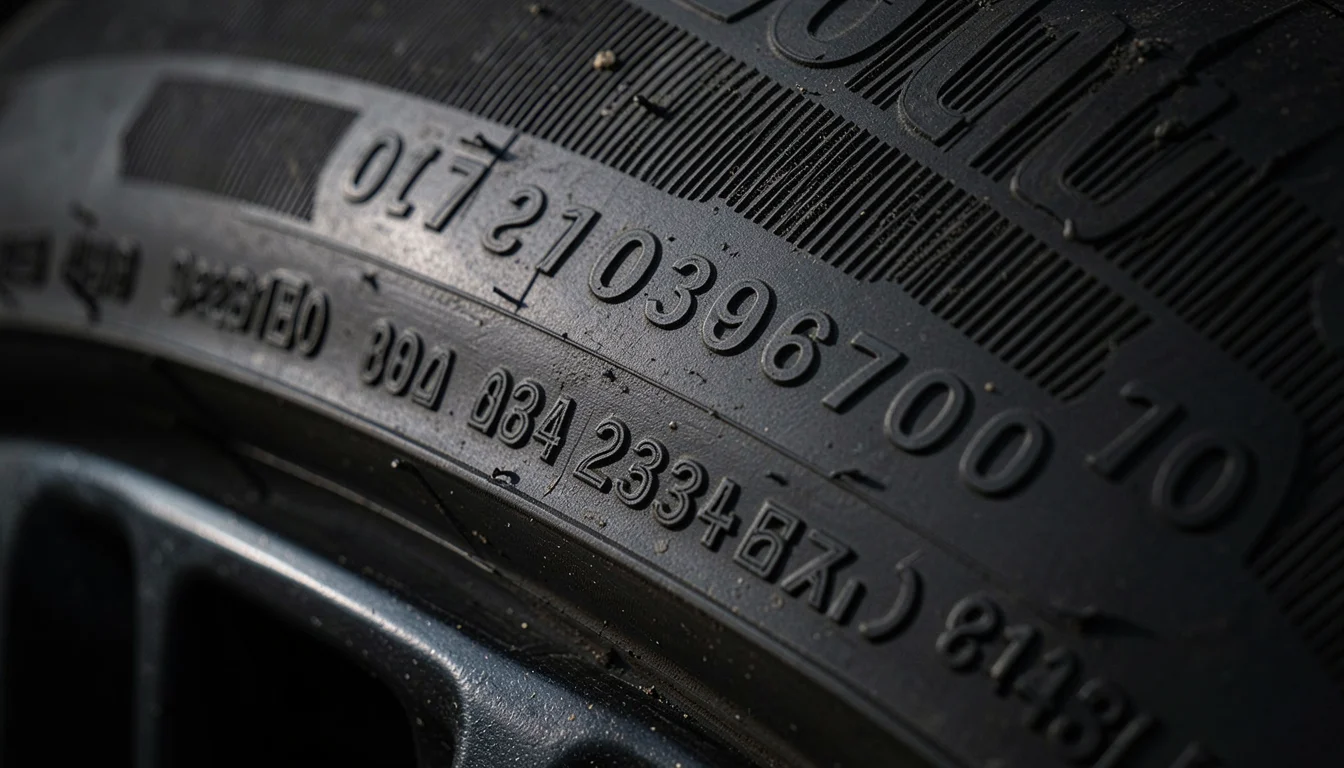
If you have ever stared at the sidewall of a tire and wondered what do tire numbers mean, you are not alone. That string of letters and numbers, something like P225/60R17 98H, tells you the tire’s width, shape, wheel size, load capacity and top speed rating. Learn to read it and you can buy the right replacement tire, check that a used set fits your car, and spot a tire that is too old to trust.
How to Read a Tire Size, Step by Step
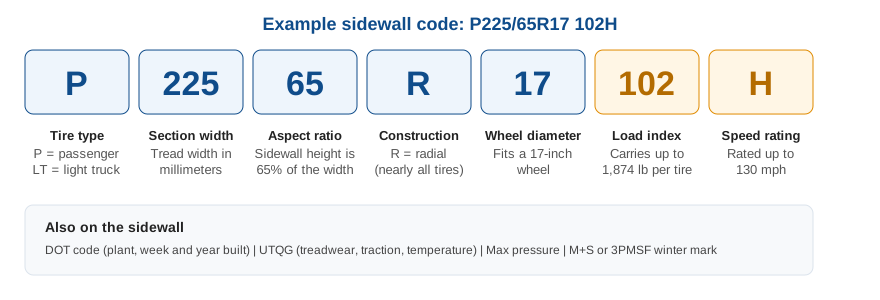
Take the example P225/60R17 98H and read it from left to right.
P: tire type
The letter at the start tells you the tire’s intended use. P stands for passenger vehicle, which covers most cars, crossovers and minivans. LT means light truck, designed for heavier loads and towing. ST means special trailer, and a T means temporary spare. If there is no letter, you probably have a European metric tire, which is sized to a slightly different load standard.
225: section width
This is the width of the tire from sidewall to sidewall, measured in millimeters. A larger number means a wider tire, which usually adds grip but can also add road noise and rolling resistance.
60: aspect ratio
The aspect ratio is the height of the sidewall as a percentage of the tire’s width. Here the sidewall is 60% of 225 mm, or about 135 mm. A low number such as 40 means a short sidewall and sharper handling, and a high number such as 70 means a taller, more cushioned sidewall.
R: construction
R stands for radial, meaning the internal plies run across the tire at right angles to the direction of travel. Almost every modern passenger tire is a radial.
17: wheel diameter
This is the diameter of the wheel the tire fits, in inches. A 17-inch tire needs a 17-inch wheel, so the number must match.
98: load index
The load index is a code for the maximum weight one tire can carry when properly inflated. A load index of 98 corresponds to about 1,653 pounds per tire. Never choose a replacement with a load index below what your vehicle needs.
H: speed rating
The final letter is the maximum speed the tire is rated for under test conditions. H is rated for up to 130 mph. It does not mean you should drive that fast, but it is a good indicator of the tire’s heat resistance and handling quality.
Speed Rating Chart
| Speed rating | Maximum speed (mph) | Common on |
|---|---|---|
| S | 112 | Family sedans, minivans |
| T | 118 | Family sedans, crossovers |
| H | 130 | Sport sedans, crossovers |
| V | 149 | Sport sedans, coupes |
| W | 168 | Performance cars |
| Y | 186 | High-performance cars |
The Other Numbers on the Sidewall
DOT code and tire age
The letters DOT start the Department of Transportation code, and the last four digits tell you when the tire was made. The first two digits are the week and the last two are the year, so 2523 means the 25th week of 2023. This matters because rubber ages even when a tire is not used. Many tire makers recommend having tires inspected once they are about six years old and replaced at around ten years regardless of tread. If you see cracking, read our guide to tire dry rot.
UTQG ratings
The Uniform Tire Quality Grading system gives three ratings:
- Treadwear: a number such as 400 or 600 comparing expected wear to a government test tire. Higher is longer, but only to compare tires from the same maker.
- Traction: AA, A, B or C for wet braking, with AA the best.
- Temperature: A, B or C for heat resistance, with A the best.
Maximum pressure and load
The sidewall lists the maximum inflation pressure and maximum load for the tire. That is a limit, not the pressure you should run. Your car’s correct pressure is on the sticker in the driver’s door jamb. See our guides to tire PSI and how to set it and to reading the tire pressure sticker for details.
Season and winter ratings
- M+S means mud and snow. It describes tread design, not winter performance in testing.
- The three-peak mountain snowflake (3PMSF) symbol means the tire passed a standardized snow traction test and is a better sign of true winter capability.
Load range and ply rating on truck tires
LT tires use a load range letter such as C, D or E. Load range E is the heavy-duty option often found on three-quarter-ton trucks, with a higher maximum pressure than a standard passenger tire.
Where to Find the Right Tire Size for Your Vehicle
Do not rely on the tires currently on your car, because a previous owner may have changed sizes. Look for the original equipment size in these places:
- The tire and loading information placard on the driver’s door jamb.
- The owner’s manual.
- The glove box door or fuel door on some vehicles.
Common Mistakes When Reading Tire Numbers
- Using the sidewall pressure as your target. That number is the maximum, not the recommended pressure.
- Ignoring the age code. A tire with deep tread can still be unsafe if it is very old.
- Mixing speed ratings. If tires differ, the lowest-rated tire sets the limit for the car.
- Confusing the 17 with the tire width. The 17 is the wheel diameter in inches, not millimeters.
What Do Tire Numbers Mean: FAQs
What do the numbers on a tire mean?
They give the width in millimeters, the aspect ratio, the wheel diameter in inches, the load index and the speed rating. Together these define the size and capacity of the tire.
What does 225/60R17 mean?
It describes a radial tire 225 millimeters wide, with a sidewall height equal to 60% of that width, made to fit a 17-inch wheel.
How do I find out how old my tires are?
Look for the DOT code and read the last four digits. The first two are the week of manufacture and the last two are the year. Our guide to checking tire tread with a penny covers the wear side of tire health.
Is a higher load index better?
A higher index means a higher load capacity. You must meet or exceed your vehicle’s requirement, but a much higher index can stiffen the ride.
Can I put a different size tire on my car?
Small changes can be acceptable, but the overall diameter should stay within a few percent of the original so the speedometer and ABS stay accurate. Ask a tire professional before changing sizes.
Bottom Line
A tire sidewall is a compact data sheet. Learn the main size code, check the load and speed ratings, and read the DOT date before you buy or install a tire. Once you know what the numbers mean, shopping for the right tire is much faster and more confident.