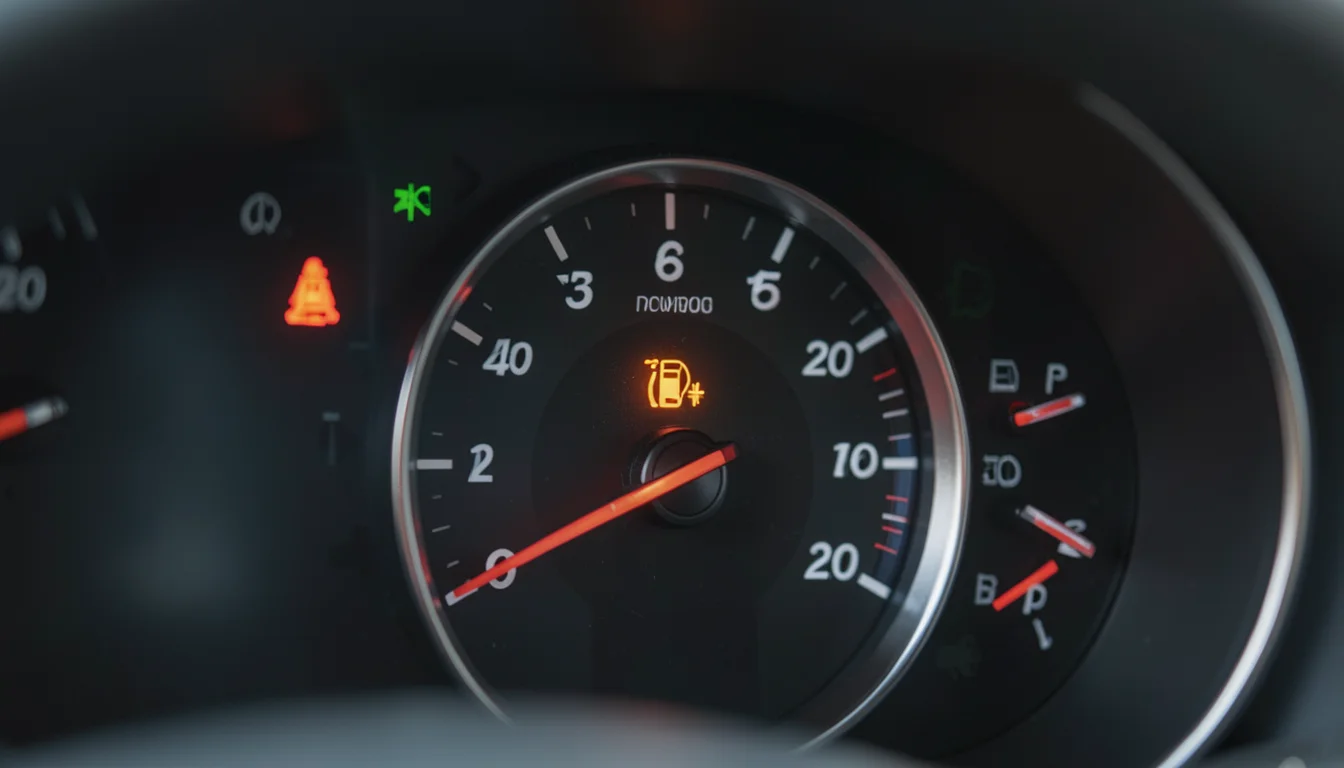
A tire pressure light flashing on your dashboard is not the same warning as a light that stays on. If the light blinks for about a minute or so when you start the car and then glows steadily, the tire pressure monitoring system (TPMS) is telling you it has a fault, not that a tire is low. This guide explains what a flashing TPMS light means, the most common causes, and the order in which to check them so you only pay for the repair you actually need.
Flashing vs. Solid TPMS Light: What Each One Means
Your car uses the same dashboard symbol, a horseshoe-shaped tire cross-section with an exclamation mark, for two different messages. The behavior of the light tells you which message you are getting.
| What the light does | What it usually means | What to do |
|---|---|---|
| Stays solid after you start the car | One or more tires are significantly underinflated, often about 25% below the recommended pressure | Check and inflate all four tires to the pressure on the door jamb sticker |
| Flashes for 60 to 90 seconds, then stays solid | The TPMS has a fault, for example a dead sensor, a missing sensor or a communication error | Verify pressures, then have the system scanned and the sensors checked |
| Comes on in the cold and goes off after driving | Air contracted in low temperatures and pushed pressure below the trigger point | Top up to the recommended pressure and recheck as weather changes |
| Flashes after a tire rotation, new tires or new wheels | Sensors may not be registered to their new positions or are missing from the new wheels | Ask the shop to run a TPMS relearn or reset procedure |
The exact symbol and flash pattern vary by manufacturer, so your owner’s manual has the final word for your vehicle. The 60 to 90 second rule is widely used across brands, and it is a reliable first filter.
Why the Tire Pressure Light Is Flashing
A flashing light means the car’s computer cannot read one or more sensors correctly. These are the causes mechanics see most often, starting with the most common.
1. A dead sensor battery
Direct TPMS uses a small battery-powered sensor inside each wheel. The battery is sealed in, so you cannot replace it on its own, and when it runs out the whole sensor has to be replaced. Sensors typically last around five to ten years, depending on the vehicle and how much you drive. If one sensor is at the end of its life, the others are often close behind.
2. A missing or damaged sensor
If you recently bought used wheels, switched to winter wheels, or had a tire changed, a sensor may have been left off, broken during mounting or never installed. Winter wheel sets without sensors are a very common reason for a light that flashes all season.
3. Sensors that need to be relearned
After a tire rotation or a wheel swap, many vehicles need to be told which sensor is in which position. Some cars do this automatically after a few minutes of driving, while others need a scan tool or a specific reset sequence. If the light started flashing right after tire work, this is a likely cause.
4. A wiring or receiver fault
Less often, the problem is in the car rather than the wheels: a failed TPMS receiver or control module, or a damaged wire. This is the last thing to suspect, and a scan tool can confirm it.
5. Indirect TPMS problems
Some vehicles use an indirect system that estimates pressure from wheel speed signals sent by the ABS sensors instead of using pressure sensors in each wheel. If the ABS light comes on along with the TPMS light, the fault may be in the ABS wheel speed sensors. You can read more about both designs in our guide to how tire pressure sensors work.
How to Fix a Flashing Tire Pressure Light
Work through these steps in order. Most drivers can complete the first three at home.
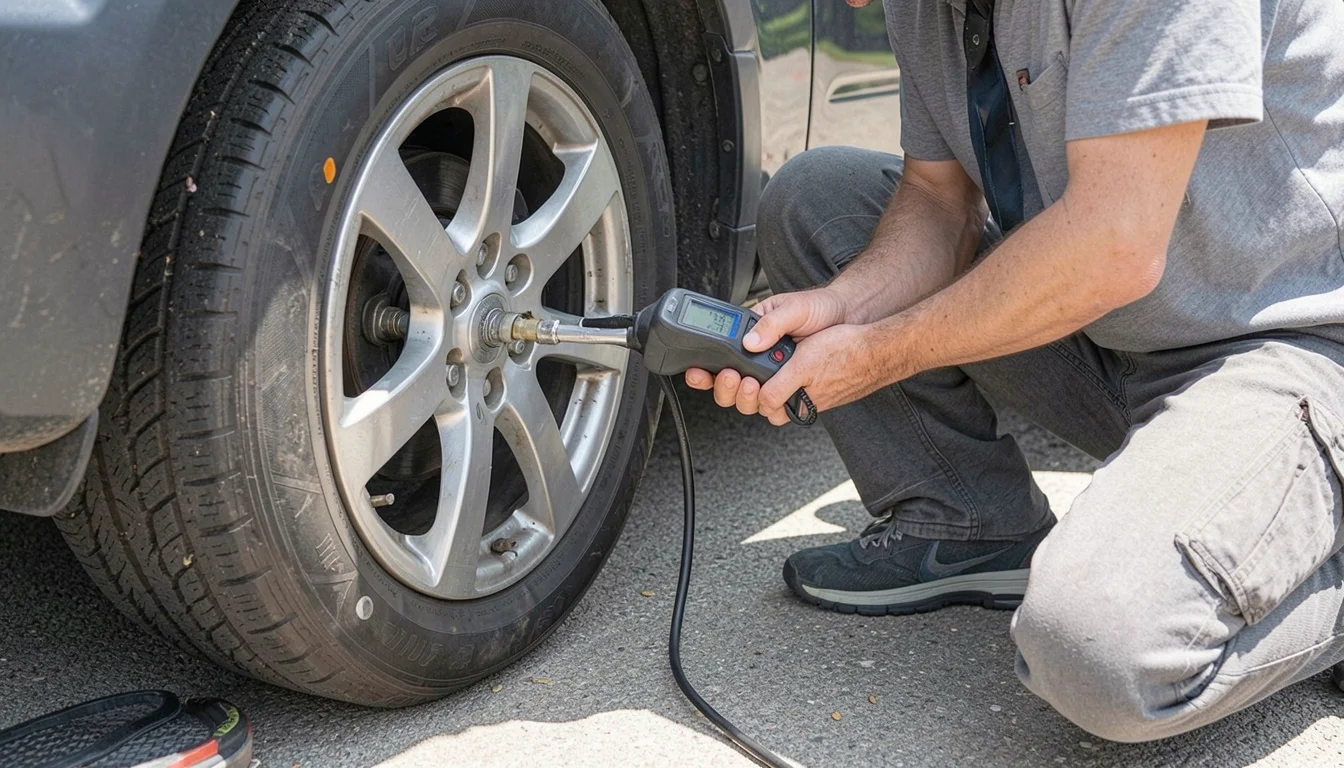
- Check all four tires with a gauge. Do not trust your eyes. Use a quality gauge and compare each tire to the figure on the driver’s door jamb sticker, not the number printed on the tire sidewall. If you need help finding the right number, see how to read your tire pressure sticker.
- Inflate every tire to the recommended pressure. Include the spare if your vehicle has a pressure sensor on it, because a low or faulty spare sensor can also trigger the warning.
- Drive for 10 to 20 minutes above 50 mph. Many systems need a short drive at highway speed to recheck sensors and clear the light.
- Try the reset procedure in your owner’s manual. Some vehicles have a TPMS reset button or a menu setting that re-registers the pressures.
- Get the sensors scanned. A shop can read each sensor’s ID, battery status and signal. This quickly shows whether one sensor is dead, missing or not responding.
- Replace or reprogram the faulty sensor. A new sensor must be programmed to your vehicle. Replacement typically costs roughly $50 to $100 per sensor for the part, plus labor to mount, balance and program it.
Can You Keep Driving With the TPMS Light Flashing?
You can usually drive carefully for a short time, but do not ignore it. When the light is flashing because of a fault, the system is not watching your tire pressure, so a slow leak or a failing tire would go unnoticed. That matters because underinflated tires overheat, wear unevenly, hurt fuel economy and raise the risk of a blowout. Our tire pressure guide explains how to keep a manual check on the numbers until the system is repaired.
Do Cold Weather and Temperature Swings Matter?
Yes. Tire pressure falls as the temperature falls, roughly 1 psi for each 10°F drop. A cold morning can push an otherwise healthy tire below the warning threshold, and the light may disappear once the tires warm up from driving. If the light only appears on cold starts, add air to the correct pressure when the tires are cold and check again after the next big temperature change. A portable inflator makes this a two-minute job, and our guide to TPMS and tire inflators covers how to deal with low pressure warnings.
Tire Pressure Light Flashing FAQs
Why is my tire pressure light flashing but my tires are fine?
A flashing light points to a TPMS fault rather than low pressure. The most likely causes are a dead sensor battery, a missing or damaged sensor, or a sensor that needs to be relearned.
How long does it take for the TPMS light to go off after filling the tires?
On most vehicles the light clears after you correct the pressure and drive for around 10 minutes at speeds above 50 mph. Some cars need a manual reset.
Will the light go off by itself?
If low pressure triggered it, yes, once the pressure is corrected. If a sensor is dead or missing, it will keep flashing at startup until the sensor is repaired or replaced.
Is the TPMS light flashing a failed inspection item?
In some states a lit or malfunctioning TPMS light can be a reason for a failed safety inspection. Rules vary, so check with your local inspection station.
Can a spare tire cause a flashing TPMS light?
It can. Some vehicles have a sensor in the spare, and a low or failed spare sensor can set off the warning. If nothing else explains the light, check the spare’s pressure.
Bottom Line
A steady tire pressure light means add air. A tire pressure light flashing at startup means the monitoring system needs attention. Check all four tires, drive for a few minutes at highway speed, and if the light still flashes, have the sensors scanned. Fixing it promptly keeps your tires, your fuel economy and your safety margin where they should be.