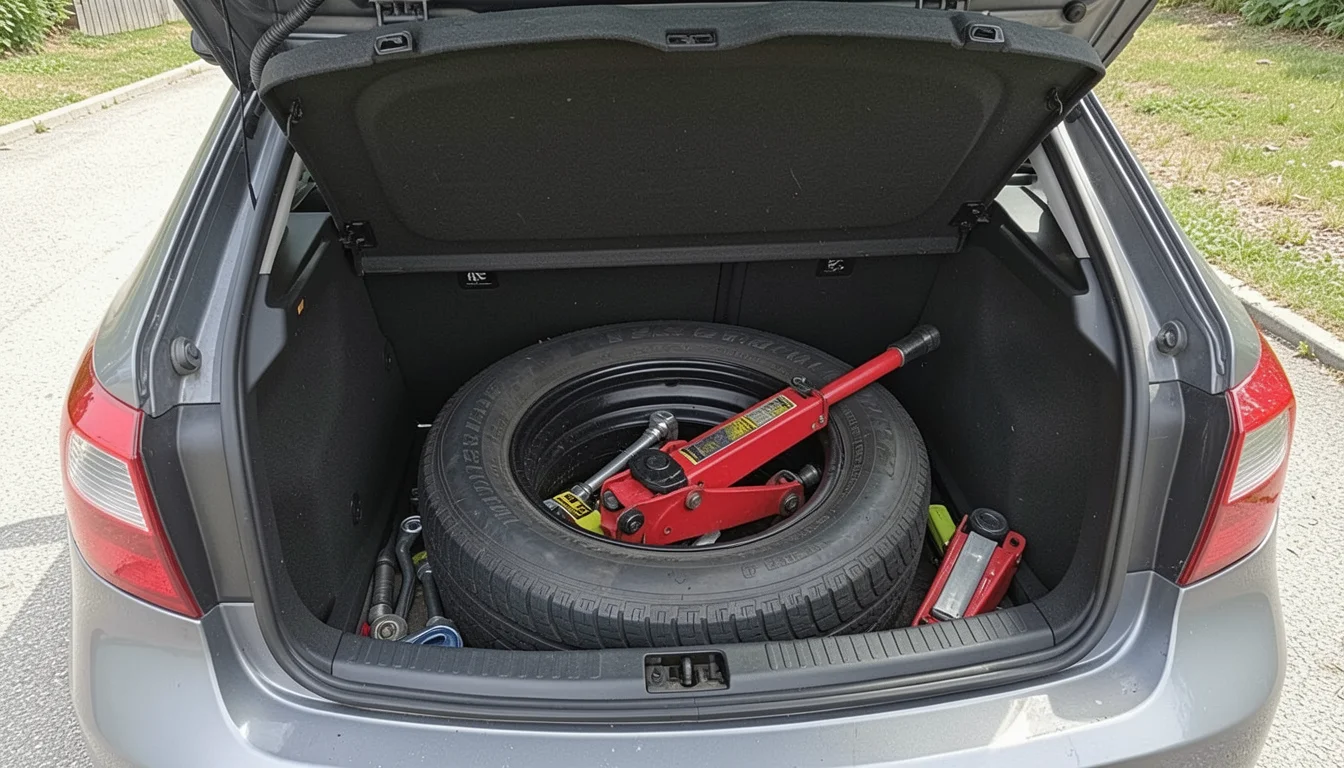
How long you can drive on a spare tire depends on which kind of spare is in your trunk. A temporary compact spare, often called a donut, is built for roughly 50 to 70 miles at no more than 50 mph. A full-size matching spare can be used like any other tire. This guide explains the limits for each type, why the rules exist and what to do after the tire change so you do not damage the car or end up stranded a second time.
How Far Can You Drive on a Donut Spare?
Most manufacturers and tire experts give the same rule for a compact temporary spare: stay under 50 mph and plan to drive only 50 to 70 miles. The exact distance and speed are usually printed on the spare’s sidewall or on a warning label in the trunk, and that label is the number to trust for your vehicle.
A donut is not a miniature version of your regular tire. It is lighter, has a shallow tread and a softer rubber compound, and it is designed purely to get you to a tire shop. The longer you drive on it, and the faster you go, the more heat builds up and the faster it wears.
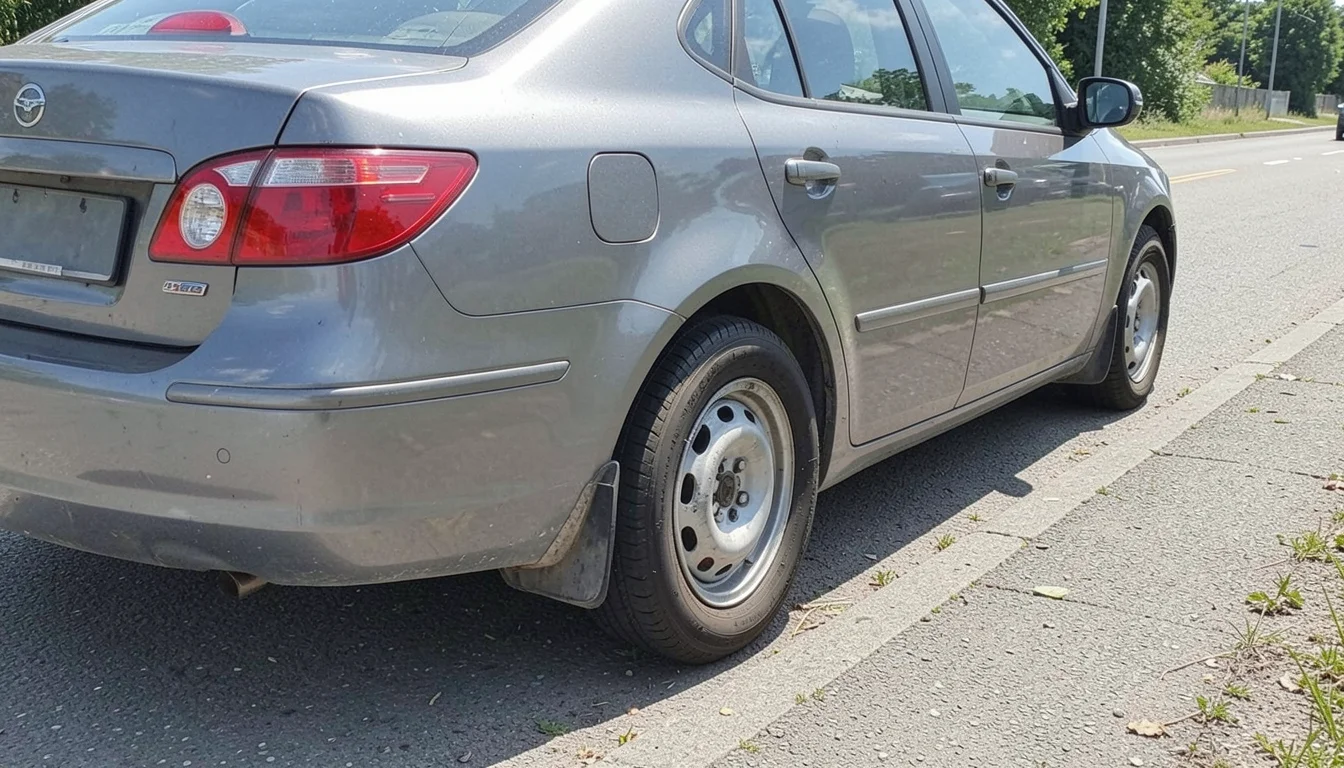
Types of Spare Tires and Their Limits
| Spare type | Typical limit | Key points |
|---|---|---|
| Compact temporary spare (donut) | About 50 to 70 miles, max 50 mph | Narrow, shallow tread, higher inflation pressure. For emergencies only. |
| Full-size matching spare | No special limit | Same size and type as your other tires. Have it swapped into the rotation after repair. |
| Full-size spare on a different wheel | Follow the manual | Same size tire, but the wheel or tread may differ. It can be fine for longer, but check the manual. |
| Run-flat tire after a puncture | Often about 50 miles at 50 mph | Rated distance and speed depend on the tire. A run-flat that has been driven flat generally cannot be repaired. |
| Inflator and sealant kit (no spare) | Short distance to a shop | A temporary seal, not a repair. Follow the kit instructions. |
Why There Are Speed and Distance Limits
- Smaller diameter. A donut is smaller than your other tires, so it has to spin faster to keep pace. That adds heat and stress, and it also makes the speedometer read lower than your true speed.
- Less tread and a softer compound. The tire is made for light, short-term use, so it wears quickly and gives less grip, especially on wet roads.
- Differential and drivetrain strain. Mixing one smaller tire with three full-size ones forces the differential to compensate for the speed difference between wheels. On a drive axle, that can heat the differential and cause wear, which is a major reason to keep the trip short.
- Handling and braking. Grip, cornering and stopping distance are all reduced, and stability control and ABS can behave differently.
How to Drive Safely on a Spare Tire
- Stay at or below the speed on the label. Fifty mph is the standard limit, and slower is better on wet or twisty roads.
- Avoid highways if you can. Secondary roads let you keep the speed down and give you a safe place to pull over.
- Brake early and corner gently. The spare gives you less grip and a longer stopping distance.
- Avoid heavy loads and towing. Extra weight raises the stress on the spare.
- Do not use snow chains on a donut. Skip them, and follow your manual for winter driving.
- Check the spare pressure. Compact spares usually need a higher pressure than regular tires, often around 60 psi, but the number on the spare itself or in the manual is the one to use. Our guide to inflating a spare tire shows what to check before you drive.
What to Do After You Put On a Spare
Treat the spare as a short-term fix and go straight to a tire shop. A technician can tell you whether the flat can be repaired. A puncture in the tread area is often fixable, while sidewall damage or a tire driven flat for any distance usually means replacement. Our guide on how far you can drive on a flat tire explains why continuing on a flat can ruin the tire and the wheel, and our review of emergency tire repair kits covers what to keep in the car if your vehicle has no spare.
Also recheck the lug nuts after 50 miles, because wheels can settle and loosen slightly after a change.
Does Your Car Even Have a Spare?
Many newer vehicles replace the spare with an inflator and sealant kit or run-flat tires to save weight and space. If you are not sure what your car carries, check under the cargo floor or underneath the vehicle. For one example, see our explainer on spare tire limits on the Toyota RAV4, and learn more about the trade-offs in our comparison of run-flat and conventional tires.
Spare Tire FAQs
How long can you drive on a donut spare?
Generally 50 to 70 miles at 50 mph or less. Use the lower end if the trip includes hills, rain or a heavy load.
Can I drive on the highway with a spare tire?
Avoid it with a donut. Highway speeds are above the 50 mph limit, and a failure at speed is dangerous. A full-size matching spare is fine on the highway.
How long can you drive on a full-size spare?
As long as you would drive on any other tire of the same type, provided it matches your other tires in size and is in good condition. Get the original tire repaired or replaced and put the spare back in the trunk or into the rotation.
Can a spare tire damage my car?
It can if you drive too far or too fast. The most common damage is wear on the differential and drivetrain when a smaller spare is mounted on a drive axle.
Should I replace one tire or all four?
On a standard two-wheel-drive car, one new tire is usually fine. On all-wheel-drive vehicles, the new tire needs to closely match the others in tread depth, so ask your tire shop.
Bottom Line
Treat a donut spare as a short bridge to the tire shop: no more than 50 to 70 miles, no faster than 50 mph, and no longer than you must. If you drive on a spare, go carefully, check the air pressure, and get the flat repaired or replaced as soon as possible so your car is safe again.