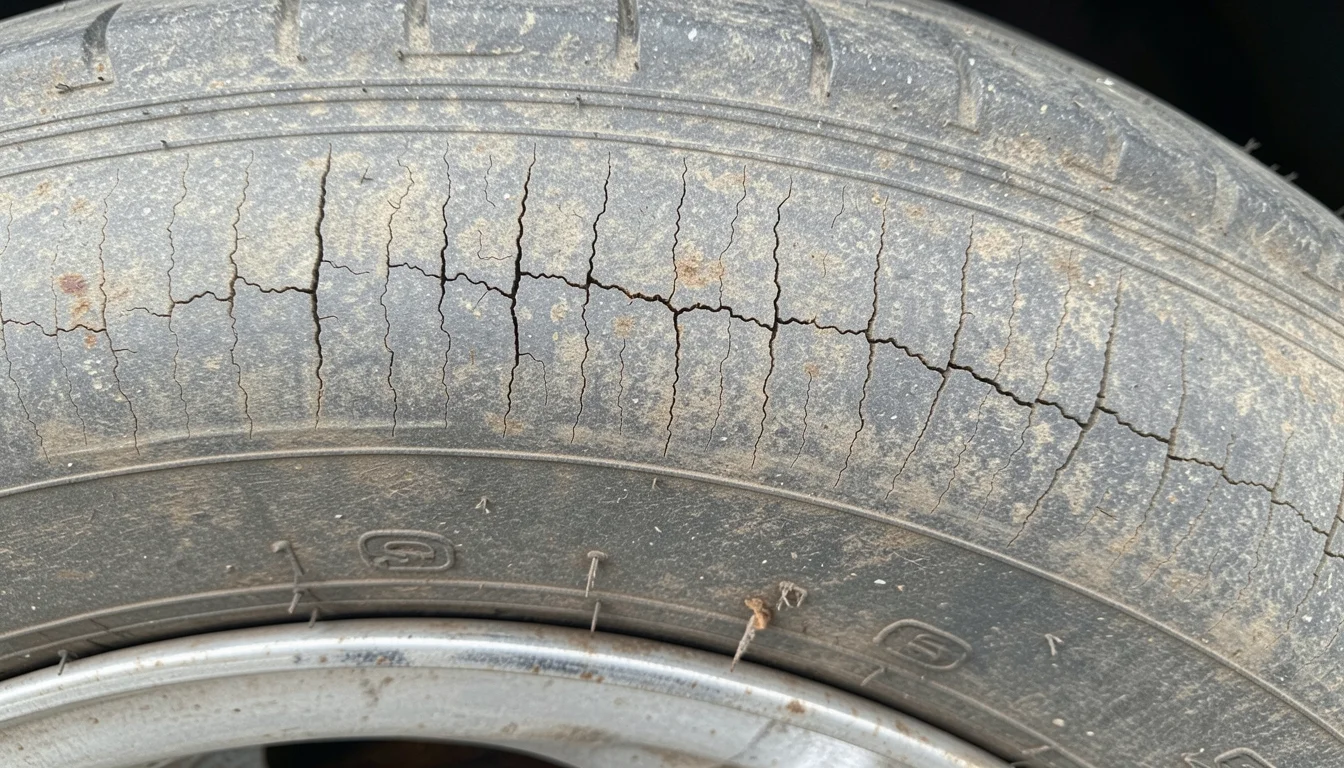
Tire dry rot is the cracking and hardening of rubber that happens as a tire ages, and it can make a tire unsafe long before the tread wears out. You can spot it as fine cracks in the sidewall, between the tread blocks or around the valve stem. This guide explains what tire dry rot is, what causes it, how to recognize the stages and when you need to replace tires.
What Is Tire Dry Rot?
Despite the name, tire dry rot has nothing to do with fungus. It is the natural degradation of the rubber compound. Tires contain oils and protective chemicals that keep the rubber flexible. Over time, heat, sunlight and oxygen slowly break these down, and the tire loses elasticity. The surface stiffens and begins to crack, which is why dry rot is also called sidewall cracking or weather checking.
Dry rot is dangerous because those cracks weaken the tire’s structure. A cracked tire may leak air slowly, and in severe cases the tread can separate from the casing or the sidewall can fail at highway speed.
What Causes Tire Dry Rot?
- Age. Rubber ages whether or not the tire is used. Dry rot is most common on tires older than six years.
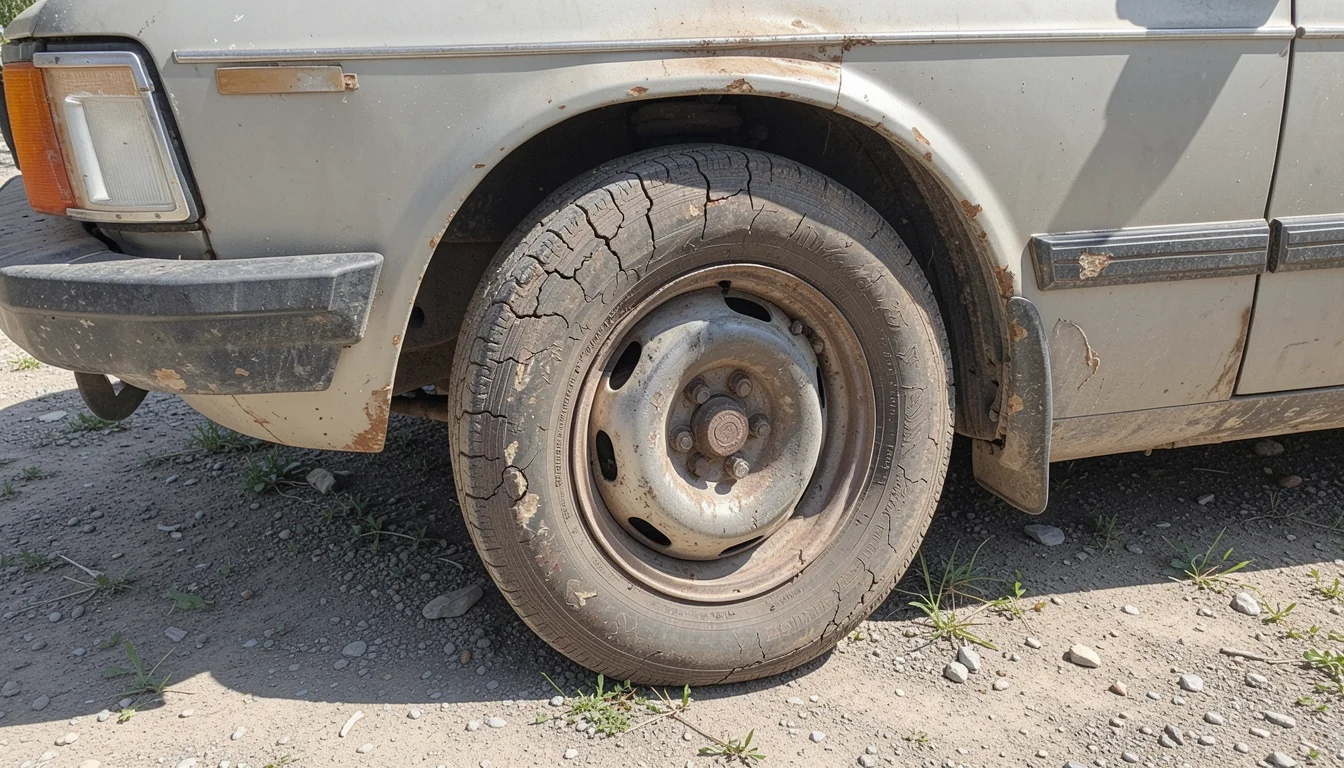
- UV exposure and ozone. Sunlight and ozone attack rubber on the surface. Cars parked outside in sunny climates age faster.
- Heat. High ambient temperatures and hot pavement speed up chemical aging.
- Underinflation. Low pressure makes the sidewall flex more and builds extra heat, which accelerates cracking.
- Harsh cleaners. Strong solvents and some dressings can strip protective compounds from the surface.
- Infrequent use. Tires on a vehicle that sits for months, such as a project car, a trailer or an RV, often crack because they rarely flex and redistribute their protective oils.
- Poor storage. Spare tires and stored seasonal tires can age quickly if kept in sun, heat or damp conditions.
Signs of Tire Dry Rot
- Fine cracks on the sidewall. Small, shallow lines are the first sign, often looking like a spiderweb or parallel lines.
- Cracks between tread blocks. Look into the grooves, where cracking can be hard to see.
- Faded, grayish or brownish rubber. A tire that has lost its deep black color is losing its protective compounds.
- Dry, hard or brittle texture. Healthy rubber feels slightly flexible. Dry-rotted rubber feels stiff.
- Frequent air loss. Cracks near the bead or valve stem can let air escape slowly.
- Bulges or tread separation. These are advanced warning signs. If you see a bump, read our guide to a bubble in the tire sidewall right away.
How Bad Is It? Stages of Dry Rot
| Stage | What you see | What to do |
|---|---|---|
| Early | Very fine, shallow cracks, slight fading | Inspect monthly, keep pressure correct, park in shade |
| Moderate | More cracks across the sidewall, some in the tread grooves | Have a tire shop inspect the tires and plan to replace soon |
| Severe | Deep cracks, exposed cords, bulges or separation | Stop driving and replace the tire immediately |
A useful rule of thumb is that cracks you can catch a fingernail in are deep enough to need a professional opinion. When in doubt, ask a tire shop for a free inspection.
How Old Is Too Old? Checking the DOT Date
Check the four-digit DOT date code on the sidewall. The first two digits are the week and the last two are the year of manufacture. Many tire manufacturers recommend inspecting tires annually once they are about five or six years old and replacing them at around ten years from the date of manufacture, regardless of tread depth. Our guide on what tire numbers mean explains how to read the code.
Can You Repair or Reverse Dry Rot?
No. Once the rubber has cracked, nothing restores it. Tire shine, protectants and rubber conditioners may make the sidewall look darker, but they do not repair a weakened structure, so a cracked tire should be replaced. Treat tire dressings as a cosmetic and light protective step for healthy tires, and choose water-based products rather than harsh solvent-based ones.
How to Prevent Tire Dry Rot
- Keep tires properly inflated. Check pressure monthly using the number on the door jamb. See our guide to tire PSI and how to set it.
- Park in shade or a garage. A covered spot or a car cover reduces UV exposure. Tire covers can help if the car sits outdoors.
- Drive regularly. If a car sits for weeks, start it and move it so the tires flex.
- Clean tires with mild soap and water. Avoid petroleum-based or solvent-heavy cleaners.
- Store spare and seasonal tires correctly. Keep them in a cool, dry, dark place, ideally in tire bags and away from motors that make ozone.
- Rotate and inspect often. Look at the sidewalls and tread grooves whenever you rotate. See how often to rotate tires for the schedule.
Tire Dry Rot FAQs
How long does it take for tires to dry rot?
It depends on climate, storage and use, but visible cracking often starts around six years after manufacture, and sooner in hot, sunny regions.
Is it safe to drive on tires with dry rot?
Light surface cracking may be tolerable for a short time but should be inspected by a professional. Deep cracks, bulges or exposed cords make a tire unsafe.
Does tire shine stop dry rot?
No. Dressings can slow surface oxidation on healthy tires, but they cannot stop or reverse aging that has already begun.
Will my tire warranty cover dry rot?
Possibly, if the tire is within the warranty period and was maintained properly. Warranties typically have an age limit, so check the paperwork and ask the retailer.
Can dry rot cause a blowout?
Yes. Cracked rubber can fail under the heat and stress of highway driving, especially when pressure is low.
Bottom Line
Tire dry rot is a slow process, but it is serious. Inspect your tires every month, keep them inflated and shaded, and check the DOT date. If you find deep cracks or your tires are around ten years old, replace them even if the tread looks fine.