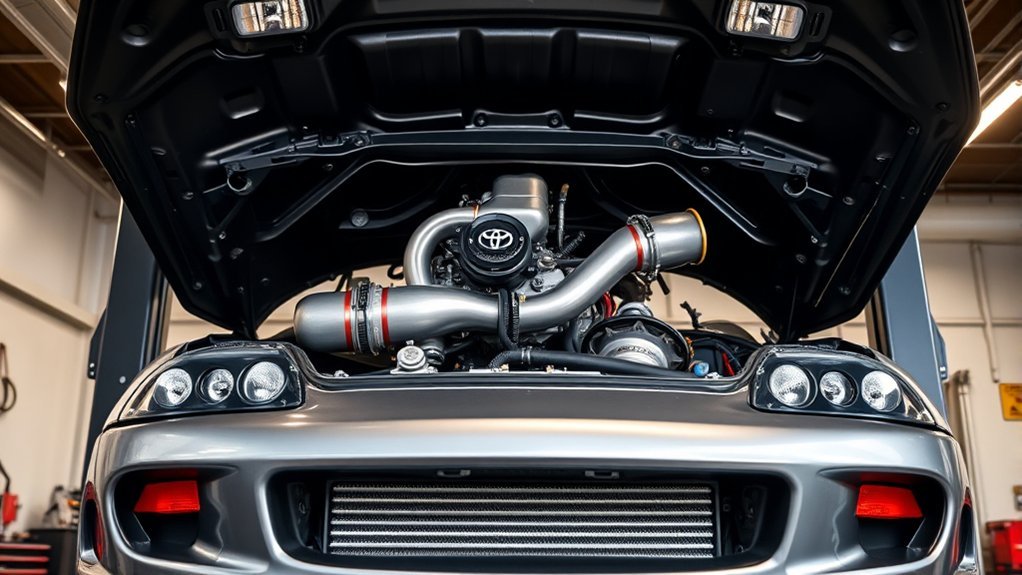
The short answer on Toyota Supra single turbo conversion: A single turbo conversion replaces the factory turbo setup with one larger turbo and needs supporting parts and a professional tune. It can affect reliability, emissions legality and your warranty, so get a quote from a specialist and check local rules before you start.
Toyota Supra single turbo conversion explained
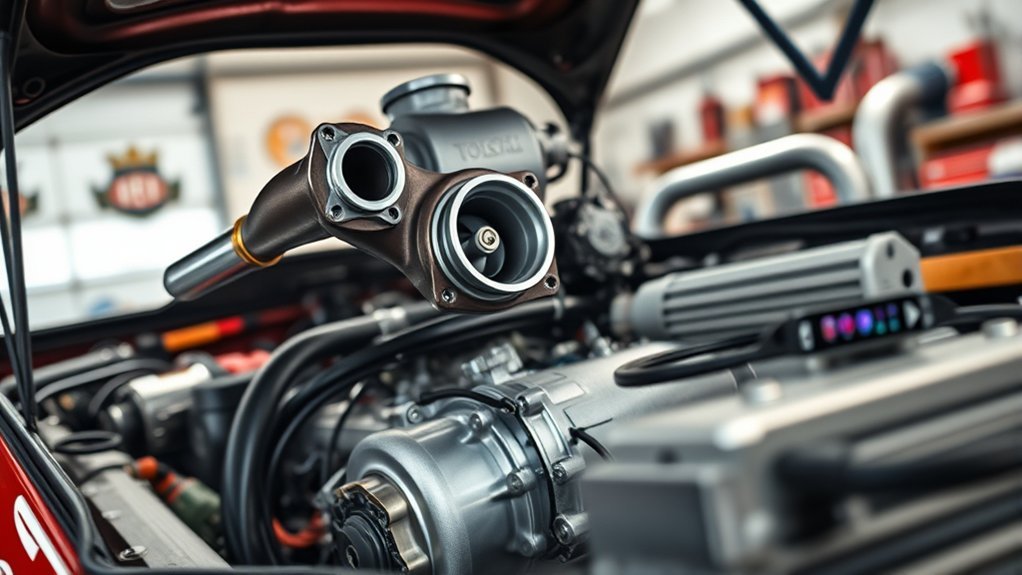
When you’re ready to kick off your single turbo conversion for your Toyota Supra, gathering the essential components is crucial to ensure a smooth and successful upgrade. Start with a high-quality single turbo kit, like those from FSR or PHR, to confirm compatibility. Pair it with an HKS GT S/S exhaust manifold for maximum flow and performance.
Next, you’ll need a quality intercooler, such as the ETS 4 FMIC, to enhance cooling efficiency under boost. Don’t overlook the importance of oil lines and fittings for proper turbo lubrication, along with a suitable downpipe to match your setup.
Lastly, consider your engine management solutions. A standalone ECU will allow precise tuning and monitoring, ensuring your Supra reaches its full capability. With all these components in place, you’ll be well on your way to releasing the power of your single turbo conversion.
Upgrading Your Fuel System for Single Turbo Conversion: Essential Parts
When upgrading your fuel system for a single turbo conversion, choosing the right fuel pump and injectors is essential. You’ll want to install larger fuel injectors, ideally around 1000cc, to meet the increased demands of your setup. Additionally, selecting a high-flow fuel pump, like the Walbro 450, ensures your engine gets the fuel it needs to perform at its best under boost.
Fuel Pump Options
Upgrading your fuel system is an essential step in ensuring your Toyota Supra can handle the demands of a single turbo conversion. Choosing the right fuel pump options is vital for supporting increased fuel demands. Aim for a high-flow fuel pump Here are some popular choices:
- Walbro 450LPH: Known for reliability and performance.
- AEM 340LPH: Excellent for high-horsepower applications.
- Compatible Fuel Lines: Upgrade to larger diameter hoses to avoid starvation.
- Adjustable Fuel Pressure Regulator: Fine-tune fuel delivery and maintain ideal air-fuel ratios.
Injector Size Selection
Choosing the right fuel injectors is essential for maximizing your single turbo conversion’s performance. When targeting 450-500 rwhp, upgrading to 1000cc injectors is recommended. If you aim for peak power around 700-750 rwhp, larger injectors like 1200cc are necessary, especially when using E85 fuel. To determine the correct injector size, you can use the formula:
| Desired HP | Injector Size (cc/min) |
|---|---|
| 450 | 1000 |
| 500 | 1000 |
| 700 | 1200 |
| 750 | 1200+ |
Pair your upgraded injectors with a high-flow fuel pump and ensure proper tuning for an ideal air-fuel ratio (AFR). This way, you’ll achieve safe and efficient engine operation post-conversion.
Steps to Choose the Right Turbocharger for Your Goals
How do you find the perfect turbocharger for your single turbo conversion? Start by defining your power goals. Are you aiming for 450-500 rwhp on 93 octane or pushing for 700-750 rwhp on E85? Next, consider the efficiency ratings and spool characteristics of various models. Popular choices like the Precision PT62 to PT76 can handle outputs from 400whp to 2000whp.
Define your power goals and consider turbo efficiency to find the ideal turbocharger for your single turbo conversion.
- Opt for a ball bearing turbo for quicker spool times.
- Verify compatibility with your chosen manifold; modifications might be necessary.
- Factor in your fuel injectors and supporting fuel system upgrades; larger turbos demand more fuel flow.
- Research turbo options that align with your performance needs.
Why Engine Management and Tuning Matter
While a single turbo conversion can dramatically enhance your Toyota Supra’s performance, effective engine management and tuning are essential to release its full potential and maintain reliability. With increased power levels, proper engine management becomes vital. Tuning adjustments, like air-fuel ratio and ignition timing, help prevent engine knock and potential damage from higher boost levels.
A standalone ECU offers precise control over fuel delivery and timing, allowing you to tailor your setup for maximum horsepower and torque. Regularly monitoring parameters such as boost levels and exhaust gas temperatures during tuning can help you identify issues before they escalate into severe engine failures.
For the best results, consider dyno tuning. This process provides accurate power output measurements and fine-tuning, ensuring your modified Supra runs efficiently and reliably. By prioritizing engine management, you’re not just boosting performance; you’re safeguarding your investment and ensuring an exhilarating driving experience.
Common Installation Challenges: Overcoming Common Issues
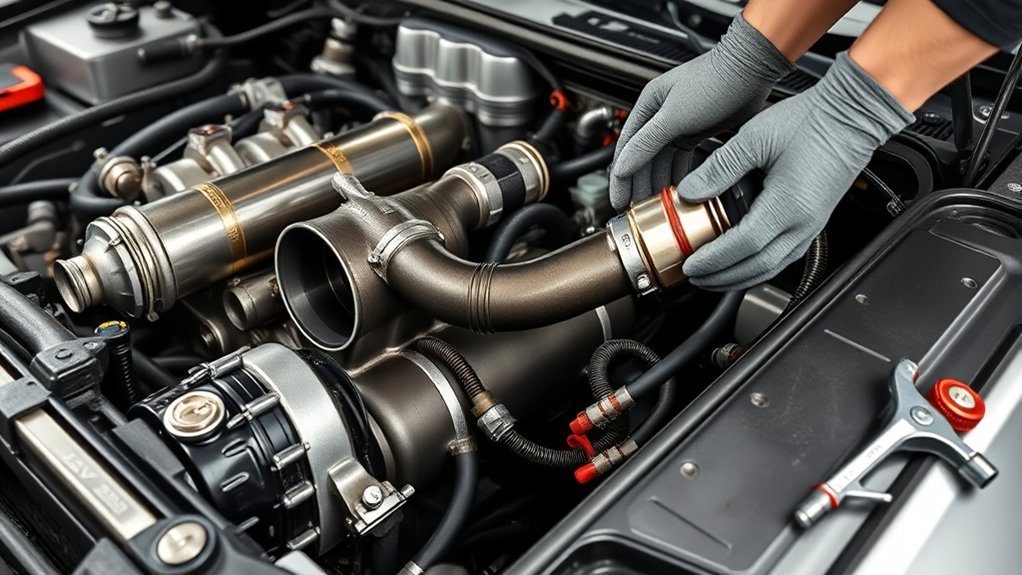
Successfully completing a single turbo conversion for your Toyota Supra involves maneuvering several common installation challenges that can arise throughout the process. Addressing these issues proactively will help you achieve a smoother installation experience.
- ensure proper clearance for the turbo and components, which might require modifications to engine mounts or the engine bay.
- Optimize wastegate placement to prevent boost creep, necessitating careful planning and possible adjustments to the exhaust manifold.
- Route oil feed and return lines correctly to avoid leaks and ensure proper lubrication, even in tight engine bay spaces.
- Be prepared to custom fabricate intake and exhaust piping, as pre-made options often don’t fit well with your new turbo setup.
Thorough research on compatible parts and insights from the community can greatly ease these common installation challenges, empowering you to enjoy the performance gains of your new turbo setup.
Essential Maintenance Tips for Turbocharged Engines
To keep your turbocharged Toyota Supra running smoothly, regular maintenance is vital. Start by checking and changing the engine oil frequently; synthetic oil is your best bet for high-performance applications, ensuring optimal lubrication for the turbo kit. Monitor the air-fuel ratio (AFR) closely—maintaining the right AFR is key to preventing engine knock and achieving efficient combustion. Don’t overlook the air filter; inspect and replace it regularly to keep debris from damaging your turbocharger.
Routine maintenance on the turbo system is important. Schedule checks for boost leaks, inspect oil lines for blockages, and confirm the wastegate functions properly. Finally, always keep an eye on coolant levels and engine temperature. Overheating can spell disaster for your turbo, so consider using high-quality coolant and monitoring conditions closely. By following these essential tips, you’ll help your turbocharged Supra reach its full potential.
How Much Horsepower Can You Achieve With a Single Turbo?
When considering a single turbo conversion for your Toyota Supra, it’s essential to assess your power goals and choose the right turbo. Depending on the turbo size and other modifications, you can achieve anywhere from 400 to over 750 rwhp. The turbo model you select will directly impact your performance, so understanding these factors will help you hit your desired horsepower target.
Power Goals Assessment
Achieving impressive horsepower with a single turbo conversion on a Toyota Supra hinges on several key factors, including turbo selection and supporting modifications. Your power goals dictate how far you can push the limits, with outputs ranging from 400whp to over 750whp. Enthusiasts often aim for:
- 450-500whp on 93 octane
- 700-750whp on E85 fuel
- Boost levels around 1.0 bar for safety
- Upgraded fuel systems and tuning for reliability
To achieve these goals, you’ll need effective upgrades like high-flow fuel pumps, larger injectors (like 1000cc), and aftermarket engine management systems. By carefully evaluating your power goals, you can reveal the true potential of your Supra and enjoy exhilarating performance on the road.
Turbo Selection Impact
Choosing the right single turbocharger can make or break your horsepower goals for a Toyota Supra. Depending on the turbo model and size, you could achieve anywhere from 400whp to an astonishing 2000whp. For instance, the Precision Turbocharger is a versatile option that supports a wide range of power needs. Many enthusiasts opt for turbos like the BW 6266, 6466, and 6766 to hit targets between 450-750 rwhp. Remember, pairing your turbo with a high-flow fuel system and proper engine management is vital, especially for those lofty horsepower aspirations. Plus, if you choose a ball bearing turbo, you’ll enjoy quicker spool times and improved throttle response, key for maximizing your Supra’s performance on the street or track.
Related reading:
- Turbocharger Heat Management: Complete Toyota Supra Guide
- Sequential Turbo System: Complete Toyota Supra Guide
- Single Turbo vs Twin Turbo: Differences, Cost and Reliability
Frequently Asked Questions
Where can I find the exact steps for my car?
Your owner’s manual lists the steps, specifications and warnings for your exact model year, and a dealer can confirm details from your VIN.
Can I rely on a general guide for specifications?
Use a general guide for orientation only. Specifications such as fluid types, intervals and capacities vary by model year and market, so confirm them in your owner’s manual.
When should I see a professional?
If a job affects braking, steering, airbags, fuel or the cooling system, or you are unsure at any step, have a qualified technician do it or check it.
Does this apply to every model year?
Not necessarily. Details change between generations and model years, so check the year and trim of your car before you follow any step.
Conclusion
So, you’ve transformed your Toyota Supra into a single turbo beast—congratulations! Now, just remember, with great horsepower comes great responsibility (and possibly a slightly lighter wallet). It’s all fun and games until you’re explaining to your friends why your car sounds like a jet engine. But hey, at least you’ll be the life of the party! Just keep up with that maintenance, and you’ll be racing into the sunset while others are still figuring out how to change their oil.