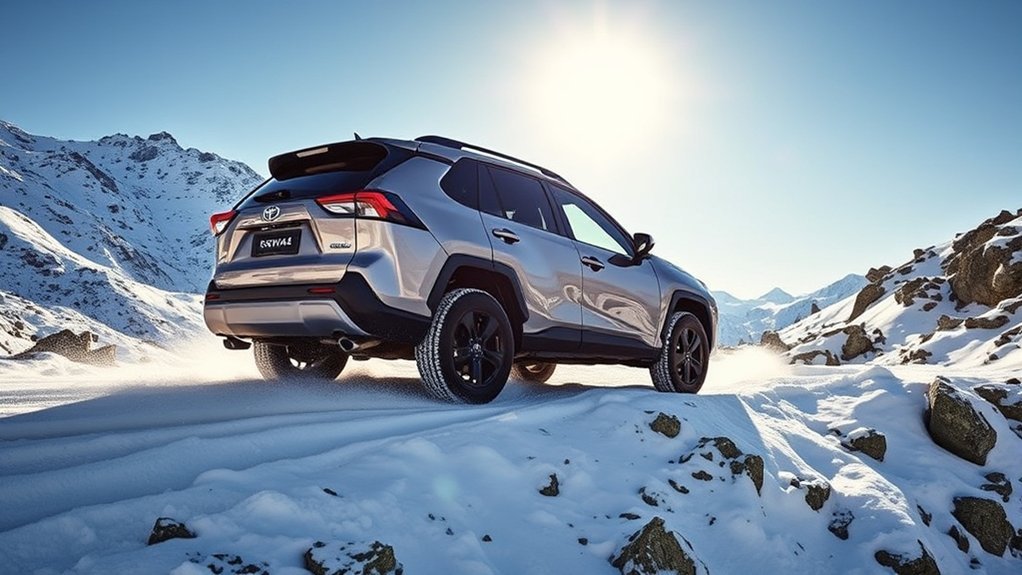
The Toyota RAV4’s AWD system is generally regarded as dependable, and the parts most likely to need attention are ordinary wear items: tires, driveline fluids, and the rear driveline components. No manufacturer or review can promise that any single vehicle will stay trouble-free, so how well it lasts depends mainly on model year, how it is used, and how well it is maintained.
Which RAV4 AWD system do you have?
“RAV4 AWD” covers several different designs, and reliability questions, maintenance and driving tips differ between them. Identify yours first.
| Model years | AWD system | Key points |
|---|---|---|
| 2013-2018 (gas) | Dynamic Torque Control AWD | Has an AWD lock switch. Toyota’s guide says to use it only when the wheels spin on loose or unpaved surfaces. |
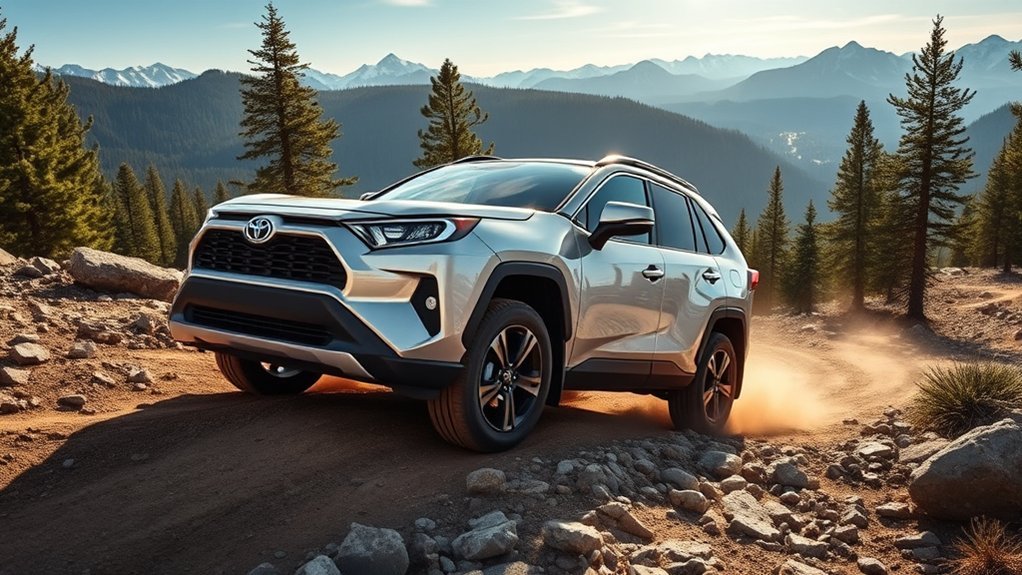
| 2019-2025 (gas), most trims | Dynamic Torque Control AWD | Multi-Terrain Select (Mud & Sand, Rock & Dirt modes) is standard on AWD gas models. |
| 2019-2025 (gas), AWD Limited and Adventure/TRD Off-Road | Dynamic Torque Vectoring AWD with Rear Driveline Disconnect | Can send up to 50 percent of engine torque to the rear and split it between the left and right rear wheels (Toyota, 2019 launch). Dog clutches stop the rear driveshaft from turning when AWD is not needed. |
| Hybrid (2016 onward) | Electric on-demand AWD | A separate rear-mounted electric motor drives the rear wheels when needed. There is no driveshaft to the rear axle. |
| 2026 and later | Electronic on-demand AWD (hybrid and plug-in hybrid only) | A dedicated rear electric motor on AWD models. Plug-in hybrids and the Woodland grade are AWD only, per Toyota. |
The 2006-2012 generation used an earlier on-demand AWD design. Procedures and switch behaviour there can differ, so check the owner’s manual for your exact year.
How reliable is it?
Toyota’s AWD systems are simple compared with many rivals, and most are “on-demand”: the vehicle drives mainly through the front wheels and sends power rearward when it detects slip or needs extra traction. Because the rear axle is not working hard in normal driving, wear is usually modest. On the gas models, the parts that do wear are the rear driveline and differential, which carry fluid and rotating joints.
The hybrid design removes the long propeller shaft, transfer parts and rear differential driveline that gas AWD models have. That means fewer mechanical parts to wear, though you still have a high-voltage system and a rear motor, and repairs there are dealer work.
No reliable, year-by-year figure for “AWD failure rates” is published by Toyota. Consumer ranking sites score whole vehicles or whole brands rather than the AWD system alone, so treat any specific AWD failure percentage you see online with caution. Before buying a used RAV4, check your VIN for open recalls on the NHTSA recall lookup at nhtsa.gov/recalls, and review the service history.
Common AWD-related problems
Worn or mismatched tires
This is the most common cause of AWD complaints. On an AWD vehicle, tires with noticeably different tread depths or diameters make the wheels turn at different speeds, which can load the coupling and differentials and, in some cases, trigger a warning light. Replace tires in sets of four where possible, rotate them on schedule, and keep the pressures on the driver’s door jamb label.
Rear driveline noise or vibration
A clunk on take-off, a vibration that changes with speed, or a whine from the rear of a gas model can come from universal joints, the driveshaft, or the rear differential. Have it inspected rather than driving on it, because a failed driveshaft can damage other parts.
AWD warning light
A Dynamic Torque Control AWD warning indicator appears in the instrument cluster if the system detects a fault. The cause can be as minor as mismatched tires or as involved as a sensor or coupling problem. Note whether any other lights are on and have the codes read.
Fluid neglect
Gas AWD models have a transfer and rear differential that use gear oil. Toyota’s maintenance schedule for your model year lists the inspection or replacement interval, and it is shorter for severe use such as towing, dusty roads or frequent off-road driving. Follow the schedule in your maintenance guide rather than a generic mileage figure.
Maintenance checklist
- Follow the schedule in your owner’s manual or Toyota maintenance guide for your model year and driving conditions.
- Have the rear differential and transfer oil (gas AWD models) checked at the listed intervals and replaced when the schedule says so.
- Keep all four tires the same brand, model, size and similar tread depth. Rotate them at the interval in your manual.
- Check tire pressure monthly, using the label on the driver’s door jamb.
- Have the driveshaft, u-joints and rubber boots inspected when the vehicle is on a lift for other work.
- Do not ignore AWD or VSC warning lights. Get the codes read.
- If you must tow, check the towing capacity for your exact trim and year before hooking up a trailer.
How to use AWD features properly
- AWD lock (2013-2018 gas): Use it only when the wheels are spinning on loose or unpaved surfaces, as Toyota’s quick reference guide says. The owner’s manual explains when it cancels.
- Multi-Terrain Select (2019-2025 gas AWD): Mud & Sand suits muddy or sandy roads. Rock & Dirt suits very bumpy surfaces such as unpaved forest roads.
- Hybrid Trail mode: Toyota listed Trail mode on all RAV4 Hybrid grades at the 2019 launch for off-road traction.
- Snow and ice: AWD helps you accelerate, not stop or corner. Braking distance depends mostly on tires.
Note: Switches, mode names and maintenance intervals vary by model year and trim. Confirm them in the owner’s manual for your vehicle at toyota.com/owners.
Frequently asked questions
Is the Toyota RAV4 AWD system good in snow?
It gives good traction when pulling away and climbing on slippery roads, but it does not shorten braking distances or improve cornering grip. Winter tires make a bigger difference than the drivetrain. Always keep all four tires matched.
Which RAV4 has the best AWD?
For gas models, Dynamic Torque Vectoring AWD is the most sophisticated system: it can send up to 50 percent of torque to the rear and shift it between the left and right rear wheels. It was fitted to AWD Limited and Adventure/TRD Off-Road trims in the 2019 launch. Hybrids use an electric rear motor, which suits everyday use well.
Does the RAV4 AWD always drive all four wheels?
No. It is an on-demand system. On the Dynamic Torque Vectoring models, the rear driveshaft is disconnected when AWD is not needed to save fuel. Hybrids engage the rear motor only when required.
Is a used RAV4 AWD a safe buy?
Check the service history, tire condition, any AWD or VSC warning lights, and open recalls on your VIN at nhtsa.gov/recalls. A pre-purchase inspection with attention to the rear differential and driveshaft is worth the cost.
Do I need AWD on a RAV4?
If you live where roads are regularly snowy, unpaved or steep, AWD is useful. In dry, mild regions, front-wheel drive is lighter and cheaper. The 2026 RAV4 is offered only as a hybrid or plug-in hybrid, with front-wheel drive or AWD on the hybrid.
Sources
Toyota’s own descriptions of the systems: the 2019 RAV4 press release and the 2026 RAV4 press release.