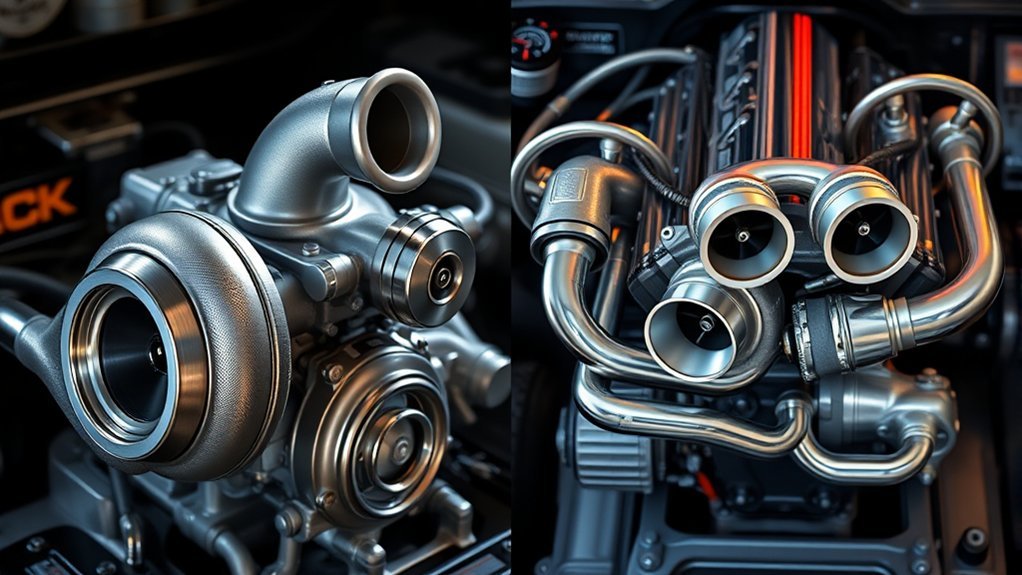
When comparing single turbo and twin turbo setups, you’ll find distinct differences that impact performance and cost. Single turbos offer simplicity and reliability with higher peak torque and easier installation, but may suffer from lag. Twin turbos, on the other hand, provide faster spool times and broader power bands at higher RPMs, albeit at a higher cost and complexity. Choosing the right setup depends on your performance goals and budget, but there’s much more to explore.
Understanding Single Turbo Vs. Twin Turbo Systems
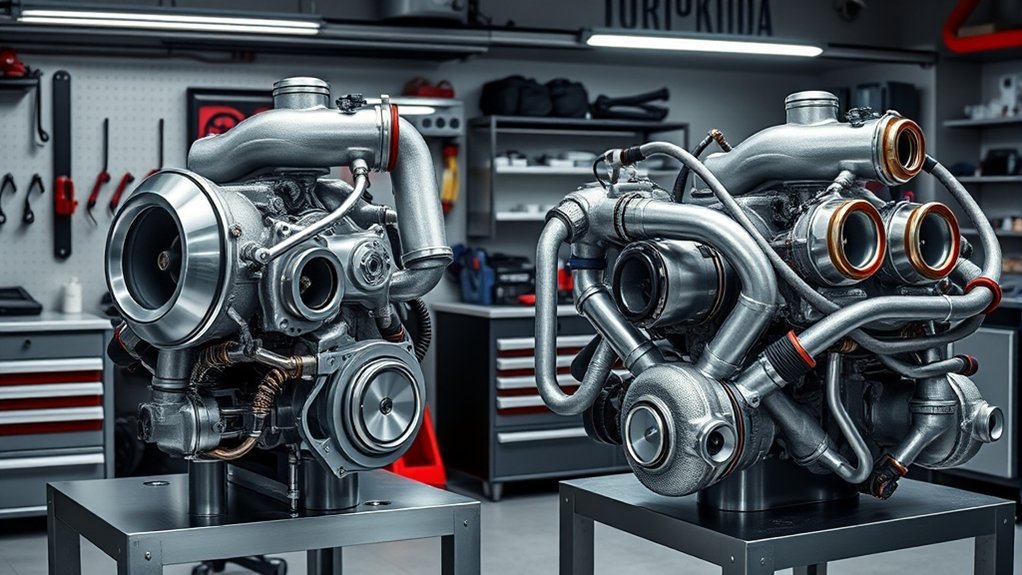
When you’re considering turbocharging options for your vehicle, understanding the differences between single and twin turbo systems is essential. A single turbo setup utilizes one turbocharger, offering simplicity and reliability with fewer components prone to failure. This configuration tends to have more lag and a limited powerband, making it less versatile. On the other hand, a twin turbo setup employs two smaller turbochargers, allowing for faster spool times and improved throttle response. This makes it ideal for high-performance applications, as it can better optimize performance across a broader RPM range. While both turbo systems can achieve similar power levels, the choice hinges on your specific performance goals and vehicle needs. Additionally, installation of a single turbo kit is generally simpler and more cost-effective compared to the complexity of a twin turbo kit. Ultimately, your decision will greatly impact how you increase power and enhance your driving experience.
Performance Differences Between Single And Twin Turbo Systems
While both single and twin turbo systems can elevate your vehicle’s performance, their characteristics vary considerably based on application and design. A single turbo, like the GTX4202R, can deliver peak torque 78 FT-LB higher and 600 RPM earlier than twin turbo setups, providing immediate low-end responsiveness. Conversely, twin turbos, such as the GTX3582R, excel at high RPMs, optimizing power delivery through two smaller turbos that reduce lag and enhance throttle response. Although both configurations can achieve similar peak horsepower, the single turbo system often showcases over 900 wheel horsepower, reflecting its substantial power potential with fewer components. However, single turbos may face lag issues, which can hinder performance in rapid acceleration scenarios. In contrast, twin turbo setups maintain a robust power curve across a broader RPM range, making them ideal for performance-oriented driving. Understanding these performance differences helps you choose the right forced induction system for your needs.
Analyzing Costs: Single Turbo Vs. Twin Turbo Systems
Choosing between single and twin turbo systems involves careful consideration of costs alongside their performance features. Single turbo setups usually come with lower initial costs due to fewer components, making them a budget-friendly option for performance enhancements. In contrast, twin turbo systems generally carry a higher price tag, as they necessitate additional parts and increased complexity for installation and maintenance.
Installation costs for twin setups can also be steeper, given the intricate nature of fitting two turbochargers. While single turbos are easier and quicker to install, the long-term performance benefits of twin turbos may justify their higher upfront costs for dedicated enthusiasts. Ultimately, when deciding between single and twin systems, you should weigh not just the initial costs but also your desired performance outcomes and the implications for ongoing maintenance. This balanced approach will guide you towards the right turbo system for your needs.
Comparing Installation Complexity Of Turbo Setups
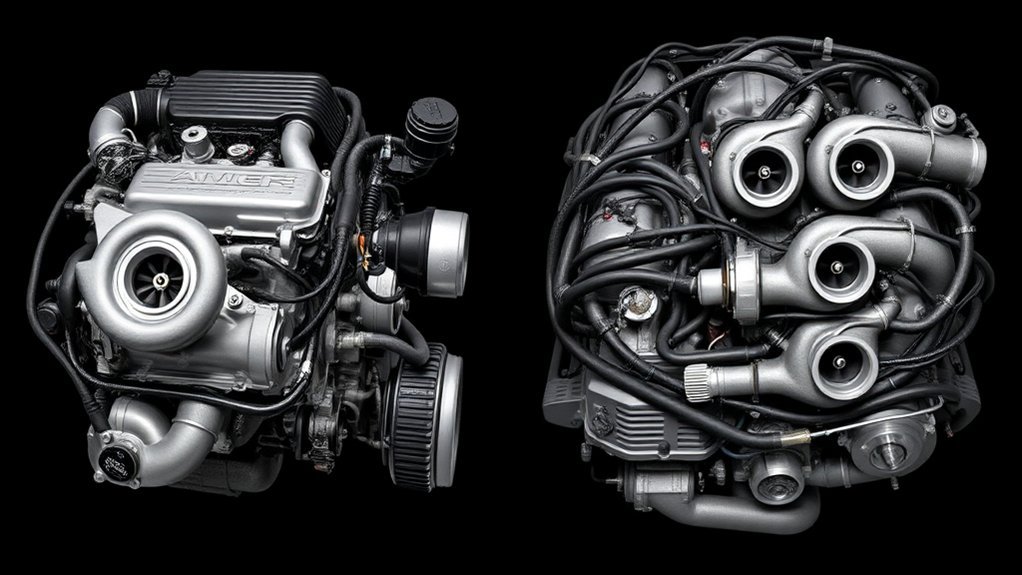
Although both single and twin turbo setups aim to enhance engine performance, their installation complexity varies greatly. Single turbo kits typically involve fewer components, leading to a simpler and quicker installation process. This straightforward integration is especially beneficial in diesel engines, where compatibility with existing components is essential. In contrast, twin turbo kits require additional space and parts, complicating the installation process in tighter engine bays. The need for precise mounting and alignment of two turbos inherently increases the complexity and can extend the installation timeline. As a result, labor costs for twin turbo setups may be considerably higher due to the additional time and expertise required. While twin turbos can offer superior performance gains, you must weigh these benefits against the increased complexity and potential installation challenges. Ultimately, your choice will depend on your specific performance goals and willingness to navigate the intricacies of turbo installations.
How To Choose The Right Turbo Setup For Your Vehicle?
How do you determine the best turbo setup for your vehicle? Start by considering your specific needs and constraints. Here’s a quick guide:
- Performance Goals: If you’re aiming for high horsepower and quick throttle response, twin turbos may be your best bet. For simpler applications, a single turbo might suffice.
- Engine Type: Diesel engines often benefit from single turbos due to their compact nature, while gasoline engines can leverage twin turbos for better RPM performance.
- Budget: Single turbo kits typically have lower initial costs and simpler installations compared to the more complex twin turbo setups.
- Space: Assess your engine bay; single turbos are more space-efficient, while twin turbos require significant room for installation.
Consulting with an expert can further tailor your choice, ensuring you align your turbo setup with your performance goals and budget effectively.
Frequently Asked Questions
Can a Single Turbo Outperform a Twin Turbo in Certain Conditions?
Yes, a single turbo can outperform a twin turbo under specific performance conditions, especially in applications requiring quicker spool times or simpler engine characteristics. Your choice ultimately depends on desired responsiveness and power delivery requirements.
What Maintenance Is Required for Single Vs Twin Turbo Systems?
You’d think maintaining a single turbo’s easier, but both systems demand attention. Tuning requirements, installation complexity, cost differences, and heat management are essential. Don’t underestimate the upkeep; freedom comes with responsibility.
How Does Turbo Size Affect Engine Performance?
Turbo size directly impacts engine performance by influencing boost pressure and turbo lag. A larger turbo can enhance engine efficiency at higher RPMs, while performance tuning optimizes characteristics, balancing responsiveness and power for your driving experience.
Are There Any Reliability Concerns With Twin Turbo Setups?
Yes, twin turbo reliability can raise concerns. Common issues include higher maintenance costs and potential performance consistency problems. Regular upkeep is essential to guarantee they operate smoothly, preventing any unexpected surprises during your driving experience.
Can a Vehicle Switch From Single to Twin Turbo Later?
Yes, you can switch from single to twin turbo, but expect turbo conversion challenges. Consider engine compatibility issues, cost considerations, and performance expectations to guarantee a successful upgrade without compromising your vehicle’s reliability or efficiency.
Conclusion
In the world of turbocharging, the choice between single and twin turbo systems boils down to your performance goals and vehicle setup. Remember, “you get what you pay for.” While single turbos offer simplicity and cost-effectiveness, twin turbos can provide superior performance and responsiveness. Assess your needs carefully, as the right turbo setup can greatly enhance your driving experience. Ultimately, choose wisely to guarantee your vehicle delivers the power and efficiency you desire.