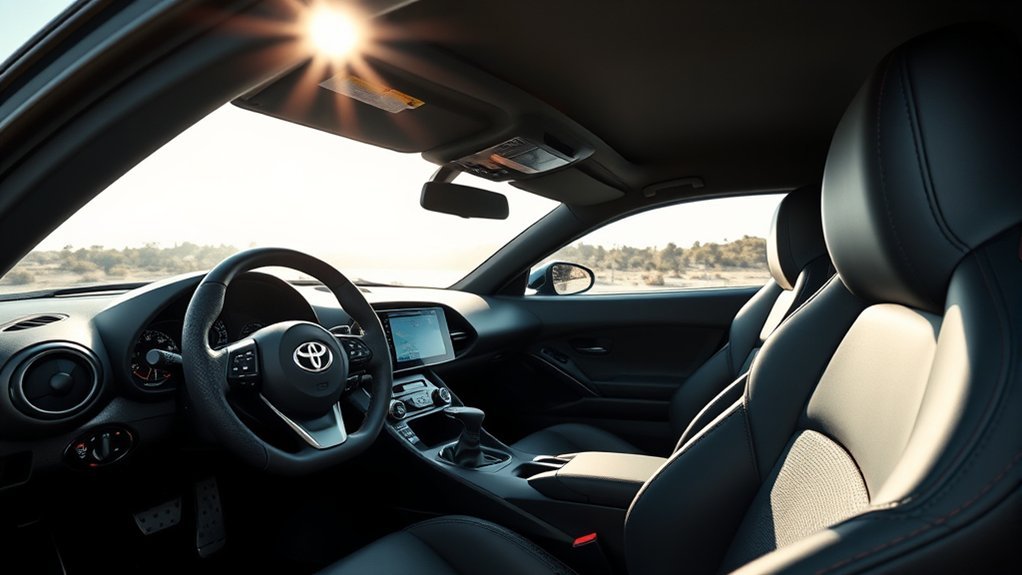
The Toyota Supra airbag system is the car’s supplemental restraint system (SRS). The A90 (GR) Supra has front airbags, front-seat side airbags, curtain airbags and a driver knee airbag, backed by seat belt pretensioners. The exact count depends on market and model year, so confirm it in your owner’s manual.
Many Supra owners also say “airbag” when they mean aftermarket air suspension. This guide covers the safety system first and then explains how air suspension differs.
What Is in the Toyota Supra Airbag System?
| Component | What it does |
|---|---|
| Front airbags (driver and passenger) | Cushion the head and chest in a frontal crash |
| Knee airbag (driver) | Helps control lower-body movement; some market listings may show more than one, so check your manual |
| Side airbags (front seats) | Protect the torso in a side impact |
| Curtain airbags | Deploy along the side windows to protect the head |
| Seat belt pretensioners | Pull the front belts tight at the start of a crash |
| Crash sensors and SRS control unit | Detect an impact and decide which parts of the system to fire |
One 2023 market listing counts seven airbags in total. Equipment can differ by country and model year, so treat the list above as a general guide and use the manual for your car.
The Supra is a two-seater, so any child seat can only go in the passenger seat. Read the manual’s child restraint and passenger airbag section first, and see our child seat fit guide.
Airbag Safety Rules for Supra Owners
- Never cover, drill, tape or paint over an airbag panel in the steering wheel, dashboard, seats or roof pillars.
- Use only seat covers that are made for seats with side airbags.
- Keep objects off the dashboard and out of the passenger footwell and knee area.
- If you replace the steering wheel or a seat, use parts approved for your car and have the work done by someone who knows SRS systems.
- Before any electrical work near SRS parts, follow the manual’s battery and waiting-time instructions, and never probe SRS wiring.
- After a crash, have a Toyota dealer inspect the system. Deployed airbags and pretensioners must be replaced.
- Check for open safety campaigns with our VIN recall check guide.
What Does the Supra SRS Warning Light Mean?
The airbag or SRS light normally comes on briefly at start-up and then goes out. If it stays on, flashes or appears while driving, the system has detected a fault and the airbags may not deploy as designed.
Possible causes include a faulty sensor, a damaged connector or a problem with a seat or belt component. Only a scan of the SRS fault codes can tell which. Book a Toyota dealer or a qualified shop soon, and do not rely on clearing the light yourself. Other dash symbols are explained in our warning lights guide.
Airbag Suspension on a Mk5 Supra Is a Different System
In car-modifying circles, “bags” means air springs that replace the coil springs and are fed by an air compressor. This is an aftermarket suspension upgrade for ride height and has nothing to do with crash protection.
Brands such as Airlift Performance and Bag Riders offer kits for the Mk5 Supra. Compare kits on what is included, which model years and trims they fit, how they work with the factory adaptive dampers some trims have, and what support the maker offers. Follow the kit’s own instructions for torque values and air pressure limits, because they differ by kit.
Planning an Air Suspension Install
- Support the car on jack stands, never on a jack alone. Our jack points guide shows where to lift.
- Disconnect sensors and sway bar links before the strut and spring assemblies come out, and mark settings so you can restore them.
- Spring compressors can release stored energy suddenly. If you are not experienced, have a shop handle that step.
- Leak-check every fitting with soapy water after the lines are connected.
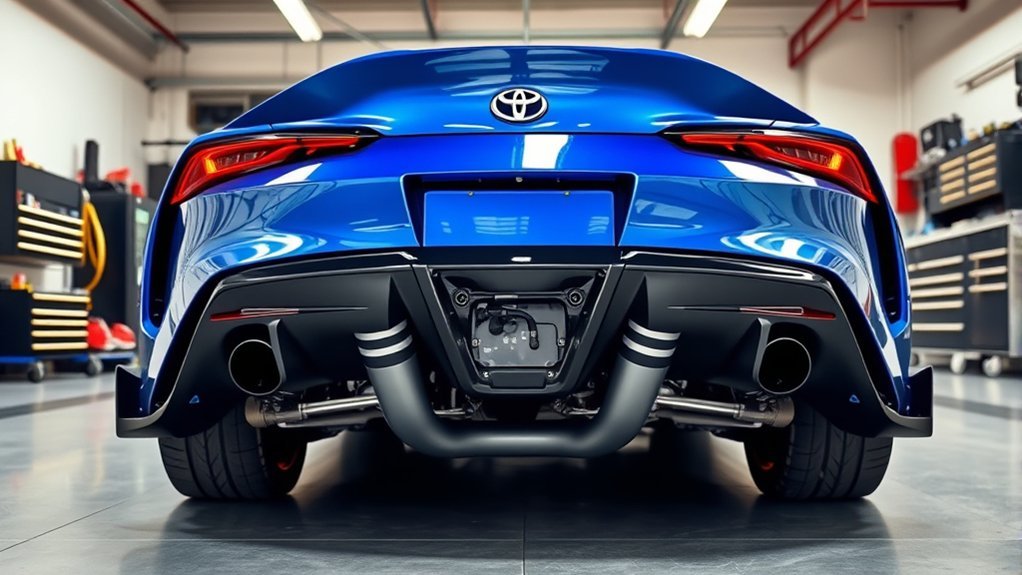
Routing Lines and Mounting the Compressor
- Route airlines away from heat, sharp edges and moving parts, and secure them with ties.
- Avoid kinks and tight bends that restrict airflow.
- Mount the compressor where vibration and noise are low, and wire it to an ignition-switched source through the fuse the kit specifies.
- Label lines and fuses so troubleshooting is easier later.
Ride Height and Fixing Common Problems
- Tighten suspension bolts to the kit maker’s specification, then set height evenly on all four corners.
- Slow leaks usually come from a fitting, a pinched line or a damaged air spring.
- If the car will not level, check power and ground to the compressor and look for kinked lines.
- A big drop in ride height changes alignment, so book an alignment afterwards. Our Supra alignment guide explains what changes.
More on Supra Safety Systems
The airbags work alongside the electronic aids. Read our guides to driver assistance systems and active safety features.
Frequently Asked Questions
How many airbags does the Toyota Supra have?
The count depends on market and model year. One market listing for the 2023 Supra counts seven airbags, made up of front, side and curtain airbags plus a driver knee airbag. Check your owner’s manual for your exact car.
Where are the airbags in a Supra?
The front airbags are in the steering wheel hub and the passenger side of the dashboard, the side airbags are in the front seats, the curtain airbags run along the roof edges above the doors, and the knee airbag sits in the lower dashboard area.
What does the SRS warning light mean on a Supra?
It means the system has detected a fault, so the airbags may not work as intended. A brief light at start-up is normal. If it stays on or flashes, have the SRS fault codes read by a Toyota dealer or qualified shop.
Can I reset the Supra airbag light myself?
Clearing the light without repairing the cause is not safe. Have the fault codes read with a suitable scan tool, fix the fault, and then clear the code. Online pedal or ignition tricks are not a substitute for a proper scan.
Is air suspension part of the Supra airbag system?
No. The airbag system is the SRS that protects occupants in a crash. Air suspension, often called bags, is an aftermarket upgrade that uses air springs and a compressor to change ride height.
Do airbags need to be replaced after a crash?
Any airbag that deployed must be replaced, and the seat belt pretensioners and sensors need inspection. Have a Toyota dealer inspect the SRS after any significant collision, even if no airbag deployed.