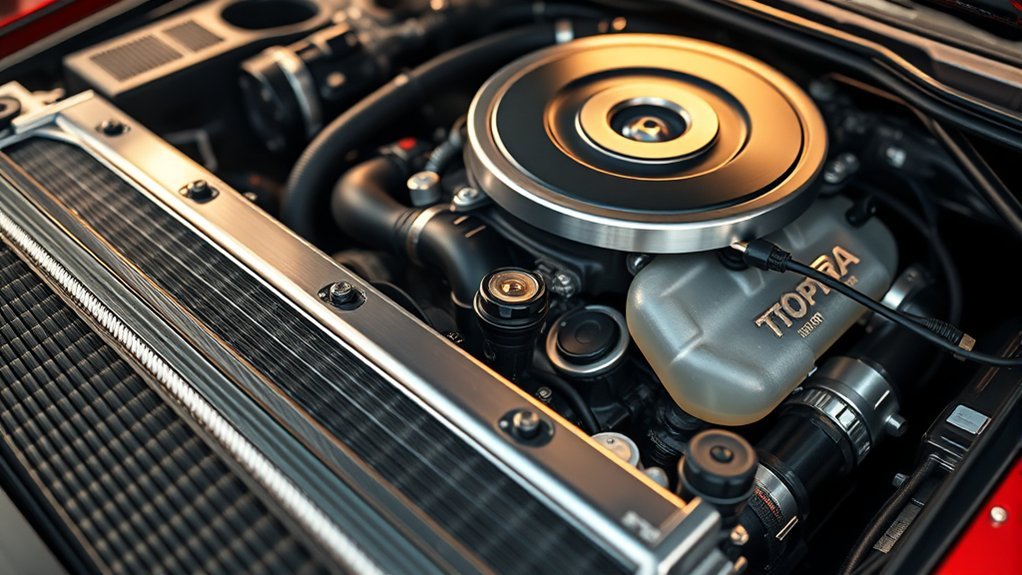
Your Toyota Supra’s cooling system is essential for peak engine performance and preventing overheating. Key components include the radiator, thermostat, and coolant. Regular maintenance is vital, such as flushing and refilling the coolant with Toyota pink coolant to prevent corrosion. If you notice rising engine temperatures or coolant leaks, it’s time to troubleshoot. Upgrading your system can enhance cooling efficiency. Stick around to explore detailed steps for maintenance, issue resolution, and performance upgrades.
Understanding the Importance of Your Toyota Supra’s Cooling System
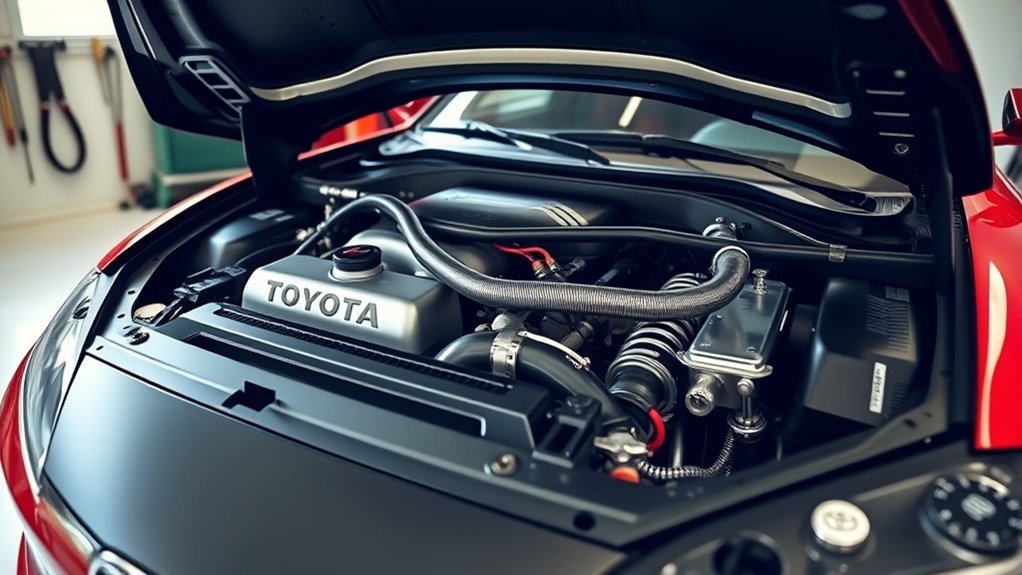
The cooling system in your Toyota Supra is a crucial component for maintaining peak engine performance. It consists of essential parts like the radiator, thermostat, and heat exchangers, all working in unison to regulate ideal engine temperature. When the engine runs, it generates significant heat, and without an efficient cooling system, you risk overheating, which can lead to catastrophic engine damage.
Regular maintenance is essential; timely coolant changes help eliminate contaminants like rust and debris that can impair efficiency. Utilizing the correct coolant, such as Toyota pink coolant, not only guarantees compatibility but also protects against corrosion and freezing.
How to Flush and Refill Your Coolant
Maintaining your Toyota Supra’s cooling system relies heavily on regularly flushing and refilling your coolant. Start by draining the old coolant from both the radiator and engine block; this removes contaminants that can harm performance. Next, remove the thermostat and reinstall the water neck to facilitate a thorough flush. Using a Prestone flush kit or distilled water, flush until the water runs clear, guaranteeing no old coolant remains. After flushing, reconnect all hoses and fill the system with a mixture of Toyota pink coolant and distilled water. With the heater set to high, start the engine to circulate the new coolant throughout the cooling system. Finally, monitor the coolant level after the engine reaches operating temperature and check for leaks. This process guarantees your Supra’s cooling system operates efficiently, keeping your engine running smoothly and reliably.
How to Effectively Bleed Your Cooling System for Optimal Performance
To guarantee your Toyota Supra’s cooling system operates at peak efficiency, bleeding it properly is essential after any coolant service. Start by removing the radiator cap and running the engine with the heater set to maximum. This allows air to escape as the thermostat opens. While bleeding, monitor the coolant level in the expansion tank, adding coolant as necessary to prevent air pockets. Once you reach operating temperature, inspect for leaks around hoses and connections, ensuring a sealed system before capping the radiator.
Don’t forget to leave the bleed valve or tee in place for future maintenance, granting easy access for additional bleeding. Document the date and mileage of your coolant maintenance; regular inspections and bleeding can prevent overheating and extend the life of your cooling system. By adhering to these steps, you’ll secure excellent performance from your Supra’s cooling system.
Troubleshooting Common Cooling System Issues?
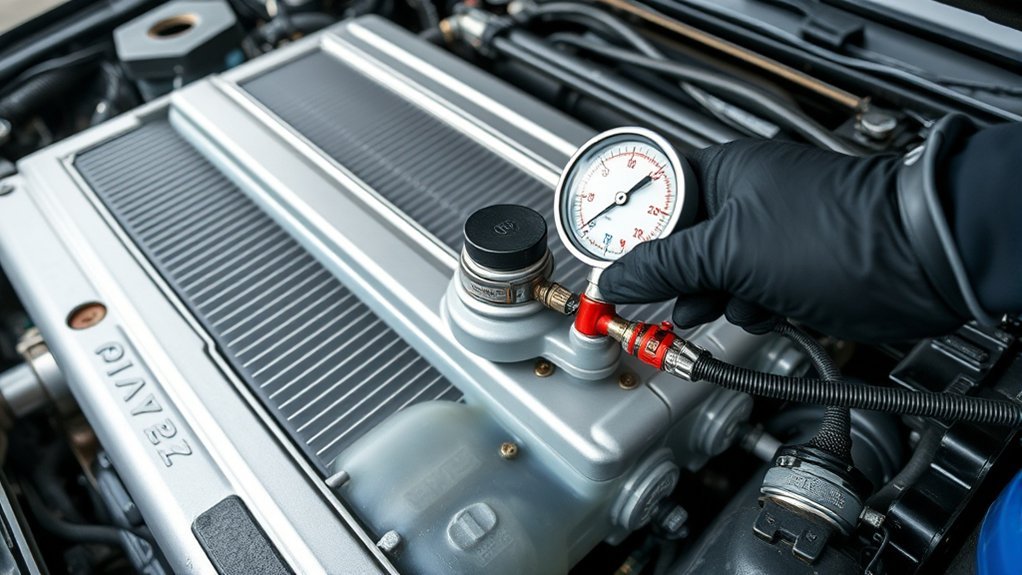
While driving your Toyota Supra, you might encounter various cooling system issues that can compromise performance and safety. Addressing them promptly is essential. Here are three common problems to watch for:
- Coolant Leaks: Regularly check hoses and connections for leaks. Low coolant levels can lead to overheating.
- Overheating: If your engine temperature rises, it could indicate a malfunctioning thermostat or a clogged radiator, both of which hinder proper coolant circulation.
- Water Pump Issues: A failing water pump may produce a whining noise or coolant leaks, leading to inadequate coolant circulation and overheating.
Additionally, a blocked or leaking heater core can cause poor cabin heating and an unpleasant coolant odor. If you notice brown, rusty coolant, that signifies contamination, necessitating a thorough flush. Keeping an eye on these symptoms will help maintain your Supra’s cooling system and guarantee it performs at its best.
Enhancing Performance: Best Cooling System Upgrades
Upgrading your Toyota Supra’s cooling system can greatly enhance performance, especially in high-demand driving scenarios. Start with the CSF High-Performance Auxiliary Radiator (CSF #8179), which features a 42mm ultra-high-performance core that boosts cooling efficiency, keeping temperatures in check during intense use. Next, consider the CSF Dual-Core Transmission Oil Cooler (CSF #8183); it increases core volume by 240%, reducing gearbox fatigue and improving shifting response under high temperatures. Additionally, the CSF B58 Charge-Air Cooler Manifold (CSF #8200) employs an efficient water-to-air intercooler design, minimizing pressure drop and maximizing your B58 engine’s performance potential. Integrate an inline filter into your system to trap debris and guarantee cleaner coolant circulation, extending the lifespan of components. Finally, don’t forget to flush the cooling system every 3,000 to 5,000 miles to maintain ideal engine temperatures, enhancing both performance and reliability.
Frequently Asked Questions
How to Check GR Supra Coolant Level?
To check your GR Supra’s coolant level, guarantee the engine’s cool, inspect the coolant expansion reservoir, and verify levels against the radiator cap markings. Look for coolant leaks and consult maintenance tips for flushing coolant periodically.
What Are the Common Problems With Supras?
You’ll encounter engine overheating, radiator leaks, and thermostat failure in Supras. Keep an eye on coolant contamination, water pump issues, hose deterioration, and air pocket problems to maintain peak performance and prevent costly repairs.
What Is Cooling System Service Toyota?
Cooling system service for your Toyota involves a coolant flush, hose inspection, thermostat check, and water pump evaluation. Follow your maintenance schedule to catch coolant leaks and guarantee peak radiator performance for engine longevity.
How Does a Toyota Cooling System Work?
Think of your Toyota’s cooling system as a symphony. Coolant flows through the engine, while the water pump orchestrates circulation. The thermostat regulates temperature, and the radiator performs heat exchange, ensuring peak performance and longevity.
Conclusion
In the world of high-performance vehicles, you’d think keeping your Toyota Supra cool would be a no-brainer. Yet, it’s often the unsung hero that gets overlooked—until it’s too late. By maintaining and upgrading your cooling system, you’re not just preventing overheating; you’re ensuring your Supra performs at its peak. So, while you’re busy revving that engine, don’t forget to give your cooling system the attention it deserves. After all, what’s the point of power if you can’t keep it cool?