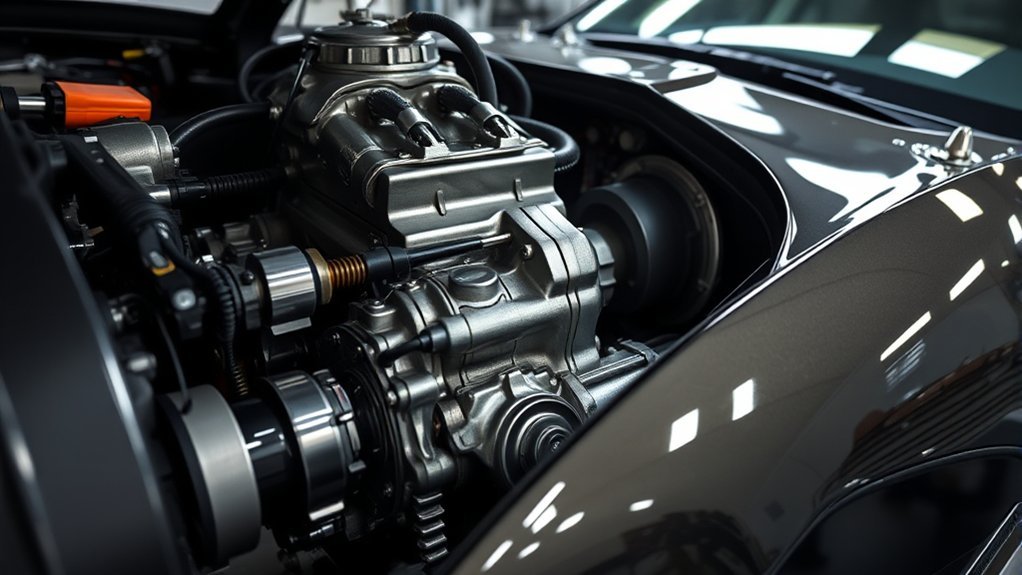
A hard shift or clunk in a Toyota Supra automatic usually comes from a short list of causes: a wrong fluid level, old or burnt fluid, worn engine, transmission or driveline mounts, or play in the driveline. Which car you own changes the list. The 1993-1998 MKIV (A80) uses a 4-speed A340E, while the 2020+ GR Supra (A90) uses a ZF 8-speed. Work through the checks below in order, from cheapest to most involved.
Which Supra Do You Have?
| Model | Automatic | What to check first |
|---|---|---|
| MKIII (1986-1992) | 4-speed automatic | Fluid level, throttle linkage adjustment, carrier bearing and mounts |
| MKIV / A80 (1993-1998) | A340E, 4-speed (2JZ-GE and 2JZ-GTE) | Fluid level and condition, mounts, driveline wear, transmission ECU codes |
| GR Supra / A90 (2020+) | ZF 8-speed automatic (8HP family) | Fluid level and condition at a dealer, driving mode, dealer software checks |
The GR Supra does not use a dipstick you can check at home, and it has no throttle linkage or carrier bearing in the sense older rear-drive cars do. Most of the do-it-yourself steps below apply to the MKIII and MKIV.
Common Causes of Hard Shifts and Clunks
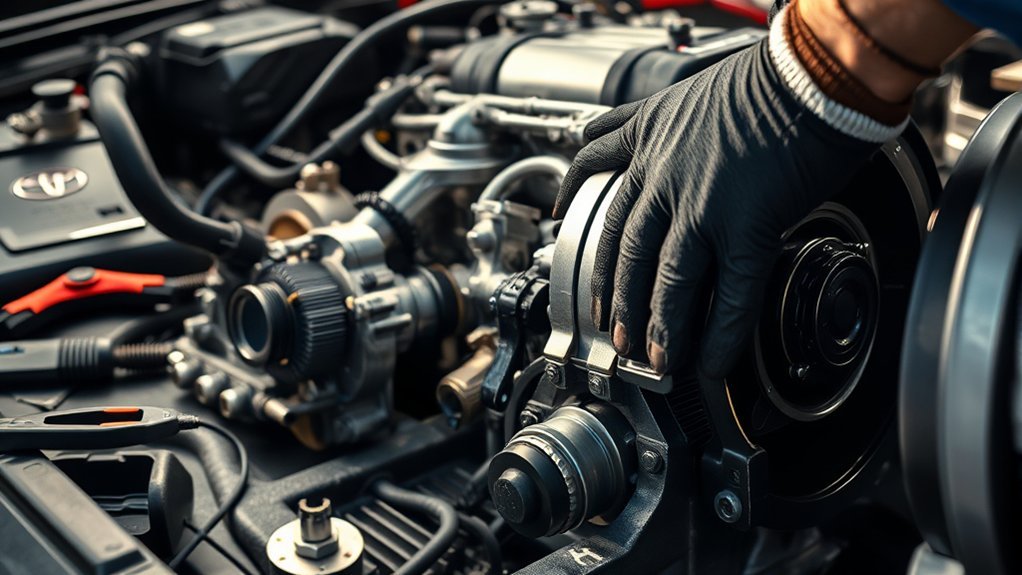
- Overfilled fluid. Too much fluid can make engagement harsher and can foam the fluid. Owners of older Supras often point to this first.
- Low, dirty or burnt fluid. Dark fluid with a burnt smell points to internal wear and heat damage.
- Worn engine and transmission mounts. The clunk you feel when you select Drive or Reverse can be the drivetrain moving on tired rubber rather than a gearbox fault.
- Driveline play. Stiff or worn U-joints, a worn carrier bearing or a loose differential mount let the car jolt as torque is applied.
- Throttle linkage out of adjustment. On the older cars with a throttle cable, the cable adjustment affects shift firmness. The factory service manual gives the procedure.
- Transmission ECU or sensor faults. A stored fault code can change shift behavior. A mismatched ECU, such as one from a manual-transmission car, will also cause problems.
- Driving mode. On the MKIV, Power mode shifts more firmly than Normal mode, so firm shifts in Power are expected.
How to Check the Fluid Level (MKIV A340E)
The MKIV repair manual gives this procedure. Check the level with the fluid at normal operating temperature, about 70-80 degrees C (158-176 degrees F), and read it on the HOT range of the dipstick.
- Park on level ground and apply the parking brake.
- Start the engine and let it idle.
- Move the selector through every position from P to L, then return to P.
- Pull the dipstick, wipe it clean, push it fully back in and pull it out again.
- Read the level against the HOT marks. It should fall within the range, not above it.
After long high-speed driving, hot weather, heavy traffic or towing, let the engine cool for about 30 minutes before checking. Look at the color too: clean fluid is red or pink, while brown or black fluid with a burnt smell means it needs service and a closer inspection. For the fluid type and capacity, check the factory service manual for your exact year.
Note: A GR Supra has no owner-accessible dipstick for this check. Level and condition are checked by a dealer or a shop with the right tools and procedure.
Step-by-Step Diagnosis for an Older Supra
- Confirm the fluid level and condition using the procedure above. Correct an overfill before anything else.
- Note when the clunk happens. A thump when shifting from Park into Drive or Reverse points toward mounts or driveline slack. A bang under hard acceleration points toward mounts or driveline. A harsh shift while moving suggests fluid, linkage or electronic control.
- Inspect the mounts. Have a helper shift between Drive and Reverse with the brake held while you watch the engine and transmission. Excessive movement, cracked rubber or torn mounts need replacing.
- Check the driveline. With the car safely supported on stands, look for play in the U-joints, carrier bearing and differential mounts, and check that their bolts are tight.
- Check the throttle cable adjustment against the factory procedure, if your car has one.
- Scan for codes. Have the transmission ECU read for stored faults, especially if the car has an aftermarket or swapped ECU.
- Change the fluid and clean the screen if the service history is unknown or the fluid looks dark.
Replacing Worn Mounts
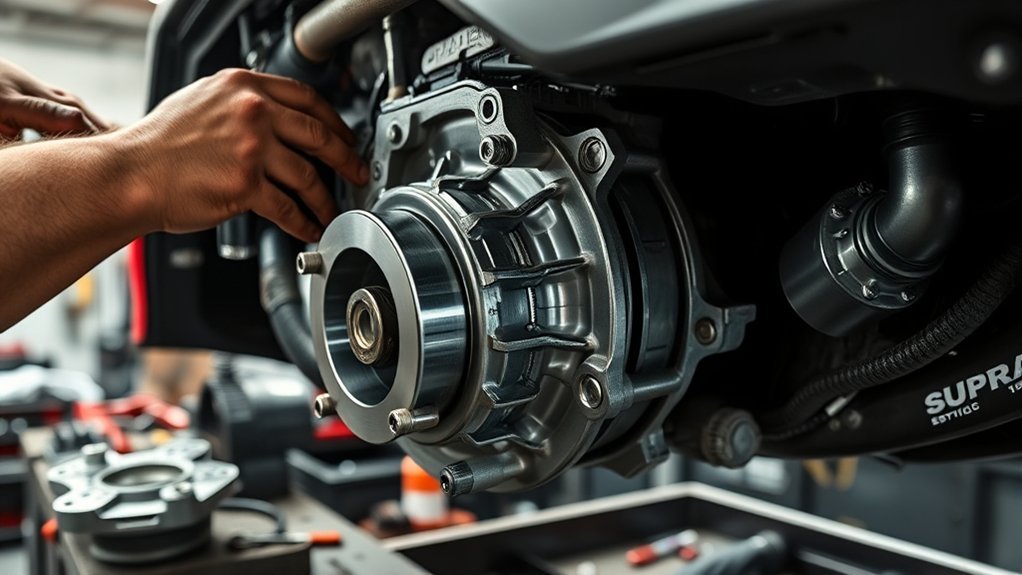
Rubber mounts harden and split with age, and on a 25-to-35-year-old Supra that is a common source of drivetrain thumps. Many owners replace them with new OEM mounts. Stiffer aftermarket options, such as TRD mounts, reduce movement but can add vibration and noise in the cabin. Prices vary by supplier and year, so get a current quote for the exact part numbers for your car.
Replace mounts as a set where possible. A single new mount next to tired ones shifts the load onto the old ones. Afterward, recheck the driveline bolts and the fluid level.
GR Supra (A90) Notes
The GR Supra pairs its 2.0 and 3.0 engines with the same ZF 8-speed automatic family and has no manual option in the US outside the later 3.0 manual model. Toyota’s specification for the automatic is ATF 3+ fluid according to published service schedules, and that schedule lists the fluid as inspect rather than a fixed replacement item for normal driving. ZF advises periodic fluid changes for track use or aggressive driving.
- Some shift firmness is normal in Sport mode and under hard acceleration. The ZF unit is tuned to be quick.
- Cold, low-speed shifts can feel firmer until the fluid warms up.
- A persistent clunk, flare between gears or a warning light needs a dealer scan. Software and adaptation resets happen at the dealer.
When to See a Shop or Dealer
- The transmission slips, flares between gears or will not engage a gear.
- The overdrive light flashes on an MKIV, or any transmission warning appears on a GR Supra.
- The fluid is dark, smells burnt or contains metal debris.
- The car is still under warranty. Have a Toyota dealer document and repair it.
Preventing Shift Problems
- Check the fluid level at the correct temperature a couple of times a year on an older Supra.
- Change fluid and filter on an older car when the history is unknown, then keep a record.
- Replace cracked or soft mounts before they damage the driveline.
- Let the transmission warm up before hard driving.
FAQ
Can overfilled transmission fluid cause hard shifts?
Yes. On the older Supras, an overfilled transmission can shift harshly and the fluid can foam. Check the level hot, on the HOT range, and drain the excess.
Why does my Supra clunk when I put it in Drive or Reverse?
The most common causes are worn engine or transmission mounts, driveline play, or a fluid level that is off. Check them before assuming internal transmission damage.
Does a stiff shifter mean a transmission problem?
Not necessarily. A stiff selector on an older car often comes from shift cable wear or adjustment. The GR Supra uses a shift-by-wire selector, so a problem there needs a dealer diagnosis.
Is hard shifting in Power mode a fault?
No. On the MKIV, Power mode holds gears longer and shifts more firmly. Switch to Normal mode to compare before diagnosing.
Does the GR Supra need a transmission fluid change?
Published service schedules list the fluid as inspect-only for normal use. Check your owner’s manual and ask a dealer, especially if you track the car.