If your Toyota Supra is hard to start in cold weather, check the cold start injector (CSI), as a malfunction can lead to insufficient fuel delivery. Inspect spark plugs and ignition components for wear and guarantee the fuel system maintains around 30 PSI. Verify the coolant temperature sensor for accurate air-fuel mixture readings. Address any electrical connection issues promptly. Keep monitoring these components for reliability, and there’s more to uncover about effective troubleshooting and quick fixes.
Common Cold Start Problems and Solutions for Toyota Supras
When temperatures drop, you might notice your Toyota Supra struggles to start, and understanding the common cold start problems can help you diagnose the issue efficiently. One crucial component is the cold start injector (CSI), which guarantees proper fuel delivery during cold starts. If the CSI malfunctions, you’ll likely experience prolonged cranking times or rough idling.
Additionally, inspect the coolant temperature sensor, as it influences the air-fuel mixture necessary for cold starts. Your fuel system components, including the fuel filter and pump, must also be checked for clogs or failures that could disrupt fuel delivery in colder conditions.
Verify all electrical connections related to the ignition system, making sure they’re intact and functional. Regularly monitoring fuel pressure and checking the CSI for leaks are essential diagnostic steps. Addressing these issues can enhance your Supra’s cold starting performance, liberating you from frustrating morning delays.
What Causes Cold Start Problems?
When you experience cold start problems in your Toyota Supra, the cold start injector (CSI) often takes the spotlight. A malfunctioning CSI can fail to deliver the extra fuel necessary for ignition in low temperatures. Additionally, ensuring fuel system integrity is vital; issues like clogged filters and weak pumps can severely impact your engine’s ability to start cold.
Cold Start Injector Issues
Although cold weather poses challenges for many vehicles, the Toyota Supra’s cold start injector (CSI) plays an essential role in ensuring a smooth engine start. When the CSI malfunctions, it can lead to hard starting issues, particularly in chilly conditions. A common problem is fuel leakage into the intake, which causes flooding and extended cranking times. You should inspect the CSI connectors to confirm they’re intact, as poor electrical connections can impair performance. Testing the CSI alongside the time switch is crucial to verify their operation, as these components manage the fuel supply during cold starts. Regular diagnostics, including monitoring fuel pressure and checking the coolant temperature sensor, can help identify and resolve cold start injector-related issues effectively.
Fuel System Integrity Checks
Proper fuel system integrity is essential for preventing cold start problems in your Toyota Supra. Issues with fuel delivery can directly impact your engine’s performance in cold weather. Here are some key areas to check:
- Fuel pump functionality: Confirm it’s delivering the correct pressure.
- Fuel filter condition: A clogged filter can restrict flow.
- Coolant temperature sensor: Verify accurate readings for ideal air-fuel mixture.
- Electrical connections: Inspect all connections related to the fuel system, especially the cold start injector.
- Fuel pressure retention: Monitor overnight to identify potential leaks.
Understanding the Role of the Cold Start Injector
The Cold Start Injector (CSI) plays a vital role in ensuring your engine receives additional fuel during cold starts, enhancing ignition. If you notice difficulty starting your Supra in low temperatures, a malfunctioning CSI could be the culprit. It’s important to test the injector and its connections to identify any issues that may be hindering proper fuel delivery.
Cold Start Injector Function
When temperatures drop, the Cold Start Injector (CSI) plays an essential role in guaranteeing your Toyota Supra starts smoothly. This component delivers extra fuel during cold starts, helping to combat hard starting issues. Here’s how the CSI functions effectively:
- Supplies additional fuel for easier ignition
- Works with a time switch to prevent engine flooding
- Guarantees optimal fuel delivery after failed start attempts
- Aids in minimizing rough idling and excessive fuel consumption
- Requires regular testing and inspection for leaks or electrical faults
The CSI’s proper functionality is critical, especially in older models where early ECUs may struggle with managing failed starts. Prioritizing the health of your cold start injector can greatly enhance your vehicle’s cold weather performance.
Symptoms of Malfunctioning CSI
If your Cold Start Injector (CSI) isn’t functioning correctly, you might notice several symptoms that signal trouble during cold starts. Typically, the engine may require multiple cranks to start, indicating inadequate fuel delivery. You could also experience rough idling when the engine is cold, a clear sign that the CSI isn’t supplying the necessary extra fuel for smooth operation. Additionally, you might detect fuel flooding in the intake manifold, which occurs when the CSI leaks or malfunctions. Ultimately, these issues compromise the engine’s performance and reliability in cold weather. Addressing these symptoms quickly is essential, as they can lead to more severe starting problems if left unresolved.
Testing and Troubleshooting Steps
Understanding how to test and troubleshoot the Cold Start Injector (CSI) becomes essential once you’ve identified symptoms like extended cranking times and rough starts. Follow these steps to diagnose the issue effectively:
- Inspect electrical connectors for signs of wear or poor connections.
- Check fuel pressure retention; a drop may indicate CSI or fuel delivery problems.
- Test the CSI for functionality using a multimeter.
- Swap the CSI with a known good unit to confirm if it’s the culprit.
- Clean any carbon deposits around the injector to guarantee peak performance.
Fuel System Integrity for Cold Starts
Maintaining fuel system integrity is critical for reliable cold starts in the Toyota Supra, especially as temperatures drop. Start by checking the cold start injector (CSI); it must be properly connected and functional to deliver the extra fuel needed when the engine is cold. Monitor the fuel pressure, making sure it retains around 30 PSI after sitting idle. If the pressure is low, verify that the fuel pump is operating effectively and the fuel filter isn’t clogged, as these can hinder cold starting performance. Additionally, inspect the coolant temperature sensor; a malfunction here can disrupt the fuel mixture, leading to improper delivery during cold starts. Finally, regularly check for air leaks in the intake system, as they can compromise the essential air-fuel mixture for an effective cold start in your 5MGE engine. Proper fuel system integrity guarantees you can confidently tackle cold weather conditions.
How to Diagnose Electrical Problems That Cause Starting Issues
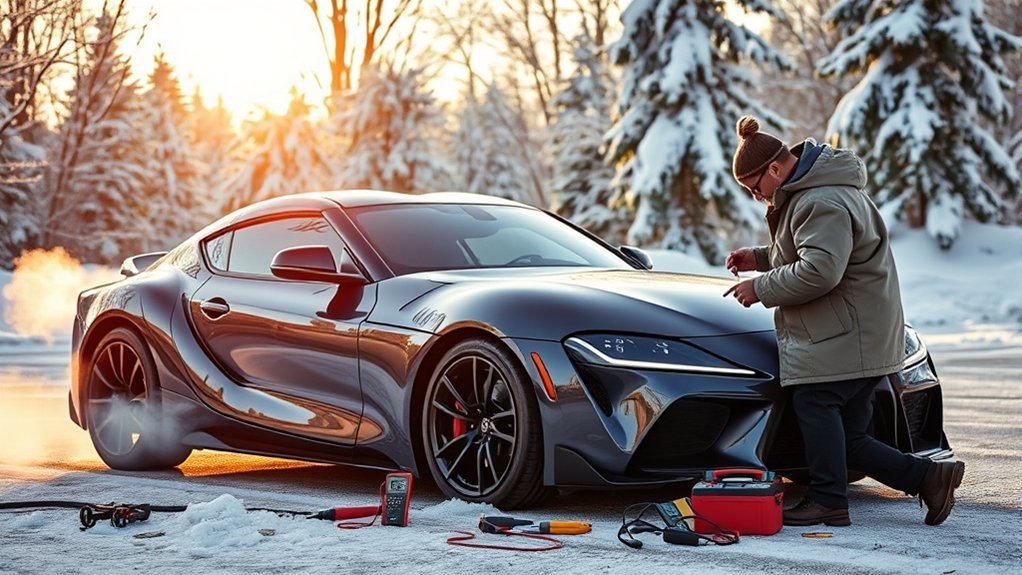
When diagnosing electrical problems that cause starting issues in your Toyota Supra, it’s crucial to systematically check key components. Follow these steps to pinpoint the cause:
- Inspect the Crankshaft Position Sensor (CPS) for electrical faults; faulty coils can impede starting in cold weather.
- Check the connectors and wiring of the cold start injector (CSI) to verify they’re intact, as poor connections can disrupt fuel delivery.
- Use a multimeter to test the ignition coils for proper voltage; weak coils can lead to misfires and hard starts.
- Monitor the battery’s voltage and health; a weak battery struggles to provide sufficient cranking power in low temperatures.
- Verify the coolant temperature sensor’s functionality; incorrect readings can disrupt the engine’s fuel management system, affecting cold starts.
Cold Start: Inspecting Spark Plugs and Ignition Components
A thorough inspection of the spark plugs and ignition components is crucial for diagnosing cold start issues in your Toyota Supra. Start by examining the spark plugs for wear, carbon buildup, or oil contamination; any of these can hinder ignition during cold starts. Next, inspect the ignition wires to confirm they’re intact, free of cracks or corrosion—faulty wires can lead to weak spark delivery. Don’t overlook the distributor cap and rotor; check for damage or moisture, as this can disrupt spark distribution and complicate starting. If you find old or worn spark plugs, replace them with the recommended type for the 7MGE engine to boost performance and cold start reliability. Finally, verify the ignition coil‘s function; a weak or failing coil might cause inconsistent spark, further contributing to your starting difficulties in colder temperatures. Addressing these components can greatly improve your vehicle’s cold weather performance.
Testing Fuel Pressure for Cold Start Reliability
Inspecting the ignition components is only part of diagnosing cold start issues in your Toyota Supra; fuel pressure plays a significant role too. To guarantee reliable cold starts, follow these steps to test your fuel pressure effectively:
- Check the fuel rail pressure, ideally around 30 PSI.
- Monitor pressure retention overnight to spot leaks or delivery problems.
- Install a fuel pressure gauge to assess system pressure before starting.
- Verify the functionality of the cold start injector (CSI) and confirm its connectors are intact.
- If issues persist, swap the CSI with a known working unit to identify the culprit.
Regularly monitoring fuel pressure and delivery during cold starts can provide insights into your fuel system’s health. By systematically checking these elements, you can address potential issues that hinder your Supra’s starting reliability in cold weather.
User Experiences With Cold Starting Issues
How do fellow Toyota Supra owners tackle hard starting issues in cold weather? Many report needing several cranks to get their engines running, especially after the car sits for days. A common troubleshooting method is checking the cold start injector (CSI); a faulty CSI can hinder fuel delivery, exacerbating cold starts. Users often emphasize the importance of verifying spark plug conditions, ensuring even spark across all plugs to mitigate persistent issues.
Some drivers have discovered that flooring the gas pedal during cranking can effectively reduce the number of attempts it takes to start in frigid conditions. Reports indicate rough starts may last around two seconds, primarily when temperatures drop. Engaging with community discussions reveals a shared commitment to addressing these hard starting issues, empowering owners to enhance their Supra experience in challenging weather.
Quick Fixes for Hard Starting in Cold Weather
What quick fixes can you implement to tackle hard starting issues in cold weather? Addressing these problems promptly can save you time and frustration. Here are some steps to take into account:
- Inspect the cold start injector (CSI) for proper function; it’s essential for delivering fuel during cold starts.
- Check spark plugs, wires, and distributor cap; electrical issues can hinder starting performance.
- Monitor fuel pressure; verify it’s around 30 PSI, as any drop indicates potential fuel pump or filter issues.
- Verify the coolant temperature sensor’s operation; it affects the air-fuel mixture critical for cold starts.
- Temporarily block off the CSI to test for flooding; a leaking injector may lead to hard starting by over-fueling the engine.
Frequently Asked Questions
Why Is My Car Having a Hard Time Starting When It’s Cold?
Your car struggles to start in cold weather due to decreased engine performance. Issues like fuel delivery inefficiency, faulty spark plugs, or a malfunctioning coolant temperature sensor can all contribute to this frustrating problem.
How to Fix Hard Starts in Cold Weather?
To fix hard starts in cold weather, guarantee your fuel system’s pressure is stable, check battery health, and replace worn spark components. A well-maintained engine thrives, releasing its true potential even in icy conditions.
How to Fix Cold Start Problem?
To fix your cold start problem, check the fuel system for leaks and verify your battery health is ideal. Inspect the cold start injector and coolant temperature sensor for functionality to improve starting performance.
Why Is My Car Struggling to Start but Runs Fine?
If your car struggles to start but runs fine, it’s likely due to battery issues affecting engine performance. Check for weak connections, corrosion, or a failing battery to guarantee reliable starts under all conditions.
Conclusion
In summary, if your Toyota Supra struggles to start in cold weather, addressing common issues like the cold start injector, fuel system integrity, and electrical components is essential. Picture yourself in the garage, tools in hand, troubleshooting like a seasoned mechanic from the ’80s. By following the outlined steps and quick fixes, you can enhance your vehicle’s performance and reliability, ensuring your Supra roars to life even in frigid temperatures. Don’t let cold weather keep you from the open road!