What’s in This Article
- What You Need to Know About ATF for Your Toyota Supra
- Fluid Change Intervals and Best Practices
- Which Automatic Transmission Fluid Should You Use for Your Model Year?
- What You Need Before You Check or Change ATF
- How to Check and Change Your Supra’s ATF Safely
- Common ATF Issues and How to Solve Them
- Why Using Manufacturer-Recommended Fluids Is Crucial
- Tips for DIY Transmission Maintenance and Repairs
- When You Should Stop and Call a Transmission Shop
- Frequently Asked Questions
Last updated: May 30, 2026
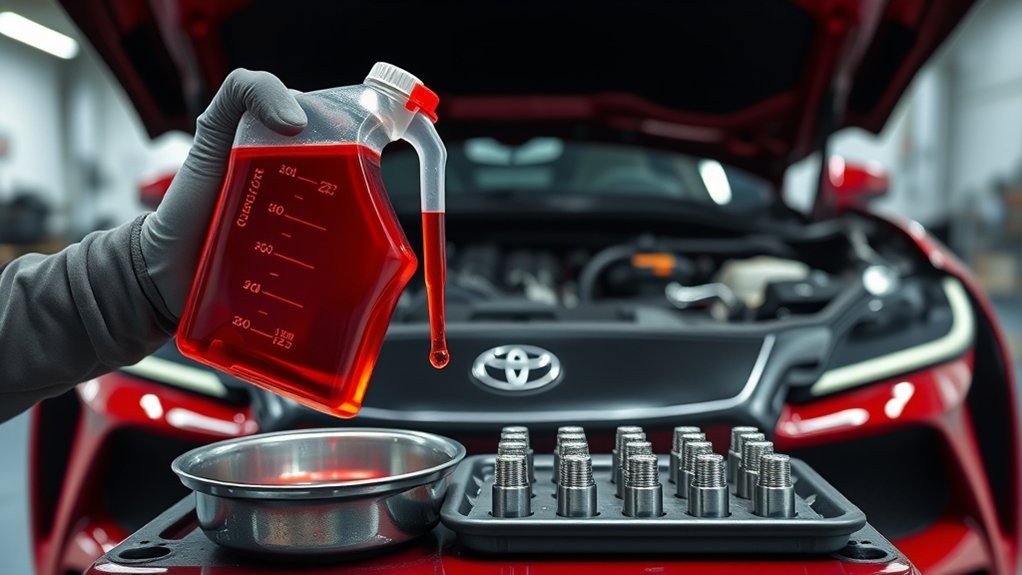
Your Toyota Supra can shift well for years, but the wrong automatic transmission fluid (ATF) can cause real damage fast. Supra ATF needs depend on the model year, engine, and transmission, so you should never choose fluid by the Supra name alone. This guide explains how to match the right fluid, check fluid condition, plan service intervals, and avoid common DIY mistakes.
Quick Answer
Use the ATF type listed in your Supra owner’s manual, on the transmission dipstick, or in Toyota service data for your exact model. Older Supra models may call for Type F, Dexron II, Toyota D-II, Type T-II, or Type T-IV, while newer GR Supra automatic models list Automatic Gearbox Oil ATF 3+. If you can’t verify the fluid spec, stop before adding fluid and ask a qualified transmission shop.
Key Takeaways
- Match ATF to your exact Supra model, transmission, and engine.
- Use Toyota service data before you trust a general fluid chart.
- Choose drain and refill service over a force flush on older or unknown-service transmissions.
- Check fluid color, smell, level, and leaks before you plan a fluid change.
- Call a shop if your Supra slips, shudders, overheats, or has no dipstick service path.
What You Need to Know About ATF for Your Toyota Supra

ATF does more than lubricate your Toyota Supra’s automatic transmission. It also helps control clutch apply feel, heat transfer, hydraulic pressure, and smooth gear changes.
The correct ATF depends on the transmission fitted to your car. Some early MkII references list Type F for certain 1982 models and Dexron II for later A43-series units, but you should confirm this against your dipstick, owner’s manual, or transmission tag before adding fluid.
Later Supra models use different fluids. A 1997 Supra owner’s manual lists ATF D-II or Dexron III for 2JZ-GE automatic models and Type T-II or equivalent for 2JZ-GTE automatic models. Newer GR Supra automatic models list Automatic Gearbox Oil ATF 3+ in Toyota owner information.
Check your fluid’s color, smell, and level before you change anything. Bright red or clean amber fluid usually looks healthy, while dark fluid, burnt odor, metal debris, or delayed shifts point to a problem that needs more care.
Fluid Change Intervals and Best Practices
You should treat ATF service as model-specific maintenance, not a single mileage rule for every Supra. Your owner’s manual and service information should guide the interval first.
ZF says many of its automatic transmissions use lifetime oil under normal use, but it also recommends an oil change after 150,000 km. ZF also says shorter intervals can make sense under high heat, high load, or unknown prior use.
Recommended Change Intervals
Older Supra automatics often benefit from careful drain and refill service if the fluid looks old but the transmission still shifts well. Avoid treating 50,000 miles as a universal rule, because Toyota and ZF guidance varies by generation.
If you drive hard, track the car, tow, sit in heavy heat, or bought a Supra with no service history, inspect the ATF sooner. If the fluid smells burnt or the transmission already slips, ask a shop before you disturb the fluid.
Why the Correct ATF Type Matters
The correct fluid protects shift feel, clutch friction, seals, and heat control. The wrong fluid can cause harsh shifts, slipping, overheating, or long-term transmission wear.
Use this quick condition check before you decide your next move:
| Fluid Condition | Action Required |
|---|---|
| Dark, burnt-smelling | Stop and get a diagnosis |
| Fluid with debris | Stop and get a diagnosis |
| Low level | Find the leak, then refill correctly |
| Clean and at the right level | Follow the service schedule |
Fluid condition tells you more than mileage alone. Low fluid can point to a leak, while dirty fluid with metal flakes can point to wear inside the transmission.
Should You Change Supra ATF Yourself or Hire a Shop?
A DIY ATF change can work if your Supra has a simple drain plug, a clear fill path, and a known fluid spec. You still need a level surface, safe lift points, the correct ATF, a drain pan, basic hand tools, and the correct level-check procedure.
Hire a shop if your Supra uses a sealed transmission, requires a scan tool, or needs a strict temperature-based fill process. Modern GR Supra automatic service can require more care than an older dipstick-style Toyota automatic.
Which Automatic Transmission Fluid Should You Use for Your Model Year?
Choose ATF by the exact transmission, not by a broad year range. Use the table below as a starting point, then confirm the spec on your car before you buy fluid.
| Supra Model or Transmission | ATF Guidance to Verify |
|---|---|
| 1982 MkII automatic | Many references list Type F; verify with dipstick or manual |
| 1983-1986 MkII A43-series automatic | Common references list Dexron II or Toyota D-II for later units; verify first |
| 1993-1998 U.S. MkIV 2JZ-GE automatic | Toyota manual lists ATF D-II or Dexron III |
| 1993-1998 U.S. MkIV 2JZ-GTE automatic | Toyota manual lists Type T-II or equivalent |
| 2020-2026 GR Supra automatic | Toyota owner information lists Automatic Gearbox Oil ATF 3+ |
Note: If your dipstick, owner’s manual, and online chart disagree, trust the vehicle-specific Toyota source or a qualified transmission shop.
Do not mix Type F, Dexron, Toyota Type T, and modern ATF 3+ fluids by guesswork. These fluids serve different friction and pressure needs.
What You Need Before You Check or Change ATF
Gather the right information before you open the drain plug. You need your model year, engine, transmission type, fluid spec, service capacity, and level-check method.
You may also need gloves, eye protection, a drain pan, a torque wrench, new crush washers, a fluid pump, and jack stands rated for the car. Some sealed transmissions need a scan tool or diagnostic app to read fluid temperature during the final level check.
How to Check and Change Your Supra’s ATF Safely

Start with the service method for your exact Supra. Older dipstick-style models and newer sealed transmissions do not use the same steps.
- Park safely: Place your Supra on a level surface and let hot parts cool enough to touch safely.
- Confirm the fluid spec: Check the owner’s manual, dipstick marking, service manual, or transmission tag.
- Inspect the old fluid: Look for burnt smell, dark color, metal debris, foam, or signs of coolant contamination.
- Drain carefully: Remove the drain plug only after you confirm you can refill the transmission.
- Refill with the correct ATF: Add only the fluid type and amount your service procedure calls for.
- Set the final level: Follow the exact warm-up, shift-cycle, temperature, and level-check steps for your transmission.
- Check for leaks: Recheck the pan, drain plug, fill plug, cooler lines, and test-drive behavior.
Do not use one universal temperature target for every Supra. Older Toyota automatics and modern ZF-style sealed units can use different level-check procedures.
Common ATF Issues and How to Solve Them
ATF issues often start with low fluid, old fluid, leaks, overheating, or the wrong fluid type. You may notice delayed engagement, harsh shifts, flare between gears, shudder, or a burnt smell.
If the fluid looks low, find the leak before you top it off. If the fluid smells burnt or contains debris, avoid a force flush and ask a shop to inspect the transmission before service.
If your Supra overheats the ATF during hard driving, check the cooler, lines, radiator condition, and fluid level. Fresh fluid can help, but it will not repair worn clutches, a clogged cooler, or a failing valve body.
Why Using Manufacturer-Recommended Fluids Is Crucial
Manufacturer fluid specs exist because each transmission needs a specific friction profile. A fluid that works in one Supra generation can shift poorly or cause wear in another generation.
- Shift quality: Correct ATF helps your transmission apply clutches at the right rate.
- Heat control: Correct ATF helps move heat away from internal parts.
- Wear protection: Correct ATF protects seals, bushings, gears, and clutch packs.
- Repair cost control: Correct ATF reduces the risk of avoidable damage.
ZF warns that unapproved oils in its 8HP transmissions can harm shift behavior and may lead to transmission failure. Toyota’s newer GR Supra owner information lists ATF 3+ for the automatic gearbox, so do not use generic Dexron or Type F fluid in a modern GR Supra.
Tips for DIY Transmission Maintenance and Repairs
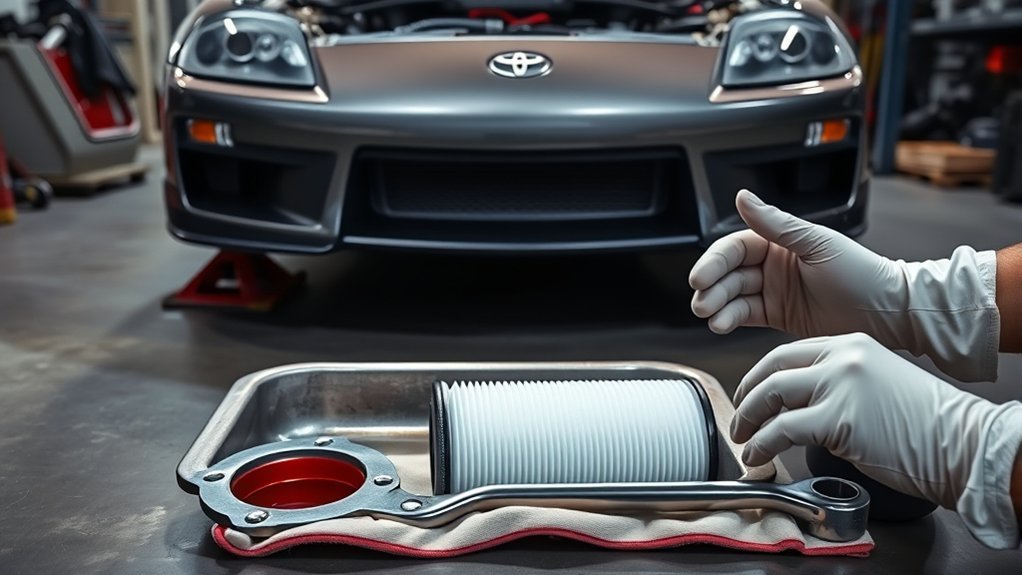
You can handle basic ATF checks if you have the right service data and a safe place to work. Never crawl under a car held only by a jack, and never open a hot transmission pan without eye and hand protection.
Warning: Hot ATF can burn skin, and an unsafe lift setup can cause serious injury.
Use a drain and refill approach unless Toyota service information or a qualified shop recommends another method for your case. A force flush can create risk on an older transmission with unknown service history.
Measure the drained fluid if your service method calls for it. This helps you add a safe starting amount before you complete the final level check.
When You Should Stop and Call a Transmission Shop
Stop DIY work if your Supra slips, bangs into gear, shudders, overheats, or shows metal debris in the fluid. A fluid change will not always fix those symptoms.
You should also call a shop if you cannot confirm the ATF spec, cannot find the fill point, or need a scan tool for the final level check. A small service mistake can cost more than a professional fluid change.
Frequently Asked Questions
How do you do a complete Toyota Supra transmission fluid change?
Use the service procedure for your exact Supra and transmission. In most cases, a careful drain and refill works safer than a force flush, especially on older cars with unknown service history.
What ATF does Toyota recommend for a Supra?
Toyota’s recommendation depends on the generation and transmission. Older models may list Type F, Dexron II, Toyota D-II, Type T-II, or Type T-IV, while newer GR Supra automatic models list ATF 3+.
Is it okay to do a full transmission flush at 70,000 miles?
Do not choose a full flush by mileage alone. If the fluid smells burnt, contains debris, or the transmission slips, get a diagnosis before you flush or change the fluid.
How do you check Toyota Supra automatic transmission fluid level?
Older dipstick-style transmissions usually need warm fluid and a level surface. Sealed transmissions may require a fill plug, a specific fluid temperature, and a scan tool or diagnostic method.
Can you mix different ATF types in a Toyota Supra?
You should not mix ATF types unless Toyota service data clearly allows it. Mixing the wrong fluids can change shift feel and may damage internal transmission parts.
Safety Disclaimer: This article is for informational purposes only and does not replace Toyota service information or professional mechanical advice. Always use proper lift equipment, wear protection, and consult a qualified technician before working under your vehicle or servicing a sealed transmission.
Conclusion
The best ATF for your Toyota Supra is the fluid Toyota specifies for your exact transmission. Start with the owner’s manual, dipstick marking, or service data before you buy fluid or open the drain plug.
If the fluid looks clean and the car shifts well, plan a careful service around the correct interval and method. If you see burnt fluid, debris, slipping, or leaks, get a diagnosis before you change anything. A cautious service decision today can help your Supra shift smoothly for many more miles.
References
- Supra Owner’s Manual U, from March 2025 Production — Toyota, 2025
- ZF LifeguardFluid 8 Product Data Sheet — ZF Friedrichshafen AG, 2021
- 1997 Toyota Supra Owner’s Manual — Toyota manual mirror
- Toyota Service News Bulletin, February 1984 — Toyota service bulletin archive
- Toyota Owner’s Manual Search — Toyota Europe