
Tire pressure that is too high wears the center of the tread, and pressure that is too low wears both shoulders. To avoid these patterns, set each tire to the cold pressure on your vehicle’s placard, check it at least monthly, and rotate the tires on schedule. Other patterns, such as cupping, feathering and one-sided wear, usually point to suspension or alignment problems instead of pressure.
How Pressure Changes the Way a Tire Wears
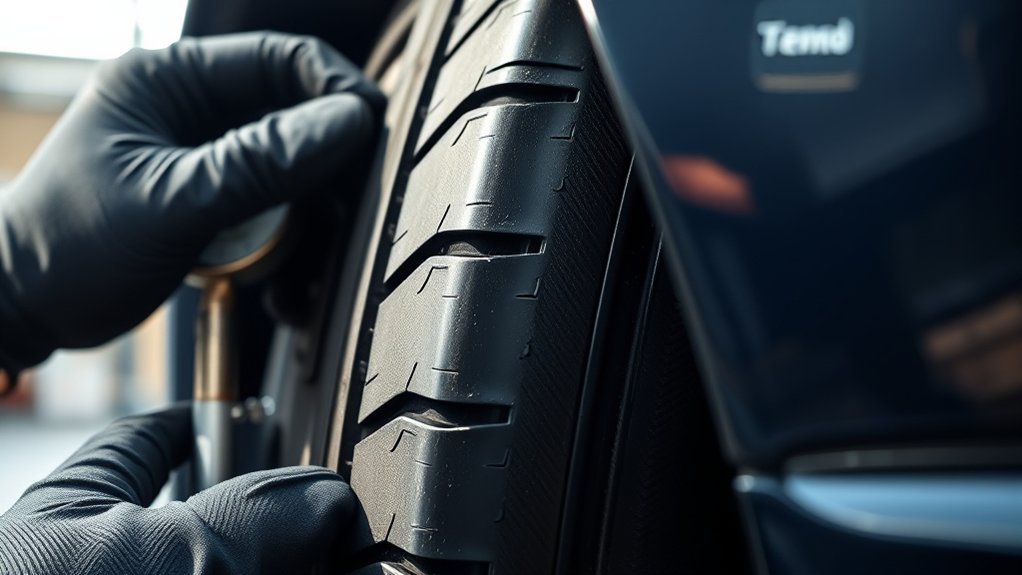
A tire’s tread touches the road through a contact patch. The air pressure decides how that patch is shaped. At the correct pressure the tread sits flat and wears evenly across its width. Change the pressure and the load shifts to one part of the tread.
| Wear pattern | What you see | Likely cause | What to do |
|---|---|---|---|
| Center wear | Middle of the tread worn smoother than the shoulders | Overinflation | Set pressure to the placard value |
| Both shoulders worn | Outer and inner edges worn more than the center | Underinflation, a slow leak or a puncture | Inflate to spec and have the tire checked for leaks |
| One shoulder worn | Only the inside or outside edge is worn | Alignment problem (camber or toe) | Have the alignment checked |
| Cupping (scalloping) | Scooped dips around the tread | Often worn suspension parts | Inspect shocks, struts and bushings |
| Feathering | Tread ribs smooth on one edge and sharp on the other | Commonly alignment (toe), worn suspension or skipped rotations | Check alignment and suspension; rotate on schedule |
Discount Tire’s wear-pattern guide lists overinflation as the cause of center wear, underinflation or a slow leak as the cause of wear on both shoulders, and vehicle misalignment as the cause of alignment wear.
Overinflation and center wear
An overinflated tire crowns in the middle, so the center carries more of the load. The tread there wears faster, and the smaller contact patch can reduce grip. The fix is to reduce pressure to the placard value when the tire is cold. A quick check: if the center of the tread is clearly more worn than the edges and the placard pressure is correct now, the tire was probably run too high earlier.
Underinflation and shoulder wear
A low tire flexes more and pushes its shoulders into the road. The outer edges wear faster, and the extra flexing builds heat. Severely low pressure can also cause heat damage and exposed cords, and Discount Tire’s guide lists underinflation and overloading among the causes of belt separation, which calls for replacement. If both shoulders show wear, check for a slow leak as well as the pressure setting.
Cupping and feathering are not pressure problems
Correct pressure will not cure cupping or feathering. Goodyear notes that cupping may be related to your suspension, and Discount Tire lists worn suspension and skipped rotations among the causes of irregular wear. If you see scalloped dips or a saw-tooth feel when you run a hand across the tread, have a shop inspect shocks, struts, bushings and alignment.
How to Check and Set Cold Pressure
- Let the car sit for at least three hours, or drive less than one mile, so the tires are cold.
- Find the recommended pressure on the driver’s door-jamb placard or in the owner’s manual. Do not use the “Max Press” number on the sidewall; that is the tire’s limit, not the recommendation.
- Remove the valve cap, press the gauge onto the valve and read the pressure.
- Add air in short bursts, or press the valve pin to release air, until the gauge matches the placard.
- Refit the valve caps and repeat for every tire, including the spare if it is a full-size or compact spare with its own listed pressure.
You will need a quality gauge and a compressor. A valve-core tool is only needed if you are dealing with a leaking valve.
Monthly and Pre-Trip Checklist
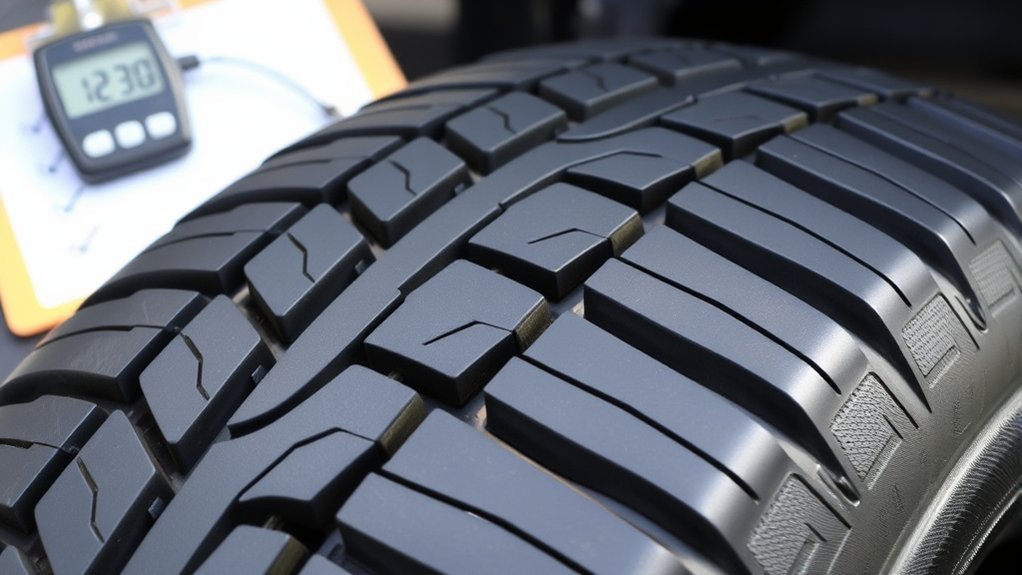
NHTSA advises checking tire pressure at least once a month, including the spare, and before long trips. Each time:
- Check cold pressure on all tires and write the numbers down. A tire that drops faster than the others points to a slow leak.
- Look at the tread across its full width for wear differences between center, shoulders and edges.
- Look for cracks, bulges, cuts and embedded objects such as nails.
- Make sure every valve has a cap.
- Measure tread depth.
Measuring tread depth
NHTSA says a tire should be replaced when the tread has worn to 2/32 of an inch. Two checks:
- Penny test: put a penny into the tread with Lincoln’s head upside down and facing you. If you can see the top of his head, replace the tire.
- Treadwear indicators: raised bars in the grooves. When the tread is worn level with them, the tire is at its wear limit.
Uneven wear means different parts of the same tire may reach the limit at different times, so measure in several places across the tread.
Rotation, Balancing and Alignment
NHTSA’s tire guidance suggests rotating tires every 5,000 to 8,000 miles if your manufacturer recommends it, or sooner if you see uneven wear. Some vehicles, for example those with different tire sizes front and rear, cannot be rotated in the usual pattern, so check the owner’s manual.
- Rotation moves each tire to a different position so the front and rear tires wear at a similar rate.
- Balancing corrects vibration from an uneven weight distribution around the wheel. It is commonly done when tires are mounted and whenever you feel vibration at speed.
- Alignment sets the angles of the wheels. NHTSA notes that alignment prevents the car from veering to the right or left on a straight, level road. Have it checked if the car pulls, if the steering wheel is off center, or if one tire edge wears faster than the rest. It is also worth checking after suspension work or a hard curb or pothole impact.
Suspension and Steering Clues
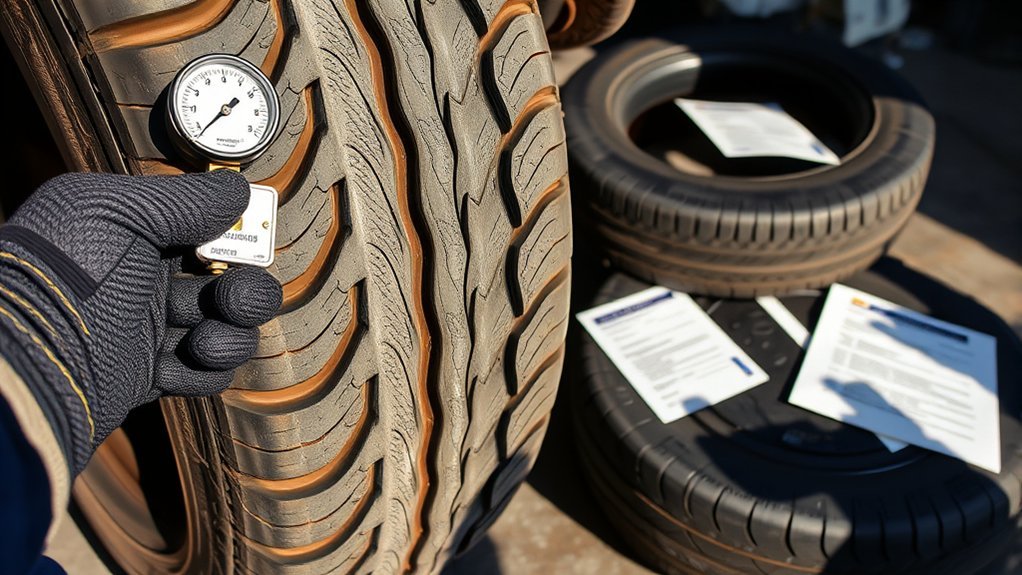
When the wear pattern does not match a pressure problem, look for these signs:
- The car pulls to one side on a flat road (alignment, or a tire with uneven pressure or wear).
- The ride bounces more than before or the front dips heavily under braking (worn shocks or struts).
- Vibration or a humming noise that changes with speed (an unbalanced wheel, cupped tread or a damaged tire).
- Clunks over bumps or loose steering (worn bushings, ball joints or tie rods).
A shop can confirm which part is worn. Fixing the cause matters because a new set of tires on the same faulty suspension will wear out the same way.
When to Repair or Replace
- Tread at 2/32 inch or less: replace the tire.
- Bulge in the sidewall: replace it immediately. Discount Tire’s guide describes a sidewall bulge from impact as not repairable.
- Exposed cords: replace immediately. Driving is unsafe once cords are visible.
- Nail or puncture in the tread area: have a tire shop inspect it. Repairability depends on the location and size of the damage, so do not plug a tire yourself as a permanent fix.
- Premature or uneven wear: ask the tire maker or seller whether the wear falls under the tire’s treadwear warranty. Terms differ by brand and model, and most require proof that the tires were inflated correctly and rotated on time. Keep your purchase receipt and your pressure and rotation records.
Frequently Asked Questions
What causes uneven tire wear?
The main causes are incorrect inflation, misalignment, worn suspension parts and skipped rotations. The pattern on the tread helps you tell them apart: center wear points to overinflation, both shoulders to underinflation, and one edge to alignment.
Is there a “5 PSI rule” or “3% rule” for tire pressure?
Neither is an official standard that we could verify. The target is the vehicle maker’s cold pressure on the placard. Being a few PSI off is better than being far off, but there is no reason to accept being low or high when checking and adjusting takes a few minutes.
How often should I check my tire pressure?
At least once a month and before long trips, with the tires cold. Weekly checks are fine if you want an easier habit to catch slow leaks, but the official minimum is monthly.
Can I fix uneven wear that has already happened?
No, worn tread cannot be restored. Correct the cause, and keep the tires until they reach the 2/32 inch wear limit if the remaining tread is even enough to drive safely and there is no damage. A shop can advise if the wear is severe or causing vibration.
Will rotating tires stop cupping?
Rotation spreads wear between positions but does not fix a worn shock, strut or bushing. Repair the suspension first, then rotate on schedule.
Conclusion
Most pressure-related wear is easy to prevent: keep cold pressure at the placard value, check the tires monthly, rotate them at the interval in your manual and have alignment and suspension checked when the wear pattern or the handling tells you something is off.

1 thought on “Tire Pressure and Tire Wear: How to Avoid Uneven Wear Patterns”