How to Read Tire Pressure Guidance in Your Owner’s Manual
What’s in This Article
- Quick Answer: Which Tire Pressure Should You Use?
- Find the Tire Pressure Label on Your Vehicle
- Read Your Tire Size, Load Index, and Speed Rating
- Choose Pressure: Unladen vs. Laden (How to Decide)
- Measure Tire Pressure: When, How, and What Tools to Use
- Adjust Front and Rear Tire Pressure for Passengers and Cargo
- Why Correct Tire Pressure Matters for Safety and Fuel Economy
- Common Mistakes and Quick Maintenance Checklist
- Frequently Asked Questions
- Conclusion
Wrong tire pressure can make your vehicle feel loose, noisy, or hard to control. The good news is simple: your vehicle already tells you the correct cold pressure values. Check the driver’s door jamb first, then the door frame, glovebox, or fuel flap if needed. Use the tire information label and owner’s manual, not the tire sidewall, to set safe pressure for normal driving, trips, and heavy loads.
Quick Answer: Which Tire Pressure Should You Use?
Use the cold tire pressure printed on your vehicle’s tire information label. You’ll usually find it on the driver’s door jamb, but some vehicles place it on the door frame, glovebox, or fuel flap. Match the pressure to your tire size and load condition, such as normal driving or fully loaded travel.
Key Takeaways
- Use the tire pressure label and owner’s manual as your main pressure guide.
- Check pressure when the tires are cold for the most accurate reading.
- Match front and rear pressure to the tire size and load condition.
- Do not use the tire sidewall number as your normal inflation target.
- Check tire pressure monthly and before long trips or heavy loads.
The owner’s manual repeats the vehicle maker’s pressure guidance, but the on-vehicle label gives you the fastest check. Many labels list separate values for front and rear tires. Some also show different pressure values for unladen and fully laden driving.
Always measure when tires are cold. Driving warms the tires and can raise the pressure reading, which may lead you to remove too much air. Correct inflation improves safety, steering response, fuel economy, and tire wear.
Find the Tire Pressure Label on Your Vehicle
Look for the tire pressure label on the driver’s side door jamb first. It’s the most common location and usually lists recommended pressures for front and rear tires. If you don’t see it there, check the door frame, glovebox, or fuel filler flap.
The label may also list tire size, load rating, and speed rating. Use those details to match the right pressure to the tires fitted on your vehicle.
Location of the Label
Start with the driver’s side door jamb or the inside of the fuel filler cap. These spots give you quick access before you drive.
- Look for front and rear pressure values.
- Check whether the label lists normal and fully loaded pressure.
- Match the tire size on the label to your fitted tires.
- Check the glovebox or lower door frame if the label is missing from the jamb.
- Review the label during routine checks and after tire replacement.
Use the label as your main reference. It removes guesswork and helps you maintain safe, stable handling.
Door and Frame Areas
Door and frame areas often hold the pressure label because they stay protected and easy to see. Open the driver’s door and scan the jamb, latch area, and nearby frame.
You may see pressure listed in pounds per square inch (PSI), bar, or both. The label can also show tire size, such as 275/40 R19, and load-based settings.
| Location | Info Shown | Purpose |
|---|---|---|
| Door jamb | PSI/bar, tire sizes | Main inflation reference |
| Frame area | Load settings | Adjust pressure for weight |
Glovebox and Fuel Flap
Some vehicles place the tire pressure label inside the glovebox or fuel flap. These labels often list cold tire pressures, tire size, and load-based pressure changes.
- Use the label to find front and rear cold pressure values.
- Check whether the label shows different values for heavy loads.
- Confirm the listed tire size before using the pressure value.
- Take a photo of the label so you can check it quickly later.
- Use the owner’s manual if the label looks worn or hard to read.
Note: If your vehicle has aftermarket wheels or non-standard tires, ask a qualified tire shop to confirm the correct pressure range.
Read Your Tire Size, Load Index, and Speed Rating
Tire markings pack several useful details into one short code. A size like 275/40R19 means the tire is 275 millimeters wide, has a 40 aspect ratio, and fits a 19-inch wheel.
The tire information label may also list a load index and speed rating. The load index shows how much weight each tire can carry. The speed rating shows the tire’s rated speed limit under proper conditions.
Never fit tires with a lower load index or speed rating than your vehicle requires. If you’re unsure, check your owner’s manual or ask a qualified tire technician.
| Item | Meaning |
|---|---|
| 275/40R19 | Width, aspect ratio, wheel diameter |
| Load index | Maximum load per tire |
| Speed rating | Rated speed limit |
| Vehicle sticker | Recommended size and pressure |
Choose Pressure: Unladen vs. Laden (How to Decide)
Choose tire pressure based on how much weight your vehicle carries. Unladen usually means normal driving with light cargo. Laden means the vehicle carries passengers, luggage, tools, or other heavy items.
Your tire information label or owner’s manual may show two pressure sets. For example, one vehicle may use about 2.3 bar for light loads and about 2.6 bar for full loads. Your vehicle’s exact label matters more than any general example.
Read the tire size and load details first, then set the pressure from the vehicle label before you drive.
- Use the unladen value for normal solo driving or light daily use.
- Use the laden value when carrying several passengers or heavy cargo.
- Adjust pressure before a long trip, not after the tires heat up.
- Follow the front and rear split shown on the label.
- Recheck pressure after large temperature changes.
Measure Tire Pressure: When, How, and What Tools to Use
Check tire pressure when the tires are cold. For most drivers, that means before driving or after the vehicle has sat for at least three hours.
Use a reliable pressure gauge that reads in PSI, bar, or both. Press the gauge firmly onto the valve stem, read the value, and compare it with the vehicle label.
When to Check
Check tire pressure at least once a month and before any long trip. You should also check it after major temperature changes or before carrying heavy cargo.
- Check pressure monthly as part of routine care.
- Check before road trips and heavy-load driving.
- Check after cold weather drops the outside temperature.
- Check if the vehicle pulls, feels unstable, or wears tires unevenly.
- Check the spare tire if your vehicle carries one.
How to Measure
Remove the valve cap and press the gauge straight onto the valve stem. A firm seal helps prevent air from escaping and gives you a cleaner reading.
Compare the reading with the pressure listed on the vehicle label. Add air in short bursts or release air slowly, then recheck until the pressure matches the recommended value.
| Condition | Example Target | Action |
|---|---|---|
| Unladen | Use label value | Inflate or deflate to spec |
| Laden | Use loaded value | Adjust before loading or driving |
Best Tools to Use
A good tire pressure gauge saves you from poor readings. Digital gauges are easy to read, while dial gauges can last a long time if you store them well.
- Use a calibrated digital or dial tire pressure gauge.
- Keep a portable gauge in your glovebox or tool kit.
- Use an air compressor with a built-in gauge only as a rough guide.
- Recheck with your own gauge after using a service-station pump.
- Replace a gauge if readings seem inconsistent.
Pro tip: Keep a small notebook or phone note with your front and rear cold pressure values.
Adjust Front and Rear Tire Pressure for Passengers and Cargo
Set front and rear tire pressures to the vehicle maker’s load-specific values. Many vehicles use different front and rear pressures because weight does not sit evenly across the axles.
Increase pressure only to the laden value listed on the label. Don’t guess or add extra air beyond the recommended range, since over-inflation can reduce grip and ride comfort.
Use small adjustments and recheck after each change. This careful approach helps your vehicle steer, brake, and carry weight more predictably.
Why Correct Tire Pressure Matters for Safety and Fuel Economy
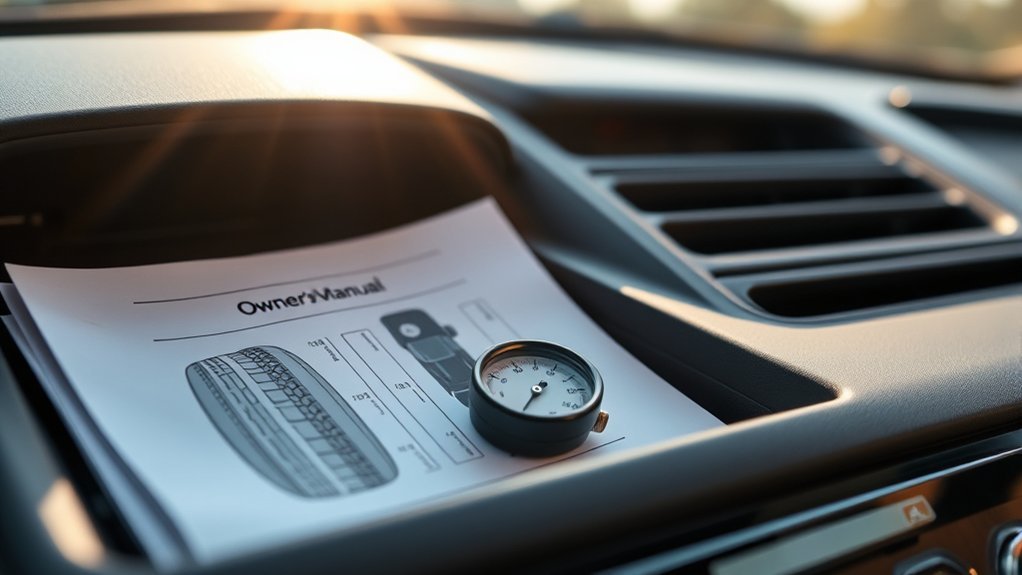
Tire pressure affects the contact patch, steering feel, braking, and tire structure. Low pressure can cause extra heat, poor handling, uneven wear, and a higher risk of tire failure.
Proper inflation also helps reduce rolling resistance. That means your vehicle may use less fuel and your tires may last longer.
Correct tire pressure helps preserve handling, fuel economy, tire life, and braking stability.
- Proper pressure supports a steady contact patch.
- Correct inflation helps steering feel more predictable.
- Routine checks reduce the chance of uneven tread wear.
- Cold readings help you avoid false pressure changes.
- Pressure checks help prevent avoidable roadside issues.
Warning: Never use the maximum pressure on the tire sidewall as your normal tire pressure target.
Common Mistakes and Quick Maintenance Checklist
Small tire pressure mistakes can undo the benefits of regular care. The most common error is checking tires after driving, when heat raises the pressure reading.
Another mistake is ignoring load changes. If you add passengers, luggage, or tools, check the loaded pressure guidance before you leave.
| Common Error | Cause | Quick Action |
|---|---|---|
| Hot-checking | Driving heat | Wait 3+ hours or measure cold |
| Ignoring load | Wrong pressure for cargo | Adjust per vehicle label |
| Bad gauge | Inaccurate readings | Calibrate or replace it |
| Skipping routine checks | Gradual air loss | Check monthly and before trips |
Make pressure checks part of your normal vehicle care. A few minutes each month can help you avoid poor handling, wasted fuel, and early tire wear.
Frequently Asked Questions
How do you read a manual tire pressure gauge?
Press the gauge firmly onto the valve stem until the reading appears. On a stick gauge, read the number where the stick stops. On a dial gauge, read the needle position.
How do you know what your tire pressure should be?
Read the tire information label on your vehicle, usually on the driver’s door jamb. Match the listed pressure to your tire size and load condition.
Can you put air in nitrogen-filled tires?
Yes, you can add regular air to nitrogen-filled tires when pressure is low. Safety matters more than keeping the fill gas pure, so don’t drive on an under-inflated tire.
What is the 5 PSI rule?
Some drivers use a 5 PSI difference as a rough warning range, but you should follow your vehicle’s exact pressure label. If a tire reads several PSI low, adjust it before driving far.
Should you use the pressure on the tire sidewall?
No, don’t use the sidewall number as your normal target. The sidewall usually shows a maximum pressure, while the vehicle label shows the recommended cold pressure.
Conclusion
Your vehicle’s tire pressure label gives you the safest pressure target for daily driving and heavy loads. Check the label, match the tire size, and measure pressure when the tires are cold. Adjust front and rear pressure before long trips or cargo-heavy drives. This small habit helps your vehicle handle better, use fuel more efficiently, and protect your tires for the road ahead.
References
- Tires — National Highway Traffic Safety Administration
- Keeping Your Car in Shape — FuelEconomy.gov, U.S. Department of Energy
- Tire Safety: Everything Rides On It — National Highway Traffic Safety Administration