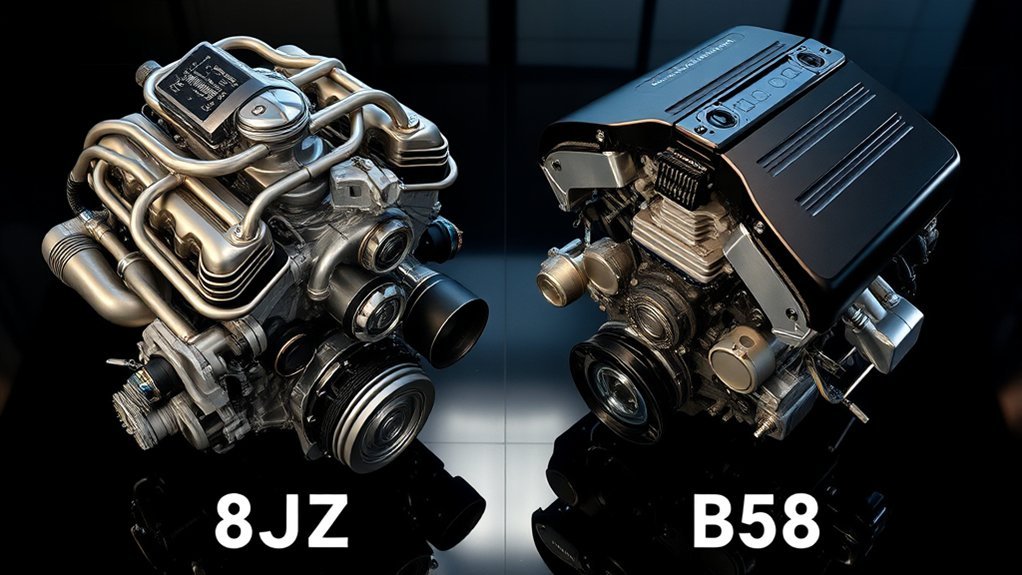
The Toyota 2JZ-GTE and BMW B58 are turbocharged 3.0-liter inline-six engines from very different eras. The 2JZ-GTE is known for its cast-iron block, sequential twin turbos, mechanical simplicity, and mature aftermarket. The B58 combines a closed-deck aluminum block with direct injection, variable valve control, modern cooling, and a single twin-scroll turbocharger. Choosing between them depends on whether you value classic tuning simplicity or modern factory performance.
Quick Answer
The B58 is the better all-around engine for a modern street car because it offers more current factory power, a broad torque band, and advanced control systems. The 2JZ-GTE remains the stronger choice for a period-correct Supra, a traditional engine swap, or a high-power project built around decades of aftermarket support.
Key Takeaways
- A U.S.-spec MkIV Supra Turbo 2JZ-GTE was rated at 320 horsepower and 315 lb-ft of torque.
- The 2026 U.S.-spec GR Supra B58 is rated at 382 horsepower and 368 lb-ft of torque.
- The 2JZ-GTE uses a cast-iron block and sequential twin turbos, while the B58 uses a closed-deck aluminum block and one twin-scroll turbocharger.
- Neither manufacturer publishes a universal safe modified-horsepower limit for either engine.
- The 2JZ is easier to integrate into many traditional project cars, but the B58 is usually the better factory-installed daily-driver engine.
2JZ vs. B58 Specifications at a Glance
| Feature | Toyota 2JZ-GTE | BMW B58 in 2026 GR Supra |
| Configuration | 3.0-liter inline-six | 3.0-liter inline-six |
| Block construction | Cast iron | Closed-deck aluminum |
| Factory turbo system | Two sequential turbochargers | One twin-scroll turbocharger |
| U.S. Supra factory output | 320 hp and 315 lb-ft | 382 hp and 368 lb-ft |
| Fuel and valve technology | Conventional electronic fuel injection and a comparatively simple control system; specifications vary by version | High-pressure direct injection, Double-VANOS camshaft timing, and Valvetronic variable valve lift |
| Primary advantage | Simple, proven foundation with extensive swap and tuning support | Stronger current factory output, broad torque, efficiency, and modern drivability |
| Primary drawback | Age, weight, rising acquisition cost, and condition variability | Complex electronics, direct-injection hardware, and more difficult swap integration |
Note: These factory-output figures compare the U.S.-spec MkIV Supra Turbo with the 2026 U.S.-spec GR Supra. Japanese-market 2JZ-GTE models and B58-powered BMWs can have different ratings.
The Legendary Status of the 2JZ Engine
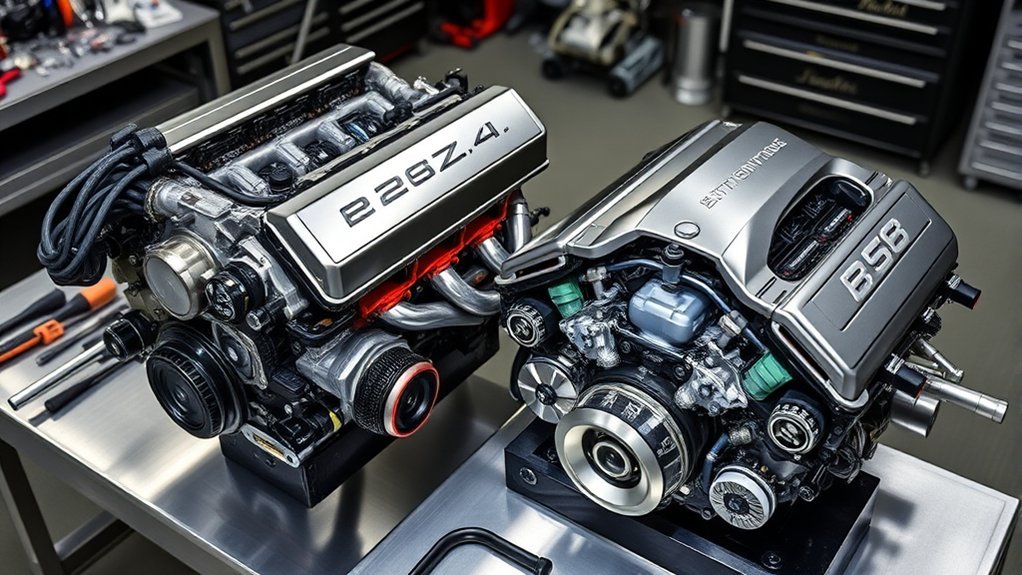
Toyota introduced the turbocharged 2JZ-GTE in the Aristo in 1991. The engine later became closely associated with the A80 MkIV Supra, which Toyota launched in Japan in 1993. Its 2,997cc displacement, inline-six layout, cast-iron block, aluminum cylinder head, and sequential twin-turbo system created a strong foundation for both factory performance and later modification.
The original Japanese-market Supra was officially rated at 280 PS and 44.0 kg-m of torque. The U.S.-spec Supra Turbo produced 320 horsepower and 315 lb-ft. Differences in turbochargers, calibration, emissions equipment, and market requirements prevent one factory rating from representing every 2JZ-GTE.
The engine’s reputation also comes from its straightforward mechanical layout and the size of its aftermarket. Tuners can choose from many turbo systems, fuel-system components, engine-management solutions, valvetrain parts, cooling upgrades, transmissions, and swap components. That support makes it easier to plan a complete build than it would be with a rare engine that has limited parts availability.
The 2JZ-GTE’s lasting advantage is not one mythical horsepower number. It is the combination of strong construction, simple architecture, accumulated tuning knowledge, and decades of aftermarket support.
Modern Engineering Features of the B58 Engine
BMW introduced the B58 to its production lineup in the 2016 BMW 340i. According to BMW’s technical release, the engine uses a lightweight all-aluminum structure, a closed-deck crankcase, arc-sprayed cylinder surfaces, a twin-scroll turbocharger, high-pressure direct injection, Double-VANOS variable camshaft timing, and Valvetronic variable valve lift.
A closed-deck block supports the upper cylinder walls more fully than an open-deck design. This increases rigidity and helps the structure tolerate high cylinder pressure. The arc-sprayed cylinder coating reduces the need for heavy conventional iron liners while supporting heat transfer and lower friction.
The B58 also uses an indirect water-to-air charge-cooling system integrated into the intake path. Its compact air route helps the engine build boost quickly and maintain responsive low-speed torque. Later versions add revised turbocharging, higher injection pressure, improved thermal management, and updated engine controls.
Some versions use a forged-steel crankshaft, but it is inaccurate to describe every B58 piston, connecting rod, and internal component as forged. Hardware also varies among B58 generations and applications.
Power and Torque: A Performance Comparison
For an equivalent U.S. Supra comparison, the B58 has the factory-output advantage. The MkIV Supra Turbo’s 2JZ-GTE was rated at 320 horsepower and 315 lb-ft, while the 2026 GR Supra produces 382 horsepower and 368 lb-ft.
The character of the power delivery also differs. Toyota’s sequential 2JZ-GTE system operates one turbo at lower engine speeds before bringing the second turbo into use as demand rises. This arrangement was designed to combine low-speed response with stronger high-speed airflow.
The B58 uses one twin-scroll turbocharger. Separate exhaust paths help preserve exhaust pulses as they reach the turbine, improving response without requiring two separate turbochargers. Direct injection, variable valve lift, variable camshaft timing, electronic boost control, and modern torque management help the B58 produce a wide, smooth torque band.
Factory numbers do not tell the whole story, however. Vehicle weight, transmission ratios, traction, differential programming, tire grip, aerodynamics, and electronic controls all affect real acceleration.
Tuning Potential: 2JZ vs. B58
2JZ Tuning Strengths
The 2JZ-GTE is attractive for large custom builds because tuners have decades of experience with its fuel system, ignition, cylinder head, turbo options, clearances, oiling, cooling, and engine management. Its simpler electronics also make it easier to operate with a standalone control unit in a custom chassis.
A mild project may retain much of the factory engine while upgrading intake, exhaust, boost control, fuel delivery, intercooling, and calibration. More demanding builds may require upgraded pistons, rods, fasteners, valvetrain components, oiling, cooling, turbo hardware, transmission parts, differential components, axles, and chassis reinforcement.
There is no universal power level at which every stock 2JZ-GTE will remain dependable. Existing engines are now old enough that mileage, previous modifications, detonation history, corrosion, oil pressure, compression, cylinder leakage, wiring condition, and maintenance history can matter as much as the original design.
B58 Tuning Strengths
The B58 responds well to calibration because BMW designed it with turbocharging, direct injection, electronic boost control, and detailed torque management from the factory. Depending on the version and target, modifications may include revised engine software, intake and exhaust components, charge-cooling upgrades, supplemental or upgraded fueling, a larger turbocharger, transmission software, and additional thermal management.
The B58’s electronics can provide precise control, but they also require a tuner who understands torque intervention, fuel pressure, ignition correction, exhaust temperature, boost targets, transmission limits, and the differences among B58 versions. A tune that produces an impressive short dyno result may not provide the heat control needed for repeated track use or long highway pulls.
Warning: Increasing boost or changing emissions-related components can damage the engine, transmission, turbocharger, catalytic converter, or fuel system. It may also affect warranty coverage, insurance, inspections, and emissions compliance. Use a qualified tuner and confirm local laws before modifying either engine.
How Much Power Can the Engines Handle?
Neither Toyota nor BMW publishes a universal safe modified-horsepower limit. Claims such as “700 hp on a B58” or “1,000 hp on a stock 2JZ” are incomplete unless they specify:
- Whether the figure is measured at the crankshaft or wheels
- The engine version and internal components
- Fuel type and fuel-system capacity
- Boost pressure and torque curve
- Turbocharger and charge-cooling system
- Engine-management strategy
- Transmission and drivetrain setup
- Ambient temperature and testing method
- Street, drag, drift, or road-course use
- How long the combination has operated reliably
A conservative calibration with stable fuel pressure, controlled knock, adequate cooling, and realistic torque targets is generally more valuable than chasing a headline dyno number.
How Weight Affects Performance: 2JZ vs. B58
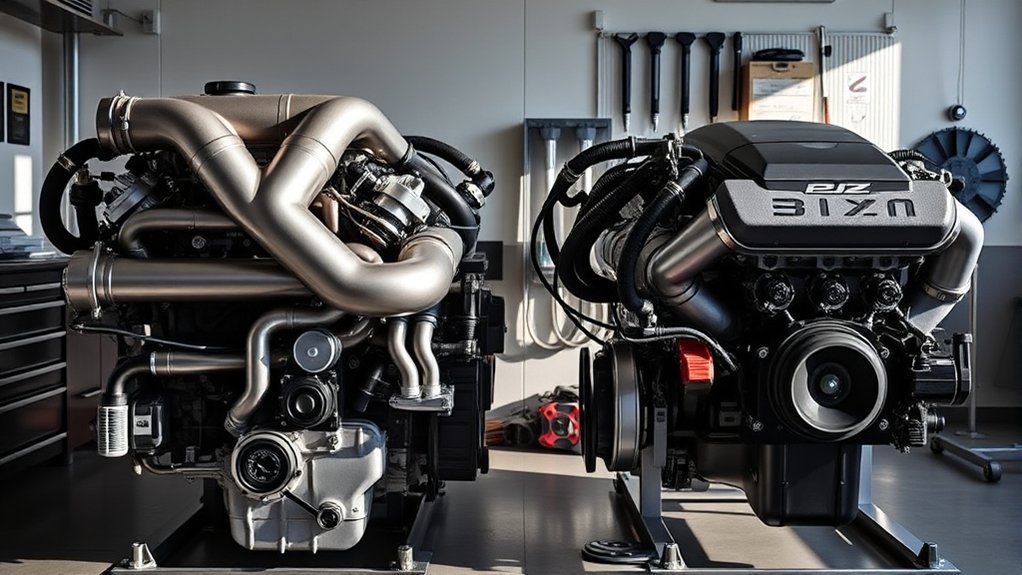
The B58’s aluminum block gives it an architectural weight advantage over the 2JZ-GTE’s cast-iron block. That can help manufacturers manage front-axle load, efficiency, and crash packaging. It does not mean that every complete B58 installation is lighter by the same amount.
A complete engine package includes the turbocharger, exhaust manifold, intercooler or charge-cooling hardware, pumps, starter, alternator, intake, emissions equipment, wiring, fluids, mounts, transmission, and accessories. Different versions can therefore produce different installed weights.
Vehicle handling also depends on where the engine is mounted. An engine installed low and close to the firewall can produce better balance than a lighter engine mounted high or far forward. Suspension geometry, spring and damper rates, tires, chassis stiffness, steering calibration, wheelbase, track width, and total vehicle weight remain important.
For a custom swap, the 2JZ’s physical size and iron block may require stronger front springs, suitable mounts, adequate oil-pan clearance, and careful radiator and steering placement. The B58 can offer a lighter block, but its cooling circuits, electronics, fuel system, and control modules add installation complexity.
Maintenance: Comparing the 2JZ and B58
The 2JZ and B58 present different ownership challenges. The 2JZ has simpler electronics and a conventional timing-belt layout, but every factory 2JZ is now an older engine. The B58 is newer and benefits from modern diagnostics, but more of its systems depend on electronic modules, direct-injection hardware, software, and specialized scan tools.
2JZ Maintenance Considerations
- Inspect the timing belt, tensioner, pulleys, water pump, and front seals according to the engine’s service history.
- Check old coolant and vacuum hoses for hardening, swelling, cracks, or previous temporary repairs.
- Look for oil leaks around cam seals, crank seals, covers, turbo oil lines, and other aged sealing surfaces.
- Test compression, cylinder leakage, oil pressure, and cooling-system integrity before planning major power increases.
- Inspect wiring, connectors, grounds, coils, sensors, and previous aftermarket splices.
- Confirm that the turbo system, intercooler piping, fuel system, and engine management match the claimed build specification.
B58 Maintenance Considerations
- Follow the maintenance information for the exact BMW or Toyota model rather than a generic internet interval.
- Use the specified engine oil, coolant, spark plugs, and filters for the vehicle and operating conditions.
- Monitor stored faults, fuel-pressure data, ignition corrections, coolant temperature, oil temperature, and boost behavior after modification.
- Inspect the charge-cooling circuit, hoses, pumps, expansion tanks, and connections when diagnosing heat-related power loss.
- Confirm software compatibility before replacing or modifying control modules.
- Remember that direct-injection, variable-valve, and electronic boost systems can require specialized diagnostic equipment.
Pro Tip: Before buying either engine, pay for a thorough inspection and verify its identification, compression, leak-down results, oil condition, fault history, wiring, turbo condition, and included accessories. A complete healthy engine package is usually worth more than a cheaper incomplete core.
Versatility: Which Engine Powers More Vehicles?
The answer changes depending on whether “2JZ” means the entire engine family or only the turbocharged 2JZ-GTE. The wider family powered many Toyota and Lexus vehicles, but the factory GTE application list is much narrower.
2JZ Vehicle Applications
Toyota installed the 2JZ-GTE in performance versions of the Toyota Aristo and A80 Supra. The wider 2JZ family included naturally aspirated 2JZ-GE and direct-injected 2JZ-FSE versions used in additional Toyota and Lexus vehicles.
Examples from the wider family include:
- Toyota Supra: Available with naturally aspirated 2JZ-GE and turbocharged 2JZ-GTE versions.
- Toyota Aristo: Offered with both 2JZ-GE and 2JZ-GTE engines.
- Toyota Crown: Used naturally aspirated 2JZ-family variants in selected generations.
- Toyota Soarer: Used the naturally aspirated 2JZ-GE in selected models.
- Lexus IS300: Used a naturally aspirated member of the 2JZ family rather than the factory twin-turbo GTE.
This distinction matters when buying an engine. A naturally aspirated 2JZ-GE is not automatically identical to a 2JZ-GTE. Block details, pistons, compression ratio, cylinder head configuration, oiling, electronics, accessories, and market-specific components can differ.
B58 Engine Flexibility
The B58 has appeared across several BMW segments, including sedans, coupes, roadsters, and SUVs. Applications have included the 340i, 740i, M240i, M340i, M440i, Z4 M40i, X3 M40i, and X4 M40i, as well as the Toyota GR Supra.
The engine is modular, but B58 versions are not automatically interchangeable. Differences can include turbochargers, cylinder heads, compression ratios, exhaust layouts, fuel systems, cooling packages, mild-hybrid equipment, oil systems, software, emissions components, and transmissions.
The B58’s broad modern use supports parts availability and continuing technical development. However, a complete donor package may require the engine control unit, body or gateway modules, keys, immobilizer components, harnesses, fuel system, sensors, transmission controller, and communication networks.
Performance Across Platforms
The same engine can feel very different in two vehicles. A heavy all-wheel-drive SUV places different demands on cooling, gearing, and torque management than a rear-wheel-drive sports coupe. Factory calibrations also reflect each vehicle’s transmission, traction, emissions requirements, thermal package, and intended use.
For that reason, selecting an engine by its best-known dyno result can be misleading. Evaluate the complete platform, not only the long block.
Cost, Availability, and Engine-Swap Complexity
2JZ Cost and Swap Factors
The 2JZ benefits from decades of swap experience. Mounts, oil pans, bellhousings, transmission adapters, wiring services, exhaust components, intake manifolds, and standalone engine-management systems are available for many popular project cars.
Its age creates a different problem. Good complete 2JZ-GTE packages are finite, and advertised condition is not always reliable. Missing sensors, damaged harnesses, incorrect accessories, mixed components, worn turbos, and unknown internal modifications can increase the final cost.
B58 Cost and Swap Factors
B58 donor availability is growing as more vehicles enter the used and salvage markets. A newer engine may offer lower age-related wear, but modern integration can make the swap more demanding.
A B58 project may need solutions for CAN-bus communication, immobilizer authorization, electronic throttle control, direct-injection fuel supply, transmission communication, cooling pumps, dashboard data, drive modes, emissions hardware, and diagnostic access. Buying a complete running donor can reduce the risk of discovering that an essential module or harness is missing.
Neither swap should be treated as an engine-only purchase. Budget for the transmission, differential, driveshaft, axles, brakes, fuel system, cooling, exhaust, wiring, tuning, fabrication, and legal inspection requirements.
Which Engine Should You Choose?
Choose the 2JZ-GTE If
- You are restoring or building a period-correct MkIV Supra or Toyota project.
- You want a traditional high-power project with extensive aftermarket documentation.
- You prefer standalone engine management and simpler vehicle electronics.
- You are prepared to inspect, rebuild, and refresh an older engine.
- You accept the additional block weight and rising cost of complete GTE packages.
Choose the B58 If
- You want stronger current factory power and a broad factory torque curve.
- You are buying a complete modern BMW or GR Supra for regular street use.
- You value fuel efficiency, diagnostics, emissions integration, and refined cold-start behavior.
- You want useful gains from careful software and supporting upgrades.
- You have access to a tuner or shop familiar with modern BMW electronics and direct injection.
Best Engine for a Daily Driver
In a complete factory vehicle, the B58 is normally the better daily-driver choice. It offers modern starting, drivability, diagnostics, emissions controls, low-speed torque, and integration with current transmissions and safety systems.
Best Engine for a Classic Project
The 2JZ-GTE is usually easier to understand and integrate into an older project when the builder wants a traditional standalone-controlled powertrain. It is also the natural choice for preserving the identity of an A80 Supra or period Toyota build.
Best Engine for a Big-Power Build
Both engines can support serious performance when built as complete systems. The 2JZ currently has the deeper history of extreme aftermarket builds. The B58 has demonstrated strong modern tuning potential, but its electronics, fueling, and version differences require more specialized planning.
Could the B58 Engine Be the Next 2JZ?
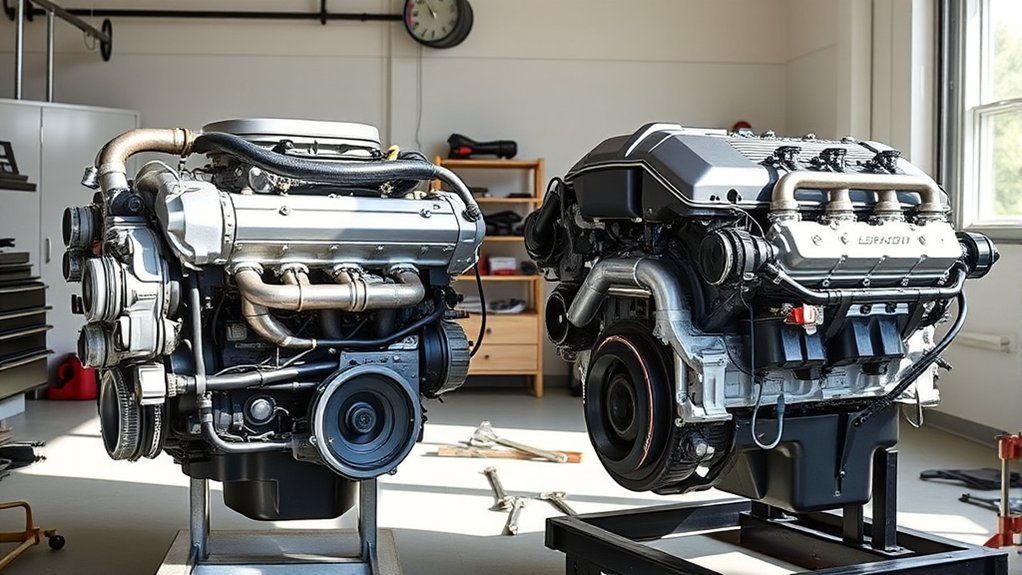
The B58 can reasonably be called a modern spiritual successor to the 2JZ because both are turbocharged 3.0-liter inline-six engines used in a Toyota Supra. Both have also attracted strong enthusiast and tuning interest.
Technically, however, they follow different design philosophies. The 2JZ-GTE uses a heavy cast-iron block, older fuel and control technology, and sequential twin turbos. The B58 uses a closed-deck aluminum block, direct injection, one twin-scroll turbo, variable valve lift, variable camshaft timing, advanced thermal control, and extensive electronic torque management.
The 2026 model year is the final North American production run for the MkV GR Supra, but that does not end the B58’s broader story. The engine continues to appear in BMW applications, and its long-term reputation will depend on how well the vehicles, engines, electronics, and aftermarket support age over the coming decades.
The B58 does not need to copy the 2JZ to become important. Its strongest case is that it delivers the smoothness and tuning appeal enthusiasts expect from a turbocharged inline-six while meeting modern performance, efficiency, emissions, and drivability requirements.
Frequently Asked Questions
Is the B58 the best engine ever made?
That is subjective. The B58 is one of the most capable modern production inline-six engines because it combines strong factory power, smooth torque, efficient turbocharging, advanced controls, and useful tuning potential. It cannot be declared the best engine for every use, especially restoration, simple swaps, or period-correct builds.
What is so special about the 2JZ-GTE?
The 2JZ-GTE combines a cast-iron block, 3.0-liter inline-six layout, sequential turbocharging, simple electronics, and decades of aftermarket development. Its reputation comes from the complete ecosystem of parts and knowledge as much as from the engine casting itself.
Is the B58 the German 2JZ?
It is a useful nickname but not a technical description. Both are turbocharged 3.0-liter inline-six engines connected to the Supra name, but their block materials, turbo systems, fuel systems, valve controls, electronics, cooling, and emissions equipment are very different.
How much horsepower can a B58 handle?
BMW and Toyota do not publish a universal safe modified-horsepower limit. The answer depends on the B58 version, engine condition, wheel or crank measurement, fuel, turbocharger, torque curve, cooling, calibration, transmission, and intended use. A qualified tuner should set targets from data rather than a generic internet number.
Is the 2JZ more reliable than the B58?
The 2JZ has simpler electronics and a long durability reputation, but surviving engines are old and their condition varies. The B58 is newer and more complex, yet it benefits from modern diagnostics, controls, materials, and factory development. Maintenance history, modifications, calibration, and use matter more than the engine name alone.
Which engine is better for a swap?
The 2JZ is usually easier for a traditional custom swap because standalone controls, mounts, adapters, wiring services, and documented combinations are widely available. A B58 swap can provide modern performance and lower block weight, but integrating its electronics, direct injection, immobilizer, transmission, cooling systems, and CAN communication is more complex.
Conclusion
The 2JZ-GTE and B58 are both important turbocharged inline-six engines, but they succeed for different reasons. The 2JZ-GTE offers mechanical simplicity, a proven cast-iron foundation, deep aftermarket support, and strong appeal for classic Toyota builds. The B58 offers more current factory power, lighter block construction, responsive turbocharging, sophisticated valve and fuel controls, and better integration in a modern daily-driven vehicle.
Choose the 2JZ-GTE for a period-correct Supra, a traditional swap, or a custom project that benefits from decades of established tuning knowledge. Choose the B58 for a complete modern performance car, refined street use, and software-led tuning supported by proper fueling and heat management. Neither engine has a guaranteed modified-power ceiling, so the quality of the build, calibration, maintenance, and supporting systems matters more than internet horsepower claims.
Sources
- Toyota Motor Corporation: Aristo Debuts — documents the 1991 introduction and factory specifications of the 2JZ-GTE.
- Toyota Motor Corporation: Toyota Launches All-New Supra — documents the Japanese A80 Supra’s 2JZ-GTE output and sequential turbo system.
- Toyota USA: Toyota Supra, an Icon a Half-Century in the Making — documents U.S.-spec MkIV Supra Turbo output and model history.
- BMW Group: The New BMW 3 Series Sedan and Sports Wagon — documents the B58’s closed-deck aluminum construction, cylinder coating, turbocharger, injection, VANOS, and Valvetronic systems.
- BMW Group: 382-hp B58 Technical Overview — documents later B58 output and updated turbocharging and injection technology.
- Toyota USA: 2026 GR Supra MkV Final Edition — documents current U.S. GR Supra output and final-edition information.