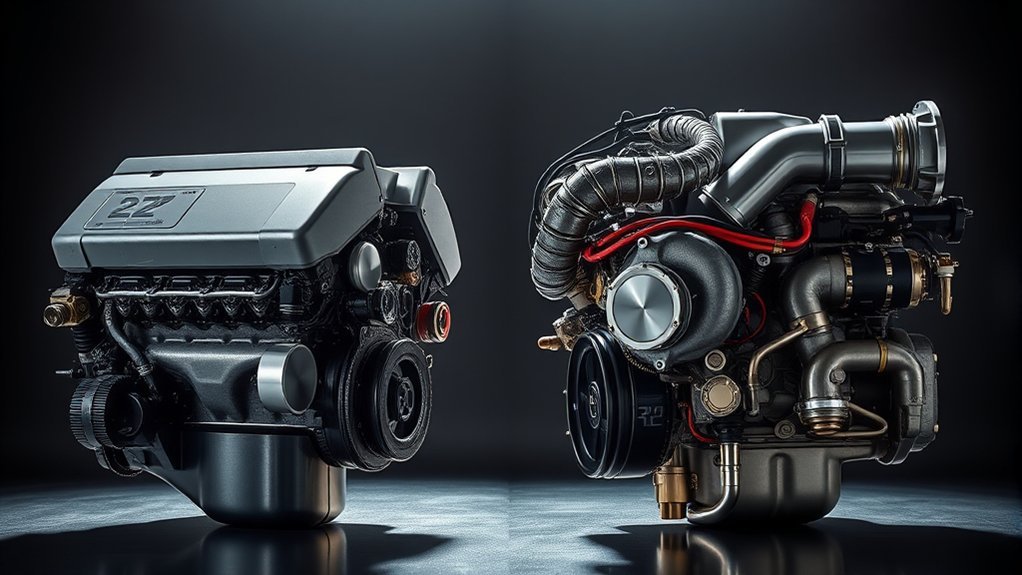
When comparing the 2JZ-GE and 2JZ-GTE engines, you’ll notice distinct differences. The 2JZ-GE is naturally aspirated, focusing on fuel economy and reliability, while the turbocharged 2JZ-GTE is built for performance, delivering higher horsepower and torque. Upgrade potential exists for both, but the GTE’s components are stronger, making it better for high power goals. Each engine has its own advantages, and understanding these can guide your decision effectively. Explore the nuances further to maximize your project’s potential.
Overview of 2JZ-GE and 2JZ-GTE Engines
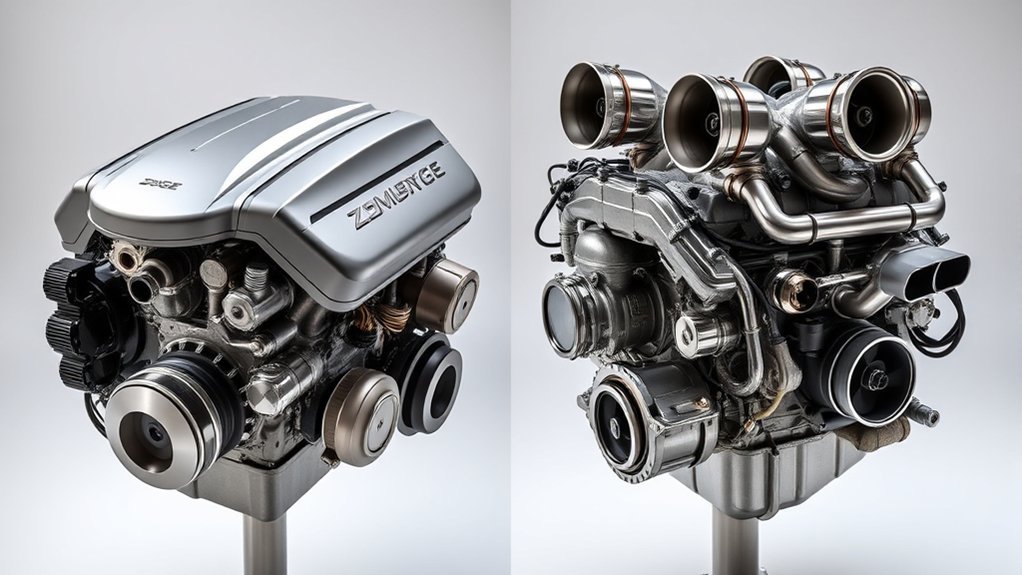
When you plunge into the world of 2JZ engines, you’ll quickly notice the distinct differences between the 2JZ-GE and 2JZ-GTE variants. The 2JZ-GE is a naturally aspirated engine, engineered for efficiency and reliability, boasting a compression ratio of 10:1. This makes it ideal for those who prioritize fuel economy and simplicity. On the flip side, the 2JZ-GTE is turbocharged, designed for performance enthusiasts seeking higher power output. It features a lower compression ratio of 8.5:1 and stronger internal components, such as reinforced rods and pistons, to handle increased boost pressure. Additionally, the 2JZ-GE lacks oil squirters, impacting lubrication and cooling efficiency compared to the 2JZ-GTE. Despite sharing interchangeable heads, each engine employs different ignition systems, with the 2JZ-GE using a distributor and the 2JZ-GTE utilizing a coil-on-plug setup, showcasing their unique engineering philosophies.
Direct Performance Comparison of 2JZ-GE and 2JZ-GTE
When comparing the 2JZ-GE and 2JZ-GTE, you’ll notice significant differences in power output and engine design that influence their performance. The turbocharged 2JZ-GTE not only offers higher horsepower but also boasts stronger internal components for better handling of boost pressure. Meanwhile, the naturally aspirated 2JZ-GE has its own tuning potential, making it an interesting option for modifications, though it can’t quite match the performance of its turbocharged counterpart.
Power Output Comparison
While both the 2JZ-GE and 2JZ-GTE are renowned for their performance, their power outputs reveal a stark contrast that enthusiasts and tuners alike should recognize. The stock 2JZ-GE delivers around 220 horsepower, falling short compared to the robust 276 horsepower of the turbocharged 2JZ-GTE. This turbocharging allows the 2JZ-GTE to exhibit not just higher horsepower but also increased torque, making it a powerhouse for performance applications. Although you can modify the 2JZ-GE to exceed 800 horsepower with custom setups, it still can’t match the inherent capabilities of the 2JZ-GTE. With stronger internal components designed for higher power output, the 2JZ-GTE stands as the clear choice for those seeking liberation through performance.
Engine Design Differences
Understanding the engine design differences between the 2JZ-GE and 2JZ-GTE is key to appreciating their performance capabilities. The 2JZ-GE, a naturally aspirated engine, boasts a higher compression ratio of 10:1, prioritizing efficiency. In contrast, the turbocharged 2JZ-GTE features a lower compression ratio of 8.5:1, optimized for power output. Significantly, the 2JZ-GTE includes oil squirters, enhancing piston lubrication and cooling during intense turbo operation, which the 2JZ-GE lacks. While both share a similar block design, the GTE’s stronger rods and pistons allow it to withstand higher boost levels. Additionally, the GTE utilizes a modern coil-on-plug ignition system, improving reliability compared to the distributor setup in the GE, affecting overall performance.
Performance Tuning Potential
Although the performance tuning potential of the 2JZ-GE and 2JZ-GTE can vary considerably, both engines offer unique advantages for enthusiasts seeking to enhance their power output. The 2JZ-GTE, being turbocharged, typically provides higher stock performance with impressive horsepower and torque. In contrast, the 2JZ-GE shines with its ability to achieve high hp through custom turbo setups, with reports of up to 1000whp. While you can modify the GE for forced induction via NA-T conversions, it can’t quite match the GTE’s robust design for handling boost. However, the GE’s head design allows for better airflow, making it appealing for specific performance tuning strategies. Ultimately, your choice will depend on your goals and desired power levels.
Upgrade Options for Maximizing 2JZ-GE and 2JZ-GTE Performance
When it comes to maximizing the performance of your 2JZ-GE or 2JZ-GTE, there are several key upgrade options to evaluate. You can boost your 2JZ-GE’s potential with a turbo kit and reliable forged internals, while the 2JZ-GTE already offers a strong foundation for tuning. Understanding these upgrades and performance tuning strategies will help you access the true power of these legendary engines.
Turbo Upgrades for 2JZ-GE
If you’re looking to release the true potential of your 2JZ-GE, turbo upgrades present exciting opportunities for performance enhancement. Shifting from naturally aspirated to turbocharged setups, known as NA-T conversions, is highly feasible with a GE turbo manifold. With the right custom turbo kit, you could achieve impressive horsepower gains, reaching up to 800hp with proper modifications. While the 2JZ-GE’s internals aren’t as robust as the 2JZ-GTE’s, you can still enhance reliability by upgrading components like ARP head studs and larger injectors. The extensive aftermarket support means you’ll find numerous options to tailor your turbo upgrades, allowing you to maximize your engine’s performance and reveal its true power potential.
Forged Internals for Reliability
Upgrading to forged internals is an important step for anyone aiming to maximize the performance and reliability of both the 2JZ-GE and 2JZ-GTE engines. The 2JZ-GE often suffers from weaker rods, making forged internals crucial for those pushing higher power levels. By installing forged rods and pistons in the 2JZ-GTE, you can greatly boost its durability, allowing it to handle higher boost without risk of failure. Both engines benefit from these upgrades, with the 2JZ-GE being a cost-effective choice that supports ambitious horsepower goals. Don’t overlook ARP head studs; they enhance clamping force, further improving reliability under increased pressures. With the right modifications, you can release your engine’s full potential and achieve impressive performance.
Performance Tuning Strategies Explained
Maximizing the performance of your 2JZ-GE or 2JZ-GTE engine involves a variety of tuning strategies and upgrade options tailored to your goals. Here are a few key strategies to contemplate:
- Turbo Kits for 2JZ-GE: Enhance horsepower considerably, with some setups exceeding 800hp.
- NA-T Conversions: A cost-effective route to turbocharging, offering increased power without extensive modifications.
- Tuning Solutions: Tools like the E-manage Ultimate help manage fuel and boost levels effectively.
Which Engine Is More Reliable: 2JZ-GE or 2JZ-GTE?
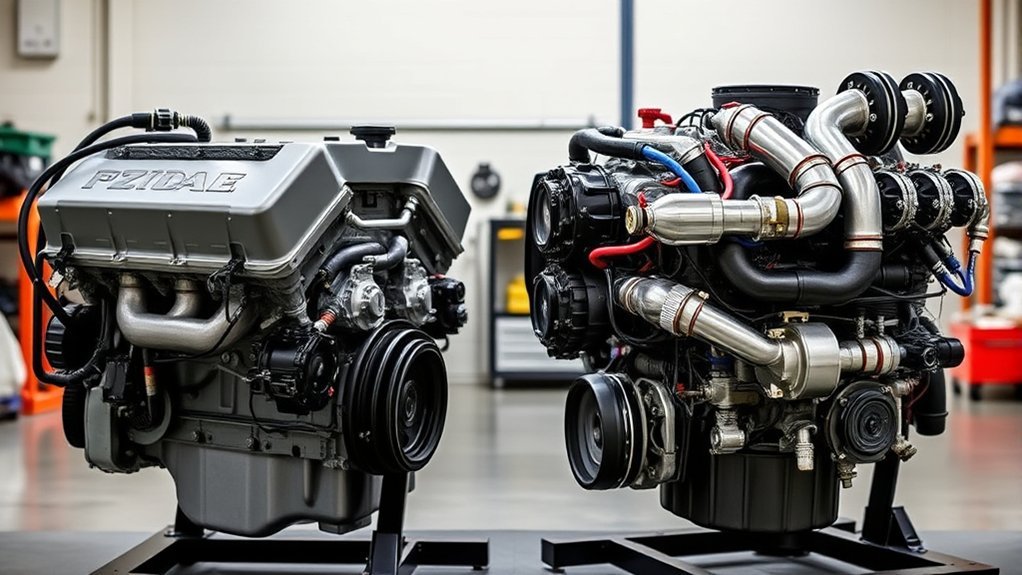
When considering reliability between the 2JZ-GE and 2JZ-GTE engines, you might wonder which one stands out for everyday driving and performance. The 2JZ-GE is generally seen as the more reliable option due to its naturally aspirated design, which features fewer complex components. This simplicity translates to less frequent maintenance compared to the turbocharged 2JZ-GTE, which can encounter ongoing issues with its turbo system. While the 2JZ-GTE includes oil squirters for better lubrication under boost, the GE’s lack of them can raise reliability concerns. However, the GE can still be modified for high horsepower builds without sacrificing reliability. Community feedback often favors the 2JZ-GE for lower-stress applications, suggesting that both engines can be reliable when properly maintained and modified. Ultimately, your choice may hinge on your intended use, with the GE being a solid option for daily driving enthusiasts.
Cost Analysis: 2JZ-GE vs. 2JZ-GTE
Cost analysis between the 2JZ-GE and 2JZ-GTE reveals significant differences that can impact your build budget. If you’re starting your project, the 2JZ-GE generally presents a more wallet-friendly option. However, if you’re aiming for high performance, consider these factors:
- Upgrading the 2JZ-GE with forged internals can yield impressive results at a lower overall cost than a 2JZ-GTE.
- Installing a turbo kit on a 2JZ-GE might match the costs of a 2JZ-GTE swap but offers a cost-effective NA-T setup for moderate horsepower.
- Maintenance costs for the 2JZ-GE are typically lower due to its simpler design compared to the more complex turbocharged 2JZ-GTE.
Ultimately, your choice hinges on your performance goals and budget. Each engine offers unique advantages, so weigh your options carefully to achieve your vision without breaking the bank.
Community Insights on 2JZ-GE and 2JZ-GTE Experiences
As you plunge into the world of the 2JZ engines, community insights reveal a wealth of experiences that can guide your decision-making process. The 2JZ-GE is often lauded for its reliability and cost-effectiveness in daily driving, while many enthusiasts report impressive horsepower gains through custom turbo setups. Conversely, the 2JZ-GTE stands out for its formidable performance and higher power potential, enchanting serious performance enthusiasts.
| Engine Model | Key Strengths | Common Insights |
|---|---|---|
| 2JZ-GE | Reliability, Cost-effectiveness | Easily modified, great for daily use |
| 2JZ-GTE | High power potential, Robust design | Favored for serious performance builds |
| Modifications | Turbo setups yield significant gains | Varies by individual approach |
| Maintenance | Generally reliable, some issues | Experience influenced by modifications |
| Community | Strong support, shared knowledge | Importance of understanding strengths |
Understanding these experiences can empower you to make an informed choice.
Installation Challenges When Swapping 2JZ Engines
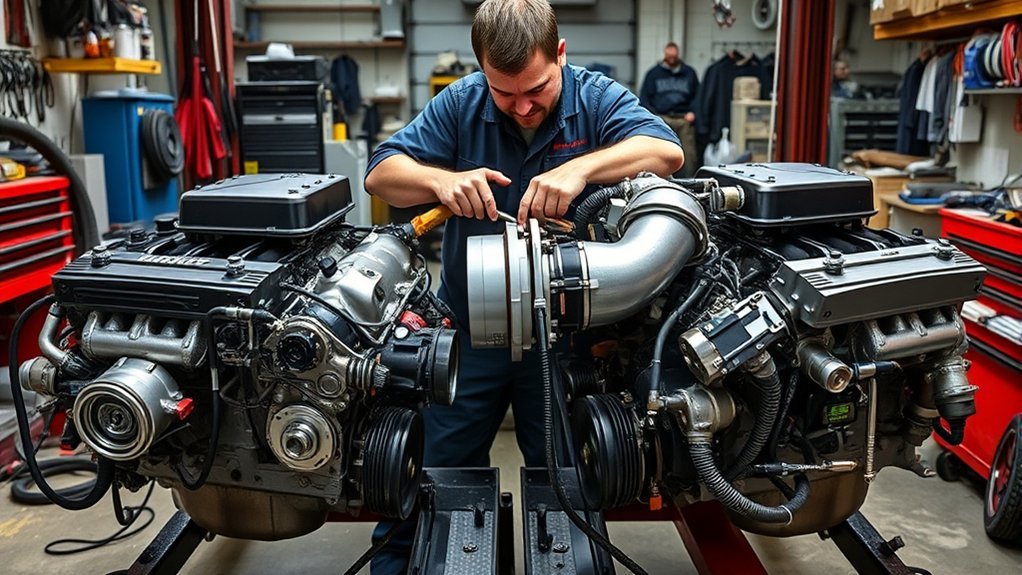
Swapping a 2JZ engine can be an exciting project, but it comes with its share of challenges, especially when moving from a 2JZ-GE to a 2JZ-GTE. You’ll face several installation challenges that require careful planning and execution:
- Engine Mounts: You may need custom mounts to accommodate the GTE engine’s design.
- Wiring & Electronics: Expect compatibility issues with wiring harnesses, as the GTE uses a coil-on-plug ignition system instead of the GE’s distributor.
- Custom Fabrication: Parts like turbo manifolds and intercoolers often demand custom solutions due to space constraints.
Navigating these challenges can be intimidating, but with the right tools and knowledge, you can successfully install the 2JZ-GTE. Embrace the process, and you’ll not only enhance your vehicle’s performance but also gain invaluable experience along the way.
Common Problems With 2JZ-GE and 2JZ-GTE?
While both the 2JZ-GE and 2JZ-GTE are celebrated for their performance potential and durability, they each come with their own set of common problems that enthusiasts should be aware of. The 2JZ-GE may face head gasket failures, particularly if you push it too far without proper tuning. On the other hand, the 2JZ-GTE often encounters oiling issues due to its turbocharger setup, and its complexity can lead to more frequent maintenance.
Here’s a quick comparison of common issues:
| Engine Type | Common Problems | Reliability |
|---|---|---|
| 2JZ-GE | Head gasket failures, lubrication issues | Generally reliable for daily driving |
| 2JZ-GTE | Oiling issues, turbo-related failures | More complex, higher maintenance needs |
| Weaker rods compared to 2JZ-GE | ||
| Age-related wear |
Understanding these issues helps you make informed decisions for your project.
Conclusion: Choosing the Right 2JZ Engine for Your Project
Choosing between the 2JZ-GE and 2JZ-GTE for your project largely depends on your specific goals and requirements. Each engine has its strengths, catering to different needs. Here are some key considerations to help you decide:
Choosing between the 2JZ-GE and 2JZ-GTE hinges on your specific goals and the unique strengths of each engine.
- Budget: The 2JZ-GE is more cost-effective, making it a great starting point if you’re looking to save money while still achieving power upgrades.
- Performance vs. Reliability: If you prioritize a reliable daily driver with good fuel economy, go for the 2JZ-GE. However, if you crave performance and high power output, the 2JZ-GTE is your best bet.
- Modifications: Remember that swapping a 2JZ-GTE typically requires more extensive modifications, which can complicate installation.
Ultimately, choose the engine that aligns with your vision—whether you seek efficiency or raw power, the right 2JZ engine can help you achieve your dreams.
Frequently Asked Questions
Can I Use 2JZ-GE Parts on a 2JZ-GTE Engine?
You can use some 2JZ-GE parts on a 2JZ-GTE engine, but be mindful of performance upgrades, part interchangeability, and installation challenges. Reliability factors and tuning differences may affect your overall experience and cost analysis.
What Is the Weight Difference Between the 2JZ-GE and 2JZ-GTE?
The 2JZ-GTE generally weighs slightly more due to its turbo components. While engine specifications and build quality differ, both offer unique performance metrics. Consider weight distribution and power output when evaluating aftermarket modifications for your project.
Are There Specific Transmission Compatibility Issues Between Both Engines?
You’ll face significant transmission compatibility issues between the 2JZ-GE and 2JZ-GTE. Differences in torque ratings, shift configurations, and drivetrain compatibility require careful consideration of adapter plates, gear ratios, and clutch options for peak performance upgrades.
How Do the Fuel Requirements Differ for Each Engine?
The 2JZ-GE prefers regular fuel octane for decent fuel efficiency, while the 2JZ-GTE thrives on higher octane, optimizing fuel mapping and fuel injectors. Fuel systems and fuel pressure also vary, impacting overall performance.
What Aftermarket Support Exists for 2JZ-GE Compared to 2JZ-GTE?
You’ll find more aftermarket support for the 2JZ-GTE, especially in turbo kits, performance parts, and aftermarket ECUs. The 2JZ-GE has solid options too, including cooling systems, exhaust options, and fuel injectors for engine upgrades.
Conclusion
In the world of performance engines, choosing between the 2JZ-GE and 2JZ-GTE is like picking between two powerful currents in a river; each has its own strengths and challenges. If you’re after raw power and turbocharged thrills, the 2JZ-GTE might be your ideal match. However, if reliability and straightforward tuning appeal to you, the 2JZ-GE could be the better choice. Ultimately, it comes down to your goals and the driving experience you crave.