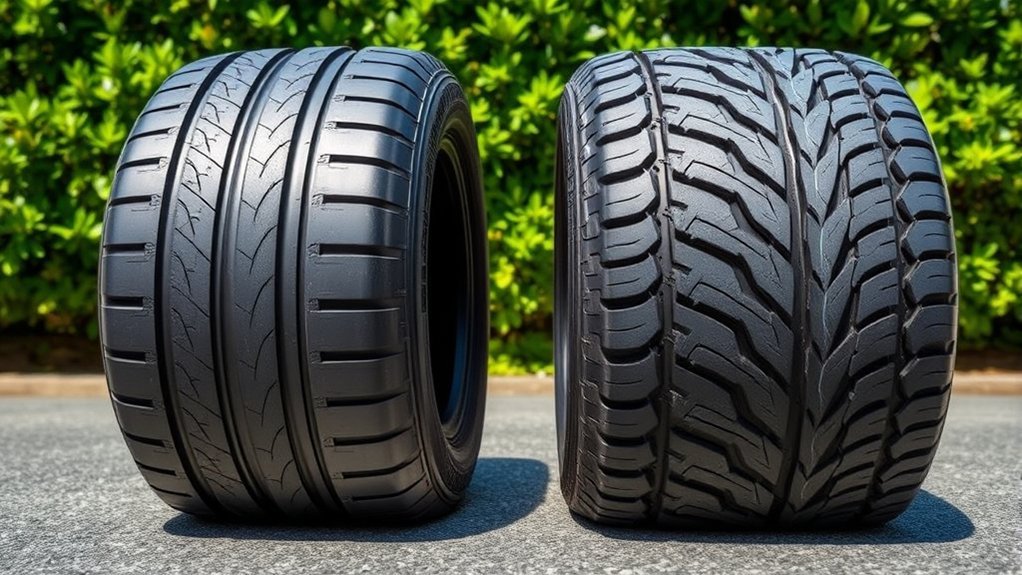
When choosing between summer and all-season tires, it’s vital to understand their differences. Summer tires excel in warm weather, providing superior grip and handling on dry and wet surfaces but struggle in cold and icy conditions. Conversely, all-season tires offer versatility, managing moderate climates and light snow but lack the performance edge of summer tires. It’s important to reflect on your driving style and local weather conditions for the best fit. Let’s explore these aspects further to make your decision easier.
Understanding Summer Tires Vs. All-Season Tires: The Basics
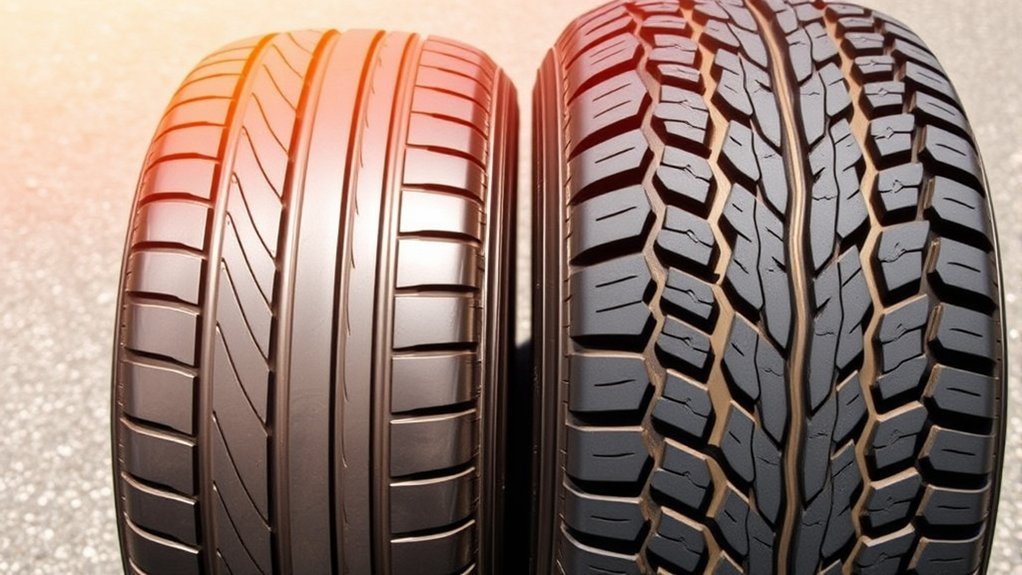
When you’re deciding between summer tires and all-season tires, understanding their fundamental differences is essential. Summer tires excel in warm conditions, designed with specialized tread patterns and softer rubber compounds that maximize grip and performance on both dry and wet roads. They thrive in temperatures above 44°F, but may harden in the cold, losing traction. In contrast, all-season tires offer versatility, engineered for moderate climates, and can handle temperatures at or above freezing, making them suitable for light snow but not heavy conditions.
The tread design of summer tires features shallower grooves, enhancing road contact for better cornering and braking. All-season tires possess a more adaptable tread pattern, balancing traction across various conditions, albeit sacrificing some performance. If you prioritize performance, summer tires are the way to go, but consider your driving habits and climate to make the best choice for your needs.
How Summer and All-Season Tires Compare in Performance
While both summer and all-season tires serve distinct purposes, their performance characteristics can greatly impact your driving experience. Here’s how they stack up:
Choosing the right tires is crucial for optimizing your driving experience across varying conditions.
- Summer Tires: With specialized tread patterns, they excel in cornering, acceleration, and braking, especially in warm conditions.
- All-Season Tires: They offer balanced performance across various weather, providing decent traction in light snow but lacking the grip of summer tires in both wet and dry conditions.
- Temperature Sensitivity: Summer tires thrive above 44°F, while all-season tires perform well at or above freezing, making them more versatile.
- Durability vs. Performance: Summer tires feature shallower tread depths and softer compounds, enhancing road contact but sacrificing durability compared to longer-lasting all-season tires.
Ultimately, your choice between summer and all-season tires will depend on your driving habits and the climates you navigate, ensuring you achieve the best possible traction and grip for your needs.
What Are the Advantages and Disadvantages of Summer Tires?
When it comes to summer tires, you’ll experience superior dry performance and enhanced grip, especially in warm weather. However, their limited winter capability means they struggle in cold conditions, which can compromise your safety. Additionally, keep in mind that summer tires typically have a shorter tread life, requiring more frequent replacements than all-season options.
Superior Dry Performance
Summer tires offer a distinct advantage in dry conditions, thanks to their specialized tread patterns and rubber compounds. These performance tires are designed to give you superior grip and handling when the temperature rises. Here’s what sets them apart:
- Enhanced cornering: Their unique tread patterns provide better responsiveness.
- Improved braking: Shallower tread depths maximize road contact for quicker stops.
- Optimal traction: Flexible rubber compounds keep performance high in warm weather.
- Hydroplaning resistance: While they excel in dry conditions, summer tires still perform better than all-season tires in light wet conditions.
However, remember that summer tires struggle in cooler temperatures, sacrificing traction on snow and ice. So, if you crave liberation in dry weather, these tires are your best bet!
Limited Winter Capability
Although summer tires shine in warm weather, their limited winter capability poses significant risks for drivers in colder climates. These tires harden below 40°F, drastically reducing traction in snow and ice, which can lead to hazardous driving conditions. Their shallower tread depths and minimal grooving enhance performance in dry conditions but increase hydroplaning risks in heavy rain. For ideal safety, especially in winter conditions, switching to dedicated winter tires is essential. Below is a summary of the advantages and disadvantages of summer tires:
| Advantages | Disadvantages |
|---|---|
| Superior grip in warm weather | Poor traction in winter |
| Enhanced cornering abilities | Reduced performance below 40°F |
| Perfect for performance driving | Increased hydroplaning risk |
| Shorter stopping distances | Requires more frequent replacement |
| Less tread depth than all-season tires | Not suitable for icy conditions |
Shorter Tread Life
Choosing summer tires often comes with the trade-off of a shorter tread life, which can surprise many drivers. While these tires provide remarkable performance, their softer rubber compounds and specialized tread designs mean they can wear faster than all-season tires. Here are some key points to contemplate:
- Typically need replacement at around 4/32nds inch tread depth.
- Enhanced cornering and braking can lead to quicker wear under aggressive driving.
- Often yield improved performance in warm conditions, with better traction.
- Higher long-term costs due to frequent replacements in warm climates.
If you prioritize performance, the benefits of summer tires might outweigh their shorter tread life, but be prepared for the potential need to replace them more often than all-season options.
What Are the Advantages and Disadvantages of All-Season Tires?
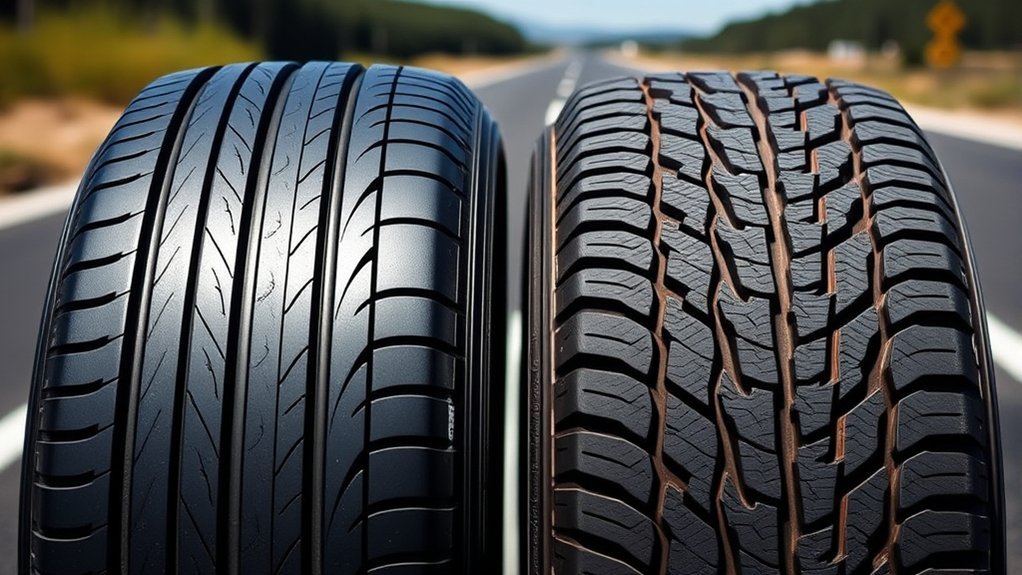
While all-season tires offer a versatile solution for drivers in moderate climates, they come with both advantages and disadvantages that are important to contemplate.
| Advantages | Disadvantages |
|---|---|
| Good traction in wet and dry conditions | Reduced handling compared to summer tires |
| Capable in light snow | Not suitable for extreme winter weather |
| Longer tread life | Moderate performance in cornering |
| Convenience of no seasonal changes | M+S rating doesn’t equal winter certification |
| Versatile for various driving conditions | May compromise overall performance |
All-season tires are designed for balanced performance, providing reasonable traction and handling throughout the year. Their durability makes them ideal for everyday driving. However, the trade-off for this versatility is a decrease in performance during extreme conditions. If you live in a region with severe winter weather, dedicated winter tires are recommended for peak safety and performance.
When Should You Choose Summer Tires Over All-Season Tires?
When you’re considering tires, think about your driving conditions, performance needs, and local climate. If temperatures often soar above 44°F and you crave responsive handling and superior grip, summer tires are your best bet. For regions with minimal winter weather, these tires can greatly enhance your driving experience, especially during spirited drives or track days.
Driving Conditions Consideration
If you often drive in warm weather above 44°F, summer tires might be the best option for you. They provide superior handling and performance compared to all-season tires, especially in dry and wet conditions. Consider these driving conditions when choosing:
- You frequently encounter wet roads, as summer tires resist hydroplaning.
- Your driving involves high speeds or performance-oriented maneuvers.
- You live in an area with mild winters and minimal snowfall.
- You prioritize performance and control over light snow capabilities.
While all-season tires can handle light snow, they compromise on performance. If your environment mostly consists of warm weather, summer tires are clearly the ideal choice for enhancing your driving experience.
Performance Needs Assessment
Choosing the right tires for your performance needs can greatly enhance your driving experience, particularly if you prioritize handling and responsiveness. If you’re a performance-oriented driver, summer tires are your go-to option when temperatures consistently exceed 44°F. Designed for peak performance in warm conditions, they offer superior grip and handling on both dry and wet roads. Featuring specialized tread patterns and softer rubber compounds, summer tires provide improved traction and reduced stopping distances, making them ideal for spirited driving and track days. While all-season tires may handle mild conditions, they can’t match the vehicle responsiveness and cornering capabilities that summer tires deliver. Invest in summer tires for a noticeable upgrade in performance and driving enjoyment.
Climate Suitability Evaluation
Understanding the climate where you drive is essential for selecting the right tires. If you prioritize performance and live in a warm area, summer tires are your best bet. Here’s when to choose summer tires over all-season tires:
- Temperatures: Ideal for consistent temperatures above 44°F.
- Performance: Superior grip and handling in both dry and wet conditions.
- Wet Conditions: Specialized tread patterns that resist hydroplaning.
- Snow: Not suitable for icy or snow-covered roads; all-season tires handle light snow better.
If you rarely encounter snow or ice, go with summer tires for enhanced performance. However, if you face colder temperatures, all-season tires offer versatility without sacrificing too much grip. Choose wisely for a liberating driving experience!
How to Choose the Right Tires for Your Driving Needs
How do you determine the right tires for your driving needs? Start by evaluating your typical driving conditions. If you often drive in warm weather, summer tires offer superior grip and tread performance when temperatures exceed 44°F. However, if you face a mix of mild climates and light snow, all-season tires are a versatile choice.
Consider your performance needs: summer tires excel in handling for sports vehicles, while all-season tires prioritize comfort and longevity for daily use. Also, verify compatibility with your vehicle by selecting tires that match the manufacturer’s specifications.
Here’s a quick comparison to guide your decision:
| Tire Type | Best Temperature Range | Ideal Conditions |
|---|---|---|
| Summer Tires | Above 44°F | Dry and wet conditions |
| All-Season Tires | Above freezing | Mild climates, light snow |
Consult tire ratings and expert reviews for informed choices. Make every drive a liberating experience!
Frequently Asked Questions
Can Summer Tires Be Used in Winter Conditions?
No, summer tires aren’t suitable for winter conditions. Their tread design and rubber composition compromise traction capabilities and handling characteristics in cold temperatures, leading to poor snow performance due to increased temperature sensitivity.
How Long Do Summer and All-Season Tires Typically Last?
“An ounce of prevention is worth a pound of cure.” Summer tires last 20,000-30,000 miles, while all-season tires can reach 40,000-60,000 miles, depending on driving habits, tire tread, maintenance, and seasonal variations. Replace when indicators show wear.
Are Summer Tires More Expensive Than All-Season Tires?
Yes, summer tires generally cost more than all-season options due to their specialized tread design and performance features. However, consider tire pricing comparison and the benefits for weather performance impact when evaluating cost-effectiveness.
Do Summer Tires Provide Better Fuel Efficiency?
Yes, summer tires often provide better fuel efficiency. Their specialized tread design enhances road grip and handling characteristics in warm temperatures, resulting in improved wear patterns and reduced noise levels, ultimately leading to noticeable fuel savings.
Can I Mix Summer and All-Season Tires on My Vehicle?
You shouldn’t mix summer and all-season tires. Different tread patterns affect tire performance, handling characteristics, and safety. Consider weather conditions and vehicle compatibility; regulatory considerations also mandate uniform tire types for ideal safety and efficiency.
Conclusion
In the end, choosing between summer and all-season tires might seem straightforward—after all, who wouldn’t want a tire that does it all? But remember, while all-season tires promise versatility, summer tires deliver performance that can make your driving experience feel like a thrilling ride. So, if you’re still leaning on the “one-size-fits-all” approach, just know that sometimes, it’s the specialized gear that keeps your journey safe and exciting. Don’t settle for less when you can have the best!