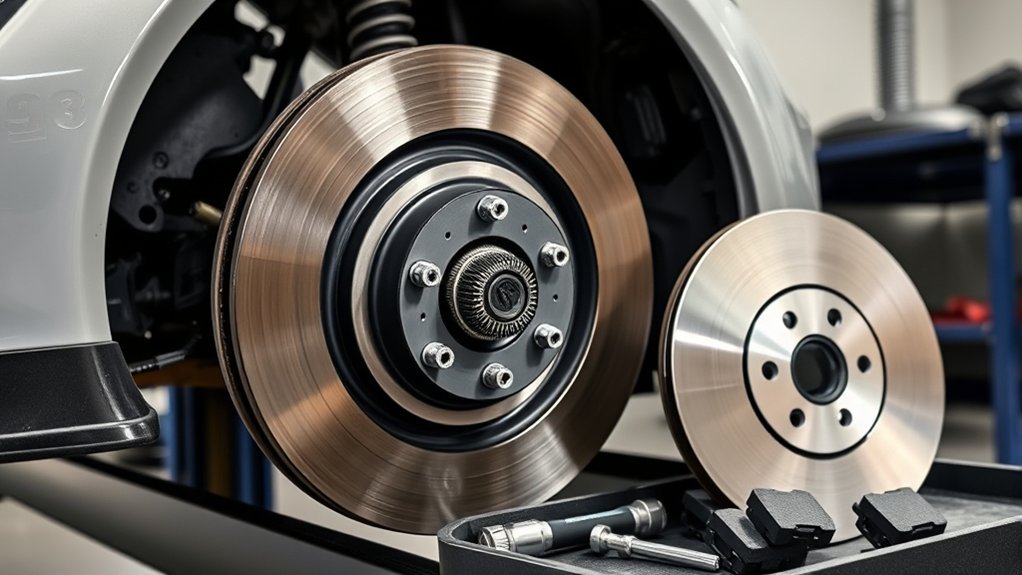
Replace brake rotors on a Toyota Supra when they are worn below the minimum thickness stamped on the rotor, or when you find cracks, deep grooves, heavy rust or a pulsing pedal that does not clear after a pad change. Measure with a micrometer and compare with the service manual, because thickness limits depend on the model year and the brake package.
When to Replace Brake Rotors on a Toyota Supra
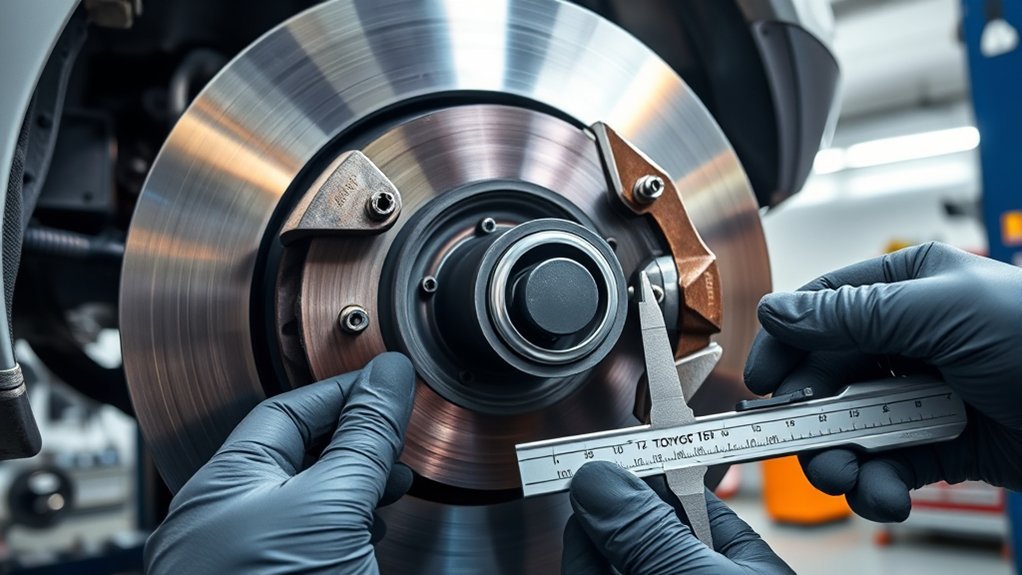
- The thickness is at or below the minimum stamped on the rotor.
- There are cracks, deep grooves or a raised lip at the edge.
- The pedal pulses or the steering shakes when you brake.
- There is blue discoloration or heavy rust on the braking surface.
- The rotor is badly worn when you fit new pads.
Brake Rotor Inspection Frequency
Look at the rotors whenever the wheels come off, and have them checked at each pad change or service.
Visual Wear Assessment
Look for grooves, scoring, cracks, rust and the lip on the outer edge.
Scheduled Maintenance Intervals
Follow the schedule in the owner’s manual. Rotor life depends on how you drive and where, so no fixed mileage is reliable.
How to Measure Rotor Thickness
- Remove the wheel and clean the rotor.
- Measure at several points with a micrometer.
- Find the minimum thickness stamped on the rotor or in the service manual.
- Replace the rotor if it is at or under the minimum.
How Warping and Scoring Impact Brake Rotors’ Performance
Uneven or scored rotors can cause a pulsing pedal, noise and longer stopping distances. Heat and heavy use can contribute, so have the brakes checked.
Why Genuine Toyota Parts Matter for Brake Rotors
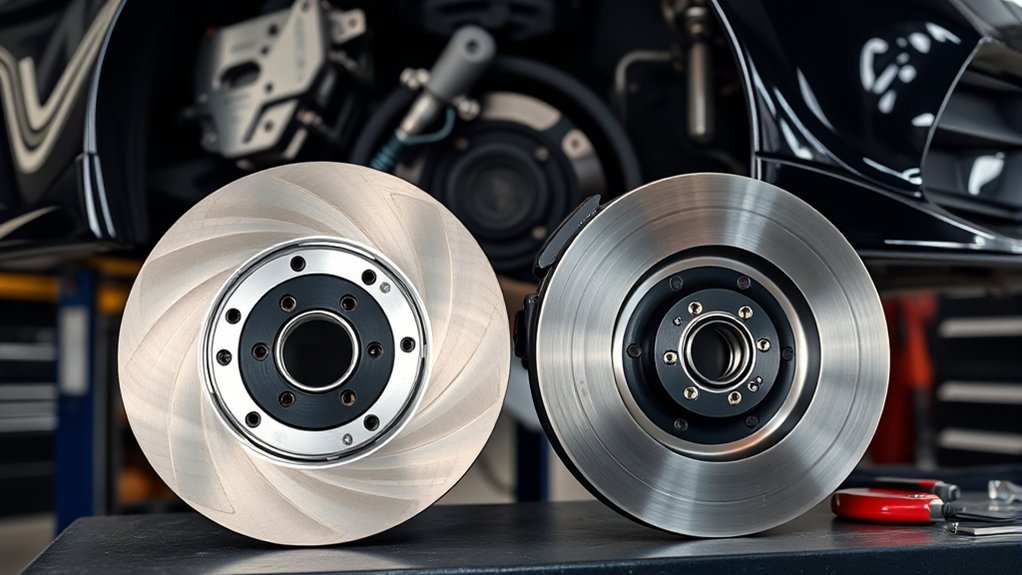
Rotors must match your car’s brake package. Use parts made for your model year, from Toyota or a reputable maker, and check the part number.
Should You DIY or Hire a Professional for Brake Rotor Replacement?
A confident home mechanic with the right tools can do it. Brakes are a safety system, so if you have doubts, use a professional.
Tips for Maintaining Your Brake Rotors for Longevity
Drive smoothly, keep the brakes clean and have the pads replaced before they wear out.
Regular Inspection Practices
Check the rotors and pads at each tire rotation.
Proper Cleaning Techniques
Use brake cleaner, not water or oil, and keep grease off the braking surfaces.
Related reading:
- How to Replace Toyota Supra Brake Pads and Rotors: Step-by-Step
- When to Replace Brake Pads on a Toyota Supra
- Top Track Brake Rotors MK5 Toyota Supra Enthusiasts
Frequently Asked Questions
When to Replace Brake Rotors on a Toyota?
When they are under the minimum thickness, cracked, deeply grooved or causing a pulsing pedal.
How Long Do Toyota Brake Rotors Last?
There is no fixed figure. It depends on how you drive, where you drive and the pad quality. Check their condition regularly.
What Is the 30/30/30 Rule for Brakes?
There is no standard rule I can confirm for this. The reliable guide is the minimum thickness stamped on the rotor and the service manual.
How to Tell When Brake Rotors Need to Be Replaced?
Look for a pulsing pedal, noise, cracks, deep grooves or thickness below the minimum.
Conclusion
Measure and inspect the rotors against the minimum and replace them when they fail the check.