
When you compare 0W-20 vs 5W-30 oil in a Toyota Supra, the answer is the grade and specification in your owner’s manual for your engine and model year, which is the safe choice for performance and the warranty. 0W-20 is thinner when hot and flows more easily when cold, while 5W-30 is thicker at operating temperature. Do not switch grades because of a forum post or climate guess without checking the manual or a dealer. Related: how to change oil on a Toyota Supra and when to change oil in a Toyota Supra.
Understanding Oil Viscosity: What Do 0W-20 and 5W-30 Mean?

The first number with the W shows how the oil flows when cold (lower flows more easily), and the second shows the thickness at operating temperature (higher is thicker). So 0W-20 is thinner when hot than 5W-30.
Climate Considerations: How Temperature Affects Oil Performance
Thin oil flows faster at cold starts, which helps in cold climates. In very hot conditions or hard use, a thicker oil may keep a thicker film, but the maker’s specification already takes the normal range into account.
The Benefits of 0W-20 Oil in a Toyota Supra
- Quick flow on cold starts
- Lower friction, which can help efficiency
- It is the grade specified by many Toyota engines, so check yours
0W-20 vs 5W-30 Oil in a Toyota Supra: Pros and Cons

A thicker oil may suit some hot or hard-use conditions, but it can slightly reduce efficiency and cold-start flow. If the manual does not allow it, you risk warranty problems.
Why Sticking to Manufacturer Oil Recommendations Is Key
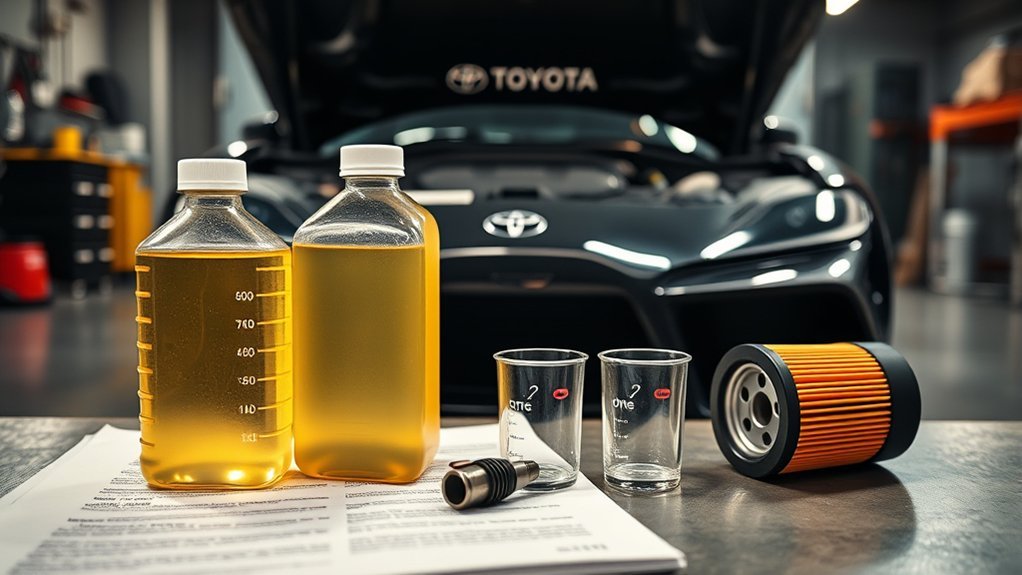
The engine tolerances, the oil pump and the variable valve timing are designed around the specified oil. Using the specified grade and approval standard also protects the warranty.
Financial Impact of Choosing Between 0W-20 and 5W-30 Oil
The price difference is small. The cost of using the wrong oil, in a possible warranty dispute or engine wear, is far greater.
Frequently Asked Questions
Can I Use 5W30 Instead of 0W-20 in Toyota?
Only if the manual lists it as an approved alternative. Otherwise use the specified grade.
What Oil to Put in a Toyota Supra?
The grade and specification in the owner’s manual for your engine.
What Happens if I Use 5W-20 Instead of 5W30?
The oil would be thinner when hot than specified. Occasional use is unlikely to cause immediate damage, but use the specified oil.
Is 5W30 Better Than 5W20 for High Mileage?
Not necessarily. Some owners of older engines like a thicker oil, but follow the manual or ask a mechanic.
Conclusion
For 0W-20 vs 5W-30 oil in a Toyota Supra, use the grade the manual specifies.