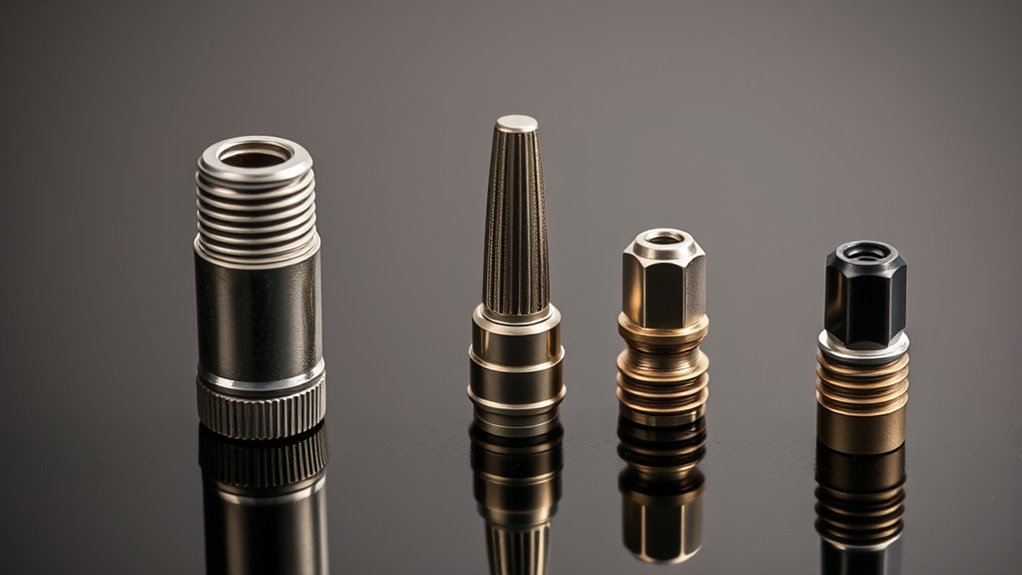
Bike tire valves look small, but choosing the wrong tube, pump head, or adapter can leave you unable to inflate the tire or can damage the valve base. Most bicycles use Presta, Schrader, or Woods/Dunlop valves. The best choice is usually the valve that matches your rim hole, wheel design, pump, and tire system.
Quick Answer
Schrader valves are wide and car-style, Presta valves are narrow with a small top nut, and Woods/Dunlop valves have a wide base with a removable insert. Match the replacement valve to the rim hole. Use a pump adapter for pump compatibility, a rim-hole reducer for a loose Presta stem, and an extender for deep rims.
Key Takeaways
- Schrader stems are about 8 mm wide and use a spring-loaded center pin.
- Presta stems are about 6 mm wide and must be opened by loosening the small knurled nut.
- Woods/Dunlop valves are common on some city, utility, and Dutch-style bikes outside North America.
- A Presta-to-Schrader pump adapter does not support a Presta stem inside a larger rim hole; that job requires a proper reducer sleeve or grommet.
- Most tubeless bicycle wheels use removable-core Presta-style valves, although newer high-flow systems are also available.
At a Glance
| Time Required | 1–3 minutes to identify a valve; 5–15 minutes for basic core or tubeless-valve service |
| Difficulty | Easy for identification and inflation; moderate for tubeless leak diagnosis |
| Tools Needed | Compatible pump with gauge; optional ruler, valve-core tool, soapy water, and sealant injector |
| Cost | No cost to identify; replacement adapters, cores, tubes, and tubeless valves vary by brand and design |
Which Valve Is on Your Bike?

Start with the shape of the stem and the way the valve opens. According to Park Tool’s bicycle valve guide, Schrader stems are approximately 8 mm in diameter, while Presta stems are nominally 6 mm. Woods or Dunlop valves have a wide lower stem with a removable upper insert.
| Feature | Schrader | Presta | Woods/Dunlop |
|---|---|---|---|
| Stem shape | Wide, nearly the same width from base to tip | Narrow, all-metal stem with a small threaded tip | Wide base with a narrower removable insert |
| How it opens | Pump head presses the spring-loaded center pin | Loosen the knurled top nut, then press or pump | Modern versions normally inflate through the insert without loosening the retaining collar |
| Typical rim hole | Larger hole | Smaller hole | Usually a larger hole similar to Schrader |
| Common bikes | Kids’ bikes, utility bikes, hybrids, and some mountain bikes | Road, gravel, mountain, performance, and many tubeless bikes | City, utility, Dutch-style, and some older bikes |
| Pump connection | Schrader chuck or dual-head pump | Presta chuck, dual-head pump, or pump adapter | Usually a compatible Presta/Dunlop pump head |
Quick Visual Checks
- Look for a center pin: a visible spring-loaded pin identifies Schrader.
- Look for a tiny top nut: a narrow stem with a knurled nut that must be loosened identifies Presta.
- Look for a retaining collar: a wide stem with a removable upper insert is usually Woods/Dunlop.
- Inspect the rim hole: a small hole usually indicates Presta; a larger hole may accept Schrader or Woods/Dunlop.
- Measure exposed stem length: the pump needs enough straight stem to grip securely, especially on deep-section rims.
Note: “Flip-lock” usually describes the lever on a pump head, not a separate bicycle valve type. The established names are Woods, Dunlop, English, DV, and sometimes Blitz valve.
When to Choose Presta, Schrader, or Woods
Valve choice should follow the wheel first. Do not choose a valve only because one type is described as “faster,” “higher pressure,” or more convenient. The valve must fit the rim safely, and the tube must match the tire size.
Choose Presta When the Rim Is Designed for Presta
Presta is the normal choice for narrow rim holes, deep aero rims, and many modern road, gravel, mountain, and tubeless wheels. Its smaller diameter removes less material from the rim. Presta stems also come in several lengths, and extenders are available for deep rims.
Presta is often associated with high-pressure road tires, but the valve type alone does not determine safe tire pressure. Always stay within the limits specified by the tire, rim, wheel, and bicycle manufacturers.
Choose Schrader for Wide Rim Holes and Easy Local Pump Access
Schrader uses the same basic interface as automobile valves, so compatible pumps and gauges are widely available. It is convenient on utility, children’s, hybrid, and some mountain bikes. However, not every bicycle pump fits Schrader, and an unregulated service-station compressor can deliver air too quickly for a bicycle tire.
Choose Woods/Dunlop When the Bike Already Uses It
Woods/Dunlop valves remain common on some city and Dutch-style bicycles. The insert is easy to remove and replace, and modern versions are easier to inflate than old rubber-sleeve designs. Schwalbe notes that traditional Dunlop valves can make accurate pressure measurement difficult unless a compatible modern insert and gauge are used.
Some manufacturer guidance describes Woods valves as durable in damp conditions, but local availability of tubes, inserts, and compatible pumps matters more than climate alone. Converting a working wheel usually offers little benefit unless you are solving a real compatibility problem.
The right bicycle valve is the one your rim, tube or tubeless system, and pump are designed to support safely.
Newer and Less-Common Bike Valves
Regina Valve
The Regina, or Italian, valve is an older tube valve still found on a limited number of city bikes, mainly in Italy. It is uncommon in most markets, so replacement tubes and pump compatibility may be harder to find. Michelin’s valve overview lists Regina alongside Presta, Schrader, and Woods for tube-type bicycle tires.
Schwalbe Clik Valve
The Schwalbe Clik Valve is a newer click-on inflation system. Conversion options are available for compatible Presta, Dunlop, Schrader, and tubeless setups, although some conversions require a removable valve core or a specific adapter. It is not yet a reason to misidentify the three classic valve types, but it is relevant when buying a new pump, tube, or tubeless valve.
High-Flow Tubeless Valves
Some tubeless systems use wider or coreless designs to improve airflow and reduce sealant clogging. Examples include Reserve Fillmore valves. These may use a Presta-compatible pump connection while having a different internal design. Check the wheel and valve manufacturer’s instructions before replacing them with a standard tubeless valve.
Valve Compatibility, Adapters, and Extenders
Three accessories are often confused, but they solve different problems:
- Pump adapter: changes the pump connection, such as allowing a Schrader pump chuck to inflate a Presta valve.
- Rim-hole reducer or adapter sleeve: supports a narrow Presta stem in a larger Schrader-sized rim hole.
- Valve extender: adds reach when a Presta stem is too short for a deep-section rim.
Warning: Do not rely on a small thread-on pump adapter to center a Presta tube in a Schrader-sized rim hole. Use a proper reducer sleeve or grommet approved for the rim. Without support, the valve can move against the rim edge and tear at the tube-to-stem joint.
Can You Put a Presta Tube in a Schrader Rim?
Often yes, but only when the tube matches the tire size and the valve is supported correctly. Park Tool recommends an adapter sleeve for a smaller Presta valve in a rim intended for the larger Schrader valve. Inspect both sides of the valve hole for sharp edges, install the reducer as directed, and make sure the stem stands straight after inflation.
Can You Put a Schrader Tube in a Presta Rim?
Not without enlarging the rim hole. Do not drill a carbon rim, narrow rim, aero rim, or any wheel unless the wheel manufacturer explicitly approves the modification. Drilling can weaken the rim, expose sharp edges, void a warranty, or damage a sealed rim cavity. The safer fix is normally a correctly sized Presta tube.
How to Choose Valve-Stem Length
Choose a stem long enough for the pump head to grip without forcing it against the rim. Presta tubes commonly come with stems around 40, 48, 60, 80, or 100 mm, but the exact range varies by brand. Schrader stems also come in different lengths, so “standard length” is not a safe assumption for every deep rim.
- Measure the rim depth from the tire bed to the outer wall.
- Choose a valve that leaves enough exposed stem for your pump chuck and valve-core tool.
- Use a compatible extender when the stem is sound but too short.
- For removable-core Presta valves, use an extender designed for removable cores when possible.
Pro Tip: Check the valve length on your spare tube before a long ride. A tube can match the tire size yet still be unusable if its stem cannot reach through a deep rim.
How to Inflate Each Bike Valve
How to Inflate a Presta Valve
- Remove the dust cap.
- Loosen the small knurled nut at the tip two or three turns. Do not remove it.
- Briefly tap the tip to confirm the valve is free.
- Attach the Presta side of the pump head straight onto the stem and lock the chuck if required.
- Inflate to the pressure recommended for your complete tire-and-rim setup.
- Release the pump head gently, then close the knurled nut by hand and replace the cap.
How to Inflate a Schrader Valve
- Remove the dust cap.
- Attach a Schrader-compatible pump head. The chuck presses the center pin automatically.
- Inflate while watching the gauge.
- Remove the pump head, check for a hiss that continues after removal, and replace the cap.
How to Inflate a Woods/Dunlop Valve
- Remove the dust cap.
- Leave the retaining collar in place unless you are intentionally deflating or servicing the insert.
- Attach a compatible Dunlop or Presta-style pump head.
- Inflate gradually and use a compatible gauge if the valve design allows pressure measurement.
- Remove the pump and replace the cap.
Tubeless and Replaceable-Core Valves
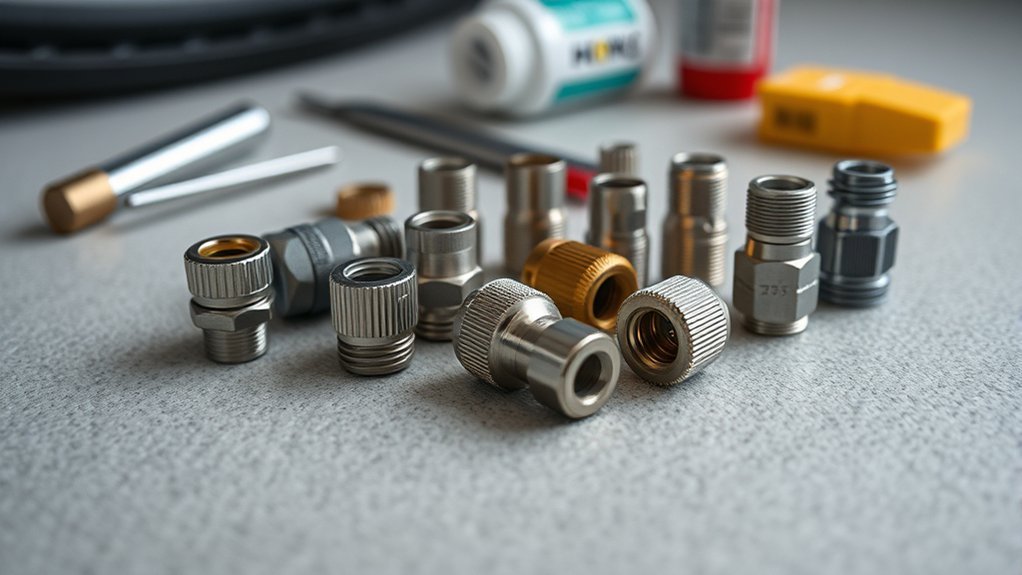
A tubeless valve is a separate part that seals directly against the taped rim. Most conventional bicycle tubeless valves use a Presta-style pump interface and a removable core, but rim shape, valve-base shape, pressure-relief features, and tire inserts can affect compatibility.
Basic Tubeless Valve Installation
- Confirm that the rim and tire are approved for tubeless use.
- Inspect the rim tape. It must cover the spoke holes and sit smoothly in the rim channel.
- Make a small, controlled opening in the tape at the valve hole. Avoid tearing a large slit.
- Insert the valve from inside the rim so the rubber base matches the rim bed.
- Press the valve base into place and tighten the external nut finger-tight. Do not use pliers.
- Install and seat the tire according to the tire and wheel maker’s instructions.
- Add the recommended sealant amount through a removable core or directly into the tire, depending on the sealant formula and valve design.
- Reinstall the core, inflate within the approved pressure limits, and rotate and shake the wheel to distribute sealant.
- Check the valve, bead, and spoke holes for leaks before riding.
ENVE’s tubeless setup instructions specify pressing the valve firmly into the rim and tightening the nut only finger-tight. Stan’s tubeless kits use removable-core valves for easier sealant service, but not every sealant formula can pass through every valve stem.
Warning: If air or sealant escapes from spoke holes, drain holes, or around the outside of the valve hole, stop inflating. The rim tape may be leaking into the rim cavity. Deflate the tire and inspect the tape instead of tightening the valve nut with tools.
How to Check for a Removable Valve Core
Look for two small flat sides near the top of the valve core. A valve-core tool fits these flats. Not every Presta tube has a removable core, while Schrader cores are commonly removable. Release all pressure before removing any core.
Adding Sealant Through the Valve
Remove the core only after fully deflating the tire. Use an injector that fits the valve stem, add the amount specified by the sealant and tire maker, reinstall the core gently, and inflate. Some sealants contain particles too large for valve injection, so follow the sealant manufacturer’s method instead of assuming every formula will pass through the core.
Everyday Valve Tasks and Troubleshooting
| Symptom | Likely Cause | What to Do |
|---|---|---|
| Bubbles at the valve core | Loose, dirty, bent, or damaged core | Deflate, clean, gently tighten, or replace the serviceable core |
| Leak at the tube-to-valve joint | Torn tube, crooked stem, tire slip, or unsupported Presta stem | Replace the tube and correct the alignment or rim-hole fit |
| Tubeless leak around valve hole | Poor valve-base fit, damaged tape, or leaking rim cavity | Deflate, remove the tire, inspect tape and valve base, then reinstall finger-tight |
| Air enters very slowly | Stuck Presta tip or sealant-clogged removable core | Tap the Presta tip; clean or replace a removable core |
| Pump head will not fit | Wrong pump setting, chuck, or adapter | Use the correct side of a dual head, reverse the internal gasket if designed to do so, or add the correct pump adapter |
| Valve stem leans at an angle | Tube installed crooked or tire and tube creeping on the rim | Deflate, straighten and reseat the tube, then check riding pressure and tire fit |
Simple Valve Maintenance
- Keep the dust cap fitted to reduce dirt and moisture around the core.
- Attach and remove the pump head straight to avoid bending a Presta tip.
- Tighten valve cores only enough to seal; overtightening can damage small parts.
- Keep tubeless sealant fresh according to the sealant manufacturer’s interval.
- Inspect the valve base whenever you replace a tube, tire, rim tape, or tubeless valve.
- Carry the correct pump adapter, a compatible spare tube, and a valve-core tool when your setup requires them.
Frequently Asked Questions
What are the three main bike valve types?
The three classic bicycle tube valves are Schrader, Presta, and Woods/Dunlop. Schrader is wide with a center pin, Presta is narrow with a knurled top nut, and Woods/Dunlop has a wide base with a removable insert. Regina and newer click or high-flow systems are less common alternatives.
Are Presta valves better than Schrader valves?
Not for every bike. Presta suits smaller rim holes, deep rims, and many performance or tubeless wheels. Schrader is simple and widely supported by pumps and gauges. The better choice is the valve your rim is designed for and that you can inflate reliably.
How do you tell a Presta valve from a Schrader valve?
Presta is narrow and has a small knurled nut at the tip that must be loosened before inflation. Schrader is wider, resembles a car-tire valve, and has a spring-loaded pin in the center.
Can I use a Presta valve in a Schrader rim hole?
Yes, when the tube fits the tire and a proper rim-hole reducer or adapter sleeve supports the narrow stem. A pump adapter alone does not protect the valve base. Check the hole for sharp edges and confirm that the stem remains straight.
Can I use a Schrader tube in a Presta rim?
A Schrader stem will not fit through a normal Presta hole. Do not enlarge the hole unless the wheel manufacturer explicitly permits it. A correctly sized Presta tube is normally the safer replacement.
Do all Presta valves have removable cores?
No. Look for two small wrench flats near the top of the core. Those flats indicate that a valve-core tool can remove it. Many tubeless Presta valves have removable cores, but some inner-tube valves do not.
Why is air leaking from my tubeless valve?
The core may be loose or clogged, the rubber base may not match the rim, or the rim tape may be leaking into the rim cavity. Deflate the tire and inspect the system. Do not keep tightening the outer nut with pliers.
Conclusion
Check the valve before buying a tube, pump, extender, or tubeless replacement. Schrader is wide and car-style, Presta is narrow with a top nut, and Woods/Dunlop uses a removable insert in a wider stem. Small details such as rim-hole size, valve length, and pump-head type make the difference between an easy repair and a stranded ride.
Carry the adapter your pump actually needs, use a reducer sleeve when a Presta stem sits in a larger rim hole, and keep a compatible spare tube. For tubeless wheels, tighten the valve nut by hand and treat air escaping through the rim as a tape problem until inspection proves otherwise.
Sources
- Park Tool: Tire and Tube Removal and Installation — valve identification, stem diameters, removable cores, and adapter sleeves
- Schwalbe: Bike Tire Valves — classic valve differences, rim-hole compatibility, rim-nut guidance, and Dunlop limitations
- Michelin: Different Bike Tire Valves — Presta, Schrader, Woods, Regina, and tubeless use cases
- ENVE: How to Set Up a Tubeless Road Wheel — tubeless tape, valve installation, finger-tightening, sealant, and leak checks
- Stan’s: Mountain Tubeless Kit — tubeless-ready compatibility and removable-core valve use
- Schwalbe: Clik Valve — current click-valve compatibility and conversion details