Choosing the right bicycle tube or tubeless valve starts with two checks: the valve hole in the rim and the pump you plan to use. Presta and Schrader valves both hold air reliably, but they differ in width, operation, pump fit, and common bike use. The safest choice is usually the valve type the wheel manufacturer designed for.
Quick Answer
Presta and Schrader valves both work well, but the rim hole decides which valve fits. Presta is narrower and common on road, gravel, and many modern mountain bikes. Schrader is wider and fits most car-style air chucks. Use a reducer sleeve for Presta in a Schrader-drilled rim, and follow the tire and rim pressure limits.
Key Takeaways
- Presta (slim metal stem): About 6 mm wide, common on road, gravel, performance mountain, and many tubeless wheels.
- Schrader (wide car-style stem): About 8 mm wide, common on city, comfort, BMX, kids’, and some mountain bikes.
- Rim compatibility: A Schrader valve normally will not pass through a Presta-sized rim hole. A Presta valve can fit a Schrader-sized hole only with a proper reducer sleeve or grommet made for that purpose.
- Pressure: Valve type does not set the correct tire pressure. Use the pressure range and maximum limits supplied by the tire and wheel manufacturers.
- Accessories: A pump adapter changes pump fit, a reducer sleeve centers the valve in a larger rim hole, and an extender adds stem length. They are different parts.
At a Glance
| Time Required | 2 to 5 minutes to identify and inflate a valve |
| Difficulty | Easy |
| Tools Needed | Compatible pump with gauge; optional Presta-to-Schrader pump adapter or valve-core tool |
| Cost | No extra cost with a compatible pump; accessory cost varies |
Presta and Schrader Valves Explained

Valves control how air enters and leaves a bicycle tire. Presta and Schrader are the two types most riders compare, although Dunlop or Woods valves remain common in some regions. Newer click-fit systems also exist, but your rim hole and valve hardware still determine compatibility.
- Presta valves (SV, Sclaverand, or French): These are tall, slim stems with a nominal diameter of about 6 mm. A small knurled nut at the tip must be loosened before inflation or deflation. Presta valves are common on narrow rims, deep-section road wheels, gravel bikes, and many modern mountain-bike wheels.
- Schrader valves (AV, American, or car type): These are wider stems with a nominal diameter of about 8 mm. They use a spring-loaded center pin and accept the same general style of chuck used on car tires. Schrader valves are common on city bikes, comfort bikes, BMX bikes, kids’ bikes, and some mountain bikes.
Park Tool’s valve guide lists the same basic dimensions and explains the operating steps for both valve types.
Note: The small nut at the very top of a Presta valve opens and closes the valve. A separate rim nut may sit near the rim. The rim nut only helps hold the stem in place and should be tightened by hand.
How Presta and Schrader Differ
The visible shape is only part of the difference. Valve width affects rim-hole fit, while the valve mechanism affects how the pump attaches and how air is released.
| Feature | Presta | Schrader |
|---|---|---|
| Typical diameter | About 6 mm | About 8 mm |
| How it opens | Loosen the tip nut, then press or pump through the valve | Pump chuck presses the spring-loaded center pin |
| Rim hole | Smaller hole | Larger hole |
| Pump fit | Presta port, smart head, or Schrader chuck with adapter | Schrader port or smart head |
| Valve core | Removable on some tubes and most serviceable tubeless stems, but not all | Normally removable with a Schrader core tool |
| Common bike use | Road, gravel, performance MTB, and many tubeless wheels | City, comfort, BMX, kids’, utility, and some MTB bikes |
Does Valve Type Control Tire Pressure?
No. A Presta valve is often found on high-pressure road setups, but the valve itself does not tell you what pressure to use. The safe pressure comes from the complete tire-and-wheel system. Check the tire sidewall, rim label, and wheel manual, then follow the lowest applicable maximum.
Warning: Never use a generic range such as 80 to 125 PSI just because the valve is Presta. Some modern hookless road wheels have maximum pressures around 72 PSI or lower, depending on the wheel and tire size. Exceeding the tire or rim limit can cause tire or wheel failure.
For hookless wheels, follow the wheel maker’s tire-compatibility list and pressure chart. SRAM’s Zipp hookless guidance, for example, limits many systems to 5 bar or 72 PSI and lists lower limits for some tire sizes.
Rim-Hole Compatibility: What Fits What?
Your rim usually decides the valve width. Check the old tube, the current tubeless valve, the wheel manual, or the hole itself before buying a replacement.
- Schrader valve in a Presta-drilled rim: It normally will not fit because the valve is wider than the hole.
- Presta valve in a Schrader-drilled rim: It can pass through, but the extra space may let the stem move, rattle, or rub against the hole edge. Use a purpose-made reducer sleeve or grommet that supports the stem.
- Rim nut: This may hold a valve upright while pumping, but it does not reduce an oversized valve hole. Tighten it only by hand.
Warning: Do not drill a rim unless the wheel or rim manufacturer specifically approves the modification. Drilling can damage the rim, create sharp edges, affect warranty coverage, or make the wheel unsafe.
Park Tool notes that some conventional rims can be enlarged under limited conditions, but that is not a universal instruction. Manufacturer approval is the safer rule, especially for carbon, aero, tubeless, or hookless rims.
Which Valve Should You Choose?
Start with the rim, not personal preference. Once you know the rim-hole size, choose a tube or tubeless valve that fits it and is long enough for your pump head.
- Choose Presta when the rim is drilled for Presta, when you use a deep-section wheel that needs a longer slim stem, or when your tubeless wheel is designed around a Presta-style valve.
- Choose Schrader when the rim is drilled for Schrader and you want direct compatibility with common car-style chucks or a simple spring-loaded valve.
- Use Presta in a Schrader rim only with proper support from a reducer sleeve or grommet designed for the rim and valve.
Which Valve Fits Which Bike and Riding Style?
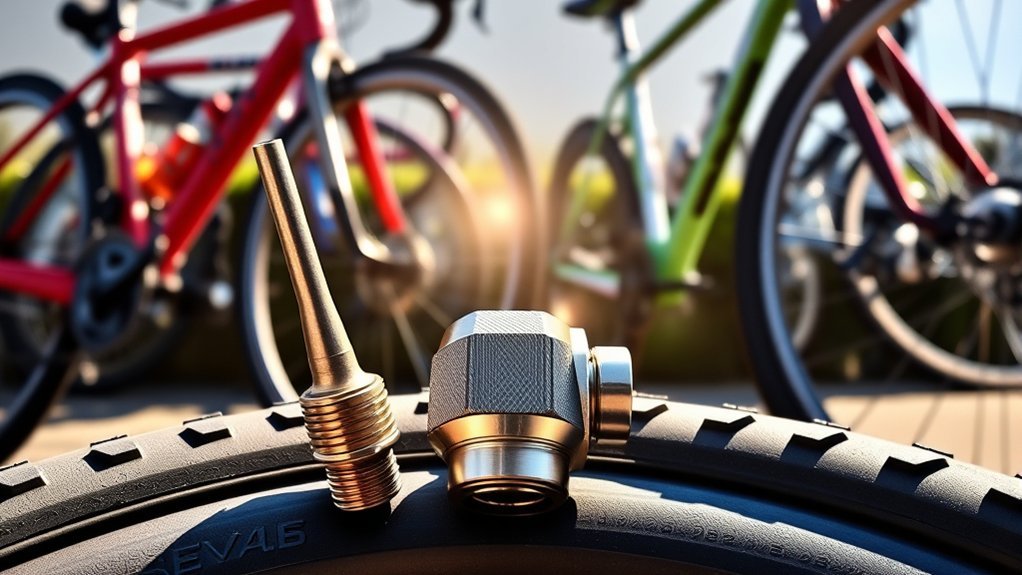
Road and Gravel Bikes
Presta is the most common choice on road and gravel bikes because the smaller hole suits narrow or lightweight rims, and long Presta stems are widely available for deep-section wheels. Many gravel tubeless systems also use removable-core Presta-style valves so sealant can be added through the stem.
Mountain Bikes
Modern performance mountain bikes often use Presta, especially with tubeless-ready rims. Schrader remains common on some entry-level and older mountain bikes. Use the valve type specified for the wheel rather than assuming all mountain bikes use the same one.
City, Commuter, BMX, and Kids’ Bikes
Schrader is common on these bikes because it is familiar and works with many car-style chucks. Presta also appears on higher-spec commuter and folding bikes, so check the wheel before buying a tube.
Inner Tubes, Tubeless Valves, and Stem Length
A tube valve is permanently attached to the inner tube. A tubeless valve is a separate part that seals against the rim and works with tubeless tape, a compatible tire, and sealant. Do not assume that every Presta tube has a removable core. Some do, while others have fixed cores.
For a replacement inner tube, match all three items:
- Wheel diameter: Match the size marking used by the tire and tube, such as an ISO/ETRTO size or a common label like 700c, 29-inch, or 26-inch.
- Tire width range: The tube’s listed width range must include the width printed on your tire.
- Valve type and length: Match the rim hole and choose a stem long enough for the pump head to attach securely.
Deep rims may need longer stems or a manufacturer-approved valve extender. Stem lengths such as 40, 48, 60, and 80 mm are common in the market, but availability depends on brand, tube material, and valve type. Do not assume long stems are exclusive to one valve standard.
Pro Tip: Before ordering a tube, photograph the tire-size marking and measure the exposed valve stem. This prevents the two most common buying mistakes: the wrong tube width and a stem that is too short for the rim.
Pumps and Compressors
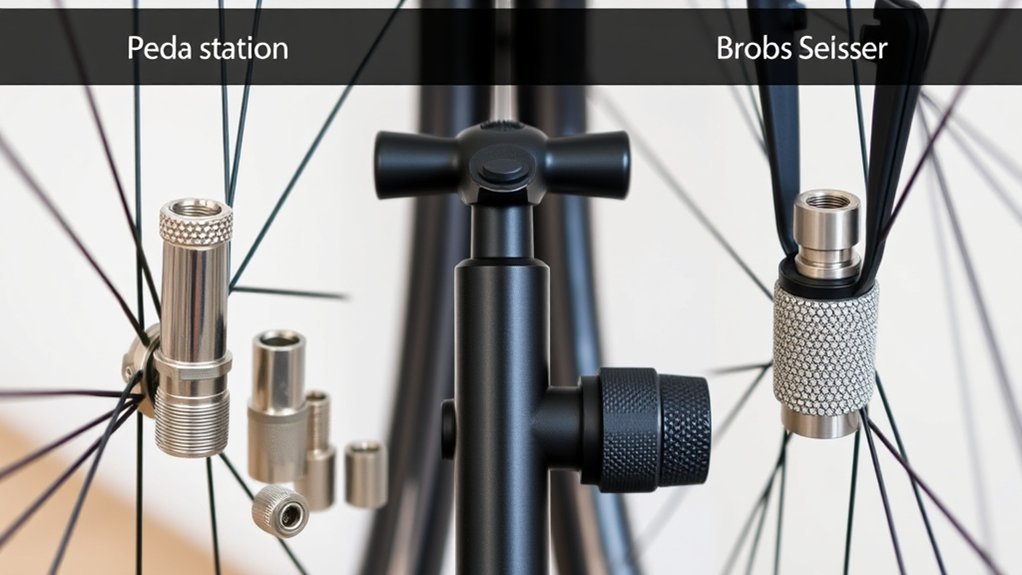
Many modern floor and mini-pumps fit both valve types, but the head design varies. Check the labels on the pump head before forcing it onto a valve.
Pump Head Compatibility
- Twin ports: The head has one small opening for Presta and one larger opening for Schrader.
- Smart head: One opening seals around either valve type.
- Swappable internals: A rubber gasket and plastic insert must be removed, flipped, and reinstalled for the other valve type.
- Single-standard head: The pump fits only Presta or only Schrader unless an adapter is added.
Manufacturers such as Topeak document dual-head systems with separate Presta and Schrader openings.
Using Air Compressors
Most service-station and automotive air chucks are made for Schrader valves. To use one on Presta, loosen the Presta tip nut and screw on a Presta-to-Schrader pump adapter before attaching the chuck.
Warning: A compressor can add air quickly to a small bicycle tire. Use short bursts, check pressure with a suitable gauge, and stop below the lowest maximum printed or specified for the tire and rim.
Adapters, Reducer Sleeves, and Extenders
- Presta-to-Schrader pump adapter: Lets a Schrader pump chuck seal onto a Presta valve. It does not change the rim hole.
- Rim-hole reducer sleeve or grommet: Supports a Presta stem in a larger Schrader-sized rim hole. It does not change pump compatibility.
- Valve extender: Adds reach for a deep rim. Some extenders fit over an opened valve, while others require a removable core. Follow the extender and valve maker’s instructions.
How to Inflate, Deflate, and Troubleshoot a Presta Valve
- Remove the cap: Take off the plastic dust cap if fitted.
- Open the valve: Turn the small knurled nut at the tip counterclockwise until it stops. Do not remove it.
- Tap the tip: Press it briefly to release a small hiss. This confirms that the valve is open and not stuck.
- Attach the pump: Use the Presta port or a compatible smart head. Push it on straight so the thin tip does not bend.
- Inflate: Pump to the pressure recommended for the tire, rim, rider, and riding conditions.
- Remove the head: Unlock and pull the pump head off straight.
- Close the valve: Turn the tip nut clockwise until finger-tight, then replace the dust cap if used.
To deflate: Open the tip nut and press the valve tip. Control the airflow with light pressure.
If it leaks: Check that the tip nut is closed, inspect the stem for damage, and test the core only if the valve has a removable core. Use a proper valve-core tool and tighten gently. Pliers can damage the core or stem.
How to Inflate, Deflate, and Troubleshoot a Schrader Valve
- Remove the cap: Unscrew the dust cap.
- Attach the pump: Push the Schrader head on firmly and squarely, then lock the lever if the pump uses one.
- Inflate: Pump to the recommended pressure while watching the gauge.
- Remove the head: Unlock and pull it off promptly, then replace the cap.
To deflate: Press the center pin with a valve tool or another small, blunt object. Keep your face away from the valve and release air in controlled bursts.
If the pump shows no pressure: Make sure the head is on far enough to press the center pin. If the valve leaks after the pump is removed, the core may be loose, dirty, worn, or damaged.
Common Valve Problems and Fixes
| Problem | Likely Cause | What to Do |
|---|---|---|
| Pump will not seal | Wrong pump port, reversed gasket, worn pump seal, or valve not fully open | Confirm the valve type, open Presta, and check the pump-head setup |
| Slow leak at valve | Loose or damaged removable core, damaged tube base, or tubeless seal problem | Use soapy water to locate bubbles; tighten only a removable core with the correct tool |
| Presta tip bends | Pump head installed or removed at an angle | Support the head and move it straight on and off |
| Valve sits at an angle | Tube or tire has shifted on the rim | Deflate, reseat the tire and tube, inspect the valve base, and correct the cause before riding |
| Presta rattles in a large hole | Presta stem installed in a Schrader-sized rim hole without support | Install the correct reducer sleeve or grommet |
| Tubeless valve clogs | Dried sealant in the core or stem | Remove a serviceable core, clean or replace it, and follow the sealant maker’s instructions |
Decision Checklist
- Check the tire size: Match the replacement tube’s wheel diameter and width range to the tire marking.
- Check the rim hole: Use the valve type the rim was designed to accept.
- Check stem length: Make sure enough stem extends beyond the rim for the pump head to grip.
- Check the pump: Set up a dual or reversible head before the ride, not after a flat.
- Carry the right accessory: Presta riders who may use car-style chucks can carry a small pump adapter.
- Respect pressure limits: Follow the lowest applicable maximum from the tire and rim makers.
For a detailed tire-and-tube service guide, see Park Tool’s Repair Help.
Frequently Asked Questions
Are Presta and Schrader valves interchangeable?
Not directly. A Schrader valve is usually too wide for a Presta-sized rim hole. A Presta valve can pass through a Schrader-sized hole, but it needs a proper reducer sleeve or grommet to support and protect the stem.
Do Presta-to-Schrader pump adapters work?
Yes. Open the Presta tip nut, screw the adapter onto the valve, and attach a Schrader-style pump chuck. The adapter changes pump compatibility only; it does not make the valve fit a different rim hole.
Can I inflate a Presta valve with a Schrader-only pump?
Yes, with a Presta-to-Schrader pump adapter. Without it, a Schrader-only head is too large to seal correctly around the Presta stem.
Why do many road bikes use Presta valves?
Presta valves need a smaller rim hole, which suits narrow and lightweight road rims. They are also sold in long stem lengths for deep-section wheels. The correct choice still depends on the wheel design.
Can I use a rim nut instead of a reducer sleeve?
No. A rim nut may hold the stem upright, but it does not fill the gap around a Presta valve in a Schrader-sized hole. Use a purpose-made reducer sleeve or grommet.
Do all Presta valves have removable cores?
No. Many tubeless Presta valves and some inner tubes have removable cores, but other Presta tubes use fixed cores. Look for wrench flats on the core or check the manufacturer’s specification before trying to remove it.
Which valve is best for tubeless tires?
Use the tubeless valve type and size approved for the rim. Presta-style tubeless valves are common on performance bikes, but Schrader tubeless valves also exist. The valve must seal correctly against the rim and work with the rim tape.
How do I know what valve-stem length I need?
Choose a stem that passes fully through the rim and leaves enough exposed length for the pump head to attach securely. Deep rims need longer stems or an approved extender. Check the wheel maker’s recommendation when available.
Conclusion
Presta offers a slim fit for narrow, deep, and many tubeless-ready bicycle rims, while Schrader offers familiar car-style pump compatibility and a robust spring-loaded design. Do not choose by pressure myths alone. Match the valve to the rim, tube or tubeless system, stem length, and pump. A small Presta-to-Schrader adapter is useful on the road, but it cannot replace a proper rim-hole reducer.
Sources
- Park Tool: Tire and Tube Removal and Installation — valve dimensions, operation, adapter sleeves, and inflation steps
- Park Tool: Tire, Wheel and Inner Tube Fit Standards — rim-hole fit, valve-core service, and stem-length guidance
- Schwalbe: Bike Tire Valves — valve types, rim nuts, large-hole risks, and current valve developments
- Continental: Bicycle Tubes — tube selection, common valve use, and pump matching
- SRAM Zipp: Hookless Tire Compatibility — system pressure limits and tire-and-rim compatibility