How to Inflate Tires and Reset the TPMS Light
What’s in This Article
- Quick Fix: Inflate Tires and Clear the TPMS Light
- How TPMS Works and Why the Warning Matters
- What a Solid Light vs Flashing Light Means
- Before You Begin: Time, Tools, and Safety
- How to Check and Top Up Tire Pressure Step-by-Step
- Reset TPMS After Inflating Tires: Methods That Work
- Diagnosing Persistent TPMS Warnings: Sensors, Module, Antenna
- Reading TPMS Error Codes and Running a System Scan
- Seasonal Tips: Temperature Effects and Monthly Maintenance
- When to See a Pro: Costs, Parts, and What to Expect
A TPMS light can turn a normal drive into a stressful stop. The fix often starts with one simple task: check cold tire pressure with a reliable gauge and inflate each tire to the pressure on your vehicle placard.
You should add air in short bursts, reinstall each valve cap, and drive briefly so the tire pressure monitoring system (TPMS) can update. If the warning stays on, scan for sensor faults, weak sensor batteries, damaged valve stems, or wiring problems.
Quick Answer
Check all tires when they are cold, including the spare if your vehicle monitors it. Inflate each tire to the pressure listed on the driver’s doorjamb placard or owner’s manual, then drive for several minutes so the TPMS can update. If the light flashes for about 60 to 90 seconds and then stays on, treat it as a system fault and get the TPMS checked.
Key Takeaways
- Use the vehicle placard pressure, not the maximum pressure on the tire sidewall.
- Check tire pressure when tires are cold for the most accurate reading.
- Drive briefly after inflation so the TPMS sensors and control unit can update.
- Scan the system if the light stays on after you confirm correct pressure.
- Get professional help if the TPMS light flashes, a tire keeps losing air, or sensor data looks wrong.
Quick Fix: Inflate Tires and Clear the TPMS Light
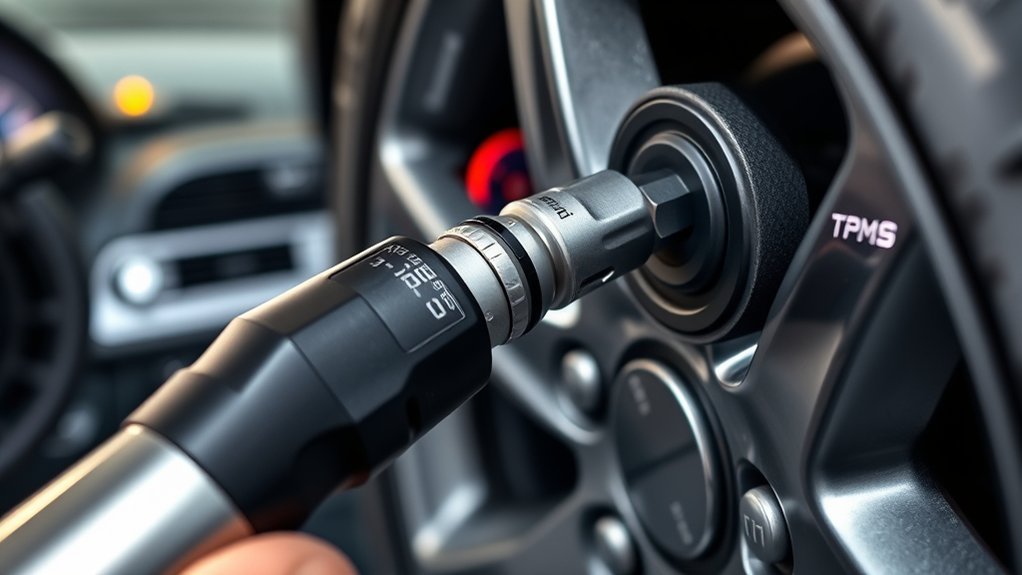
If your TPMS light comes on, first check all tires with a gauge. Inflate each tire to the manufacturer-recommended pressure on the driver’s doorjamb placard or in the owner’s manual. Many passenger vehicles use pressures around 30 to 36 psi, but your vehicle placard gives the correct number.
Drive for 5 to 10 minutes at normal neighborhood or road speed if your manual allows a drive-cycle reset. The system often needs wheel movement before it updates pressure readings and clears the warning.
Temperature changes can also affect pressure. Tire Rack notes that tire pressure changes about 1 psi for every 10°F change in air temperature, so cold mornings can trigger a warning even when the tire has no puncture.
Warning: Do not keep driving on a tire that looks low, feels unstable, or loses pressure again after inflation.
If the light stays on, inspect for a slow leak, damaged valve stem, corroded wheel, or faulty sensor. Check your owner’s manual for the reset steps that match your vehicle.
How TPMS Works and Why the Warning Matters
A tire pressure monitoring system watches for pressure that drops below a safe range. According to the National Highway Traffic Safety Administration (NHTSA), a TPMS light means at least one tire has become significantly underinflated, and you should check pressure as soon as possible.
You will see two main system types. Direct sensors measure air pressure at each wheel. Indirect systems use wheel-speed data from the anti-lock braking system (ABS) to estimate when a tire may be low.
Direct Vs Indirect Sensors
Direct TPMS sensors sit inside the wheel assembly and send pressure data to the vehicle. They can give per-wheel readings, depending on the vehicle display, and they help you target the tire that needs air.
Indirect systems do not use pressure sensors inside each wheel. They compare wheel rotation patterns, so they need calibration after tire rotation, tire replacement, pressure correction, or some wheel service.
- Direct systems can provide per-wheel pressure data on many vehicles.
- Indirect systems use wheel-speed data and need recalibration after tire service.
- Direct sensor batteries can weaken with age and use.
- Indirect systems may miss equal pressure loss across all tires.
- Both systems support safety, handling, tire life, and fuel use when you still check pressure by hand.
How Alerts Are Triggered
Federal TPMS rules require a warning when tire pressure falls well below the vehicle manufacturer’s recommended cold pressure. The Tire Industry Association explains that the warning should go out when the tires sit within the correct pressure range and the system works properly.
When the light comes on, check each tire with a gauge. Inflate to the placard value, inspect for leaks or damage, and drive only if the tire appears safe.
| Risk | Response |
|---|---|
| Low pressure affects handling | Check and inflate |
| Pressure drops again | Inspect and repair |
Limitations And Delays
The TPMS warning helps you catch low pressure, but it cannot replace monthly tire checks. NHTSA says TPMS activates only when a tire becomes significantly underinflated, so a tire can still sit below ideal pressure before the light comes on.
Gradual leaks, fast temperature swings, weak sensor batteries, and wheel service can also delay or confuse alerts. Use the system as a warning tool, not your full maintenance plan.
- Verify pressures manually with a calibrated gauge each month.
- Inspect sensors if the TPMS warning light flashes or acts erratically.
- Adjust for outdoor temperature when you set cold tire pressure.
- Treat TPMS as an alert system, not a maintenance substitute.
- Replace faulty sensors to restore reliable monitoring.
What a Solid Light vs Flashing Light Means
A solid TPMS light usually means one or more tires need pressure correction. Pull over when safe, inspect the tires, and check pressure with a gauge.
A flashing TPMS light means something different on many 2008 and newer vehicles. NHTSA explains that a system malfunction may show as a TPMS symbol that flashes for 60 to 90 seconds and then stays on.
If the light flashes and then turns solid at each startup, do not treat it as a simple low-pressure alert. Check pressure first, then schedule a scan if the light pattern continues.
Before You Begin: Time, Tools, and Safety
Estimated total time: 15 to 25 minutes for a basic pressure check, inflation, and short reset drive. A full sensor scan or relearn can take longer, especially if your vehicle needs a scan tool.
When you’re keeping tires at their recommended pressure, three tools help most: a quality tire pressure gauge, a reliable inflator, and a TPMS reader for system diagnostics. You use a tire pressure gauge to get accurate psi readings and compare them with the placard value.
Select an inflator that matches your workflow. Compact portable units help with roadside top-ups, while a shop compressor fills tires faster. Choose a model with clear pressure control and a chuck that seals well.
A TPMS reader can show sensor IDs, battery status when supported, and fault data. It helps you isolate a weak or dead sensor instead of guessing.
- Use a digital or dial gauge that reads clearly.
- Use an inflator that lets you add air in short bursts.
- Keep valve caps clean and reinstall them after each check.
- Use a TPMS scan tool only if it supports your vehicle.
- Check your owner’s manual before using any reset button or relearn mode.
How to Check and Top Up Tire Pressure Step-by-Step
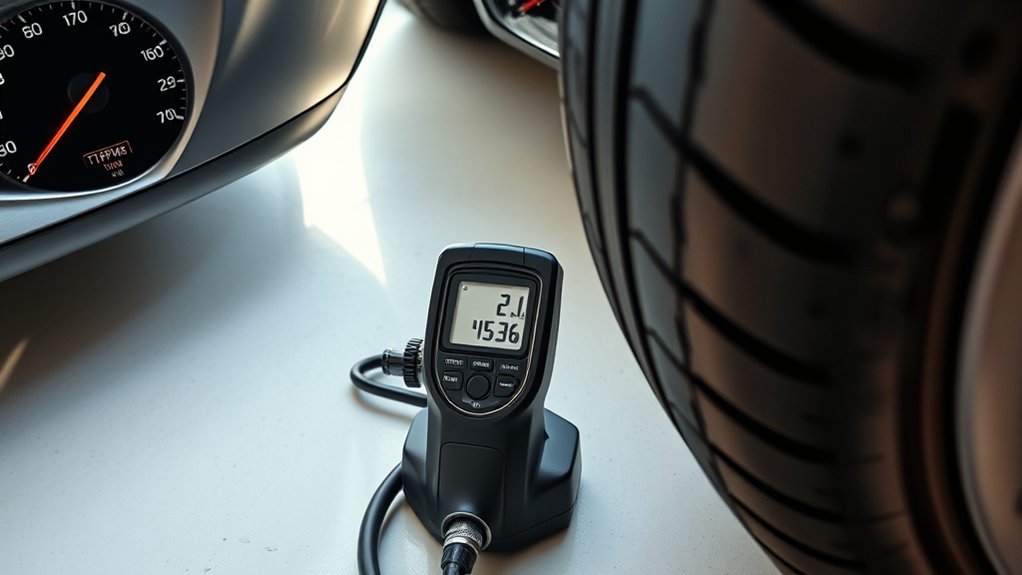
Start with cold tires when possible. NHTSA defines cold tires as tires that have not been driven for at least three hours, which gives you a more accurate baseline.
- Find the correct pressure. Read the Tire and Loading Information Label on the driver’s door edge, doorjamb, or owner’s manual.
- Remove the valve cap. Put the cap somewhere clean so dirt does not enter the valve stem.
- Press the gauge firmly. Hold the gauge straight on the valve stem until you get a stable reading.
- Compare the reading. Match each tire to the placard value, not the sidewall maximum.
- Add air in short bursts. Recheck often so you do not overinflate the tire.
- Release air if needed. Press the valve stem lightly, then recheck until the reading matches the placard.
- Repeat for every tire. Check the spare too if your vehicle uses or monitors one.
- Reinstall valve caps. Caps help keep dirt and moisture away from the valve core.
Check Pressure With Gauge
A reliable tire pressure gauge lets you compare each tire with the manufacturer’s recommendation. Remove the valve cap, press the gauge squarely on the stem, and read the value.
Check every wheel and write down any tire that sits low. If one tire loses pressure again within days, inspect it for a nail, valve leak, rim leak, or sidewall damage.
- Use a quality gauge for consistent readings.
- Check tires cold, before long driving.
- Note which tires differ from the placard value.
- Inspect valve stems and caps for damage or corrosion.
- Recheck after inflation to confirm the final reading.
Add Air To Specification
Confirm the recommended psi on the doorjamb placard or owner’s manual. If a tire reads below spec, attach the inflator to the valve stem and add air in short bursts.
| Step | Action |
|---|---|
| 1 | Verify the placard pressure |
| 2 | Measure cold tire pressure with a gauge |
| 3 | Add air in short bursts |
| 4 | Recheck and adjust each tire |
| 5 | Drive briefly if the manual calls for a reset drive |
Do not inflate to the maximum pressure molded into the tire sidewall. That number shows the tire’s limit, not your vehicle’s correct operating pressure.
Reset TPMS After Inflating Tires: Methods That Work
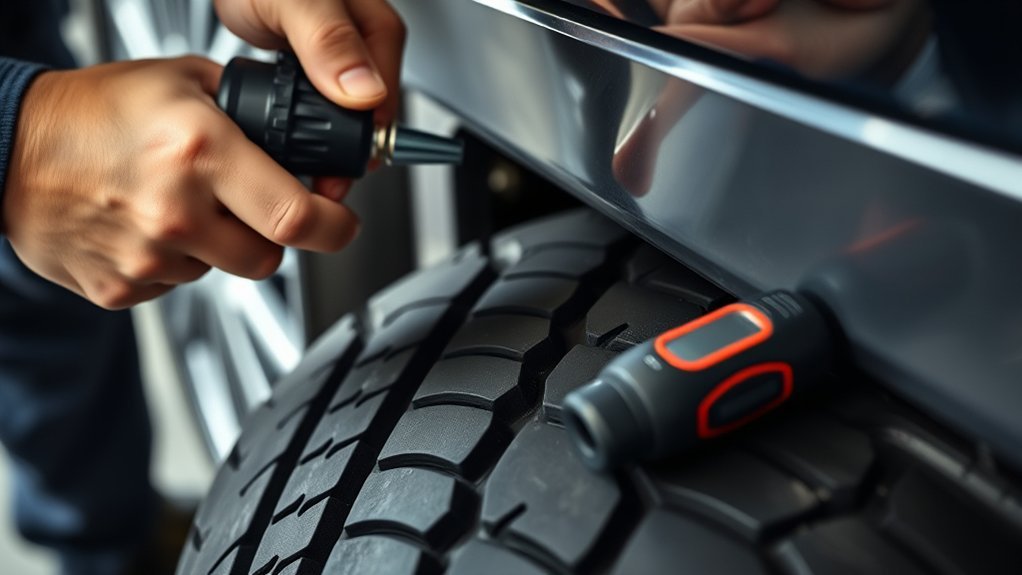
After you inflate each tire to the correct recommended pressure, many vehicles clear the TPMS warning after a short drive. Watch the dashboard light during the drive and after the next restart.
Some vehicles need a manual reset through a button, instrument cluster menu, infotainment screen, or scan tool. Follow your owner’s manual because the wrong relearn sequence can keep the system from reading the correct sensor positions.
- Inflate each tire to the exact placard pressure.
- Tighten valve caps to reduce dirt and moisture exposure.
- Drive at normal speed for 5 to 10 minutes if your manual supports that method.
- Watch the dashboard and confirm the TPMS light turns off.
- Use the reset button or menu only when your manual instructs you to do so.
Note: Some indirect TPMS systems need recalibration after you rotate tires, replace tires, or correct pressure.
Diagnosing Persistent TPMS Warnings: Sensors, Module, Antenna
If the TPMS warning light stays on after you inflate the tires and drive, diagnose the system in order. Start with the tire, valve stem, and wheel because pressure loss causes many warnings.
Inspect each tire for nails, cuts, bead leaks, cracked valve stems, missing caps, or corrosion near the valve. Then use a scan tool that supports your vehicle to check wheel sensors, sensor IDs, and communication faults.
Aging direct sensors can fail when their sealed batteries weaken. Many sensor batteries last several years, but heat, driving habits, and sensor design affect lifespan.
Check antenna connections, wiring, and wheel-well harnesses for cuts, corrosion, or loose connectors. If sensors and wiring pass testing, a technician may test the TPMS module.
Reading TPMS Error Codes and Running a System Scan
Choose an OBD-II compatible TPMS scan tool that supports your vehicle’s make, model, year, sensor type, and relearn method. Connect it to the diagnostic port and follow the tool prompts.
Read and log the TPMS error codes, but do not assume every code means the same thing on every vehicle. Code definitions vary by manufacturer and scan tool, so use the service manual or tool database for your vehicle.
Scan Tool Selection
Pick a scan tool that can read TPMS-specific data, not just engine codes. A useful tool should read sensor IDs, trigger sensors when needed, support relearn steps, and show live pressure data when the vehicle allows it.
- Confirm vehicle compatibility before you buy or borrow a tool.
- Verify TPMS-specific code reading and relearn support.
- Check whether the tool can read sensor IDs.
- Use firmware updates when the tool maker provides them.
- Save scan reports before you clear any fault codes.
Interpreting TPMS Codes
TPMS codes can point toward low pressure, a missing signal, a dead sensor, a mismatched ID, or a module communication problem. Record the exact code, freeze-frame data if available, and the tire position shown by the tool.
If the scan points to low pressure, check the tire with a gauge and inspect for leaks. If the scan points to a sensor or communication fault, test the sensor, wiring, antenna, and module before replacing parts.
Live Data Monitoring
After you clear codes and repair the cause, use live data monitoring to confirm the system works under real driving conditions. Watch sensor IDs, pressure, temperature, and signal status if your tool supports those fields.
- Connect a compatible TPMS scanner and start a full system scan.
- Log sensor IDs, pressures, temperatures, and signal status.
- Use the code definitions for your exact vehicle.
- Test-drive and scan again for intermittent faults.
- Replace or reprogram faulty sensors, then verify the repair.
Practical Fixes: Sensor Swap, Relearn Procedures, and Safety Notes
If you replace a failing TPMS sensor, you usually need a relearn procedure so the vehicle control unit recognizes the new sensor ID. Replace sensors one wheel at a time, record original IDs when possible, and install parts that match your vehicle’s frequency and protocol.
Use the manufacturer’s relearn procedure. Some vehicles use a drive-cycle relearn, while others need tool-assisted ID programming through the diagnostic port.
Avoid TPMS emulators unless a qualified technician confirms that the part is legal, safe, and compatible with your vehicle. A workaround that hides a TPMS fault can leave you without a working tire safety warning.
After any repair, run a full diagnostic scan, clear old codes, and monitor live TPMS data. Fix wiring or grounding problems right away because new sensors will not solve a damaged circuit.
What Not to Do When the TPMS Light Comes On
Do not ignore the light because the tire looks normal. NHTSA explains that underinflated tires can look hard to detect by eye.
- Do not inflate to the sidewall maximum pressure.
- Do not reset the system before you check all tire pressures.
- Do not assume cold weather is the only cause.
- Do not keep driving if the tire looks low or the vehicle feels unstable.
- Do not replace sensors before you confirm pressure, leaks, and code data.
Seasonal Tips: Temperature Effects and Monthly Maintenance
When temperatures fall, tire pressure often drops. Check and adjust pressures monthly during seasonal shifts, and set them to the vehicle placard values when tires are cold.
Use a calibrated gauge, inflate to spec with cold tires, and log values if one tire keeps losing air. If the TPMS light turns on after a cold night, verify gauge readings before you assume a sensor failed.
Expect about 1 psi change per 10°F change in air temperature. Check cold tire pressures monthly and inflate to the vehicle placard.
- Verify tire pressure when tires are cold, ideally before daily driving.
- Use a reliable digital or dial gauge.
- Inflate to the vehicle placard value, not the tire sidewall.
- Log pressure and outdoor temperature if one tire keeps dropping.
- Recheck after long cold snaps or large temperature swings.
Pro tip: Check pressure before a long trip and again after a major temperature change.
When to See a Pro: Costs, Parts, and What to Expect
Monthly checks catch many pressure changes, but repeated TPMS warnings need professional diagnostics. Ask the technician to check pressure, inspect valves and rims, scan sensor IDs, and test module communication.
RepairPal estimates that TPMS lamp diagnosis often ranges from about $98 to $233 before taxes, fees, and local variation. TPMS sensor replacement averages about $246 to $313, including labor and parts, before taxes and local variation.
Control module repair can cost more. RepairPal estimates tire pressure monitor control module replacement at about $487 to $528 on average, but your vehicle and location can change the final cost.
Ask for a written estimate before work starts. Request warranty terms and keep the repair record so you can track future sensor or tire issues.
Frequently Asked Questions
How Do You Get Rid of a Low Tire Pressure Notification?
Inflate all tires to the manufacturer’s recommended cold psi, then drive briefly if your manual allows a drive-cycle reset. If the notification stays on, recheck pressure and scan for sensor or system faults.
Why Does My TPMS Say Low Tire Pressure but the Tires Are Fine?
Your tires may look fine but still sit below the correct pressure. Cold weather, a weak sensor battery, a recent tire rotation, or a system fault can also trigger the warning.
Can You Fix a TPMS Error Yourself?
You can fix simple pressure-related warnings by checking and inflating the tires. You may need a compatible TPMS scan tool or a tire shop if the light flashes, a sensor fails, or the system needs a relearn.
What Is the First Thing You Should Do When a Low Air Pressure Warning Comes On?
Pull over when safe and inspect the tires before you keep driving. Then check each tire with a gauge and inflate any low tire to the placard pressure.
Does the TPMS Light Reset Automatically After Adding Air?
Many vehicles clear the light after you correct pressure and drive for several minutes. Some vehicles need a button, menu command, or scan-tool relearn, so check your owner’s manual.
Safety Disclaimer: This article is for informational purposes only and does not replace your owner’s manual or advice from a qualified tire technician. If a tire looks damaged, loses pressure quickly, or affects vehicle control, stop driving when safe and get professional help.
Conclusion
A TPMS warning deserves quick action because tire pressure affects control, braking, tire wear, and fuel use. Check every tire cold, inflate to the placard pressure, and let the system update through the correct reset method.
If the warning returns, scan the system and inspect for leaks, weak sensors, damaged wiring, or module faults. Keep a gauge in your vehicle and check pressure monthly so small pressure changes do not become roadside problems.
References
- Tire Safety Ratings and Awareness: TireWise – National Highway Traffic Safety Administration, accessed 2026
- Tire Pressure Monitoring System – Tire Industry Association, accessed 2026
- How Does Temperature Change Affect Tire Air Pressure? – Tire Rack, accessed 2026
- Tire Pressure Monitor Lamp Diagnosis Cost Estimate – RepairPal, 2026
- TPMS Sensor Replacement Cost Estimate – RepairPal, 2026
- Tire Pressure Monitor Control Module Replacement Cost Estimate – RepairPal, 2026