

Keep each tire at the manufacturer’s cold PSI and check pressures weekly with a calibrated gauge to avoid center or edge wear. Inflate or deflate while cold, log readings, and inspect tread for cupping, feathering, or bulges. Rotate tires every 5,000–7,500 miles, balance when rotating, and get alignment annually or after suspension work. Address worn shocks, bushings, or tie rods promptly. Follow this routine and you’ll prevent most uneven wear—and learn practical steps to fix remaining issues.
Quick Answer: Stop Pressure‑Related Uneven Tire Wear
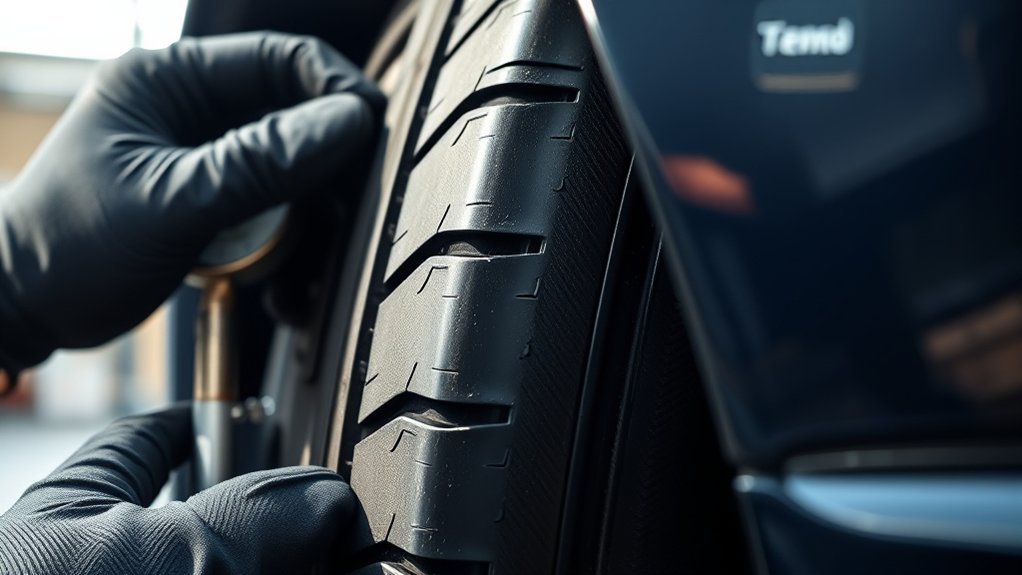
When you keep tires at the manufacturer’s recommended PSI, you stop the common pressure-related wear patterns: overinflation strips tread from the center, and underinflation chews through the shoulders. You’ll prevent uneven tire wear by checking tire pressure monthly and before long trips, using a reliable pressure gauge to set precise inflation. This is proper care that preserves tire longevity, reduces rolling resistance, and boosts driving safety. You won’t surrender efficiency or control to neglect; regular maintenance is a simple, liberating routine that cuts replacement costs and lowers fuel use. Measure cold, adjust to the manufacturer-recommended value, and document readings so patterns reveal themselves early. If pressure drifts, address leaks, valves, or temperature effects promptly. You’ll maintain traction and reduce blowout risk, especially in heat or on long drives. Treat inflation as nonnegotiable: it’s a technical task with practical payoff that keeps you free from avoidable roadside failures and accelerates your vehicle’s reliable performance.
How Tire Pressure Causes Center, Edge, and Cupping Wear
If your tires are overinflated, the center of the tread bears more load and wears faster, reducing traction and comfort. If they’re underinflated, the outer edges contact the road more and deteriorate prematurely, raising rolling resistance and blowout risk. Irregular bouncing from worn suspension or fluctuating pressure can create cupping — scalloped dips that signal inconsistent tire contact.
Overinflation Causes Center Wear
Because an overinflated tire bulges at the center, you’ll see the middle of the tread take more of the load and wear faster than the edges. You should monitor pressure routinely: overinflation forces the center into greater road contact, producing center wear that reduces traction and compromises wet braking. Visually inspect the tread—if the center looks smoother than the shoulders, adjust pressure immediately. Overinflation also raises rolling resistance and heat, accelerating deterioration and shortening tire lifespan, increasing blowout risk. Maintenance is liberation: follow the manufacturer’s pressure specs, check cold PSI regularly, and correct deviations before uneven wear becomes irreversible. These disciplined checks preserve traction, improve ride comfort, and extend tire life while keeping you safer on the road.
Underinflation Causes Edge Wear
Although underinflation may be less obvious than a puncture, it forces the tire’s shoulders to carry more load, so you’ll see accelerated wear on the outer edges. You need to act: underinflation increases rolling resistance and heat, causing edge wear, excessive wear, reduced fuel efficiency, and higher blowout risk. Embrace control through regular vehicle maintenance.
- Check your tire pressure monthly and adjust to the manufacturer’s recommended PSI to prevent uneven tread and early replacement.
- If you notice scalloped or pronounced shoulder wear, correct pressure immediately and inspect alignment to avoid compounded damage.
- Keep a portable gauge, log readings, and prioritize check your tire pressure during seasonal changes to maintain fuel efficiency and extend tire life.
Liberate yourself from preventable failures with precise, routine attention.
Pressure-Induced Cupping Wear
You’ve seen how low pressure wears the shoulders and how high pressure wears the center; now look at cupping wear, where pressure issues combine with suspension faults to create uneven scalloped dips in the tread. Cupping wear signals more than cosmetic damage: worn shocks or struts let tires lose consistent road contact, and improper inflation amplifies the oscillation that produces those scalloped patterns. You prevent center wear and edge wear by keeping tire pressure at the manufacturer-recommended level; regular checks monthly and before trips are nonnegotiable. Track pressure to avoid uneven wear and protect tire performance, fuel economy, and safety. If you spot cupping wear, correct inflation and repair suspension components immediately to restore consistent contact and liberate your control.
How to Check and Set Cold Tire Inflation Pressure (Tools & Steps)
How do you check and set cold tire inflation pressure quickly and accurately? Use a reliable tire pressure gauge when the tires are cold (vehicle stationary ≥3 hours or driven <1 mile). Find the recommended air pressure on the driver’s door sticker or owner’s manual. Remove the valve cap, press the gauge firmly to get a reading, and compare it to the vehicle’s safety specification.
- Tools: quality gauge, portable air compressor, valve-core tool — check your tires and record pressures.
- Steps: verify cold condition, read recommended air pressure, deflate or inflate to spec, replace valve caps.
- Follow-up: include tire inspections, monitor tread depth, rotate your tires per schedule, and consult a professional tire technician when readings vary or wear suggests misalignment.
Routine, precise checks prevent uneven wear patterns, improve economy, and protect your freedom on the road without relying on guesswork.
[Products Worth Considering]

PROCESS LEVEL ACCURACY: Each ETENWOLF’s digital tire pressure gauge is calibrated manually to ANSI B40.7 Grade 2A(plus-minus 1 PSI).Presta valve adapter not included, if used for bicycles, it must be purchased separately
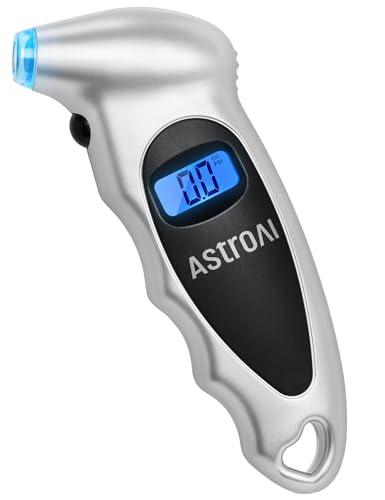
EXPERT-GRADE CALIBRATION: Each AstroAI Tire Pressure Gauge is calibrated with professional-grade tools, ensuring quick and accurate measurement results within plus-minus 1PSI. Stay prepared for any roadside emergency and travel with peace of mind.

Digital Tire Pressure Gauge 2 Pack, Industrial Tire Gauge 3-200 PSI, Calibrated to ANSI B40.7 Grade 2A(plus-minus 0.5%), Air Pressure Gauge with Replaceable AAA Batteries
Monthly and Pre‑Trip Tire Pressure & Tread Checklist
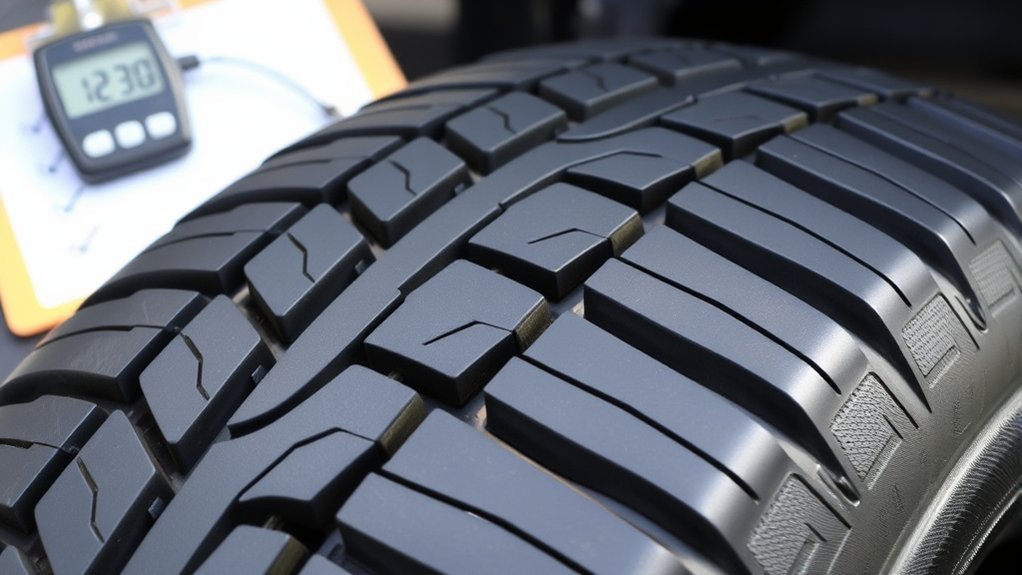
Before every long trip and at least once a month, check each tire’s cold pressure and tread so you catch underinflation, irregular wear, or low tread before they become safety hazards. Use a reliable pressure gauge and set tire pressure to the manufacturer’s recommended psi; doing so prevents under-inflated tires and reduces uneven wear patterns. Inspect tread depth with wear bars or the penny test—replace tires below 2/32–4/32 in. Document any irregular wear (feathering, cupping) you find during checks, since those signs often point to alignment issues or worn suspension parts that need prompt attention. Keep a concise log of pressure readings, tread depth, and visible damage before trips and monthly. Combine this checklist with regular maintenance and a consistent tire rotation schedule every 5,000–7,500 miles to promote even wear. This routine protects traction, extends tire life, and keeps you free to travel without being grounded by preventable tire failure.
When to Rotate, Balance, and Align to Prevent Pressure Wear
After you’ve been keeping a monthly pressure and tread log, schedule rotation, balancing, and alignment to stop uneven wear from progressing. You’ll rotate tires every 5,000–7,500 miles per your maintenance schedule to counterfront-tire wear from steering and engine load. Inspect tires monthly and before trips, and maintain tire pressure at manufacturer specs to prevent under- or overinflation that causes pressure-related uneven wear.
- Rotate tires on schedule and balance tires during that service to eliminate vibrations and stop asymmetric wear.
- Check wheel alignment at least annually or when the vehicle pulls; proper alignment corrects camber, toe, and caster to reduce common tire wear patterns.
- If you notice steering-wheel shake or rapid wear, inspect tires immediately and have a pro perform balancing and alignment.
You’ll preserve handling and extend tire life by combining pressure vigilance with coordinated rotate, balance, and wheel alignment actions.
[Products Worth Considering]

Main Characteristics: Our wheel alignment tool is capable of assisting you in resetting the strut to its initial camber position after the suspension has been removed and reinstalled. It can also check the extent of camber variation prior to re-installation. This camber alignment tool is ideal for precisely inspecting the castor and camber angles
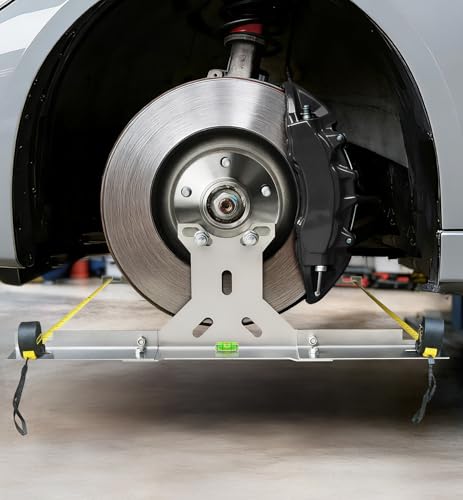
DIY front‑end toe adjustment for home garages – Designed for car owners and home garages who want tocheck front-end toe and assist with basic adjustments between professional visits. Use after minor suspension, steering, or tire work to verify toe settings and keep steering stable without a costly shop trip.
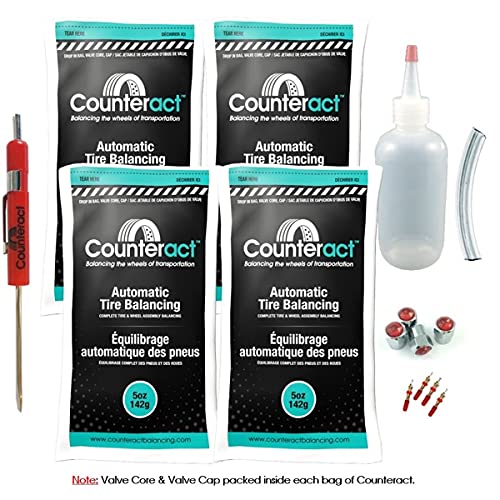
ENHANCED VEHICLE PERFORMANCE – Counteract glass balancing beads for trucks, motorcycles, and off-road vehicles provide an automatic, readjusting, trouble-free, lifetime balance of the entire wheel assembly
Identify Suspension or Steering Signs Linked to Uneven Wear
When you spot uneven wear—cupping, scalloping, inner- or outer-edge wear, or feathering—treat it as a likely suspension or steering symptom and inspect the shocks, struts, tie rods, and alignment promptly; these patterns often mean the dampers aren’t keeping the tire flat on the road, the wheels are misaligned, or components are loose or worn, and addressing those faults quickly prevents accelerated, irregular tread loss and compromised handling. You should check for these signs: pulling to one side indicates alignment or suspension bias causing asymmetric tire wear; vibration or noise at speed signals unbalanced tires or worn dampers that break consistent contact and produce cupping. Scan tread for feathering—sharp inner or outer edges mean scrubbing from toe errors. If the center wears differently from shoulders, confirm tire pressure first, then inspect camber and caster settings. Don’t accept degraded contact patches; inspect suspension mounting, bushings, and tie rods, correct alignment, and restore full contact to liberate control and extend tire life.
When to Repair, Replace, or Claim Warranty for Pressure Damage
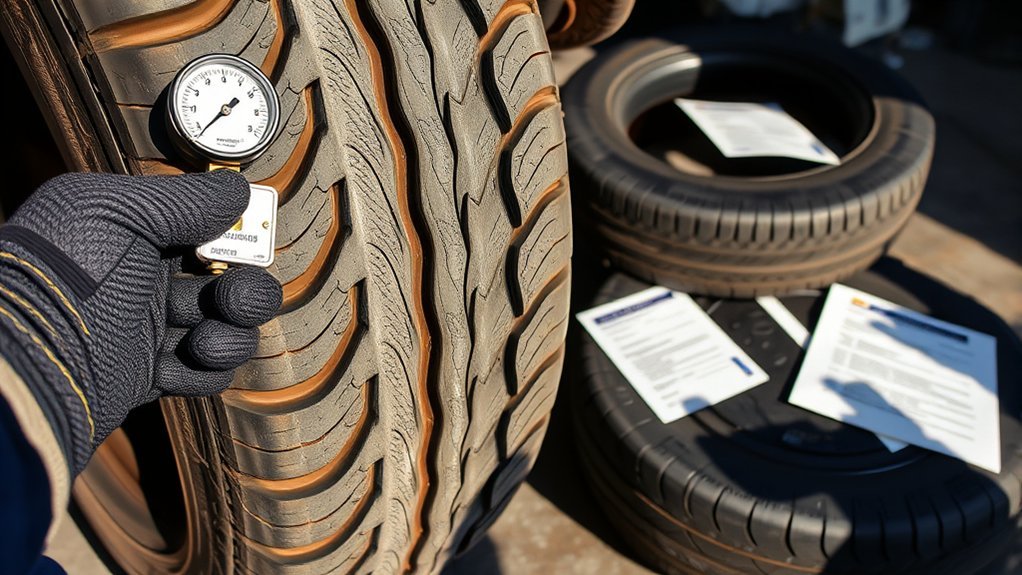
If you spot pressure-related damage—rapid center wear, shoulder degradation, bulges, or exposed cords—act fast: inspect tread depth, check for visible structural failures, and decide whether repair, replacement, or a warranty claim applies. You’ll measure tread depth; below 2/32–4/32 in. mandates replace decisions because traction collapses. Visible damage like cracks, bulges, or exposed cords requires immediate replacement to avoid blowouts. For irregular or uneven wear patterns (feathering, cupping), inspect suspension and decide repair vs replace based on severity.
Spot pressure-related wear—measure tread, check for structural damage, replace immediately if below safe depth or showing bulges.
- If the damage is puncture-only and within repair limits, repair safely; document conditions for potential warranty claims.
- If tread depth is under threshold or you see visible damage, replace the tire immediately; don’t gamble with structural failures.
- If the tire is under three years old with >3/32 tread and damage is non-repairable, file a warranty claim; keep purchase records and inspection notes.
Use regular inspections to catch pressure-related issues early and preserve your freedom to repair, replace, or claim warranty.
[Products Worth Considering]

1.Accurate and Efficient: Different colors on the bar represents different scopes, the red range on bar: 0 – 3/ 32; Yellow range on bar: 3/ 32 – 6/ 32; Green range on bar: 6/ 32 – 32/ 32, allowing you easy and fast to read and calibrated

1. Accurately measures tire tread depth gauge tool, Calibrated from 0 to 1 inch in 1/32 inch

Accurate measures tire tread depth gauge tool
Quick Maintenance Plan: Weekly, Quarterly, and Annual Tasks
Check tire pressure weekly using a calibrated gauge and adjust to the manufacturer’s Cold Tire Inflation Pressure to prevent uneven wear and blowouts. Every three months (or ~3,000 miles) inspect tread, sidewalls, and for embedded objects, and log findings. Rotate tires at 5,000–7,500 miles and schedule annual wheel alignments to keep wear even and extend service life.
Weekly Pressure Checks
Make a quick weekly habit of measuring each tire’s pressure with a reliable gauge and inflating or deflating to the manufacturer’s Cold Tire Inflation Pressure—this prevents over- or underinflation, reduces uneven wear, and preserves fuel economy and safety. You’ll get consistent, predictable handling and extend tire life by incorporating pressure checks into your regular maintenance routine.
- Use a calibrated gauge; compare readings to the manufacturer’s recommended PSI and correct immediately to reduce wear.
- Watch for center wear from overinflation and edge wear from underinflation; address deviations before they worsen.
- Record pressures weekly to spot trends, catch slow leaks, and maintain peak performance.
You’re reclaiming control: steady pressure checks liberate you from avoidable failures and unsafe driving.
Quarterly Tire Inspection
Weekly pressure checks keep your tires at the right PSI; every three months you should follow that habit with a more thorough inspection to catch wear and damage that short checks can miss. On a quarterly inspection, measure tread with a gauge or penny; keep depth above 4/32″ for traction and freedom to travel. Inspect each tire for uneven wear patterns—cupping, feathering, edge wear—that signal alignment or suspension faults needing prompt correction. Verify pressure and adjust to the manufacturer’s recommended cold tire inflation pressure; correct inflation prevents premature, uneven wear and improves efficiency. Document tread depth, pressure, and observed anomalies to build a maintenance record. This disciplined routine protects performance, reduces replacement costs, and keeps you moving without constraint.
Frequently Asked Questions
What Causes an Uneven Wear Pattern on Tires?
Uneven wear happens when poor tire alignment, incorrect inflation pressure, worn suspension issues, heavy vehicle load, bad driving habits or road conditions create inconsistent tread depth; you should use tire rotation and check wear indicators regularly.
What Is the 3% Tire Rule?
The 3% tire rule means you keep tire pressure within 3% of recommended values; use an inflation gauge, follow maintenance tips: monitor tread depth, rotation schedule, alignment check, consider load capacity, seasonal changes, and adjust driving habits accordingly.
What Is the 5 Psi Rule?
Keep tire inflation within 5 psi of the manufacturer’s cold pressure; you’ll prevent uneven wear, improve safety, and extend life. Use pressure monitoring, tire maintenance, tire rotation, alignment checks, tread depth, watch vehicle load, driving habits, seasonal changes.
How to Get Rid of Uneven Tire Wear?
You eliminate uneven tire wear by scheduling regular maintenance: perform tire rotation, check alignment checks, maintain proper inflation and tread depth, address suspension issues, adjust load distribution, and adapt driving habits to road conditions for lasting liberation.
Conclusion
Keep tire pressure in spec to stop uneven wear: underinflation wears edges, overinflation wears the center, and fluctuating pressure aggravates cupping. Check cold pressures monthly and before long trips, rotate/balance per mileage, and address alignment or suspension signs early. For example, a courier fleet cut tire replacements 40% after instituting weekly cold checks and quarterly rotations — a small, disciplined routine that directly saves tire life and improves safety.







Leave a Reply to How To Inflate Bike Tires With A Tire Inflator: Presta And Schrader Cancel reply