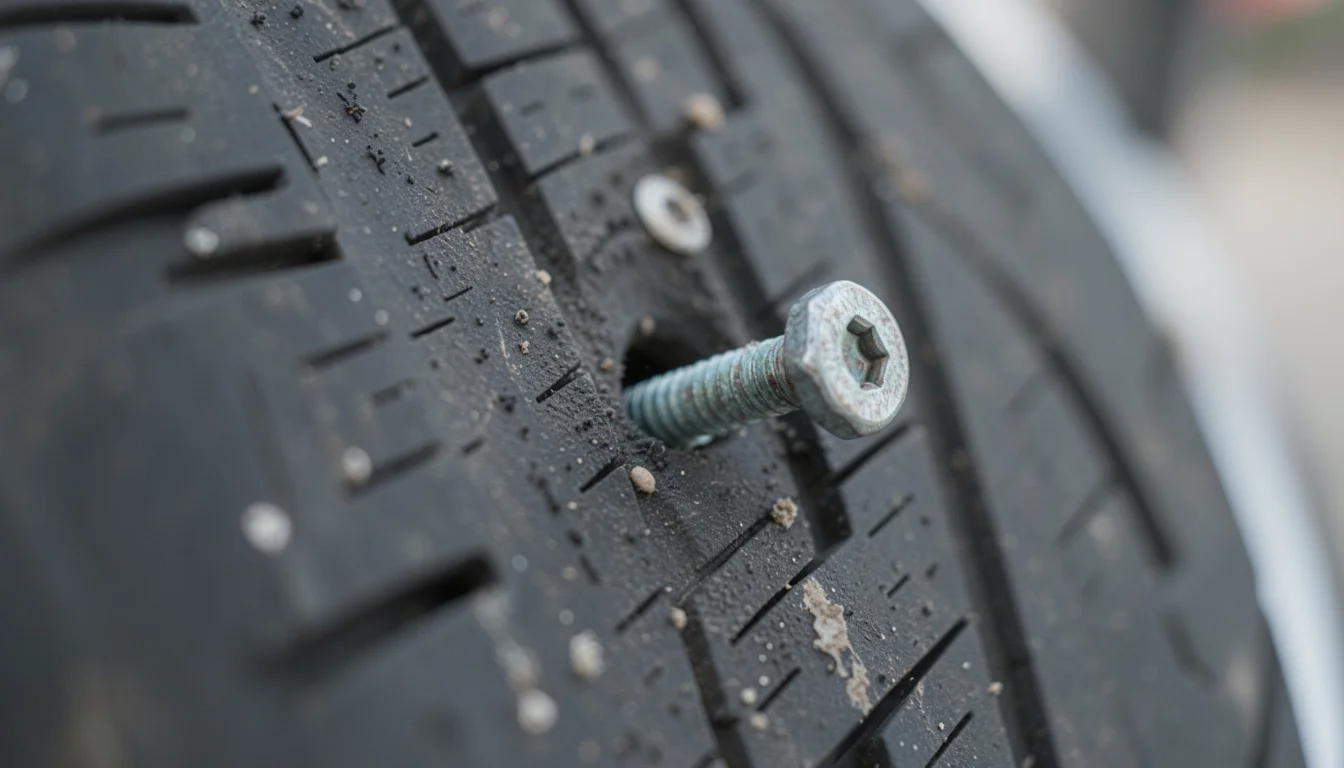
Plugging a tire is one of the fastest ways to fix a puncture, and when it is done correctly it can keep a tire on the road. But a plug is not right for every flat, and a plug alone is not considered a permanent repair by many tire manufacturers. This guide explains when plugging a tire is safe, when it is not, how to do it step by step in an emergency and what a proper long-term repair looks like.
When You Can and Cannot Plug a Tire
| Situation | Can you plug it? | Why |
|---|---|---|
| Nail or screw in the center of the tread | Yes | This is the standard repairable area |
| Puncture larger than about 1/4 inch (6 mm) | No | The hole is too large for a safe repair |
| Puncture in the shoulder or sidewall | No | These areas flex too much for a repair to hold |
| Tire driven flat for any distance | No | Internal damage is likely even if the outside looks fine |
| Tread worn to 2/32 inch or less | No | The tire should be replaced anyway |
| Run-flat tire | Usually no | See our guide on whether you can plug a run-flat tire |
| Multiple punctures close together | No | Repairs must not overlap or sit too near one another |
Plug vs. Patch vs. Plug-and-Patch
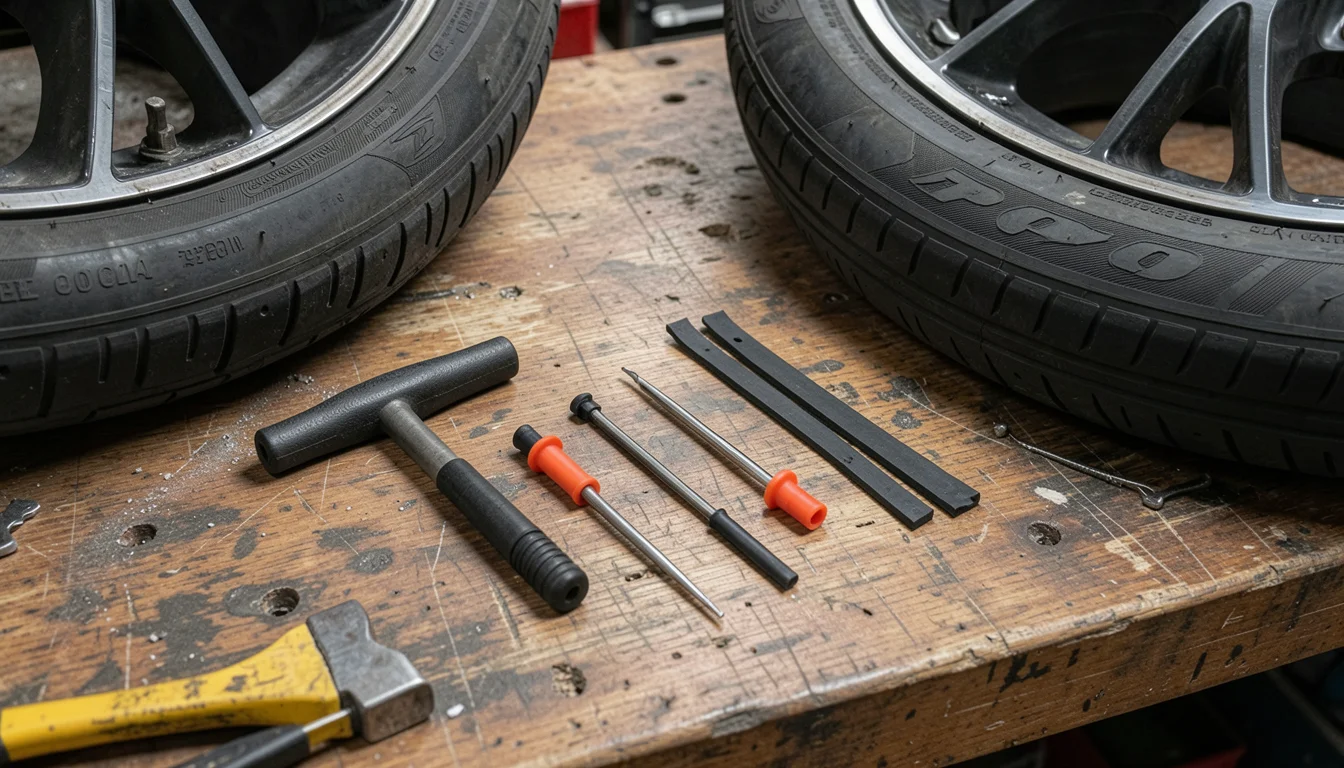
- Plug (string or rubber plug): a sticky rubber strip pushed into the hole from the outside. It is quick and cheap, but it seals only the hole, not the inner liner, which is why it is often called a temporary repair.
- Patch: a sticker-like repair applied to the inside of the tire after the tire is removed from the wheel. It seals the inner liner but does not fill the puncture channel.
- Plug-and-patch combination: a one-piece repair that fills the hole and seals the liner at the same time. This is the method that tire industry groups describe as a proper permanent repair, and it is what most shops use.
If you are weighing repair costs, see how much it is to patch a tire.
How to Plug a Tire Step by Step
Use these steps for a roadside or driveway repair with a standard plug kit. Park on level ground and set the parking brake first.
- Find the puncture. Listen for a hissing sound or spray soapy water on the tread and watch for bubbles. Mark the spot with chalk.
- Remove the object. Use pliers to pull the nail or screw out straight. Note the angle it was in.
- Ream the hole. Push the rasp tool in and out several times to clean and roughen the hole so the plug will grip.
- Prepare the plug. Thread a plug strip through the eye of the insertion tool so it is centered, and apply rubber cement if your kit includes it.
- Insert the plug. Push the tool firmly into the hole until only about half an inch of plug remains outside, then pull the tool straight out. The plug should stay in place.
- Trim the excess. Cut the plug about 1/4 inch above the tread surface.
- Re-inflate and test. Inflate the tire to the pressure on the door jamb. Our guide to tire PSI shows how to find it. Spray soapy water on the plug to check for leaks.
After You Plug a Tire
Drive carefully and have the tire inspected by a professional soon. A shop can dismount the tire, look for inner-liner damage and install a proper plug-and-patch repair if the tire is still repairable. If you are unsure how long a roadside plug will hold, see our guide on how long a tire plug lasts. If you are comparing do-it-yourself options, our article on screw-in tire plugs covers an alternative design.
Plugging a Tire FAQs
Is plugging a tire safe?
A plug in the tread of an undamaged tire is a reasonable short-term fix. For a lasting repair, tire industry guidance is to have a professional install a plug-and-patch from the inside.
How much does it cost to plug a tire?
A do-it-yourself kit usually costs about $10 to $20. Shops often charge in the range of roughly $15 to $40 for a plug or patch, and some offer repairs free if you bought the tires from them.
Can I plug a tire without removing it?
Yes, with a standard external plug, which is why it is popular for emergencies. A patch or combination repair requires dismounting the tire.
How big a hole can you plug?
Up to about 1/4 inch (6 mm) in the tread area. Anything larger should be replaced.
Can you drive on a plugged tire?
Yes, in most cases, once it holds air. Keep an eye on the pressure and get it checked.
Bottom Line
Plugging a tire works for small tread punctures and can get you home safely. Treat a roadside plug as temporary, avoid plugging sidewalls or large holes and let a shop install a plug-and-patch when you can. If you are in doubt, replacement is always the safe answer.