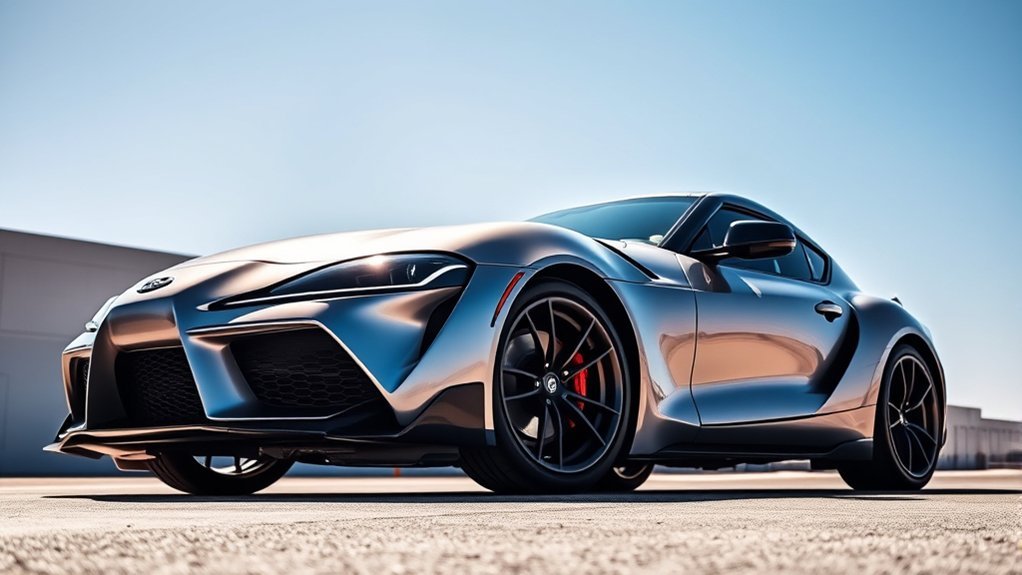
Supra exhaust pops and burbles happen when a little unburnt fuel ignites in the hot exhaust as you lift off the throttle. The stock exhaust on the Toyota GR Supra (A90, 2020 and newer) is quiet and does this only faintly, so the loud crackles you hear in videos usually come from a tune, a downpipe, a cat-back exhaust, or a mix of the three.
This guide explains what causes the sound, which changes make it louder, how to drive for it, and the legal, warranty and reliability trade-offs. It covers the A90 with the B58 3.0 and B48 2.0 engines, not the older Mk4 (A80) Supra.
What Causes Supra Exhaust Pops and Burbles?

When you lift off the throttle, a stock engine normally cuts or trims fuel, so very little combustion reaches the exhaust. A burble or pop tune changes that on purpose. It keeps a small amount of fuel flowing and adjusts ignition timing so some of the mixture burns in the exhaust, where the heat ignites it.
- Burbles: a low, rolling, gurgling sound, usually from small amounts of fuel burning on throttle lift.
- Pops and bangs: sharper cracks, usually from more fuel or more retarded timing on deceleration.
- Turbo flutter: a separate whooshing sound from the turbo when you lift. It is not the same as an exhaust pop.
The factory exhaust is very quiet, and aftermarket sellers note that crackle on overrun needs a supporting tune. Tuning platforms such as Bootmod3 list burble adjustments and exhaust flap (Sport mode) settings as options, so the sound can be set up in software instead of only through hardware. For how the factory valve works, see our Supra exhaust valve guide.
Ways to Get More Pops and Burbles
| Change | What it does | Trade-offs |
|---|---|---|
| ECU tune with burble settings | Controls whether, when and how loud the overrun sound is | Quality depends on the tuner; flashing can affect warranty; more heat in the exhaust |
| Catless downpipe | Removes the restriction of the factory catalytic converter; sellers describe it as the loudest street setup | Not legal for road use in the US; check engine light risk; fails many inspections |
| High-flow catted downpipe | Less restrictive than stock while keeping a catalytic converter | Quieter than catless; still check local rules and warranty |
| Cat-back exhaust | Deeper tone and more audible flutter on throttle lift | Pops still need a tune; can drone at cruise |
| Resonator delete | Louder, raspier note | Cabin drone and noise-law risk |
A tune plus a less restrictive exhaust is the usual combination, and results vary by car and setup. If you are shopping for a cat-back, start with our Mk5 Supra cat-back exhaust roundup and the catalytic converter guide. Tuners typically let you set an RPM window, intensity and duration for burbles, so ask your tuner which values they recommend instead of copying numbers from a forum post.
Driving Habits That Bring Out the Burbles
Driving style changes how often you hear the sound once the car is set up for it. On a stock car, expect little change.
- Let the engine and oil reach normal operating temperature first.
- Select Sport mode so the throttle and, on tuned cars, the exhaust flap respond more sharply. See our Sport mode guide.
- Accelerate firmly in a lower gear, then lift off the throttle smoothly and let the car decelerate.
- On the 2023 and newer manual (3.0 only), Toyota says the iMT is on by default and can be switched off in Sport mode. Check your owner’s manual for the current procedure.
Only do this where it is safe and legal. Do not rev or downshift hard to chase a sound in traffic, in residential areas, or on a cold engine.
Risks, Legality and Warranty
- Emissions law: removing a catalytic converter from a road car is tampering under US federal law, and California-style visual inspections spot catless setups quickly.
- Noise rules: many states and cities set limits on exhaust loudness, and a louder exhaust can attract tickets.
- Heat and wear: burning fuel in the exhaust adds heat and stress to the turbo, catalytic converters and exhaust parts. Mild settings are lower risk than aggressive ones.
- Warranty: an aftermarket tune or exhaust can give a dealer grounds to deny claims on related parts. Ask your Toyota dealer before you modify a car under warranty.
- Fire safety: unburnt fuel igniting in the exhaust is a reason to avoid parking over dry grass or leaves right after a spirited drive.
Quick Checklist Before You Modify
- Confirm your model year and engine (B58 3.0 or B48 2.0) and transmission.
- Check local emissions and noise rules before choosing a downpipe or resonator delete.
- Choose a tuner with Supra-specific experience and ask what burble settings they run.
- Ask about warranty impact in writing if the car is still covered.
- Start with the mildest setting, then adjust it for your commute and neighbors.

Frequently Asked Questions
Why do Supras pop and burble?
A Supra pops or burbles when a small amount of unburnt fuel and air reaches the hot exhaust and ignites after you lift off the throttle. The stock calibration keeps this quiet, so loud pops and crackles usually come from a tune, a downpipe or a less restrictive exhaust.
How can you tell if a Supra has a burble tune?
You cannot be sure from sound alone. Look for a tuning app or aftermarket parts such as a downpipe or cat-back, ask the seller for the tune file or dyno sheet, and have a specialist check the car before you buy it. A stock GR Supra is quiet on throttle lift.
What is a popping tune called?
It is usually called a burble tune, a crackle tune, an overrun map or a pops-and-bangs tune. Some tuning platforms list burble adjustments as a setting, so the intensity and conditions can be changed instead of being all-or-nothing.
Is a catless downpipe legal on the street?
In the United States, removing or disabling a catalytic converter on a road vehicle is emissions tampering under federal law, and many states fail catless cars at inspection. Retailers sell these parts for off-road or track use, so check your local rules first.
Can pops and burbles damage a Supra?
Aggressive burble settings send combustion into the exhaust, which adds heat and stress to parts such as the turbo and catalytic converters. Mild settings from a reputable tuner are generally considered lower risk, but no tune is risk free and it may affect your warranty.
Is the Supra 2.0 or 3.0 better for exhaust sound?
Most enthusiasts prefer the 3.0 for sound because it is a turbocharged inline-six, while the 2.0 is a turbocharged four-cylinder, but this is a matter of taste. Either engine can be tuned for burbles, and the 3.0 also makes more power (382 hp versus 255 hp in recent US models).
Bottom Line
A factory Supra is quiet. The pops and burbles people love come from tuning and exhaust changes, and each step adds cost, noise and some risk. Keep it legal, keep the settings moderate, and use a tuner who knows the B58 and B48.