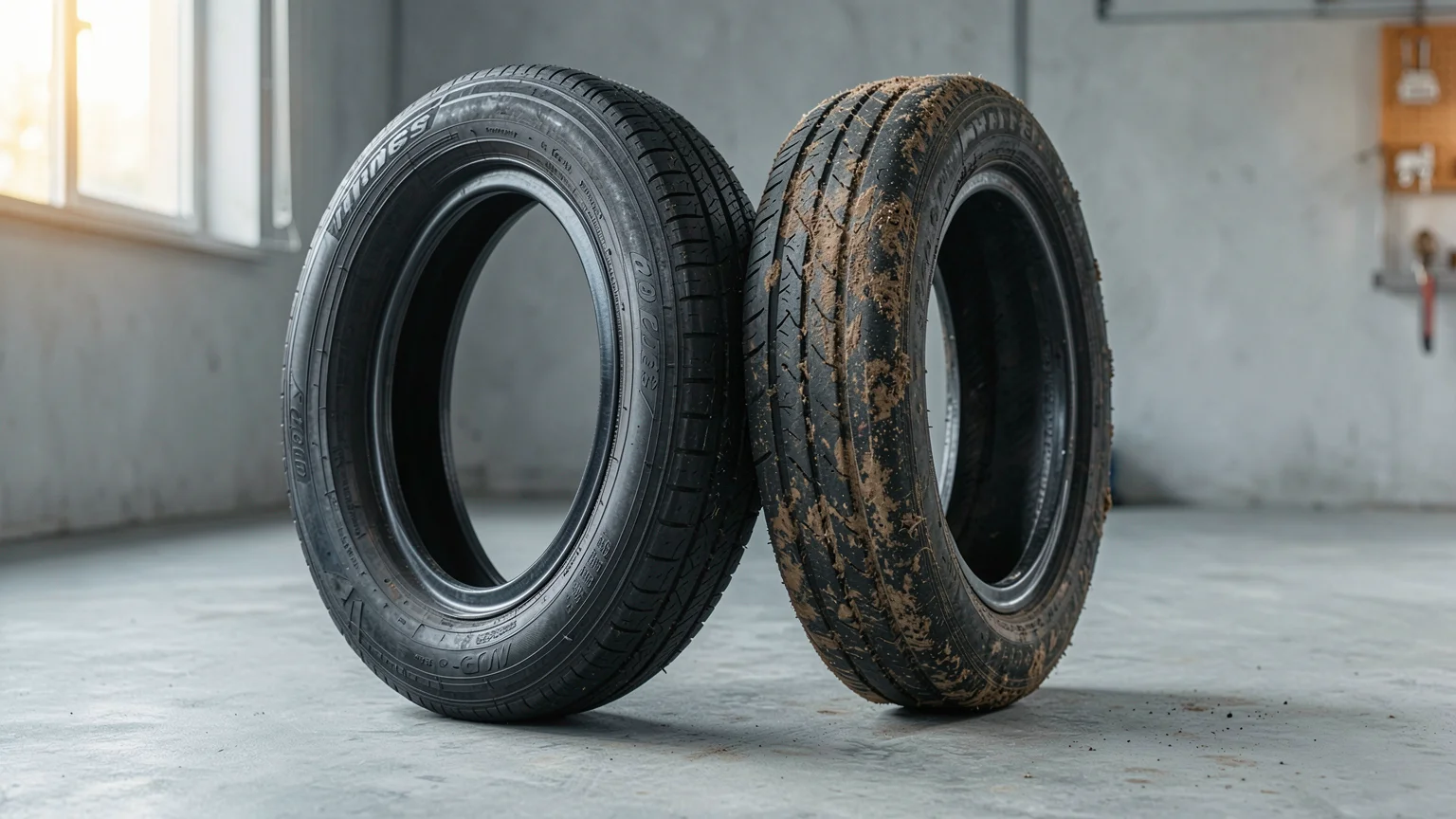
How often should you change your tires? Replace them when the tread wears down to its limit or when they reach about six years old, whichever comes first, and never keep them past 10 years. For most drivers that works out to a new set every 3 to 6 years.
The right moment depends on how many miles you drive, your climate and the condition of the rubber. This guide gives you the numbers, a quick age-and-tread check and the warning signs that mean a tire cannot wait.
Key Takeaways
- Check tires every year after year five, and plan to replace them at six years of age, even if the tread looks fine.
- Tire Rack suggests replacing at about 5/32 inch of tread for snow, 4/32 for wet roads and 2/32 for dry roads.
- Remove any tire older than 10 years, including the spare.
- Bulges, deep cracks and sidewall cuts mean replace now, whatever the age.
- The four-digit DOT date code on the sidewall tells you the week and year a tire was made.
In this guide:
- Tire age rules
- Tread depth rules
- Mileage and years
- How to read the date code
- Warning signs
- How to decide
- FAQ
How Often Should You Change Your Tires by Age?
Rubber breaks down over time, so age matters even when a tire has barely been used. No federal rule sets an expiry date. NHTSA has no specific guidelines on tire aging and defers to carmakers and tire makers, according to Edmunds.
The industry guidance looks like this:
| Tire age | What to do | Source of advice |
|---|---|---|
| Under 5 years | Keep up routine care and monthly pressure checks | General maintenance advice |
| 5 years or more | Have the tires inspected each year | Tire Rack, Michelin and Continental guidance |
| 6 years | Replace, or get a professional to confirm they are sound | Ford, Nissan and Mercedes-Benz tell owners to replace at six years |
| 10 years | Replace without exception, including the spare | Tire Rack and tire manufacturers |
Tire Rack adds that never-mounted tires more than six years old should not go into service, even if they were stored properly. Tire trade groups say the six-year figure is arbitrary, which is why the 10-year ceiling is the firmer line.
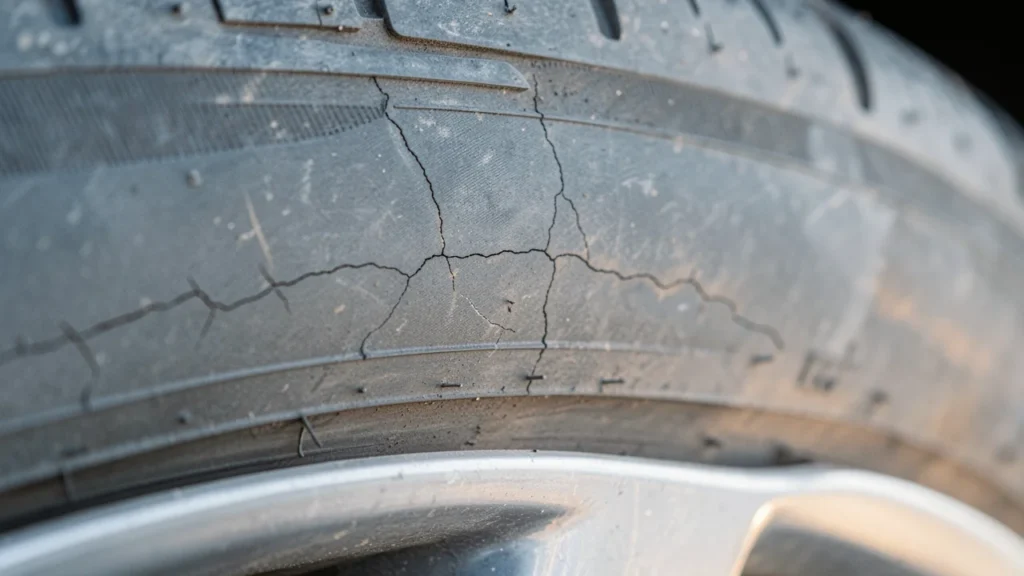
Heat speeds the process. NHTSA research cited by Edmunds found that tires age faster in warm climates and with strong sunlight. If you live somewhere hot, lean toward the early end of the range.
Tread Depth Rules: When Wear Says Replace
New passenger tires start with roughly 9/32 to 11/32 inch of tread. Most states treat 2/32 inch as the legal minimum, and the wear bars molded into the grooves show when you reach it.
But 2/32 is a floor, not a target. Tire Rack recommends replacing earlier when the weather calls for more grip:
| Driving conditions | Replace at about |
|---|---|
| Snow | 5/32 inch |
| Wet roads | 4/32 inch |
| Dry roads only | 2/32 inch |

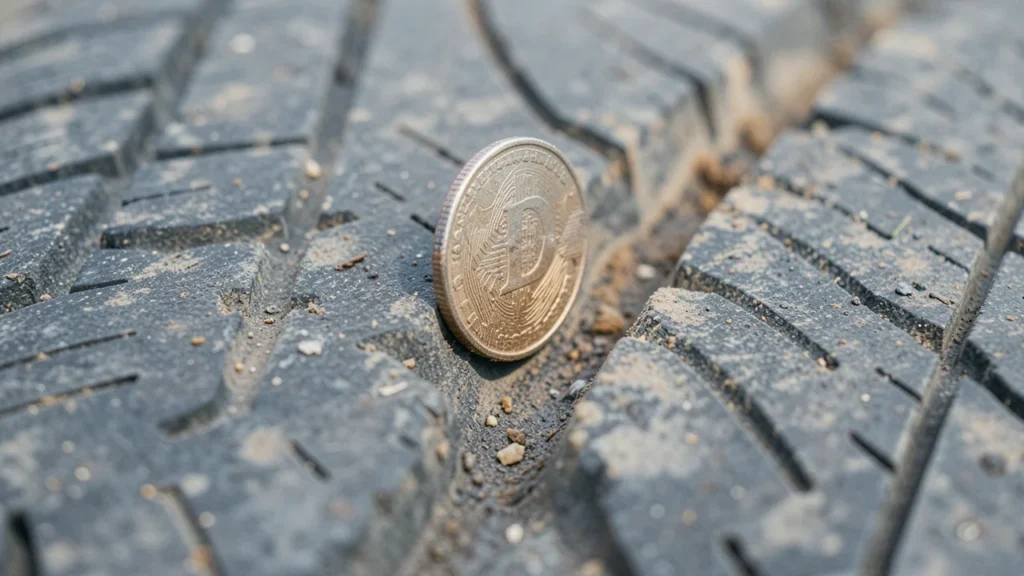
A cheap gauge reads depth in 32nds of an inch. For a no-tool check, try the coin test. Our guide on how to check tire tread with a penny and a quarter walks through it. Then read whether 4/32 tread is safe and what new tire tread depth looks like.
How Often Should You Change Your Tires by Mileage?
NerdWallet puts the average tire life at about six years, or between 36,000 and 75,000 miles. That range is wide because tire type, climate and driving habits vary. Here is how those mileages translate into years at different driving rates.
| Miles per year | Years to reach 36,000 miles | Years to reach 75,000 miles | What probably limits you |
|---|---|---|---|
| 5,000 | 7.2 | 15 | Age (6 to 10 years) |
| 8,000 | 4.5 | 9.4 | Age or wear |
| 12,000 | 3.0 | 6.3 | Wear, then age |
| 15,000 | 2.4 | 5.0 | Wear |
Edmunds notes that drivers who cover 12,000 to 15,000 miles a year usually wear the tread out in three to four years, well before the rubber ages out. If you drive far less, or only on weekends, age becomes the bigger worry.
Good habits stretch tire life. Check pressure monthly. Follow how often to rotate tires and how often to balance tires. Discount Tire suggests rotating every 6,000 to 8,000 miles and balancing every 12,000 to 16,000.
How to Check Your Tire’s Age From the DOT Code
Every tire carries a DOT number on the sidewall. Tires made after 2000 end in four digits. The first two show the week and the last two show the year, so 1116 means the 11th week of 2016, as Edmunds explains.
- Find the letters DOT on the sidewall, then look at the last four digits of that string.
- Read the first two digits as the week and the last two as the year.
- Look on the inner sidewall if you cannot find a full code outside. Some makers mold it on the inside.
- Check the spare too. It ages even if it never touches the road.
- Verify new tires at purchase. A set that looks new can be a few years old.
Warning: If you need to see the inside sidewall, do not work under a car held only by a jack. Use rated jack stands on level ground, or ask a shop to check for you.
Warning Signs You Should Not Ignore
Some problems override every age and tread rule. Replace the tire promptly if you see any of these:
- Bulges, blisters or bubbles: Tire Rack says these call for replacement. Read more on a bubble in the tire sidewall.
- Large cuts or deep cracks: Damage in the shoulder or sidewall is often beyond repair.
- Driven flat: A tire run flat or very low on air can be permanently weakened inside.
- Hairline cracking or tread distortion: These point to aging rubber, per advice from the British Tyre Manufacturers’ Association quoted by Edmunds. See tire dry rot for causes.
- New vibration: A change in how the tire feels can signal internal damage.
Tire Rack says small punctures in the tread, up to about 1/4 inch, can usually be repaired. Anything in the shoulder or sidewall usually cannot.
How to Decide When It Is Time
Run through this checklist twice a year.
- Measure tread in several spots across each tire.
- Check the DOT date on all four tires and the spare.
- Inspect the sidewalls and tread for cracks, bulges and cuts.
- Compare your numbers with the tables above for your climate.
- Replace the set when any one test fails, or ask a shop for a second opinion.
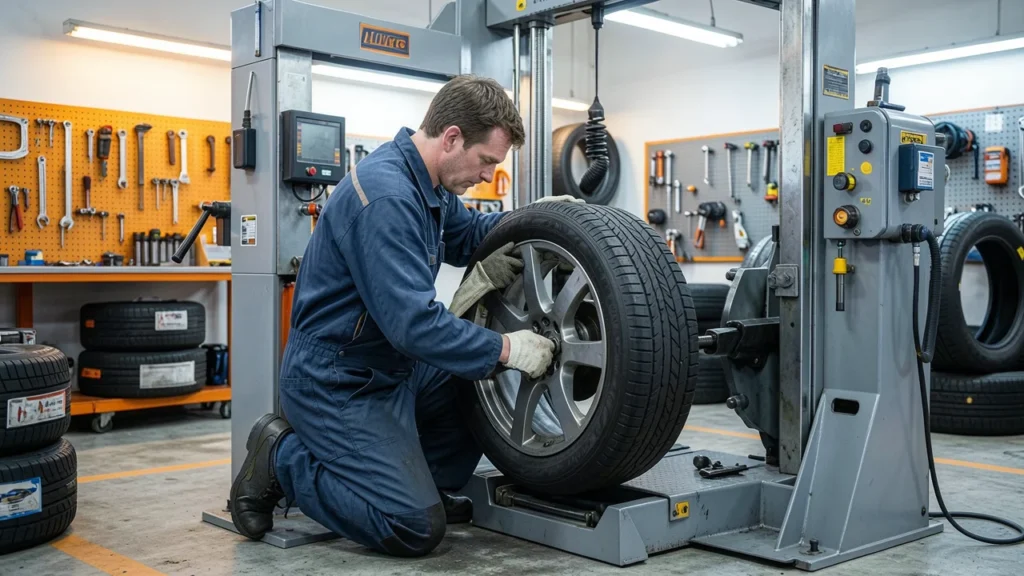
On an all-wheel-drive vehicle, replace all four at once so tire diameters stay matched. Check your owner’s manual, and see what one tire costs in 2026 to plan your budget.
Frequently Asked Questions
How often should you change your tires if you do not drive much?
Age usually decides it. Plan on replacing tires at six years, and have them inspected every year after year five. Remove any tire older than 10 years, even with deep tread. Low mileage does not stop the rubber from drying out and cracking.
How many miles do tires last?
NerdWallet puts the average at about six years or 36,000 to 75,000 miles. Your result depends on the tire, your climate and your habits. Rotating on schedule and keeping pressure correct helps you reach the higher end of that range.
Is it safe to drive on 10-year-old tires?
No. Tire Rack says tires made more than 10 years ago should come off the vehicle, spares included, even when they look fine. Edmunds describes crashes tied to tread separation on tires near that age. Replace them.
When should you replace tires based on tread?
Tire Rack recommends about 5/32 inch for snow driving, 4/32 for wet roads and 2/32 for dry roads. The legal minimum in most states is 2/32 inch. If you drive in rain or snow often, replace earlier than the legal limit.
Do you need to replace all four tires at once?
On an all-wheel-drive vehicle, usually yes, so the tires wear at matching rates. On other vehicles you can sometimes replace two or one tire if the others have plenty of tread. Ask a tire professional and check your owner’s manual.
How can I tell how old my tires are?
Read the DOT code on the sidewall. On tires made after 2000, the last four digits give the week and year, so 1116 means week 11 of 2016. Check the inside sidewall if the full code is not on the outer side.
Final Thoughts
How often should you change your tires? Use two clocks and replace on whichever runs out first: tread depth and age. For most drivers that means a new set every 3 to 6 years, with an inspection every year after year five and a firm stop at 10.
Put a reminder on your calendar for the DOT date, measure the tread twice a year, and treat bulges, cuts and deep cracks as immediate replacements. That routine keeps you ahead of nearly every tire failure.