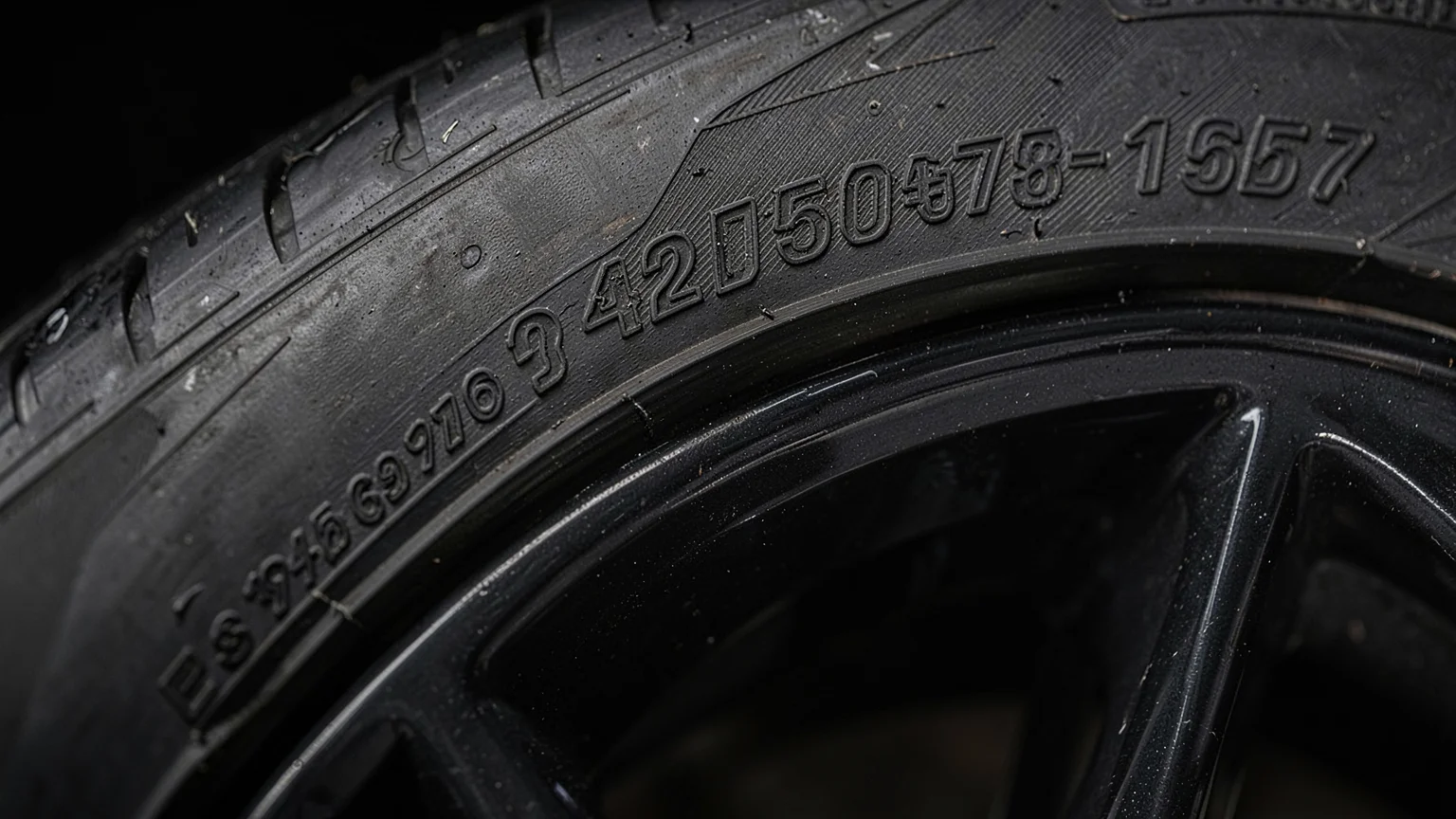
What is speed rating on tires? It is a letter on the sidewall that shows the highest speed a tire can sustain in lab testing while carrying its rated load. An S rating means 112 mph, and an H rating means 130 mph.
That number is not a speed limit or a driving target. It describes how well a tire handles heat at speed, and it helps you pick tires that match your car.
This guide shows where to find the rating, lists a full tire speed rating chart and explains what to buy, what to avoid and whether you can mix ratings.
Key Takeaways
- The speed rating is the last letter in the size code, after the load index, such as the S in 195/60R15 87S.
- Each letter maps to a top speed: S is 112 mph, T is 118 mph, H is 130 mph and V is 149 mph.
- The rating assumes an undamaged tire at the right pressure and load, so it is not a safe driving speed.
- Follow your carmaker’s recommended rating and avoid mixing ratings on one vehicle when you can.
- Higher ratings usually sharpen handling, but they can mean a firmer ride and faster tread wear.
In this guide:
- What is speed rating on tires?
- Where to find the speed rating
- Tire speed rating chart
- What speed rating you need
- Does a higher rating matter?
- Can you mix speed ratings?
- When the rating stops applying
- FAQ
What Is Speed Rating on Tires?
A tire’s speed rating, also called its speed index, is the top speed the tire can hold over time at its full rated load, according to Pirelli. It is shown as a letter that you look up on a chart.
The practice began in Germany, where some highways have no speed limit. Tire Rack explains that the goal was to match a tire’s speed capability to the top speed of the vehicle.
Behind each letter is a lab test. Les Schwab describes the standard ECE method: the tire runs against a metal drum in a room heated to 77°F. It steps up in 10-minute stages until it reaches the target speed, holds that speed for 10 minutes, and then gets inspected for failures such as tread separation.
In short, the rating shows how well the tire resists heat at speed. That is the ability the letter reflects, Pirelli says.
Warning: A speed rating is not permission to drive that fast. Pirelli says it should never be treated as the safe maximum speed of your vehicle. Obey posted limits and keep your tires properly inflated.
Where to Find the Speed Rating on Your Tires
Check the size code on the sidewall. The speed rating is the single letter at the very end, right after the load index. Tire Rack uses 195/60R15 87S as its example: 87 is the load index and S is the speed rating.
- Find the size code on the sidewall, such as P225/60R16 97V.
- Read the last letter. In this example, it is V.
- Treat the number just before it (97) as the load index, not the speed.
- Look up the letter in the chart below. V means 149 mph.
- Compare it with the rating in your owner’s manual or on the driver’s door sticker.
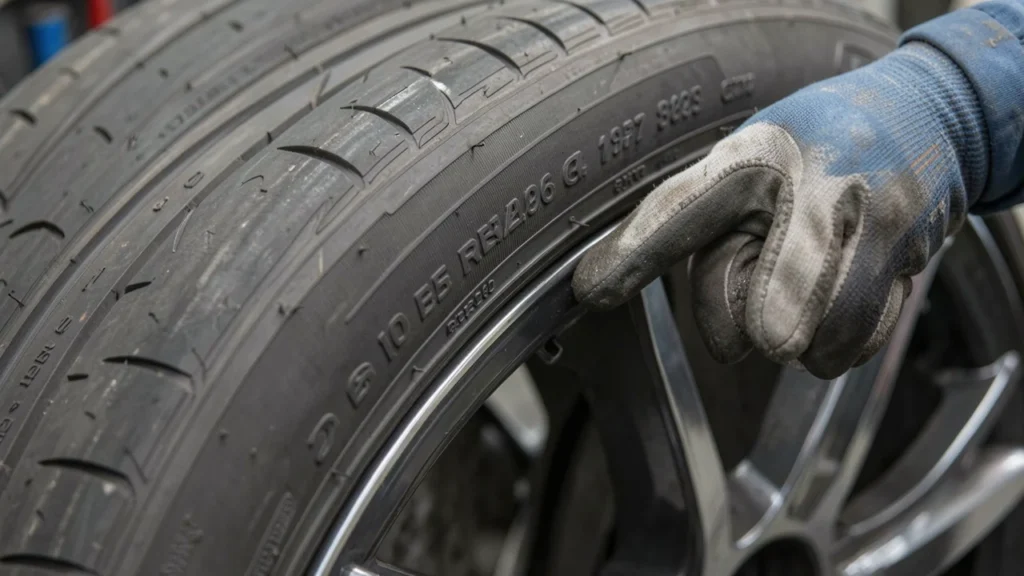
Les Schwab notes that your owner’s manual and the sticker in the driver’s door area also list the rating. If you want to decode every other number on the sidewall, read our guide to what tire numbers mean.
Tire Speed Rating Chart
This tire speed rating chart answers what is speed rating on tires in numbers. It lists the common letters, their top speeds and typical uses. The values come from Tire Rack’s table and match the chart at Les Schwab.
| Symbol | Top speed (mph) | Top speed (km/h) | Typical use |
|---|---|---|---|
| L | 75 | 120 | Off-road and light truck tires |
| M | 81 | 130 | Temporary spare tires |
| N | 87 | 140 | Light trucks |
| P | 93 | 150 | Light trucks |
| Q | 99 | 160 | Winter tires |
| R | 106 | 170 | Heavy-duty light truck tires |
| S | 112 | 180 | Family sedans and vans |
| T | 118 | 190 | Family sedans and vans |
| U | 124 | 200 | Less common |
| H | 130 | 210 | Sport sedans and coupes |
| V | 149 | 240 | Sport sedans, coupes and sports cars |
| W | 168 | 270 | Exotic sports cars |
| Y | 186 | 300 | Exotic sports cars |
Notice that H falls between U and V in the chart. The letters are not strictly alphabetical, so read the table instead of guessing.
What Z, ZR and (Y) mean
Some size codes include a Z, such as 225/50ZR16 91W. Tire Rack explains that the Z in the size means the tire can exceed 149 mph, while the W at the end gives the actual top speed of 168 mph.
| Size code | What it tells you |
|---|---|
| 225/50ZR16 | Capable of more than 149 mph |
| 205/45ZR17 88W | 168 mph top speed |
| 285/35ZR19 99Y | 186 mph top speed |
| 285/35ZR19 (99Y) | Tested above 186 mph (the brackets matter) |
What Speed Rating Do You Need?
Before you shop, remember what is speed rating on tires: a lab limit, not a driving goal. Start with the rating your carmaker recommends in the owner’s manual or on the door sticker. Les Schwab warns that a rating that falls short of your vehicle’s needs can cause safety problems, including tire failure.
| Vehicle or tire type | Common ratings |
|---|---|
| Commuter cars, sedans, minivans | S or T |
| Some passenger cars and coupes | H |
| Performance cars and some electric vehicles | V, W or Y |
| Light trucks | N, P, Q, R, S, T or H |
| Most winter tires | Q, S or T |
Even where rural limits reach 75 mph, most drivers stay well below the limits of H-rated tires, per Les Schwab. Commuters and family drivers are usually well served by S or T tires. If you drive a performance car hard, V, W or Y tires may suit you better.
Winter tires
Most winter tires carry Q, S or T ratings. Choose them for cold-weather grip first, then confirm the rating fits what your carmaker recommends.

Does a Higher Tire Speed Rating Matter?
Higher-rated tires often handle better, but they come with trade-offs. Les Schwab says they are usually built with softer rubber compounds and stiffer construction.
| What you may gain | What you may give up |
|---|---|
| Sharper cornering and steering response | Less ride comfort |
| Stronger stopping power | Lower performance in cold weather |
| Better heat resistance at speed | Shorter tread life |
Pirelli adds that higher-rated tires usually, but not always, handle and stop better even at lower speeds. Tread design and other factors matter too.
Before you upgrade, compare prices. Our guide to how much one tire costs shows what shops charge per tire.
Can You Mix Tires With Different Speed Ratings?
It is best to avoid it, because what is speed rating on tires worth if the set does not match? Pirelli warns that tires with different speed ratings may grip and handle differently. Les Schwab adds that the lowest-rated tire sets the limit for how fast you can safely drive.
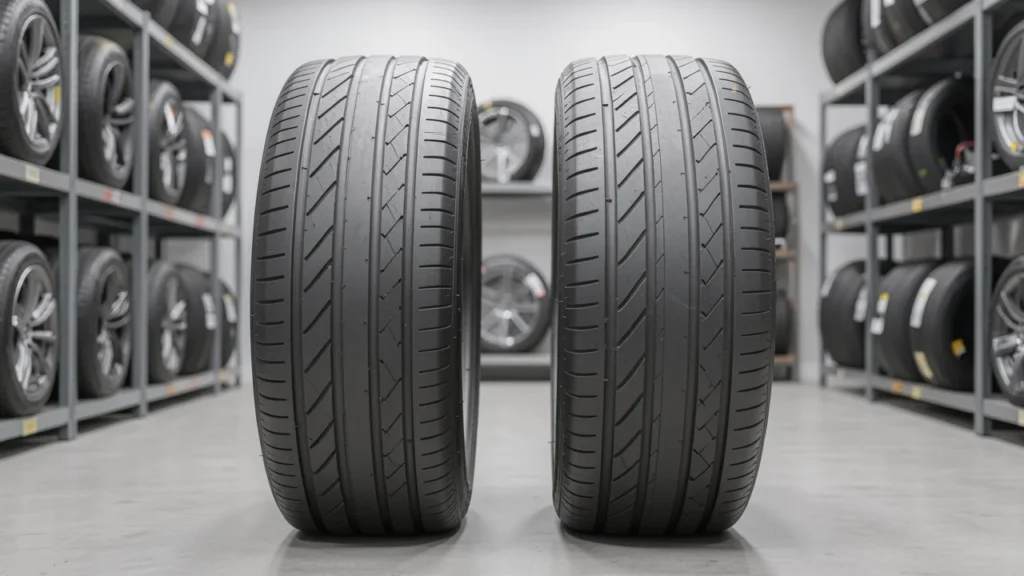
If mixing cannot be avoided, shops do not all agree on placement. Pirelli says to put the higher-rated tires on the rear axle. Les Schwab says technicians prefer the lower-rated tires up front to prevent oversteering, although that can conflict with the rule of putting the deepest tread on the rear. Ask your shop how it handles it.
Pro Tip: Replace tires in matched sets when you can. If you must replace one, ask the shop to match the speed rating and tread depth of the others. Rotating on schedule also helps wear evenly, as covered in our tire rotation mileage guide.
When the Speed Rating Stops Applying
What is speed rating on tires when conditions change? A number that no longer applies. A speed rating only holds under test conditions. Tire Rack says it applies only to tires that have not been damaged, altered, or run underinflated or overloaded. Pirelli adds that old or worn tires fall outside the rating too.
- Low pressure: Check your pressure often. Our explainer on how tire pressure sensors work shows how your car warns you.
- Heavy loads: Extra cargo lowers the speed a tire can handle safely.
- Repairs: Les Schwab notes that some manufacturers say the speed rating may be reduced after a puncture repair. Read our step-by-step guide to plugging a tire for the limits that apply.
Frequently Asked Questions
What is speed rating on tires in simple terms?
It is a letter on the sidewall, after the load index, that shows the top speed the tire can hold in lab conditions. S is 112 mph, H is 130 mph and V is 149 mph. It measures heat and speed capability, not a safe driving speed.
Where is the speed rating on a tire?
It is the last letter in the size code on the sidewall, right after the load index. In P225/60R16 97V, the speed rating is V. You can also check your owner’s manual or the sticker in the driver’s door area.
Is a higher speed rating better?
Usually it brings sharper handling and braking, but not always. Higher-rated tires often use softer rubber and stiffer construction, so you may get a firmer ride and shorter tread life. Choose the rating your carmaker recommends unless you have a clear reason to change.
What happens if you exceed your tire’s speed rating?
You risk heat damage that can shorten the tire’s life and lead to failure. Pirelli warns this can cause safety problems and even an accident. Stay within posted limits and keep your tires inflated and within their load rating.
What speed rating do most cars use?
Family sedans and minivans commonly use S or T ratings, and some passenger cars and coupes use H. Performance cars and some electric vehicles often use V, W or Y. Check your door sticker for the exact rating your car needs.
Can a repair change a tire’s speed rating?
It can. Les Schwab notes that some manufacturers say a tire’s speed rating may drop after a puncture repair. Ask your tire shop, and check the tire maker’s repair guidance before you rely on the original rating.
Final Thoughts
So, what is speed rating on tires? It is a letter that links a tire to a top speed in lab conditions. It is not a speed limit, and it stops applying to damaged, underinflated or overloaded tires.
Find the letter on your sidewall, match it to the chart and follow your carmaker’s recommendation. Most drivers do best with the rating that came on the car. When you buy new tires, keep all four matched.