
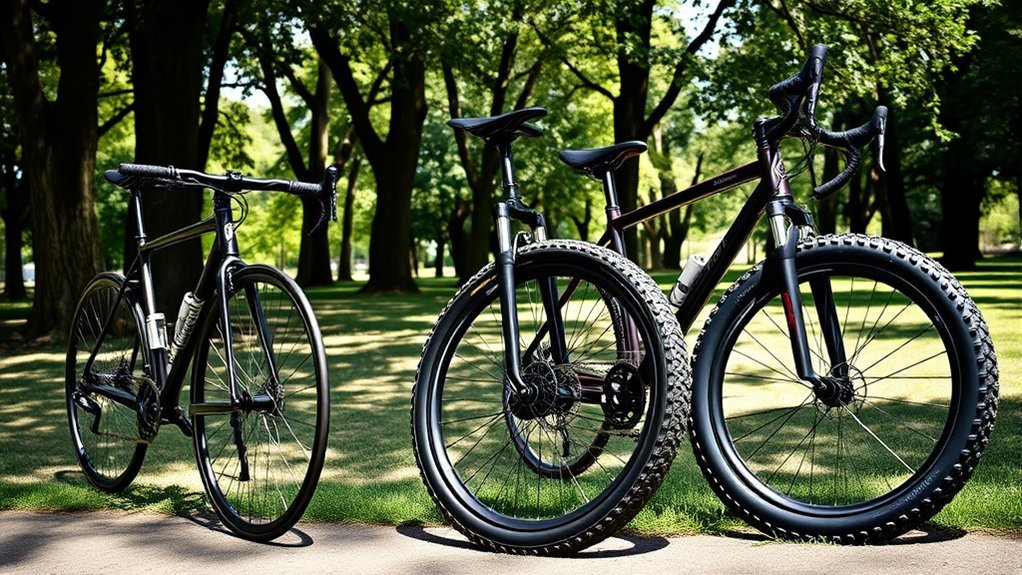
Finding the right tire pressure transforms your ride from harsh and sluggish to smooth and fast. While the “max PSI” printed on your sidewall is a safety limit, it is rarely the ideal pressure for riding. Modern cycling science has shifted toward lower pressures to improve comfort, grip, and speed.
For road bikes, most riders now aim for 70–100 PSI (often lower for tubeless setups); mountain bikes perform best around 20–35 PSI; and hybrids typically sit between 40–70 PSI. You should increase pressure for heavier riders or smooth pavement, and drop it for traction, rough trails, or wet conditions. Always run the rear tire 5–10% harder than the front for stability and never exceed the rim’s maximum limit—especially on hookless rims.
Key Takeaways
- Road Trends: Modern wider tires (28mm+) are faster at lower pressures (70–90 PSI) than the old 120+ PSI standard.
- Safety Limit: If you have hookless rims, never exceed 72.5 PSI (5 bar).
- MTB Sweet Spot: Trail riders usually run 20–30 PSI; anything over 40 PSI on a mountain bike reduces grip significantly.
- Rear vs. Front: Put more air in the rear tire to support your weight distribution (usually roughly 60% rear, 40% front).
Recommended PSI Ranges for Road, Mountain, and Hybrid Tires
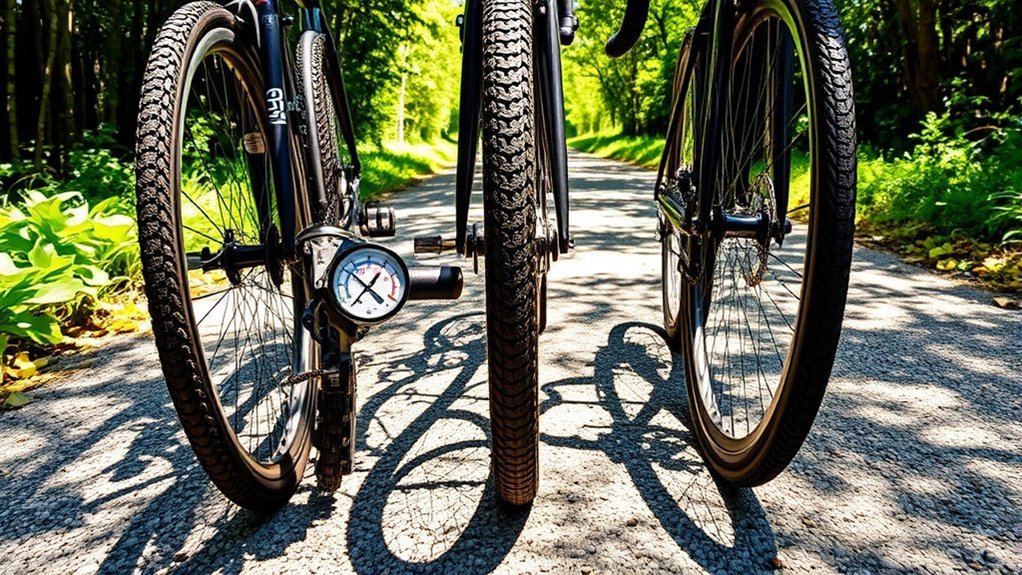
When you pick tire pressure, match it to the bike type and riding surface. Use these ranges as a baseline, then refine for your weight and tubeless setup:
- Road Tires (25–32mm): 70–100 PSI. (Racers on modern wide tubeless tires often run 65–80 PSI for lower rolling resistance).
- Mountain Tires (2.2″+): 20–35 PSI. Lower pressures allow the tire to conform to the trail, boosting grip and speed over bumps.
- Hybrid Tires (35–45mm): 40–70 PSI. A blend of speed and cushioning for city streets and bike paths.
Check the sidewall of the tire for the manufacturer’s maximum tire pressure and never exceed it. However, be aware that the “max” is a limit, not a recommendation. For a road bike, finding the “sweet spot” (often 80–90 PSI for tubes) reduces rolling resistance by stopping the bike from vibrating excessively on rough asphalt. For a mountain bike, lower PSI absorbs hits; raising it above 40 PSI is usually only necessary for urban riding on smooth pavement.
[Products Worth Considering]

Planet Bike Dial Gauge's simple and rugged design will read tire pressures up to 140 psi.

RUGGED DESIGN: The stainless steel components prevent rust and corrosion while the precision-crafted nozzle seamlessly seals onto the valve stems for highly accurate readings (±2% span). We also provide 4 valve stem caps for convenient replacement.

【Accurate Digital Tire Gauge】Safeguard your every trip. HYVOHEX tire pressure gauge is certified by ANSI B40.7 Grade 2A standard and equipped with a high-sensitivity sensor to provide you with instant, error-free results (±0.1 PSI). The intelligent anti-interference chip ensures stable operation in extreme temperatures (-4°F-130°F). Whether it is daily commuting or long-distance driving, you can always know the tire condition
Choose PSI: Rider Weight + Tire Width + Rim Type
Start by matching your target PSI to three variables you can control: your weight, the tire width, and the rim type.
- Rider Weight: This is your baseline. Heavier riders need higher PSI to prevent pinch flats and keep the tire from squirming under load. A 200lb rider might need 15–20 PSI more than a 130lb rider on the same bike.
- Tire Width: Volume matters. Narrow road tires (25mm) need higher pressure (90 PSI+) to hold their shape, while wider gravel or hybrid tires (40mm) work perfectly at 40–50 PSI.
- Rim Type (Crucial Safety Note): Check if your rims are “hooked” or “hookless.” Hookless rims have a strict industry safety limit (ETRTO standard) of 72.5 PSI (5 bar). Exceeding this on hookless rims can cause the tire to blow off the rim.
Adjust Tire Pressure for Terrain, Speed, Temperature, and Load
Because terrain and load change how a tire performs, you should routinely tweak PSI. Use a digital pressure gauge before rides and adjust for conditions:
| Terrain | Suggested PSI Range | Purpose |
|---|---|---|
| Mountain (Trail) | 20–30 | Max grip, shock absorption |
| Road (Smooth) | 80–100 | Aerodynamics, responsiveness |
| Road (Rough/Wet) | 70–85 | Vibration damping, traction |
| Hybrid/Commuter | 40–70 | Puncture protection, comfort |
Temperature Checks: On hot days or during long descents where rim brakes generate heat, tire pressure rises. If you inflate tires inside a cool garage and ride in 90°F heat, the pressure will increase by a few PSI.
[Products Worth Considering]

PROCESS LEVEL ACCURACY: Each ETENWOLF’s digital tire pressure gauge is calibrated manually to ANSI B40.7 Grade 2A(plus-minus 1 PSI).Presta valve adapter not included, if used for bicycles, it must be purchased separately

Upgraded Power Supply: Instead of 3 coin cell batteries, this tire pressure gauge comes with 2 AAA batteries. These AAA batteries provide a longer service life and are easier to remove and replace.

ETENWOLF T300 Plus Tire Pressure Gauge 200 PSI, Digital Tire Gauge with Bright LED Display, Tire Gauges for Tire Pressure
Front vs Rear Tire Pressure: How Much Difference and Why
Although both tires share the road, you should almost always run the rear 5–10 PSI higher than the front. This matches the bike’s weight distribution, as the rear wheel carries about 60% of the load.
- Road Bikes: A 5–10 PSI gap helps smooth out the ride. If your rear is at 90 PSI, try the front at 80–85 PSI.
- Mountain Bikes: Drop the front tire pressure noticeably (e.g., 23 PSI Front / 26 PSI Rear) to gain cornering grip while keeping the rear firm enough to protect the rim from rocks.
- Hybrids: A small increase in the rear ensures stability when carrying panniers or backpacks.
Safety Limits, Tools, and a Quick Pre-Ride PSI Checklist
Stick to the PSI range stamped on the sidewall, but treat the “Max” number as a limit, not a target. Using a dependable gauge—ideally a digital one—prevents damage and keeps handling predictable. Squeeze tests are unreliable; a tire at 40 PSI feels rock-hard to the thumb but might be dangerously low for a narrow road rim.
Pre-Ride Checklist:
- Inspect: Check for cuts, glass, or sidewall wear.
- Inflate: Pump to your baseline pressure (e.g., 85 Rear / 80 Front).
- Adjust: Drop 5–10 PSI if it is raining to increase the contact patch for better grip.
- Valve Check: Ensure the valve core is tight and the cap is on to keep dirt out.
[Products Worth Considering]

PROCESS LEVEL ACCURACY: Each ETENWOLF’s digital tire pressure gauge is calibrated manually to ANSI B40.7 Grade 2A(plus-minus 1 PSI).Presta valve adapter not included, if used for bicycles, it must be purchased separately

Dual-Valve SmartHead Compatibility: Features a rotating SmartHead that works with both Presta and Schrader valves seamlessly—no need to change parts or adapters for quick, accurate readings.
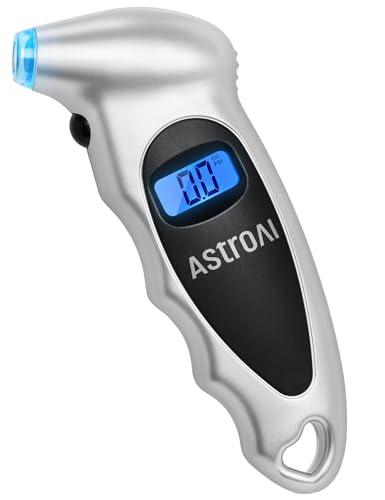
EXPERT-GRADE CALIBRATION: Each AstroAI Tire Pressure Gauge is calibrated with professional-grade tools, ensuring quick and accurate measurement results within plus-minus 1PSI. Stay prepared for any roadside emergency and travel with peace of mind.
Frequently Asked Questions
What PSI should bike tires go to?
It depends entirely on the bike. As of 2026, general guidelines are: Road bikes 70–100 PSI, Hybrids 40–70 PSI, and Mountain bikes 20–35 PSI. Always check your tire sidewall limits and adjust for your body weight.
Is 40 PSI too high for a bike?
For a mountain bike on trails, yes—40 PSI is likely too high and will cause you to bounce off obstacles with poor grip. However, for a hybrid or road bike, 40 PSI is often too low and could lead to pinch flats or rim damage. Context is key.
Is 40 PSI good tire pressure for a bike?
40 PSI is an excellent “goldilocks” pressure for gravel bikes and many hybrid bikes with wider tires (around 40mm). It offers a great balance of comfort and speed. It is generally too low for skinny road tires and too high for technical mountain biking.
What is the PSI for a 26-inch bike tire?
Most 26-inch tires are found on older mountain bikes or cruisers. Aim for 30–45 PSI for street use to roll smoothly. If you are riding off-road trails, drop it to 25–30 PSI for better traction.
Conclusion
Matching PSI to your tire width, weight, and terrain is the single best free upgrade you can make to your bike. Remember that lower pressures (within reason) often yield lower rolling resistance on real-world roads because the tire absorbs vibrations rather than bouncing over them. Check your pressure before every ride, respect the hookless 72.5 PSI limit if applicable, and enjoy a faster, safer ride.







Leave a Reply