
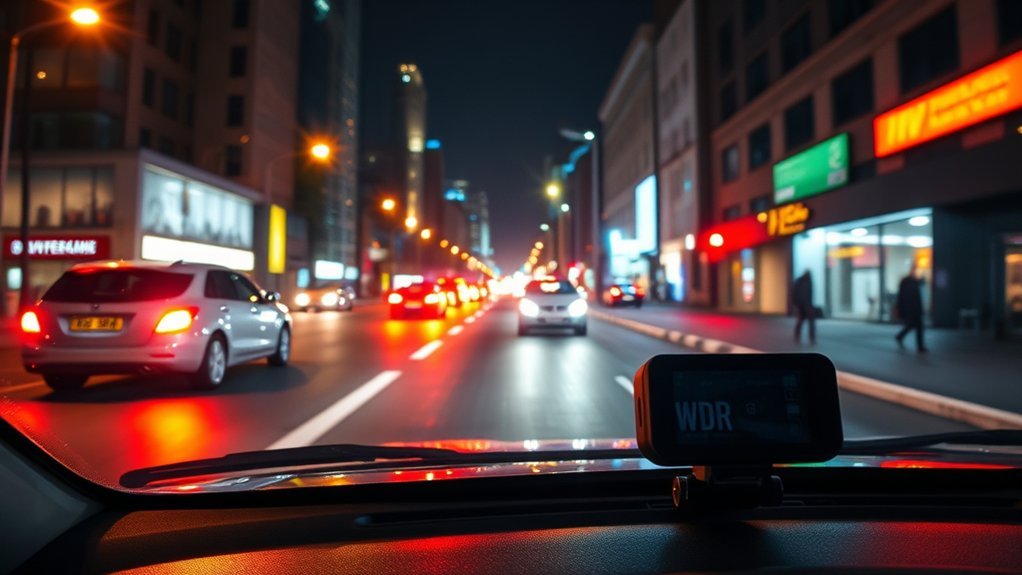
WDR, or Wide Dynamic Range, in dash cams is a game-changer for your driving safety. It enhances video quality in low-light scenarios and reduces glare from headlights or streetlights. By capturing multiple frames at different exposure levels, WDR balances bright and dark areas, ensuring clearer footage of crucial details like license plates. This technology really shines at night, giving you peace of mind on the road. Keep going to discover more about choosing the right WDR dash cam for your needs!
What Is Wide Dynamic Range (WDR) in Dash Cams?
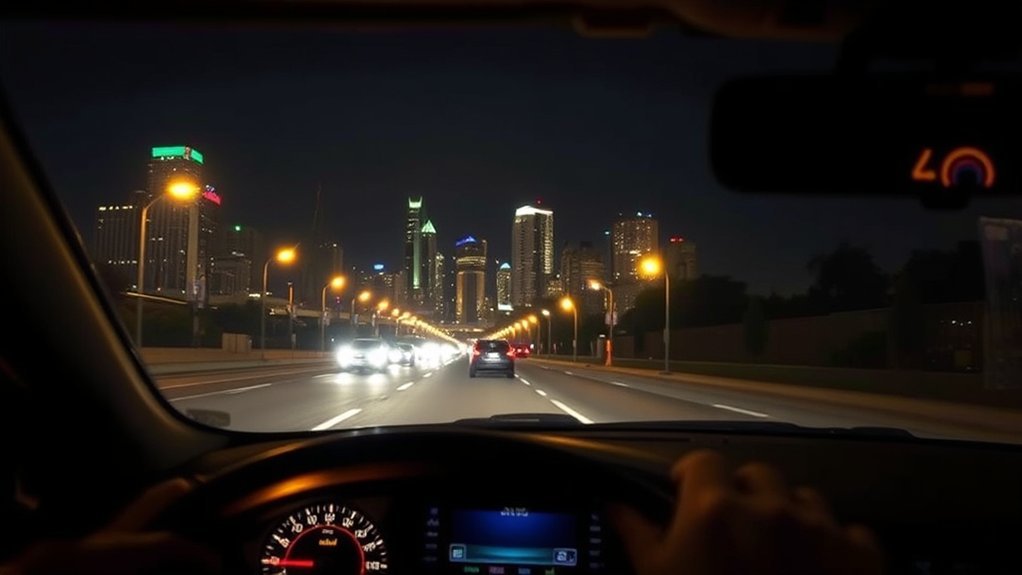
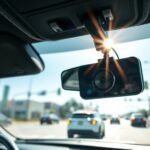
Wide Dynamic Range (WDR) in dash cams is a game-changer for capturing clear and detailed footage in challenging lighting conditions. This technology enhances video quality by effectively balancing dark and light areas, guaranteeing you get clear footage even in high contrast environments. WDR works through advanced image processing, capturing multiple frames at varying exposure levels. It merges these frames to reduce glare and reveal details hidden in shadows or highlights. This is especially useful during night driving or when you’re maneuvering through rapid lighting changes, like entering tunnels or facing the sun. Dash cams equipped with WDR can greatly improve the visibility of essential details, such as license plates and road signs, making them indispensable for incident documentation. However, remember that not all dash cams feature WDR, so it’s important to check specifications to make sure you’re investing in a model that delivers peak performance for your needs.
How Does WDR in Dash Cams Enhance Visibility in Low-Light Conditions?
When driving in low-light conditions, you often face challenges like poor visibility and glare from headlights. WDR (Wide Dynamic Range) technology is your ally in these situations, enhancing clarity and ensuring you can see essential details clearly.
- Captures multiple frames at different exposure levels, merging them for balanced images
- Reduces glare from streetlights and oncoming vehicles
- Maintains image quality during high-contrast situations, like tunnels or sunsets
This technology effectively handles both bright and dark areas, making license plates and road signs more visible during night driving. By minimizing overexposure, WDR improves the overall image quality, giving you peace of mind as you navigate dark environments. If you often drive in varying lighting conditions, investing in a dash cam with WDR can greatly enhance your visibility and safety on the road.
Top Advantages of WDR Technology in Dash Cams
WDR technology in dash cams brings a host of advantages that make it invaluable for drivers. First and foremost, it enhances image quality by balancing bright and dark areas simultaneously, which is vital in high-contrast lighting conditions. This means you’ll capture clear images, even when driving through tunnels or during sunrise and sunset. Additionally, WDR greatly improves nighttime recordings, reducing glare and ensuring visibility of essential details like license plates and road signs.
[Products Worth Considering]

【UHD 4K Front+1080 Rear+1080P Cabin Recording】-SHRINLUCK brings you the X5 dash cam front and rear inside , which can record Ultra HD 4K front video+1080P internal video+1080P rear video. SHRINLUCK X5 dashcam can help you read key details such as road signs and vehicle license plates more clearly, bringing you better driving pleasure and better security. This car camera is equipped with a 176° wide-angle front camera and a 160° wide-angle internal & rear camera, recording everything you need.

4K+2K DUAL RECORDING ULTRA SHARP AND EXTRA WIDE VIEW: Adopting f1.5 ultra-large aperture and excellent optics, the 4K Dash Cam front and rear dual lenses are utilized to capture every detail, providing 170°wide-angle coverage for 6-lane road visibility. Enhanced WDR and sharper night vision technology ensures crystal clear images in low light or high contrast conditions (e.g. tunnels, nighttime driving), ideal for accident forensics or scenic travel.

4K+2K+2K TRIPLE RECORDING: The FAIMEE 3-channel dash cam captures ultra-crisp footage in 4K UHD (3840×2160P)@25fps front + Full HD 2K (2304*1296) interior + 2K (2304*1296) rear cameras. The 170° front and 150° rear wide-angle lenses minimize blind spots, providing comprehensive coverage that is ideal for accident forensics, preventing fraud, and delivering crucial evidence for insurance claims.
WDR Dash Cams vs. Regular Dash Cams: What’s the Difference?
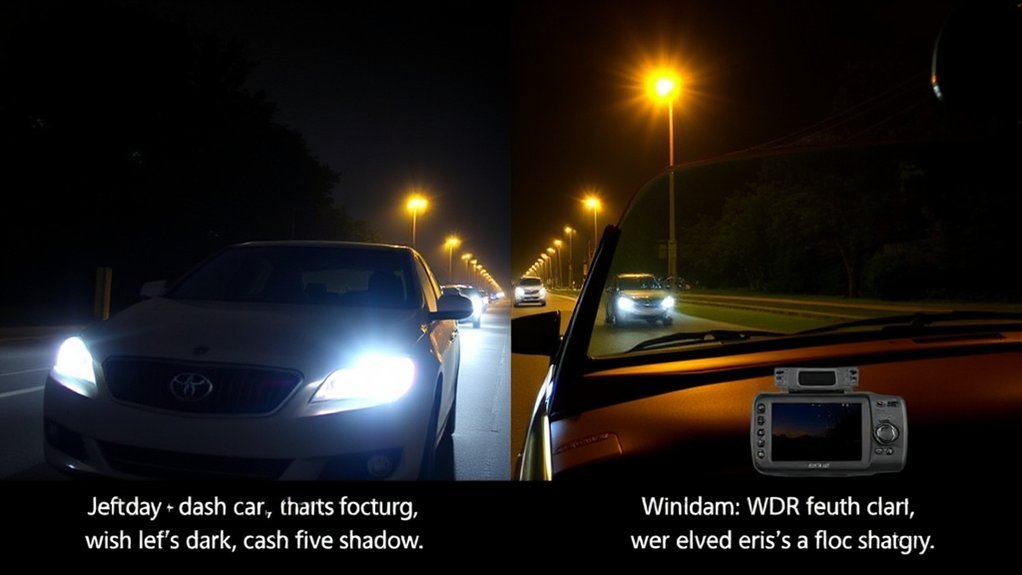
How can you guarantee the best footage in challenging lighting conditions? The answer lies in choosing a WDR dash cam over regular dash cams. WDR, or Wide Dynamic Range technology, excels at capturing clear footage, even in extreme light contrasts.
- Enhanced Image Quality: WDR dash cams combine multiple exposures for balanced images, preserving details in shadows and highlights.
- Night Driving Advantage: They improve visibility of critical details like license plates and road signs, unlike regular dash cams that struggle in low-light scenarios.
- Real-Time Adjustments: Thanks to advanced image processing, WDR models adapt quickly to dynamic lighting conditions, ensuring you get the best footage possible.
For frequent drivers maneuvering through varying lighting situations, investing in a WDR dash cam is essential. You’ll enjoy superior image quality, allowing you to drive with confidence, knowing you’ve captured every important detail on the road.
[Products Worth Considering]
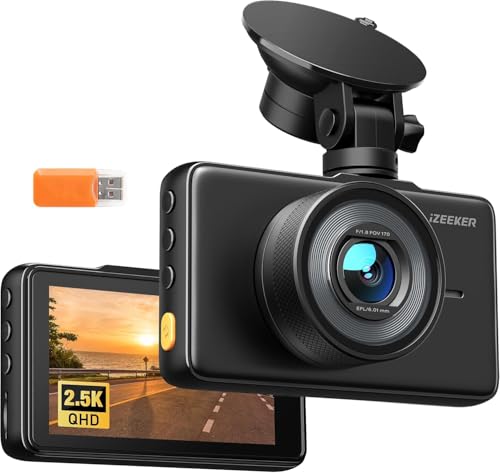
【2.5K QHD Resolution & 3" IPS Display】The car dash cam records super QHD videos & images at 2560X1440P @30fps, which is 2 times the resolution of a traditional 1080P dashcam. 170-degree wide-angle lens to make the recording range wider and ensure no blind spots. The three-inch IPS screen allows you to monitor and replay key moments even if driving at high speeds.
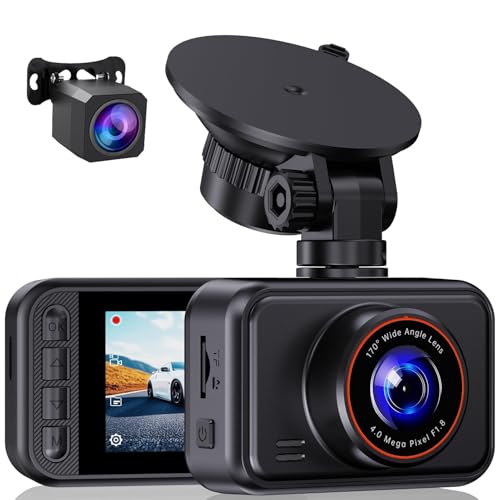
【2.5K Dashcam Front and Rear Cameras】The S60 dash cam delivers unparalleled clarity with a 2560*1440P front camera and a 1080P rear camera, With ultra-wide angle shooting from both front and rear cameras, complete coverage of your driving experience.

【1296P QHD & 130° Wide-Angle FOV】Equipped with a 3-megapixel camera, the 70mai dash cam M310 records in 2304 x 1296P HD high resolution, featuring almost 1.5 times clearer than the standard 1080P dash cams. The dash cam front can easily capture license plates, road signs, and other critical details on the road. With 130° wide-angle FOV, this dash cam enables you to monitor more lanes with fewer blind spots
Tips for Choosing the Best WDR Dash Cam for Your Needs
Choosing the right WDR dash cam can greatly enhance your driving experience, especially under challenging lighting conditions. Start by prioritizing models with high-performance image sensors, like Sony STARVIS, which excel in handling varying light. Check the WDR capabilities, focusing on dynamic range and dB ratios—higher values translate to better performance in extreme lighting environments.
Next, consider video resolution and frame rate; aim for at least 1080p or 4K at 30fps or higher for peak clarity and detail in your recordings. Don’t forget to look for night vision capabilities and AI integration for improved incident detection and safety monitoring.
Finally, read user reviews and expert recommendations to understand how well a particular WDR technology performs in real-world situations. By following these tips, you’ll guarantee you choose a WDR dash cam that meets your needs and keeps you safe on the road.
[Products Worth Considering]

4K Front + 2K Rear Dash Cam: KuTaiTai dash camera for cars captures every detail with stunning 4K front and 2K rear video. Dual 170° ultra-wide front and rear angle minimize blind spots. Equipped with the advanced full-color starlight night vision, F1.6 large aperture, 6-layer optical lens and WDR&HDR technology, ensures sharp night vision and crisp details day or night.

[4K+1080P Front & Rear Recording] REDTIGER F7NP dash cam captures every detail with stunning 4K front and 1080P rear video. Featuring the advanced STARVIS 2 sensor plus the 170° front and 140° rear wide-angle lens, this dash camera delivers sharper images, balanced lighting, and reliable evidence day or night. Ideal for commuting, road trips, rideshare drivers, and new drivers.
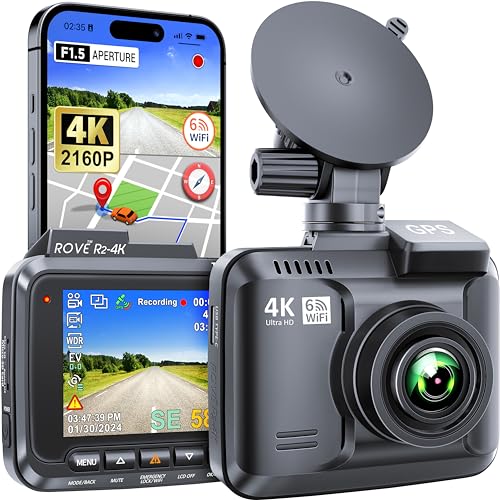
4K ULTRA HD RECORDING – The ROVE R2-4K dash camera can record videos up to a resolution of 2160P. The Ultra HD video recording quality is so good that you will notice so much more clarity and quality difference than all other car dash cams. Revolutionary Super Night Vision Technology (6 Glass Lens + F1.5 Aperture + SONY IMX335) helps to get comparatively clearer footage and images from the recording in low light conditions.
Frequently Asked Questions
Should WDR Be on or Off?
You should keep WDR on for ideal performance. Its benefits include improved clarity in varying light, minimizing glare, and enhancing detail. With WDR technology, you’ll enjoy safer driving and better video quality under diverse conditions.
Which Is Better, HDR or WDR?
For dynamic driving conditions, WDR’s superior night visibility and glare reduction shine, while HDR benefits enhance color vibrancy in stable settings. Adjust your camera settings based on your usual driving conditions to optimize video clarity and user experience.
Does WDR Affect Video Quality?
Absolutely, WDR technology boosts video clarity by enhancing dynamic range, sensor sensitivity, and contrast. You’ll notice improved low light performance, glare reduction, and night vision, ensuring clearer footage and reliable evidence in challenging conditions.
How Does WDR Improve Image Quality?
WDR improves image quality by enhancing contrast, boosting image brightness, and ensuring low light performance. It reduces glare, optimizes dynamic range, and enhances night visibility during urban driving, resulting in clearer, more reliable video clarity under varying conditions.
Conclusion
To sum up, choosing a dash cam with Wide Dynamic Range (WDR) can greatly enhance your driving experience, especially in challenging lighting conditions. Did you know that up to 70% of road accidents occur at night? Having a WDR-equipped dash cam means clearer footage, reducing blind spots caused by glare and darkness. By investing in this technology, you’re not just capturing moments; you’re enhancing your safety on the road. So, make sure to prioritize WDR when selecting your next dash cam!



Leave a Reply