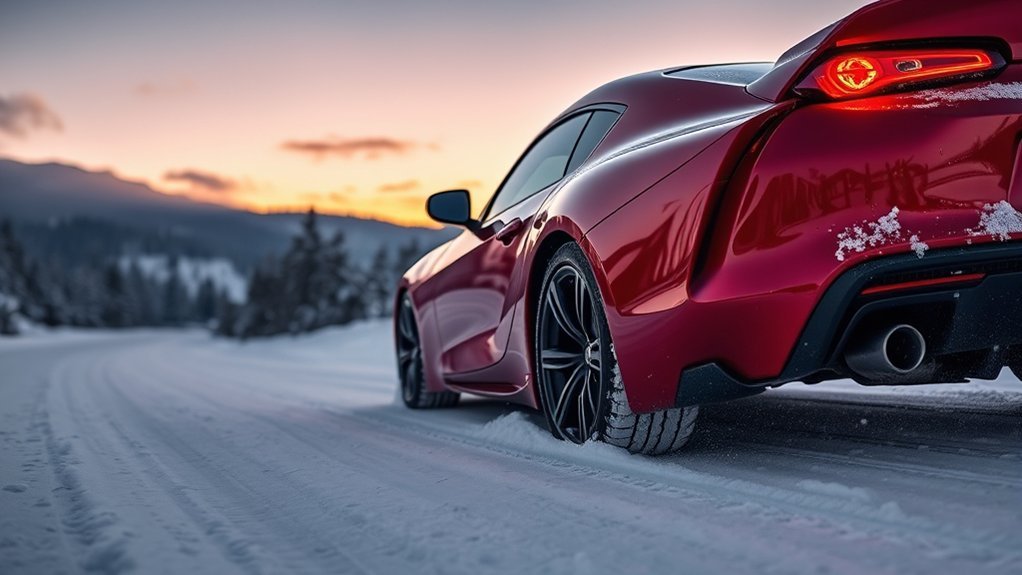
Toyota Supra traction control in snow should stay on: the system reduces engine power and brakes a spinning wheel so the rear-wheel-drive Supra can pull away without the tail stepping out, and the slip light flashes while it works. The only common reason to press the VSC OFF switch is to rock the car free when it is stuck, as the owner manual describes. Winter tires in the correct sizes for the staggered front and rear wheels make a far bigger difference than any setting, and summer tires lose grip once it is cold even on dry roads.
Toyota Supra Traction Control in Snow: Winter Driving Basics
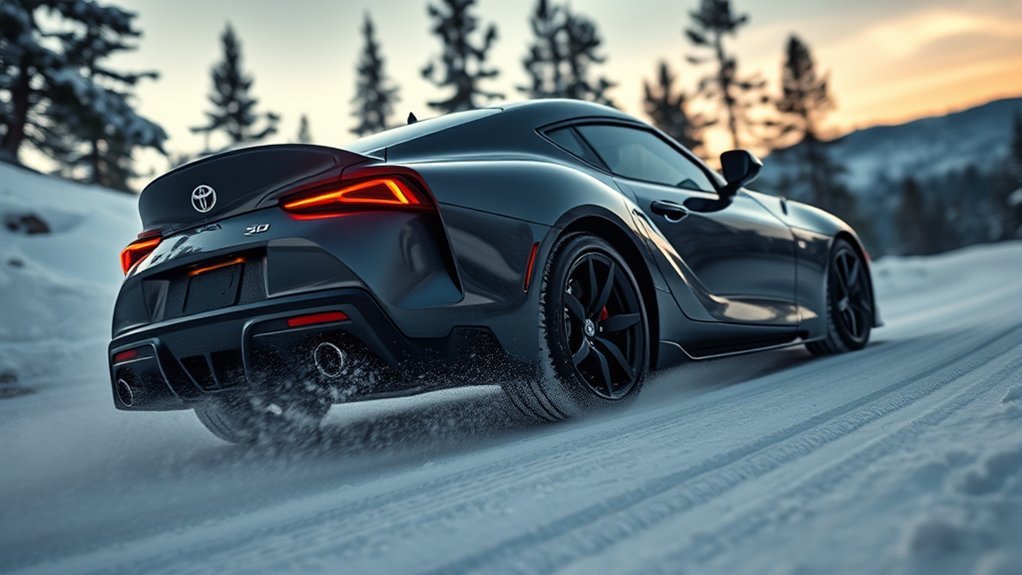
Winter driving in a Toyota Supra can be a thrilling yet challenging experience. To navigate snowy roads, engage the traction control (TC) system. This feature helps you maintain stability by preventing rear tire spin, vital for controlling your rear-wheel-drive vehicle. When accelerating or braking, practice smooth, gradual movements. Abrupt actions can lead to skidding, so finesse is key to keeping your Supra in check.
Be certain to equip your Supra with performance-oriented winter tires like the Pirelli SottoZero. These wider tires enhance grip and stability on snow-covered surfaces. To build confidence, familiarize yourself with the vehicle’s dynamics in a safe space, such as an empty parking lot. Mastering these essential techniques will liberate you from winter driving anxiety, allowing you to enjoy the exhilarating performance of your Supra.
Selecting the Best Winter Tires for Your Toyota Supra
When selecting the best winter tires for your Toyota Supra, prioritize options that feature a soft compound and deep tread patterns, which greatly enhance grip and performance in cold conditions. Here are some key considerations to help you choose wisely:
- Tire Type: Look for winter tires like the Pirelli SottoZero that excel in traction.
- Studded Options: Consider studded tires for extra traction in icy conditions, especially if you live in harsh climates.
How Traction Control Helps You Drive Safely in Winter
Traction control is your ally when driving the Toyota Supra in winter conditions. It enhances grip control by preventing tire spin, ensuring you maintain traction on slippery surfaces like snow and ice. With this system engaged, you’ll feel more confident and stable as you navigate through unpredictable winter weather.
Enhanced Grip Control
Driving on snow-covered roads can be challenging, especially for rear-wheel drive vehicles like the Toyota Supra. Thankfully, traction control (TC) markedly enhances grip, ensuring you stay in control. Here’s how it helps:
- Engine Power Adjustment: TC reduces engine power when it detects wheel slip, allowing better grip.
- Brake Application: It applies brakes to individual wheels, improving stability on slippery surfaces.
- Improved Acceleration Control: Engaging TC helps you accelerate confidently without losing grip on icy roads.
- Enhanced Safety: Keeping TC activated boosts your confidence, letting you manage your vehicle’s dynamics in winter conditions.
When combined with high-quality winter tires, traction control maximizes grip, making your winter driving experience not just safe but liberating.
Prevents Tire Spin
Conquering snowy roads requires more than just skill; it demands precise vehicle control. That’s where traction control (TC) comes into play. In your Toyota Supra, TC automatically adjusts engine power and applies brakes to individual wheels, helping prevent tire spin on slippery surfaces. This system enhances your grip, ensuring you maintain stability and control during acceleration, which is vital when maneuvering through deep snow or icy patches. Engaging TC allows you to harness the power of your rear-wheel drive while reducing the risk of skidding or losing traction. By effectively utilizing traction control, you can accelerate smoothly and avoid abrupt loss of grip, making your winter driving experience not only safer but also more liberating.
Common Winter Driving Challenges for Supra Owners
While winter can transform your driving experience into a challenge, Supra owners often face unique obstacles due to the car’s rear-wheel drive configuration. Here are some common winter driving challenges you might encounter:
Winter driving can be particularly challenging for Supra owners due to its rear-wheel drive setup.
- Reduced Traction: Cold temperatures can greatly decrease grip, making the choice of winter tires essential.
- Deep Snow Struggles: RWD vehicles like the Supra can struggle in deep snow, requiring smooth driving techniques.
- Rust Concerns: Moisture and salt exposure can lead to rust; regular undercarriage washing and undercoating are important.
- Road Awareness: Adjusting your speed according to road conditions is critical; practicing in empty parking lots can boost your confidence.
Maintenance Tips for Your Winter Tires
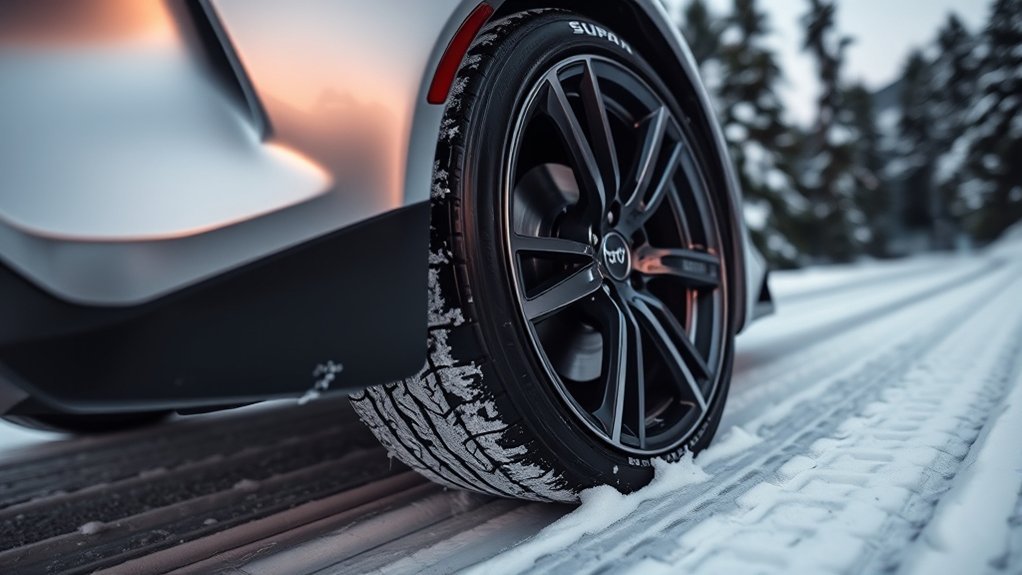
To ensure your winter tires perform at their best during harsh conditions, regular maintenance is essential. When the season’s over, store your winter tires in a cool, dry place, away from sunlight and heat sources to prevent rubber degradation. After driving in snow or slush, clean the tire’s surface to remove debris and ice buildup, preventing corrosion and maintaining grip. Finally, replace winter tires older than six years, as their effectiveness can diminish regardless of tread wear. By following these tips, you’ll ensure your winter tires provide the traction needed for a safe driving experience in winter conditions.
Safety and Owner Manual Notes
Tire sizes for the GR Supra are on the door placard and differ front and rear, so order a matched winter set. Tread depth limits, rotation and replacement age are in the owner manual and the tire maker guidance. Check local rules on studded tires and chains.
Frequently Asked Questions
Should I turn traction control off in snow?
No, except to rock the car free when it is stuck, which the owner manual describes. With it on, the system limits wheelspin as you pull away.
Can a Supra drive in snow?
Yes, with winter tires, smooth inputs and lower speeds. It is rear-wheel drive with a lot of torque, so tires and gentle throttle matter most.
Why does the slip light flash?
It flashes while the system is limiting wheelspin, which means grip is low. Ease the throttle and steer smoothly.
Do I need winter tires on both axles?
Yes, all four, in the sizes on the door placard. Mixing winter and summer tires upsets the balance of the car.
Conclusion
Keep traction control on, fit a matched set of winter tires, drive smoothly, and use VSC OFF only to rock the car free as the owner manual explains.