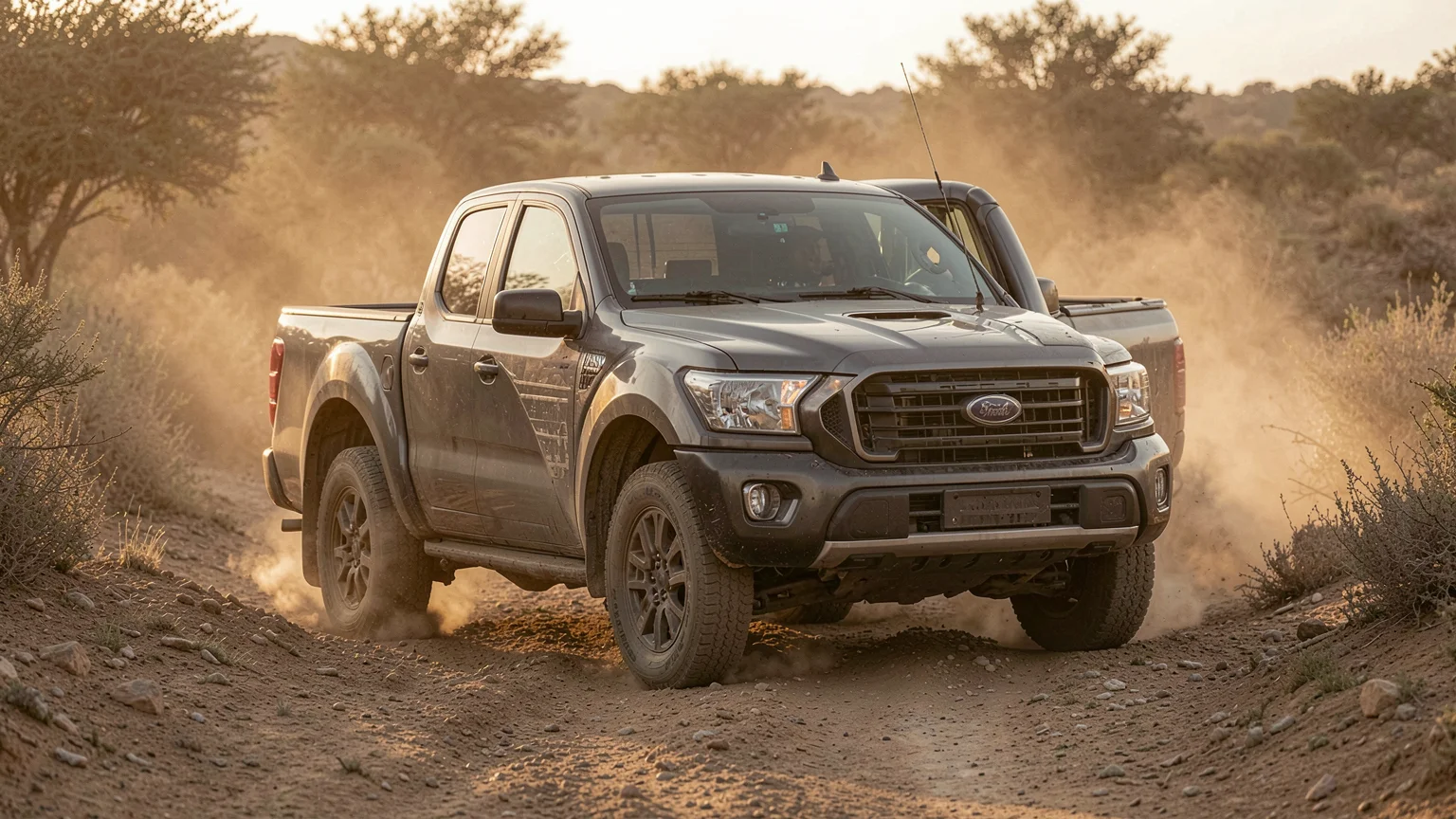
The Toyota Tacoma shock absorber recall covers 48,280 trucks, mostly 2024 and 2025 TRD Off-Road models. Corrosion can weaken the welded flange that holds the external oil reservoir on each shock, and the reservoir can fall off while you drive. Dealers inspect the front and rear shocks and replace affected assemblies for free.
This guide explains which trucks are included, what the defect is, how to check your VIN and what to do until your repair visit. Every fact below comes from Toyota, the National Highway Traffic Safety Administration (NHTSA) or news reports that cite them.
Key Takeaways
- Toyota filed the recall on August 6, 2026, under NHTSA campaign 26V514.
- NHTSA lists 48,280 vehicles: 2024 and 2025 Tacoma trucks plus the 2024 Tacoma Hybrid.
- Corrosion can break the weld that holds the shock’s oil reservoir, and the reservoir can drop onto the road.
- The repair is free. A dealer inspects both front and rear shock assemblies and replaces them as needed.
- Check your VIN with Toyota or NHTSA instead of guessing from trim or model year.
In this guide:
- Recall at a glance
- What is wrong with the shocks
- Which Tacoma trucks are included
- How to check your Tacoma recall by VIN
- What the repair involves
- What to do until the repair
- Why off-road shocks corrode
- FAQ
Toyota Tacoma Shock Absorber Recall at a Glance
Here are the key facts from Toyota’s announcement and the NHTSA recall acknowledgment.
| Item | Detail |
|---|---|
| NHTSA campaign number | 26V514 |
| Toyota recall codes | 26TB14 and 26TA14 |
| Filed with NHTSA | August 6, 2026 |
| Vehicles affected (U.S.) | 48,280 |
| Models listed by NHTSA | 2024 and 2025 Tacoma, 2024 Tacoma Hybrid |
| Problem | The welded flange on the front and rear shocks can corrode and fail, so the external oil reservoir can detach |
| Risk | A road hazard that can raise the risk of a crash |
| Remedy | Dealer inspects and replaces the shock assemblies as needed, at no cost |
| Owner letters | NHTSA expected mailing on September 21, 2026, and Toyota said owners would be notified by early October 2026 |
Toyota’s own announcement describes the trucks as TRD Off-Road models. That is why a VIN check matters more than a quick look at your window sticker.
What Is Wrong With the Tacoma Shocks?
NHTSA says the metal flange on the front and rear shock absorbers may corrode and fail. When that happens, the external oil reservoir can come off the shock. Toyota adds that corrosion builds up over time, and a reservoir that detaches while you drive becomes a road hazard for you and for the drivers behind you.
How the shock is built
These off-road shocks carry an external reservoir that adds oil volume and helps the shock shed heat on rough ground. A passage joins the reservoir to the main shock body, and a welded flange locks it in place. According to GCN’s summary of the NHTSA report, moisture can reach untreated metal where the shock body, reservoir and flange meet. Corrosion then damages the welds until the reservoir separates.

How Toyota found the problem
GCN reports that Toyota began investigating in September 2025 after two reports of leaking shocks. A dealer inspected one truck and found a leaking left-rear shock with its reservoir missing. By late July 2026, Toyota had logged 20 field technical reports and 62 warranty claims in the United States, and it decided to recall the trucks on July 30, 2026.
Which Tacoma Trucks Are in the Tacoma TRD Off-Road Recall?
Toyota’s notice names certain model year 2024 and 2025 Tacoma TRD Off-Road trucks. NHTSA lists the 2024 and 2025 Tacoma and the 2024 Tacoma Hybrid. Both GCN and Motor1 report that the affected trucks were built from early January 2024 through late November 2024.
| Group | Trucks |
|---|---|
| 2024 and 2025 Tacoma (non-hybrid) | 43,827 |
| 2024 Tacoma Hybrid TRD Off-Road | 4,453 |
| Total listed by NHTSA | 48,280 |
The count breakdown comes from Motor1. The same report notes that two more 2025 trucks carry the same shocks.
GCN says SR, SR5 and TRD Sport Tacomas use a different shock setup and are not part of this campaign. Even so, Toyota and NHTSA both tell owners to run a VIN check instead of assuming. If you are not sure which trim you own, our Toyota Tacoma trims guide shows how each level differs.
How to Check Your Tacoma Recall by VIN
A VIN check takes a few minutes and gives a definite answer. Follow these steps.
- Find your 17-character VIN on your registration, your insurance card or the base of the windshield on the driver side.
- Open Toyota’s recall page at Toyota.com/recall, or the NHTSA page at nhtsa.gov/recalls.
- Enter your VIN. Toyota says you can also use your license plate.
- Look for NHTSA campaign 26V514 or the Toyota codes 26TB14 and 26TA14.
- Call your Toyota dealer to book the inspection and ask whether replacement shocks are in stock.
- Keep the repair order once the work is done.

Need more help? Toyota’s customer line is 1-800-331-4331. You can also reach the NHTSA Vehicle Safety Hotline at 1-888-327-4236. Our guide on how to check Toyota recalls by VIN walks through the same lookup for a Supra, and the steps work the same way on a Tacoma. To see how a recall repair usually moves from notice to dealer visit, read our recall process overview.
Pro Tip: Owner letters were scheduled to start going out on September 21, 2026. If you have not received one, check your VIN online anyway. A missing letter does not mean your truck is excluded.
What Does the Recall Repair Involve?
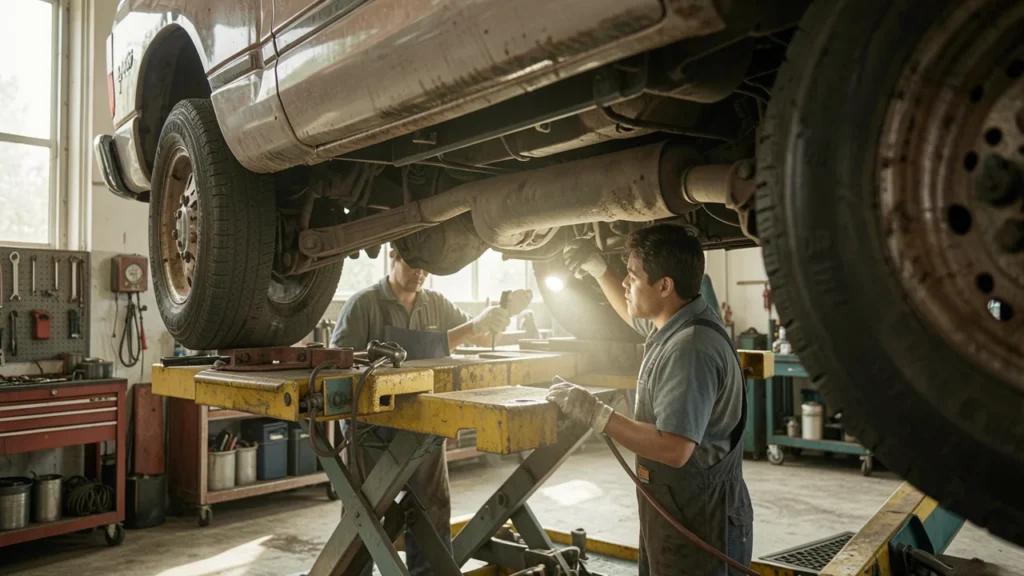
Toyota says dealers will inspect the front and rear shock absorber assemblies and replace affected ones with improved assemblies at no cost. This is a hands-on repair. GCN points out that a software update or dashboard message cannot fix it, so every included truck needs a dealer visit.
Motor1 notes that repairs depend on replacement dampers, so appointments may open up as parts arrive. Call ahead and ask these questions:
- Are the replacement shock assemblies in stock for my VIN?
- Will you inspect all four shocks in one visit?
- Can I get a copy of the repair order for my records?
What Should You Do Until Your Repair?
The recall does not carry a Do Not Drive notice, according to GCN, so the decision about urgency is yours. The risk is real, though. A reservoir that drops in traffic can hit the vehicle behind you.
Watch for these signs:
- Oil stains or wet spots under any corner of the truck.
- A change in how the truck rides or handles on rough pavement.
- Visible rust or a loose look where the reservoir meets the shock body.
Motor1 also advises owners to go easy on heavy towing and hard off-road driving until the shocks are checked. If you tow, our 2026 Toyota Tacoma towing capacity guide explains the limits. A heavier load also changes how your truck sits, as shown in our guide to Tacoma curb weight by trim.
Warning: Never get under a truck held only by a jack. If you want a closer look at the shocks, use rated jack stands on level ground, or let a shop do the inspection.
Why Off-Road Shocks Face Corrosion Risk
Mud, water, road salt and constant flexing are exactly what an off-road shock sees. GCN notes that the same conditions speed up corrosion when a mounting point is not sealed against moisture. In this case, the weak spot is the welded flange.
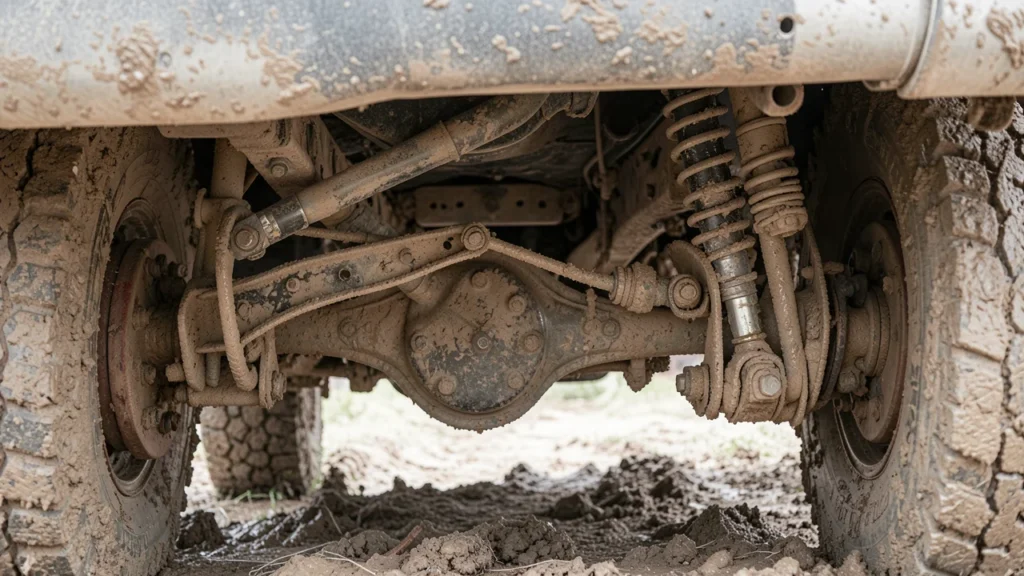
Rinsing mud and salt off the underbody after trail runs and winter drives is good habit. It will not fix this defect, though. Only the dealer repair does that. Tire choice also affects how your truck handles on the trail, so see our picks for the best tires for Toyota Tacoma once your shocks are sorted.
Frequently Asked Questions
Which Tacoma trucks are in the shock absorber recall?
Toyota’s notice covers certain 2024 and 2025 Tacoma TRD Off-Road trucks, and NHTSA also lists the 2024 Tacoma Hybrid. Reports say the trucks were built from early January through late November 2024. Confirm with your VIN, because trim and year alone are not enough.
Is it safe to drive my Tacoma before the repair?
The recall carries no Do Not Drive warning, so the choice is yours. A detached reservoir can become a road hazard and raise crash risk. Check each shock for oil leaks, watch for handling changes and book your dealer visit as soon as you can.
How much does the Tacoma recall repair cost?
Nothing. Toyota says dealers will inspect the front and rear shock assemblies and replace the affected ones with improved parts at no cost to you. Ask your dealer whether the parts are in stock before you book, so you do not make a wasted trip.
How do I know if my Tacoma is part of the recall?
Enter your 17-character VIN at Toyota.com/recall or nhtsa.gov/recalls. Look for NHTSA campaign 26V514 or Toyota codes 26TB14 and 26TA14. You can also call Toyota at 1-800-331-4331. Do not wait for a mailed notice before you check.
What causes the Tacoma shock reservoir to detach?
Moisture reaches untreated metal where the reservoir meets the shock body. Corrosion builds at the welded flange until the weld fails, according to GCN’s summary of the NHTSA report. Mud, water and road salt speed up the process on trucks that see hard use.
Are SR, SR5 and TRD Sport Tacomas affected?
GCN reports that those trims use a different shock setup and are not part of this recall. Toyota’s notice names TRD Off-Road trucks. Still, run your VIN to be sure, because Toyota and NHTSA both tell owners to check instead of assuming.
Final Thoughts
The Toyota Tacoma shock absorber recall is a free fix for a real safety problem. If you own a 2024 or 2025 Tacoma, especially a TRD Off-Road, run your VIN today. Then call your dealer, ask about parts and keep your repair order.
Until the work is done, look for oil stains, ease off heavy towing and rough trails, and report anything odd to your dealer. Recall details can change, so recheck Toyota.com/recall or nhtsa.gov/recalls before your visit.