Toyota Rav4: How Safe Is The Toyota RAV4 Safety Frame
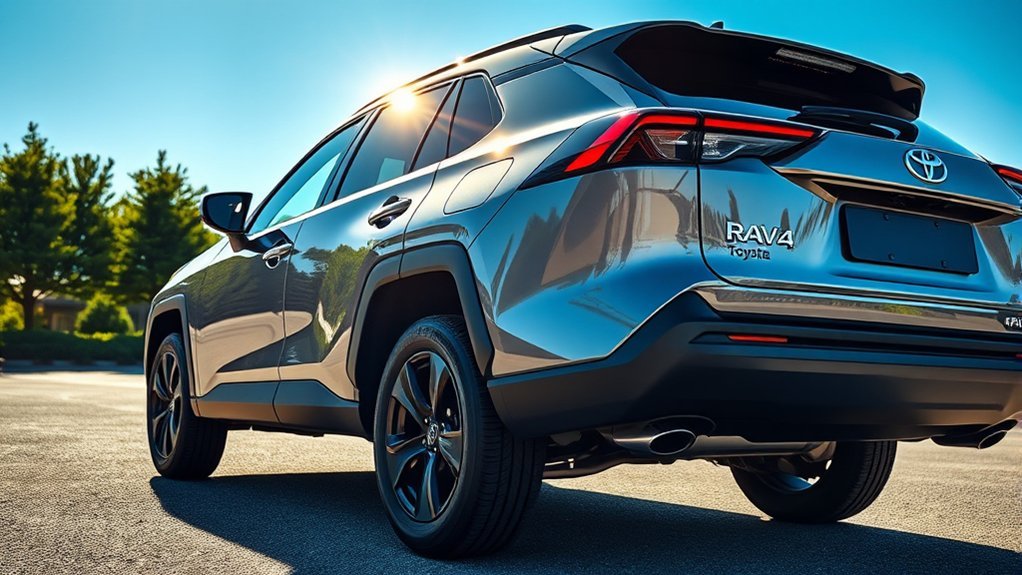
The Toyota RAV4’s safety frame demonstrates strong crashworthiness, particularly excelling in small overlap front tests where it achieves “good” ratings for both driver and passenger sides. With effective structural integrity, it maintains low peak intrusions and manages tibia indices effectively. However, rear seat safety raises concerns due to airbag performance. Overall, while the RAV4 shows robust safety features, understanding the nuances can help you make an informed decision about this vehicle’s safety. More insights await.
Crashworthiness Assessment of the Toyota RAV4
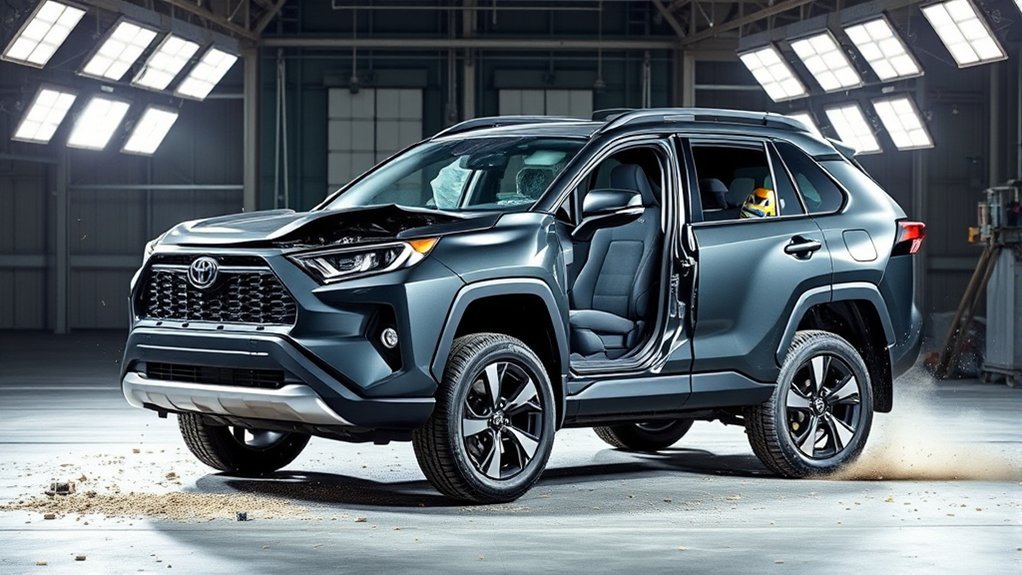
When evaluating the crashworthiness of the Toyota RAV4, it’s clear that the vehicle excels in safety performance, particularly in small overlap front evaluations. The RAV4 received a “good” rating in crash tests, showcasing nearly flawless results on both the driver and passenger sides. With peak intrusions of only 3 cm and 6 cm, respectively, the vehicle demonstrates impressive structural integrity.
In the driver-side small overlap test, the extension bending moment measured 1.3 Nm, with tibia indices of 0.63 on the left and 0.36 on the right. Similarly, the passenger-side test recorded an extension bending moment of 1.9 Nm and tibia indices of 0.86 and 0.49. Overall, the RAV4 shows a low risk of injuries across all body regions, affirming its high safety performance in small overlap evaluations. This assessment applies to 2019-2026 models, ensuring a reliable choice for safety-conscious drivers.
Rear Seat Safety: Key Concerns for Families
When evaluating rear seat safety in the Toyota RAV4, airbag performance raises significant concerns. During tests, the rear seat dummy’s head moved outside the side curtain airbag, highlighting potential risks during frontal collisions. These findings emphasize the need for families to evaluate the overall effectiveness of safety features in protecting rear seat occupants.
Airbag Performance Concerns
While the Toyota RAV4 is a popular choice among families, concerns regarding airbag performance in the rear seat warrant careful consideration. In frontal collision tests, the rear seat dummy’s head moved outside the side curtain airbag during rebound, raising significant safety concerns. Although the rear seat belt managed to keep the dummy’s head positioned away from the front seat back, the overall safety score remained “acceptable” due to potential airbag performance issues. Side impact tests revealed that the dummy’s head struck the c-pillar hard, indicating a moderate risk of injury. These identified flaws in side curtain airbag performance may lead families to reconsider the RAV4, especially if rear seat safety is a top priority in their vehicle choice.
Rear Seat Dummy Testing
Rear seat dummy testing reveals critical safety concerns for families considering the Toyota RAV4. In these tests, the dummy’s head moved outside the side curtain airbag during rebound, indicating potential vulnerability in violent crashes. While the rear seat belt restricted the dummy’s head from hitting the front seat back, this protective measure can’t entirely compensate for the side curtain airbag’s limitations. The overall “acceptable” rating for rear seat safety reflects these concerns, particularly regarding side impacts. Families should recognize that although the RAV4’s rear seat safety is rated as acceptable, the highlighted risks associated with the side curtain airbag necessitate cautious consideration for rear seat passengers’ safety. Prioritizing protection is essential for your loved ones.
Frontal Collision Impact Risks
Frontal collision tests raise significant safety concerns for rear seat passengers in the Toyota RAV4. The results indicate vulnerabilities, particularly with the side curtain airbags. While the rear seat belt kept the dummy’s head from hitting the front seat back, during rebound, it moved outside the airbag’s protection.
| Test Type | Risk Level | Key Concerns |
|---|---|---|
| Frontal Crash | Acceptable | Airbag performance issues |
| Side Crash | Moderate | Pelvic injuries risk |
| Rear Seat Safety | High | Head striking c-pillar |
These evaluations suggest that while the RAV4 performs adequately overall, families should remain vigilant about rear seat safety, especially during violent crash events.
Child Seat Anchors in the RAV4: Safety and Usability Insights
In the Toyota RAV4, you’ll find two rear seating positions equipped with complete LATCH hardware, making child seat installation straightforward. However, borrowing lower anchors from other seating positions can limit your options if you need to secure multiple child seats. Understanding these anchor limitations is essential for ensuring ideal safety for your children during every ride.
LATCH Hardware Availability
When it comes to securing child seats in the Toyota RAV4, users will find that the vehicle offers a well-designed LATCH system. This system includes two rear seating positions equipped with complete LATCH hardware, ensuring a secure installation of your child seat. Additionally, an extra seating position features a tether anchor, further enhancing safety options. It’s essential to recognize that while borrowing lower anchors from other positions is allowed, this may limit anchor availability for multiple child seats. The LATCH hardware rating applies consistently across RAV4 models from 2019 to 2026, maintaining high safety standards. However, positions relying solely on tether anchors or borrowed anchors lack a complete LATCH system and are not rated for maximum safety efficacy.
Borrowing Anchor Limitations
Although borrowing lower anchors from other seating positions in the Toyota RAV4 can enhance flexibility, it’s vital to understand the limitations that come with this practice. While the RAV4 offers two positions with complete LATCH hardware and one with a tether anchor, relying solely on borrowed anchors can compromise safety. Consider these factors:
- You may reduce the availability of LATCH hardware for your child seat.
- Positions using only borrowed anchors aren’t rated for ease of use or safety.
- Long-term safety assessments apply to models from 2019 to 2026.
Be mindful of these limitations when installing your child seat. Prioritizing secure installation guarantees the safety of your loved ones while maximizing the RAV4’s potential for child passenger safety.
Small Overlap Front Test Results: Driver vs. Passenger Side
The results of the small overlap front test for the 2019 Toyota RAV4 reveal significant differences between the driver and passenger sides. The driver-side recorded a peak extension bending moment of 1.3 Nm, with maximum tibia indices of 0.63 (left) and 0.36 (right), indicating a low risk of injury. In contrast, the passenger-side test showed a higher peak bending moment of 1.9 Nm and greater chest compressions, measuring 1.7 mm (left) and 3.4 mm (right). When examining maximum tibia axial force, the driver-side achieved 2.4 kN (left) and 2.2 kN (right), further confirming its safety. Conversely, the passenger-side measurements revealed a higher risk, with forces of 3.0 kN (left) and 2.4 kN (right). Overall, the RAV4 scored “good” in the small overlap front test, demonstrating strong structural integrity and low injury risk across various body regions.
Crash Avoidance Features: Effectiveness and Performance
Having established the Toyota RAV4’s solid performance in crashworthiness through small overlap front tests, it’s important to turn attention to its crash avoidance features. The 2023-25 RAV4 is equipped with the Toyota Safety Sense 2.5 Pre-Collision System with Pedestrian, which excels in preventing crashes under various conditions.
- Avoids collisions at speeds of 31 mph and 37 mph for centered and off-center targets.
- Successfully mitigates pedestrian impact at 12 mph for crossing children and reduces speed by 21 mph at 25 mph.
- Demonstrates effectiveness at night, avoiding collisions with adults at 12 mph.
These features not only enhance your safety but also empower you with confidence as you navigate through busy environments. Overall, the RAV4’s crash avoidance systems are rated as effective, ensuring you remain vigilant and protected on the road.
Headlight Performance: Visibility and Safety Implications
Effective headlight performance is essential for ensuring safety during nighttime driving, as it greatly influences your ability to detect pedestrians and obstacles. The Toyota RAV4 features LED projector low and high-beam headlights, which provide commendable visibility performance on straightaways. However, low beams deliver only fair to inadequate performance on curves, making it important to understand their implications.
| Headlight Type | Visibility Performance |
|---|---|
| Low Beam | Fair to Inadequate |
| High Beam | Good (Right) / Fair (Left) |
| High-Beam Assist | Mitigates Low Beam Limitations |
| Overall Rating | Improved with High Beams |
| Nighttime Safety | Essential for Crash Avoidance |
The effectiveness of the RAV4’s headlight system considerably contributes to its overall crash avoidance ratings, particularly in low-light conditions, making it a critical factor in your driving safety.
Side Impact Performance: Impacts and Protective Measures
While headlight performance plays a significant role in nighttime safety, side impact performance is equally important in evaluating the Toyota RAV4’s overall safety profile. In side impact tests against a 4,200-pound truck at 37 mph, the RAV4 showed effective structural integrity, maintaining a 23-centimeter distance between the b-pillar and the seat center line. However, the results revealed vulnerabilities in airbag performance:
- Rear passengers face potential risks due to compromised side curtain airbags.
- The driver’s head received adequate protection, but moderate pelvic injury risks were noted.
- Overall, the side impact performance scored “acceptable,” indicating room for improvement.
These findings highlight the RAV4’s strengths while also pointing out significant flaws that could compromise rear seat safety during side collisions. Ensuring the safety of all occupants is essential, and understanding these impacts can empower you to make informed decisions about vehicle safety.
Frequently Asked Questions
Is the Toyota RAV4 Safe in a Crash?
The Toyota RAV4 performs well in crash tests, earning good safety ratings overall. However, you should be aware of potential concerns with side curtain airbags, particularly for rear seat safety during collisions.
What Is the Biggest Complaint About the 2025 RAV4?
Isn’t it frustrating when headlights underperform? The biggest complaint about the 2025 RAV4 revolves around inconsistent low beam headlights, as consumer feedback highlights their inadequate performance on curves, affecting nighttime visibility considerably.
What Is the Class Action Lawsuit Against the Toyota RAV4?
The class action lawsuit against the Toyota RAV4 involves allegations of safety defects, focusing on inadequate side impact protection and insufficient rear seat safety features, stemming from consumer complaints regarding crash test performance and disclosure failures.
What Is the Biggest Issue With the Toyota RAV4?
The biggest issue with the RAV4 lies in its reliability issues and rising maintenance costs. While it shines in many areas, these concerns can weigh heavily on your ownership experience, potentially dimming its appeal.
Conclusion
To summarize, the Toyota RAV4’s robust safety features and thoughtful design provide families with confidence on the road. Its crashworthiness, coupled with commendable child seat anchors and effective crash avoidance systems, creates a secure driving experience. However, while it performs well in many tests, paying attention to headlight visibility and rear seat safety can enhance protection further. Overall, this vehicle stands as a solid choice for safety-conscious consumers seeking reliability and reassurance.