If you own a 2004-2005 Toyota RAV4, be aware of the recent airbag recall affecting around 50,000 vehicles. Faulty airbags can explode, releasing sharp fragments, posing serious injury risks. It’s essential to stop driving your vehicle and check its recall status using the VIN with Toyota’s Safety Recall Lookup Tool. Schedule a free repair with an authorized dealer, as many offer mobile services. Stay informed on safety updates to guarantee your vehicle’s reliability and safety post-repair.
Overview of the Recent Toyota RAV4 Airbag Recall
Recently, Toyota issued a recall for around 50,000 older RAV4 models from 2004-2005 due to faulty airbags that pose a significant risk of explosion, potentially sending sharp metal fragments into the cabin. This recall is essential for your safety, as the airbags may deploy unexpectedly, leading to serious injury or death. Toyota strongly advises against driving these affected vehicles until the airbags are repaired or replaced at authorized dealers. To facilitate this process, you can contact your local dealer for mobile repairs or towing services. Repairs are free of charge and typically take about an hour. You can also check your vehicle’s recall status through the Safety Recall Lookup Tool using your license plate number or 17-digit VIN.
Steps for Affected RAV4 Owners
If you own a 2004-2005 Toyota RAV4 affected by the recent airbag recall, it’s essential to take immediate action to guarantee your safety. First, stop driving your vehicle right away to avoid the risk of serious injury from malfunctioning airbags. You can verify if your RAV4 is affected by using the Safety Recall Lookup Tool, which needs your VIN or license plate number and state. Next, contact your local Toyota dealer to schedule a free repair, which usually takes about an hour. Many dealers offer mobile repairs or towing services for your convenience. Finally, make it a habit to check your vehicle’s recall status every three months to stay updated on any new safety recalls or service options.
Injuries and Dangers From Malfunctioning Airbags
Malfunctioning airbags pose significant risks, particularly with the potential for explosive deployments that can injure occupants. Statistics reveal at least 26 fatalities in the U.S. linked to defective Takata inflators, underscoring the dangers these failures present. It’s essential to understand the specific risks associated with aging airbag systems and the importance of addressing safety recalls promptly.
Airbag Explosion Risks
As vehicle safety technology advances, the risks associated with malfunctioning airbags, particularly those produced by Takata, have become alarmingly clear. These defective airbags can deploy explosively, ejecting sharp metal fragments that may cause serious injury or even death. The Takata airbag recall, the largest in automotive history, underscores the widespread danger, affecting tens of millions of vehicles across 19 automakers. Since May 2009, over 26 fatalities in the U.S. have been linked to these airbags, highlighting the urgent need for repairs. High humidity levels further increase the risk of airbag inflator explosions, especially in warmer regions. Vehicle owners must regularly check for recalls and seek immediate repairs at authorized dealers, which are performed at no cost.
Injury Statistics Overview
The dangers posed by malfunctioning airbags extend beyond the explosive risks highlighted previously, with injury statistics revealing a troubling pattern of severe consequences. Since May 2009, at least 26 fatalities in the U.S. have been linked to defective airbags, particularly those involved in the Takata recalls. Unexpected deployments can cause traumatic brain and spinal injuries, especially in low-impact scenarios. Moreover, these systems may fail to deploy during critical accidents, increasing occupant injury risks.
| Airbag Issue | Injuries Reported | Recall Status |
|---|---|---|
| Explosive Deployment | 26 fatalities | Ongoing |
| Low-Impact Deployment | Severe injuries | Historic recalls |
| Age-Related Failure | Increased risks | Active recalls |
Addressing these issues is essential for safety.
Check Your RAV4’s Recall Status Easily
You can easily check your RAV4’s recall status by entering your 17-digit VIN or license plate number on Toyota’s online recall lookup tool. Regular checks, recommended every three months, are essential to identify any safety recalls, especially those related to airbags. If a recall is found, contact your local dealer promptly to schedule necessary repairs at no cost.
Simple Recall Lookup Process
Checking your Toyota RAV4’s recall status is straightforward and can be done in just a few minutes. Use the Safety Recall Lookup Tool by entering your vehicle’s license plate number and state or the 17-digit VIN. This quick process reveals any active safety recalls, including the Takata airbag recall, affecting models from 2002 to 2017. If a recall is identified, you can easily schedule a free repair service at an authorized dealer to guarantee your vehicle’s safety. It’s wise to check your recall status regularly, ideally every three months. For immediate assistance, don’t hesitate to contact Toyota’s Brand Engagement Center at 1-800-331-4331. Stay informed and protect yourself and your passengers.
Importance Of Regular Checks
Staying updated on your Toyota RAV4’s recall status is vital for ensuring the safety of everyone in the vehicle. Many models are affected by the Takata airbag recall, which poses serious risks due to potentially explosive airbag deployment. The National Highway Traffic Safety Administration (NHTSA) recommends you check your recall status every three months. Utilizing the Safety Recall Lookup Tool, you can easily verify your RAV4’s status by entering your 17-digit VIN or license plate number along with your state. If your vehicle is identified in a safety recall, immediate repair is essential, as delays can greatly increase the risk of injury or death. Authorized dealers provide free repairs, ensuring that safety issues are resolved effectively.
Contact Local Dealers Promptly
Timely action is essential when it comes to addressing recalls on your Toyota RAV4. You can easily check your vehicle’s recall status by entering your 17-digit VIN or license plate number on the Toyota recall lookup tool. If you find outstanding recalls, it’s important to contact your local Toyota dealer immediately to schedule necessary repairs at no cost. Particularly for those affected by the Takata airbag recall, refrain from driving until your vehicle is serviced to guarantee your safety. Local dealers can facilitate mobile repairs or towing services, enhancing convenience. Staying informed about recalls and promptly addressing any issues with your dealer is crucial for maintaining vehicle safety and compliance with regulations. Don’t wait—act now!
Repair Options for the Toyota RAV4 Airbag Recall
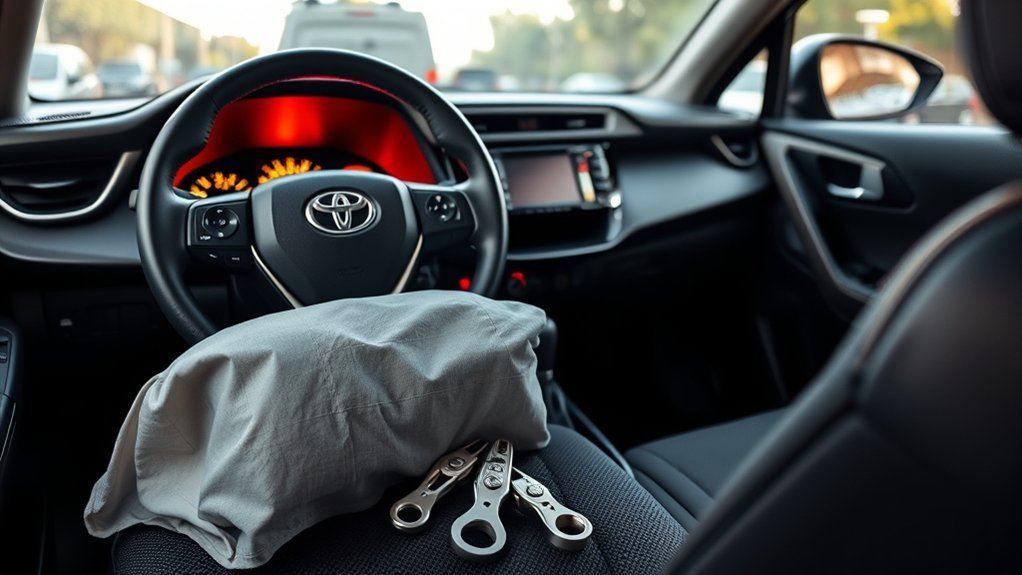
If you’ve received a recall notice for your Toyota RAV4, it’s important to address the airbag issue as soon as possible. Toyota recommends that you stop driving affected models immediately due to the risk of faulty airbags deploying explosively. The airbag recall repairs are conducted free of charge at authorized Toyota dealers and typically take about one hour. If you can’t drive your vehicle to the dealership, you can arrange for mobile repairs or towing services for safety recall repairs. To determine if your vehicle is involved in the recall and to schedule repairs, use the Safety Recall Lookup Tool on the Toyota website, requiring your vehicle’s VIN or license plate number.
Common Airbag Deployment Issues in Toyota RAV4 Models
In your Toyota RAV4, airbag deployment can be influenced by various factors, including common scenarios of impact severity and sensor calibration issues. If the impact doesn’t meet the specific G-force threshold, the airbags may fail to deploy, potentially increasing injury risk. Understanding these deployment issues is vital for ensuring your safety on the road.
Common Deployment Scenarios
While airbags in Toyota RAV4 models are engineered to deploy during high-impact crashes, several factors can affect their activation in real-world scenarios. Airbags may not deploy in low-speed collisions due to G-force thresholds, meaning your safety could be compromised in minor accidents. In expected deployment situations, like frontal or side impacts, the airbags’ activation hinges on impact location and crash severity. Additionally, the Takata airbag recall highlights the importance of monitoring recalls, as certain models may have malfunctioning airbags that can deploy explosively or fail to activate. To guarantee safety, always check for recalls and verify that your airbag systems are functioning properly to mitigate potential deployment issues.
Impact Severity Factors
Understanding the impact severity factors that influence airbag deployment in Toyota RAV4 models is crucial for guaranteeing your safety in the event of a collision. Airbags are designed to activate primarily in high-impact collisions, which means they depend on crash severity, impact location, and vehicle speed. If you’re involved in a minor collision or an impact that doesn’t meet the necessary deceleration levels, your airbags may not deploy, leaving you feeling unprotected. Additionally, certain RAV4 models, especially those related to the Takata airbag recall, have faced issues with reliability. Recognizing these factors can empower you to stay informed about your vehicle’s safety features and guarantee that you’re adequately protected when it matters most.
Sensor Calibration Issues
Airbag systems in Toyota RAV4 models can face significant challenges due to sensor calibration issues, which may compromise their reliability during a crash. Malfunctioning sensors might lead to non-deployment of airbags or unexpected deployments while driving. This can seriously jeopardize your safety.
To guarantee your airbag system functions correctly, keep these points in mind:
- Regularly inspect and recalibrate airbag sensors to maintain peak function.
- Watch for airbag warning lights, which indicate potential sensor malfunctions.
- Stay informed about safety recalls related to sensor calibration issues and seek repairs from authorized dealers.
Tips for Ensuring Your Vehicle’s Safety Post-Recall
To guarantee your vehicle’s safety after a recall, it’s essential to stay proactive in monitoring your vehicle’s status and completing necessary repairs. Regularly check your vehicle’s recall status using the Safety Recall Lookup Tool at Toyota.com/recall or nhtsa.gov/recalls, especially for models affected by safety recalls involving defective airbags. If your vehicle is identified in a recall, schedule immediate repairs at authorized dealers, as these repairs are provided at no charge. Stay informed about any new service campaigns by checking your VIN or license plate number every three months. Confirm all completed recall repairs are documented and verify that your airbag systems are functioning correctly by observing warning lights on your dashboard. Address recalls quickly to avoid serious injuries.
The Role of the National Highway Traffic Safety Administration (NHTSA)
While steering through vehicle safety, it is crucial to recognize the pivotal role of the National Highway Traffic Safety Administration (NHTSA). This federal agency oversees vehicle safety regulations and manages safety recalls, including those related to the Takata Airbag Safety Recall. Here are three key aspects of the NHTSA’s mission:
- Recall Management: The NHTSA coordinates safety recalls, ensuring that manufacturers, like Toyota, address potential risks effectively.
- Consumer Notification: The agency actively informs consumers about recalls, guiding them on necessary repairs and safety updates.
- Safety Standards Enforcement: The NHTSA enforces compliance with safety standards, promoting the integrity of airbag systems in vehicles.
Staying Informed About Future Recalls and Vehicle Safety Updates
Staying informed about potential recalls and safety updates is critical for every Toyota RAV4 owner, as it directly impacts your vehicle’s safety and performance. Regularly check your RAV4 for safety recalls, particularly regarding Takata airbags, since new recalls can emerge from ongoing evaluations. The National Highway Traffic Safety Administration (NHTSA) recommends reviewing your vehicle’s recall status every three months. Utilize the Safety Recall Lookup Tool online to verify any active recalls via your VIN or license plate number. Keeping your contact information current with local dealerships guarantees you receive timely recall notifications and updates on necessary service campaigns. Respond promptly to any recall notifications; delays can lead to increased risks of airbag malfunction and potential injuries.
What to Expect During the Airbag Repair Process?
What can you expect when it’s time to address your Toyota RAV4’s airbag repair? The process is straightforward and designed for your safety. Here’s what you need to know:
Expect a straightforward airbag repair process for your Toyota RAV4, prioritizing your safety and peace of mind.
- Free Repairs: Authorized dealers conduct the repair process at no cost, typically completing it in about an hour.
- No Driving Required: Don’t drive your vehicle to the dealer. They can arrange mobile repairs or towing services if needed.
- Thorough Inspection: After replacing defective airbag inflators or systems, dealers will inspect your airbag system to guarantee all safety features are fully restored.
Stay proactive by scheduling your appointment promptly after receiving a safety recall notification. Your safety and peace of mind are paramount.
Frequently Asked Questions
Is There a Recall on Toyota RAV4 Airbags?
Yes, there’s a recall on Toyota RAV4 airbags due to airbag deployment issues. Check your vehicle’s safety ratings and recall history using your VIN online to guarantee your safety and compliance with current standards.
Which Toyota Models Are Recalled for Airbags?
The Honda Accord, Ford Explorer, and Nissan Altima models are recalled for airbags due to potential malfunctions. Always check recall status for your vehicle to guarantee your safety and avoid dangerous deployment issues.
What Is the Class Action Lawsuit Against the Toyota RAV4?
The class action lawsuit against the Toyota RAV4 highlights serious safety concerns due to faulty airbags. You’ll want to stay updated on lawsuit details, consumer impact, and potential settlement updates that could affect your rights.
What Is the Biggest Issue With the Toyota RAV4?
The biggest issue with your RAV4 might be performance concerns, including sluggish acceleration. You may also notice compromised fuel efficiency and subpar interior quality, which can detract from your overall driving experience and satisfaction.
Conclusion
In summary, staying informed about your Toyota RAV4’s airbag status is essential for your safety. Check for recalls, address any warnings promptly, and seek repair options without delay. By prioritizing your vehicle’s safety, you’re ensuring peace of mind, safeguarding your loved ones, and enhancing your driving experience. Remember, a proactive approach today leads to a safer journey tomorrow. Don’t wait—act now to protect yourself and your passengers from potential dangers.