Hot weather changes tire pressure, but a higher reading after driving is usually normal. The safest approach is to check each tire when it is cold, set it to the vehicle manufacturer’s recommended pressure, and inspect it for damage before long summer trips. Correct inflation helps control heat buildup, tire wear, handling, and fuel use.
Quick Answer
Tire pressure commonly changes by about 1–2 PSI for every 10°F change in temperature. Check and adjust your tires when they are cold, using the PSI on the driver-side door placard or in the owner’s manual. Do not release air simply because a tire reads higher after driving.
Key Takeaways
- Use the vehicle’s recommended cold PSI, not the maximum pressure molded onto the tire sidewall.
- A warm tire normally reads higher than it did before driving. Do not bleed it down to the cold-pressure target.
- Check all tires, including the spare, at least monthly and before long trips, towing, or carrying a heavy load.
- Underinflation increases sidewall flex and heat buildup, making tire damage and failure more likely.
- Replace or professionally inspect tires with bulges, exposed cords, tread separation, repeated air loss, or severely worn tread.
At a Glance
| Time Required | 5–10 minutes |
| Difficulty | Easy |
| Tools Needed | Accurate tire-pressure gauge and access to an air compressor or portable inflator |
| Cost | Usually free with existing tools; approximately $10–$30 for a basic gauge |
Why Tire Temperature Matters
The air inside a tire expands as it warms and contracts as it cools. Outside temperature, sunlight, road temperature, driving speed, vehicle load, and normal tire flex can all affect the reading you see on a gauge.
A pressure increase after driving is expected. It does not automatically mean the tire was overinflated. If the tire was set correctly while cold, releasing air because the warm reading is above the door-placard number can leave the tire underinflated after it cools.
The more serious summer concern is often a tire that started low, is overloaded, is damaged, or is driven for a long time at highway speed. Low pressure causes additional sidewall flex, which creates more heat inside the tire. Sustained heat can contribute to internal damage, tread separation, or sudden pressure loss.
NHTSA reported 511 deaths in tire-related motor-vehicle crashes during 2024, reinforcing the importance of correct inflation, adequate tread, and regular damage inspections.
How Temperature Changes Affect PSI
As a general rule, tire pressure may change by approximately 1–2 PSI for every 10°F change in temperature. The exact change varies with the starting pressure, tire size, load, and operating conditions.
This rule is useful for understanding why a properly maintained tire may read differently after a weather change. It should not be used to invent a separate summer pressure target.
Temperature-to-PSI Conversion
| Temperature Change | Approximate Pressure Change | What to Do |
|---|---|---|
| 10°F warmer | About 1–2 PSI higher | Recheck cold; do not bleed a warm tire. |
| 20°F warmer | About 2–4 PSI higher | Treat this as an estimate, not a new target. |
| 30°F warmer | About 3–6 PSI higher | Check cold after the vehicle has been parked. |
| 10°F cooler | About 1–2 PSI lower | Add air when cold if the reading is below the placard PSI. |
Morning vs. Hot Readings
A cold tire is generally one that has not been driven for at least three hours. Checking early in the morning is convenient because the vehicle has usually been parked overnight, but the tires do not have to be checked at dawn. A shaded vehicle that has sat long enough can also provide a valid cold reading.
Compare the cold reading with the Tire and Loading Information Label on the driver-side door edge or pillar. Some vehicles specify different pressures for the front and rear tires, so check each axle separately.
Warning: Do not release air from a warm tire merely because its reading is above the recommended cold PSI. The pressure will fall as the tire cools.
What to Do If the Tire Is Already Warm
If a warm tire reads comfortably above the cold placard value and there is no visible damage, wait until the vehicle has been parked for at least three hours and check it again. Do not use the warm reading as the final adjustment target.
If a warm tire reads below the recommended cold PSI, it is significantly low because warming normally raises pressure. Add enough air to reach at least the placard value, drive cautiously, and perform a precise cold adjustment as soon as possible. Investigate repeated pressure loss rather than continually adding air.
Risks of Overinflated Tires in Hot Weather
Actual overinflation means the tire is above the appropriate specification when checked under the conditions required by the vehicle manufacturer. It is different from the normal temporary pressure increase that occurs during driving.
A genuinely overinflated tire may produce a harsher ride, reduce its ability to absorb pothole impacts, and increase the chance of impact damage. Excessive pressure may also contribute to irregular tread wear and alter handling, especially on wet or uneven roads.
Use the vehicle placard rather than the tire sidewall as the normal target. The sidewall number is associated with the tire’s rated load and maximum cold inflation conditions, not the pressure automatically recommended for your specific vehicle.
Risks of Underinflated Tires in Hot Weather
Underinflation is especially dangerous in hot weather because it increases sidewall flex and internal heat buildup. The combination of low pressure, heavy loading, high speed, and sustained heat can damage the tire internally even when the outside looks normal.
The National Highway Traffic Safety Administration identifies underinflation as a leading cause of tire failure. It can also worsen handling, increase rolling resistance, accelerate shoulder wear, and shorten tire life.
FuelEconomy.gov states that gas mileage may fall by about 0.2% for every 1 PSI decrease in the average pressure of all tires. A 10 PSI reduction across the average pressure of the tire set could therefore reduce fuel economy by roughly 2%, although the result varies by vehicle and conditions.
| Condition | Effect | Safety Concern |
|---|---|---|
| Underinflated tire | Increased sidewall flex | Heat buildup and possible internal damage |
| Heavy load or towing | Additional stress and heat | Reduced load-carrying safety margin |
| Average pressure 10 PSI low | Approximately 2% lower fuel economy | Higher fuel use and tire stress |
| Uneven or shoulder wear | Reduced tread life | Less dependable traction |
How to Check Tire Pressure Correctly
Check all four road tires at least once a month and before a long trip. Check the spare according to the vehicle manufacturer’s instructions because compact spares often require substantially more pressure than normal road tires.
- Park long enough for the tires to cool. Wait at least three hours after driving whenever possible.
- Find the correct pressure. Read the Tire and Loading Information Label on the driver-side door edge or pillar, or check the owner’s manual.
- Check front and rear specifications. Do not assume all four tires use the same PSI.
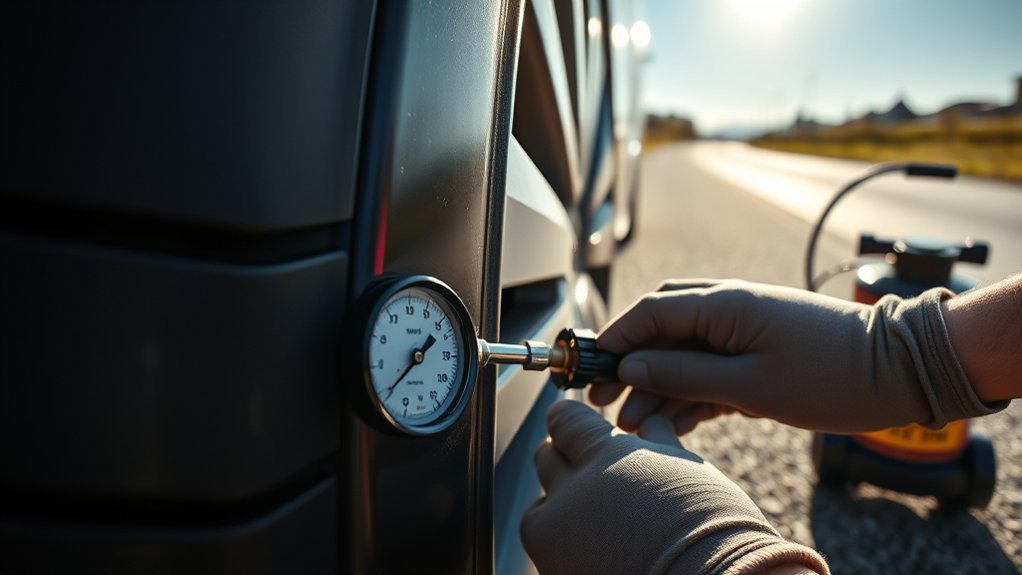
- Remove the valve cap. Press an accurate gauge firmly and squarely onto the valve stem.
- Compare the reading. Add air in short bursts if the cold reading is low. If the cold reading is high, release a small amount and measure again.
- Check every tire and the spare. Look for a tire that differs noticeably from the others or repeatedly loses pressure.
- Replace the valve caps. Caps help keep dirt and moisture away from the valve and provide a secondary seal.
Pro Tip: Keep your own digital or dial gauge in the vehicle. Built-in gauges on public air pumps may be damaged or inaccurate, so use your personal gauge for the final reading.
Adjust PSI for Big Temperature Swings
Large weather changes are a reason to check pressure again, not a reason to choose a different target. Set cold tires to the placard specification at the current ambient temperature. When temperatures later rise or fall, recheck the tires cold and restore any tire that is outside the recommended setting.
Do not lower cold pressure because a hot afternoon is expected. Likewise, do not intentionally exceed the placard value because the night may become cooler. The vehicle manufacturer’s cold-pressure specification already provides the correct baseline for normal road use.
Adjust for Temperature Changes
If the weather changes by 20°F or more, checking the tires the next morning is sensible. A tire that was correct before a cold front may now read several PSI lower, while a tire checked after a major warm-up may read higher.
When towing or carrying a heavy load, consult the owner’s manual and Tire and Loading Information Label. Some vehicles list a separate loaded pressure or different front and rear requirements. Never exceed the vehicle’s load rating, tire load rating, or wheel limits.
Note: Temperature changes affect every tire, but a single tire that loses substantially more pressure than the others may have a puncture, valve leak, rim leak, or other damage.
Inspect Tires for Heat-Related Damage
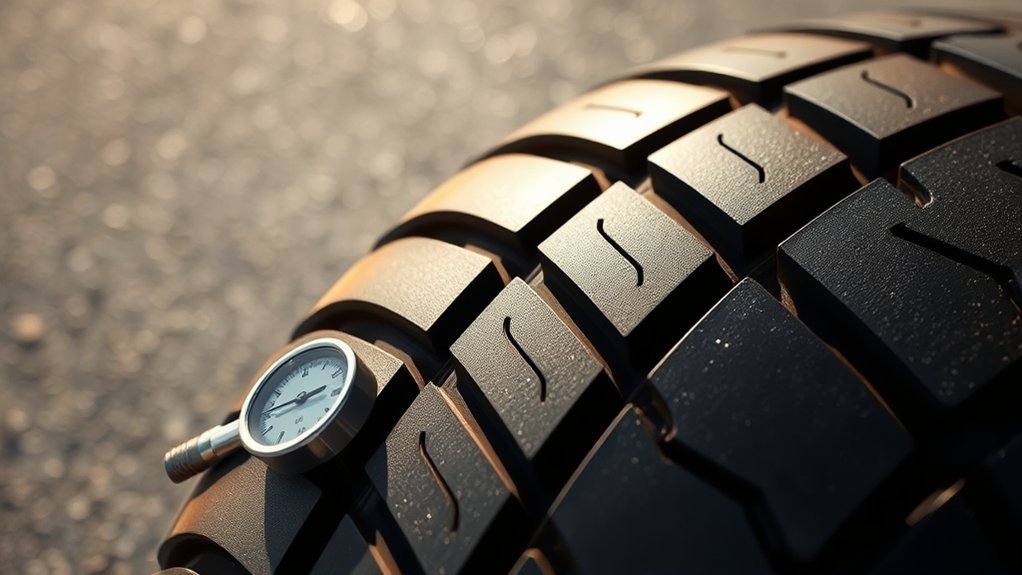
Inspect the tread and both visible sidewalls at least monthly and before long summer drives. Look for cuts, punctures, embedded objects, scrapes, cracking, bubbles, bulges, exposed cords, or sections of tread that appear to be separating.
Check the treadwear bars or measure tread depth. NHTSA advises replacing passenger tires when tread reaches 2/32 inch. The penny test can provide a quick indication: insert a penny with Lincoln’s head upside down into a main tread groove. If the top of the head remains visible, the tread is at or below approximately 2/32 inch.
Compare the wear across all four tires. Heavy shoulder wear can point to low pressure, while irregular patches may indicate alignment, balance, suspension, or rotation problems. A tire professional should inspect unexplained wear, vibration, thumping, or noise.
When to Replace Your Tires or See a Mechanic
Stop using a tire and arrange professional assistance if it has a bulge, exposed cords, visible tread separation, severe cracking, or major impact damage. Do not attempt to judge whether structural sidewall damage is safe based only on pressure readings.
Schedule a tire inspection when:
- A tire repeatedly loses pressure after being inflated.
- The TPMS warning remains on after the tires are correctly adjusted cold.
- The vehicle develops new vibration, pulling, thumping, or handling changes.
- Tread reaches 2/32 inch or wear bars become flush with the tread.
- The tire has been driven while flat or severely underinflated.
- You are unsure about the tire’s age, repair history, or internal condition.
Check the last four digits of the DOT Tire Identification Number to determine the manufacturing week and year. For example, “2622” means the tire was made in the 26th week of 2022. NHTSA notes that some vehicle and tire manufacturers recommend replacing tires between six and ten years old regardless of remaining tread, so follow the instructions for your specific tires and vehicle.
You can also search for open tire recalls through the NHTSA recall database.
Hot-Weather Tire Checklist Before a Long Trip
- Check cold pressure in every road tire and the spare.
- Use the door placard or owner’s manual, not the sidewall maximum.
- Confirm the vehicle is not overloaded.
- Use any loaded or towing pressure specified by the manufacturer.
- Inspect tread, sidewalls, valve stems, and valve caps.
- Measure tread depth and check for uneven wear.
- Pack a pressure gauge, inflator, jack, wheel tools, flashlight, and roadside emergency supplies.
- Investigate a recurring pressure loss before beginning the trip.
What to Do If a Tire Blows Out
If a tire suddenly loses pressure while driving, avoid abrupt steering and do not slam on the brakes. NHTSA recommends holding the steering wheel firmly with both hands, maintaining control, gradually releasing the accelerator, and correcting the steering as needed.
Once the vehicle is stable, slow down gradually and pull completely off the roadway when it is safe. Turn on the hazard lights and call roadside assistance if you cannot change the tire safely away from traffic.
Frequently Asked Questions
How does tire pressure affect fuel economy in hot weather?
Underinflation increases rolling resistance, so the vehicle needs more energy to move. FuelEconomy.gov estimates that gas mileage may drop about 0.2% for every 1 PSI decrease in the average pressure of all tires. Correct cold pressure also supports better handling and tire life.
Can heat make the TPMS reading or warning change?
Yes, because the tire’s actual pressure changes with temperature. A marginally low tire may trigger the warning when cool and move above the warning threshold after driving. That does not mean the sensor gave a false reading. Check the pressure manually when cold. A light that flashes for roughly 60–90 seconds and then stays on usually indicates a TPMS malfunction.
Do different tire brands respond differently to heat?
Tire construction, compound, load rating, speed rating, tread design, and condition can affect heat resistance and performance. However, the basic rule remains the same for every brand: use the vehicle manufacturer’s recommended cold pressure and stay within the tire, wheel, and vehicle load limits.
Is nitrogen inflation better for summer driving?
Nitrogen may escape through tire rubber more slowly and contains less moisture than ordinary compressed air, but it still changes pressure as temperature changes. Its practical benefit for most passenger vehicles is modest. Air and nitrogen can both be used safely, and either one still requires regular pressure checks.
How does parking on hot asphalt affect tire life?
A brief period on hot pavement does not normally require a pressure adjustment. Long-term exposure to heat, sunlight, ozone, poor maintenance, and infrequent use can contribute to tire aging. Inspect older or rarely used tires regularly and follow the tire and vehicle manufacturers’ age recommendations.
Should I lower my tire pressure during summer?
No. Set each cold tire to the pressure listed on the vehicle placard or required by the owner’s manual. The normal increase that occurs as a tire warms was considered when the vehicle and tire specifications were developed.
What if I can check my tires only after driving?
Do not lower a warm tire to the cold placard number. If the warm reading is below the cold recommendation, add air because the tire is clearly low. Recheck and make the final adjustment after the vehicle has been parked for at least three hours.
Safety Disclaimer: This article provides general automotive safety information and cannot account for every tire, wheel, vehicle, load, repair, or driving condition. Follow your vehicle owner’s manual and tire manufacturer instructions. Consult a qualified tire professional if a tire is damaged, repeatedly loses pressure, or may have been driven while severely underinflated.
Conclusion
Hot weather can change the number shown on your pressure gauge, but the safest target remains the vehicle manufacturer’s recommended cold PSI. Check your tires after the vehicle has been parked, avoid bleeding air from warm tires, and pay special attention to underinflation, loading, tread wear, and visible damage.
A monthly pressure and condition check takes only a few minutes. Repeat it before long trips, towing, or carrying a heavy load, and have repeated air loss or structural damage inspected before returning to highway speeds.
Sources
- NHTSA TireWise — cold inflation pressure, placard guidance, TPMS behavior, tread depth, tire age, damage inspection, and blowout response.
- NHTSA Summer Driving and Road Trip Tips — summer pressure checks, sidewall-versus-placard guidance, spare tires, tread, and visible damage.
- U.S. Tire Manufacturers Association Tire Care Essentials — temperature-related pressure changes, underinflation, towing, heavy loads, TPMS, and tread maintenance.
- FuelEconomy.gov: Keeping Your Vehicle in Shape — fuel-economy effects of underinflation and recommended pressure location.
- Michelin: How to Properly Inflate Your Car Tires — warm versus cold readings, gauge use, spare pressure, and nitrogen inflation.
- Continental: Nitrogen in Tires — temperature behavior and the limited everyday benefit of nitrogen inflation.