
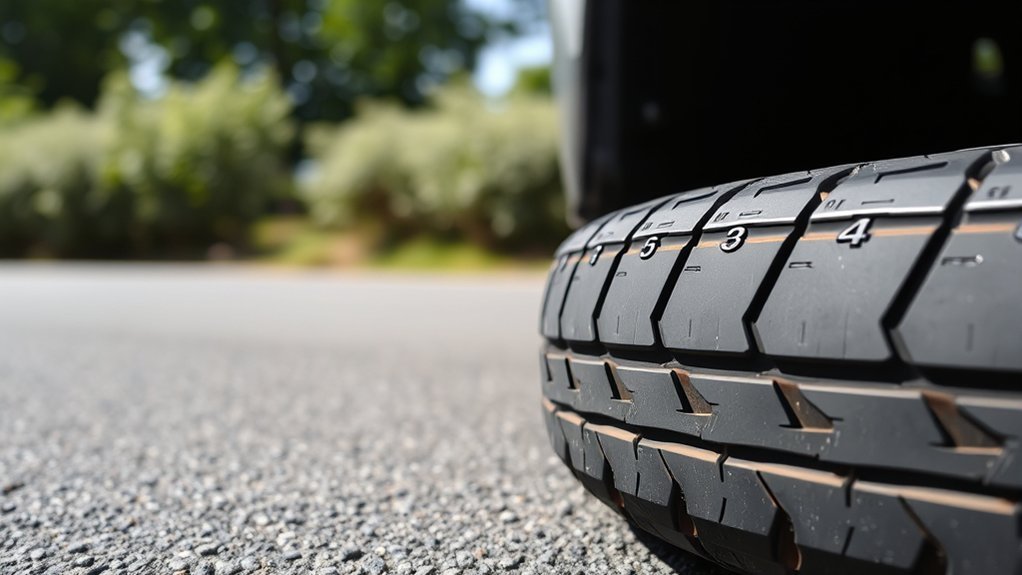
You must read your tire sidewall: the load index number maps to a specific maximum weight per tire, and the load range (ply rating or letter like C/E) shows construction and allowable high-pressure use. Tire pressure directly sets the weight each tire can safely carry—underinflate and capacity drops, overheat and fail; overinflate and traction and ride suffer. For towing or heavy loads pick tires with equal-or-higher index and appropriate range, inflate to the specified pressure, and keep monitoring for safe operation to learn more.
Read the Load Index and Load Range on Your Tire
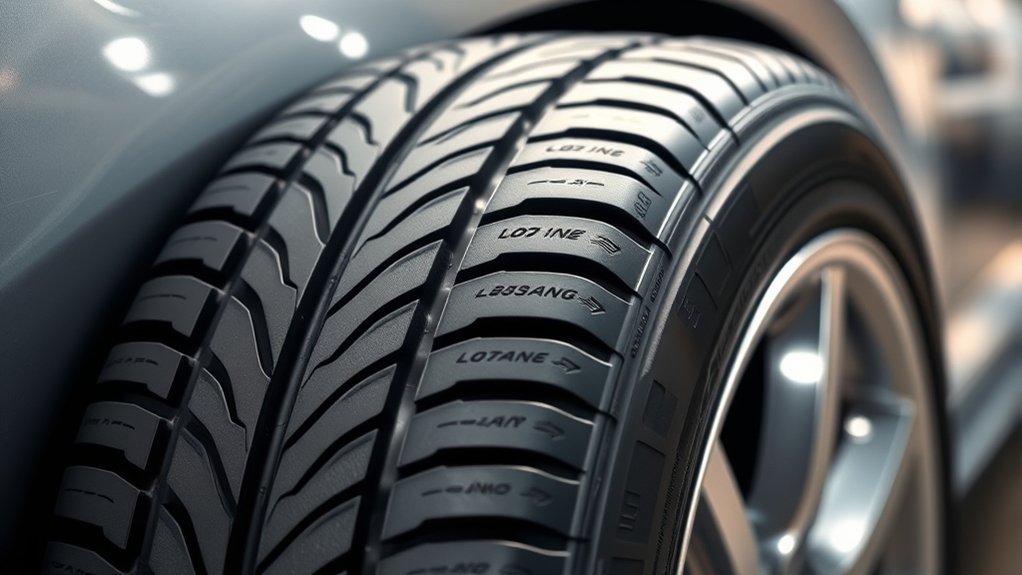
Start by locating the load index and load range stamped on the tire sidewall; these markings tell you the tire’s rated weight capacity and construction strength. You’ll read a load index number adjacent to the tire size; that numeric code corresponds to a specific maximum weight per tire at maximum air pressure. Cross-reference tire markings with a load-capacity chart to convert the load index to pounds — for example, a 94 load index equals 1,477 lbs per tire. The load range, shown as a letter, denotes ply-equivalent construction and inherent durability; higher letters mean greater load capacity and toughness (C equals a 6-ply equivalent). For vehicle safety, always select tires whose tire load rating and load range meet or exceed manufacturer tire specifications to avoid overloading and failure. Use the combined load capacity of all tires when calculating allowable payload, and confirm maximum air pressure required to sustain the stated load capacity under intended use.
[Products Worth Considering]


Quick Decision Checkpoints: Normal Driving, Towing, or Heavy Loads
Now that you can read load index and load range markings, use them to make a quick choice based on expected use: for normal driving, confirm your tire meets the vehicle’s tire specifications and the load index equals or exceeds recommended capacity. Check the owner’s manual for the prescribed load ratings and PSI, then set air pressure accordingly to achieve the listed maximum load capacity per tire.
If you’re towing or carrying heavy loads, switch to tires marked Extra Load (XL) so the increased weight and higher air pressure are supported safely. Match the load index to the total axle weight divided by number of tires; if any tire’s maximum load capacity is insufficient, upgrade. Prioritize tires whose load index and load range align with dynamic weight shifts under acceleration and braking. Your decisions should free you from uncertainty: use precise load index values, adhere to tire specifications, and maintain correct air pressure to prevent overload and preserve control.
Choose the Right Load Index and Load Range for Car vs. Trailer
When choosing tires for a car versus a trailer, match the load index and load range to the expected axle weights and operating pressures so each tire carries its share without exceeding rated capacity. You’ll read load index values (70–124 for passenger vehicle tires) on sidewalls; use a load index chart to translate that number into the precise maximum weight per tire. For trailer tires expect higher load index numbers and reinforced construction. Choose a load index that meets or exceeds OE ratings to preserve safety and performance.
Load range markings (C, D, E) indicate carcass strength and allowable tire pressure; higher letters mean greater carrying capacity and permissible tire pressure. When you outfit a trailer, size tires to the trailer’s gross weight plus cargo so each tire’s carrying capacity exceeds its share. For a passenger vehicle don’t downgrade load index or load range. Confirm tire sizes and consult manufacturer data; pick tires that free you from guesswork and prevent overloading, blowouts, and instability.
[Products Worth Considering]

Set of 4 New Premium Radial Trailer Tires 225/75R15 10PR, Brand: FREE COUNTRY


Premium FREE COUNTRY Heavy Duty 10 ply rated, load Range E, 2400LBS capacity!
How Tire Pressure Affects Load Capacity and Handling
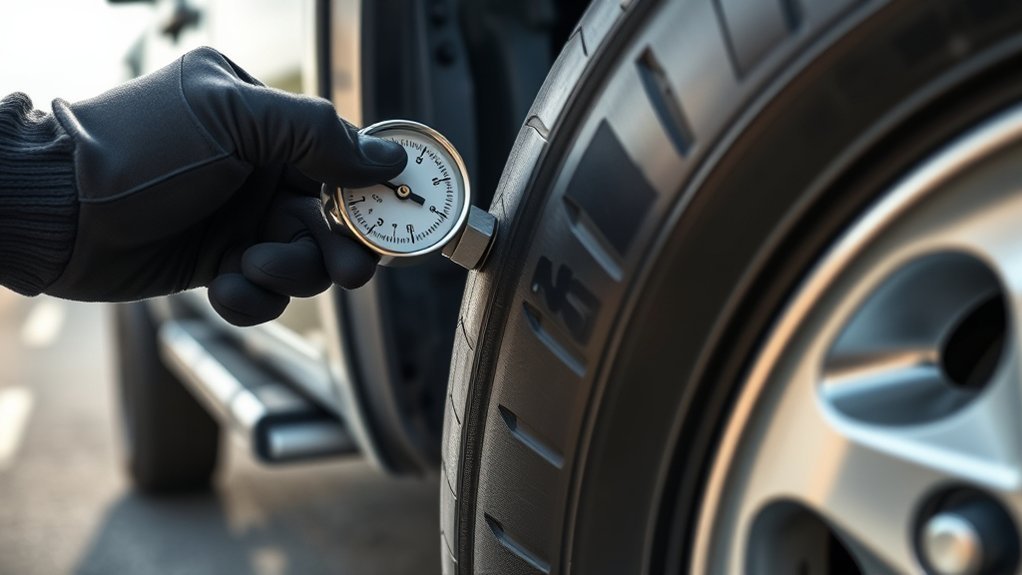
Although invisible to most drivers, tire pressure directly controls how much weight each tire can safely carry: lower-than-specified pressure reduces the effective load capacity and raises heat buildup and blowout risk, while maintaining the manufacturer’s maximum-rated inflation preserves the tire’s designed load-bearing capability and handling characteristics. You should monitor air pressure because the tire’s ability to support weight-bearing loads ties directly to inflation: a given load index only meets its rated pounds at the specified maximum or recommended pressure. Under-inflation spreads load over an increased contact patch, increasing flex, heat, and rolling resistance, which degrades handling, stability, and traction and can lower the tire’s safe maximum speed. Over-inflation concentrates stress, reduces traction, and alters ride dynamics. For empowered operation, you’ll match tire pressure to vehicle load and consult sidewall and placard values; that guarantees the declared load capacity and predictable handling characteristics the manufacturer engineered, preserving safety and performance.
[Products Worth Considering]

PROCESS LEVEL ACCURACY: Each ETENWOLF’s digital tire pressure gauge is calibrated manually to ANSI B40.7 Grade 2A(plus-minus 1 PSI).Presta valve adapter not included, if used for bicycles, it must be purchased separately

INCLUDES: Built-in deflator valve on this and all of Milton's single head pencil gauges. White nylon indicator bar.

HIGH ACCURACY: Every ETENWOLF's pencil tire gauge is calibrated to ANSI B40.1 Grade B, it is accurate to 2% of span in the middle 50% of range and 3% of span in the lower and upper 25% of range. Each of ETENWOLF pencil tire pressure gauge is manually calibrated and has its unique calibration number printed on the pencil
Set Tire Pressure for Heavy Loads & Towing : Step-by-Step
If you’re hauling heavy loads or towing, set tire pressures deliberately to match the load rather than relying on everyday settings: consult the vehicle owner’s manual and the tire sidewall to determine the required inflation and never exceed the tire’s maximum stamped pressure. Step 1: calculate total cargo and tongue weight, then compare to the axle load capacity and tire load index to determine required inflation. Step 2: consult the vehicle owner’s manual for recommended air pressure adjustments under towing conditions and for any maximum speed limitations tied to tire rating. Step 3: check the tire sidewall for maximum pressure and load index; if needed, fit Extra Load tires that increase the tire’s ability to carry weight. Step 4: inflate to the calculated air pressure using a calibrated gauge, staying below the maximum stamped pressure. Step 5: recheck pressures after a short drive and monitor regularly; this preserves load capacity, maintains handling at higher maximum speed, and maximizes safety.
Frequently Asked Questions
How to Read Tire Load Capacity?
You read tire load capacity by locating the load index on the sidewall, checking tire ratings against vehicle compatibility and weight limits, then apply safety guidelines for load distribution, tire inflation, tire maintenance, seasonal adjustments, and performance factors.
What Is the 3% Tire Rule?
The 3% tire rule means you limit extra load to three percent of vehicle weight; you’ll use tire maintenance tips, proper inflation techniques, tire pressure monitoring, understand sidewall markings, assess tire wear patterns, load distribution methods, effects of underinflation, overinflation consequences, seasonal tire adjustments, choosing correct tires.
What Does 225 40ZR18 92W XL Mean?
Like a map, 225/40ZR18 92W XL tells you tire specifications: tire dimensions and aspect ratio, tire classification and performance ratings, speed ratings, XL designation; you’ll use understanding tires to judge tread patterns and tire maintenance.
What’s Better Load Range, C or D?
Load range D’s better: you’ll get higher towing capacity, improved tire durability and performance differences for heavy duty applications. Follow pressure recommendations and tire inflation, watch wear patterns, consider vehicle compatibility and safety considerations in load range comparison.
Conclusion
You’ve learned how load index and load range translate into real-world limits, and how pressure tweaks change capacity and handling. When you’re hauling the usual load, stick with the factory numbers; if you’re towing or carrying extra weight, pick a higher load index and beefier range, then increase pressure to the recommended towing values. Treat tire specs as polite but firm suggestions — they’re the last line of defense between calm trips and costly surprises.







Leave a Reply