
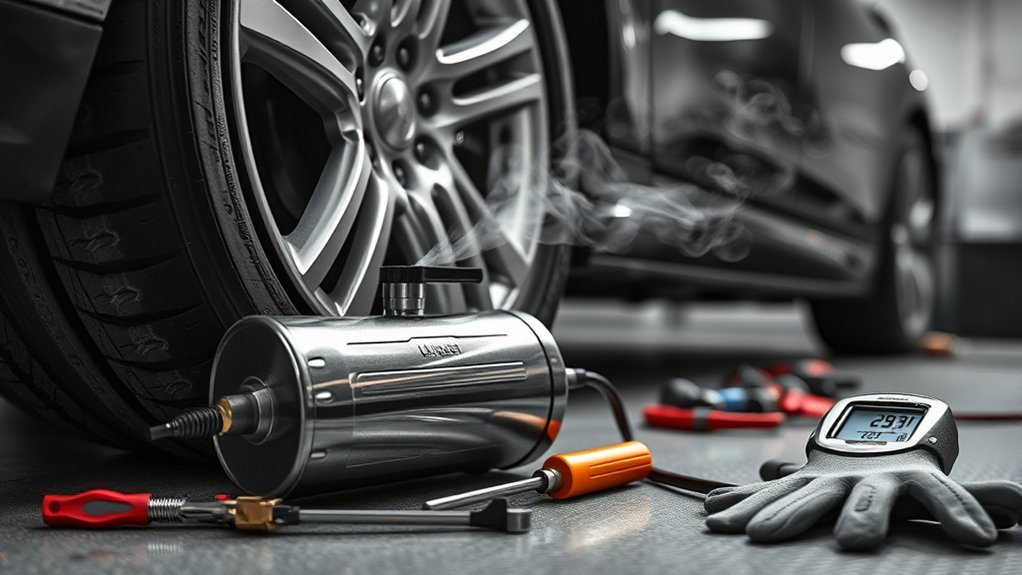
Your tire inflator overheats because compression, friction, and restricted airflow turn electrical energy into heat; metal bodies and high ambient temps trap that heat, while continuous high-pressure use compounds it. You can prevent it by keeping vents clear, using short bursts with rest intervals, positioning the unit for good ventilation, keeping the air intake clean, and ensuring the hose isn’t kinked to reduce load. Follow duty-cycle limits and safety cutoff procedures — more practical fixes and diagnostics follow.
What This Guide Covers and How to Use It
Although this guide is compact, it gives you the practical diagnostics and actions needed to prevent and address tire inflator overheating. You’ll get a focused map: common causes like inadequate ventilation, high ambient temps, and mechanical friction; clear preventive steps—regular maintenance, ensuring proper airflow, and monitoring duty cycles; and indicators to watch—odd noises or elevated discharge temperatures. Use it to inspect and act safely.
You’ll learn quick cooling actions you can apply in the field and routine checks that extend service life. The guide points you to expert troubleshooting when issues exceed simple fixes, so you’re not trapped by uncertainty. Apply the procedures to keep the tire inflator reliable and reduce downtime. This is practical, actionable knowledge aimed at preventing repetitive failures and unnecessary replacements.
Why Tire Inflators Overheat (The Basics)
You’ll see most overheating comes from two core processes: rapid air compression that naturally raises air temperature as you force it into the tire, and mechanical friction inside the pump. Heating is unavoidable when you squeeze a lot of air into a small space quickly because the heat has no time to escape. Frictional contact in pistons, valves, and sealed bearings, plus airflow resistance from the hose, convert electrical energy into heat that adds to the thermal load.
Rapid Air Compression
When you turn on a tire inflator and force air into a smaller volume almost instantly, the gas naturally heats up. This rapid compression gives the heat nowhere to go; that rise in temperature — amplified by mechanical friction inside the pump and limited ventilation around the unit — is why the casing feels hot and why continuous use risks overheating. You should understand that squeezing air into a tight space generates heat. With restricted airflow, that heat remains trapped, elevating component temperatures and triggering the thermal safety switch. Act deliberately: follow the duty cycle, allow cooling intervals, and position the inflator for maximum ventilation to keep the device reliable.
Frictional And Flow Losses
Rapid compression explains why compressed air gets hot, but mechanical friction and restricted airflow add substantial additional heat you’ll feel in an inflator. You’ll notice frictional heating from pistons, gears, and sealed bearings converting motion to heat. Flow resistance in kinked hoses and narrow fittings forces the motor to work harder, generating even more heat. Keep your air hoses straight and unkinked to liberate performance and prevent thermal buildup. Visualize components and effects:
| Component | Loss Type | Effect |
|---|---|---|
| Piston/gear | Frictional heating | Localized temp rise inside casing |
| Hose | Airflow restriction | Forces motor to work harder |
| Casing | Heat dissipation | Retains or sheds built-up heat |
Which Inflators and Materials Heat Up Fastest
Which inflators heat up fastest depends on power, materials, and ventilation: high-power units and those pushing high volumes of air produce heat quickly. Metal-bodied or poorly ventilated plastic designs retain that heat, and continuous heavy-duty use compounds temperature rise, so you should expect shorter duty cycles and regular cool-downs for compact models. They convert electrical energy to thermal energy very fast. Continuous operation multiplies these effects, so you’ll need planned rest intervals based on the manufacturer’s duty cycle. For the best reliability, prioritize inflators that balance performance and heat management to stay operational.
[Products Worth Considering]

ULTIMATE HEAVY-DUTY TIRE INFLATOR: ETENWOLF Vortex S7 Cordless Air Compressor is brand's most powerful model, specifically for inflating heavy-duty vehicles quickly, such as pickups, trucks, off-road vehicles, not to mention regular cars, bicycles, balls, pool floats, and air mattresses (But Not for SUPs)

Fast and Efficient Inflation: ETENWOLF Vortex S6SE tire inflator portable air compressor features a durable dual-cylinder design, delivering an impressive 1.5 CFM@0 PSI (42 L/min) airflow, and can inflate a 31-inch tire from 0 to 35 PSI in just 1 minute. With a maximum pressure of 160 PSI and gauge accuracy within +/-1 PSI, it ensures fast and precise inflation. Additionally, the tire inflator is equipped with a built-in cooling system, allowing for continuous operation even during extended use.

ETENWOLF Vortex S6 cordless air compressor excels at inflating heavy-duty vehicles quickly, such as pickups, trucks, off-road vehicles, not to mention regular cars, bicycles, balls, pool floats, and air mattresses(Not for SUPs)
Ambient Conditions and Usage Patterns That Drive Overheating
Knowing an inflator’s power, materials, and ventilation gives you half the picture; ambient conditions and how you use the tool supply the rest. You’ll face more overheating issues when ambient conditions are hot—high air temperature and direct summer sun reduce the device’s ability to shed heat. Place the unit in the shade or away from hot engines to preserve heat dissipation pathways.
Don’t ignore the duty cycle. Running a standard portable inflator for more than 10-15 minutes without scheduled cooldowns increases motor load and internal temperature. You’ll extend the lifespan by alternating short inflation bursts with pauses. Guarantee proper ventilation around intake ports and avoid cramped spaces that restrict airflow. To minimize breakdowns, make environmental control and disciplined usage your routine: cool shade, spaced intervals, and unobstructed airflow will cut overheating issues.
Common Signs Your Tire Inflator Is Running Too Hot
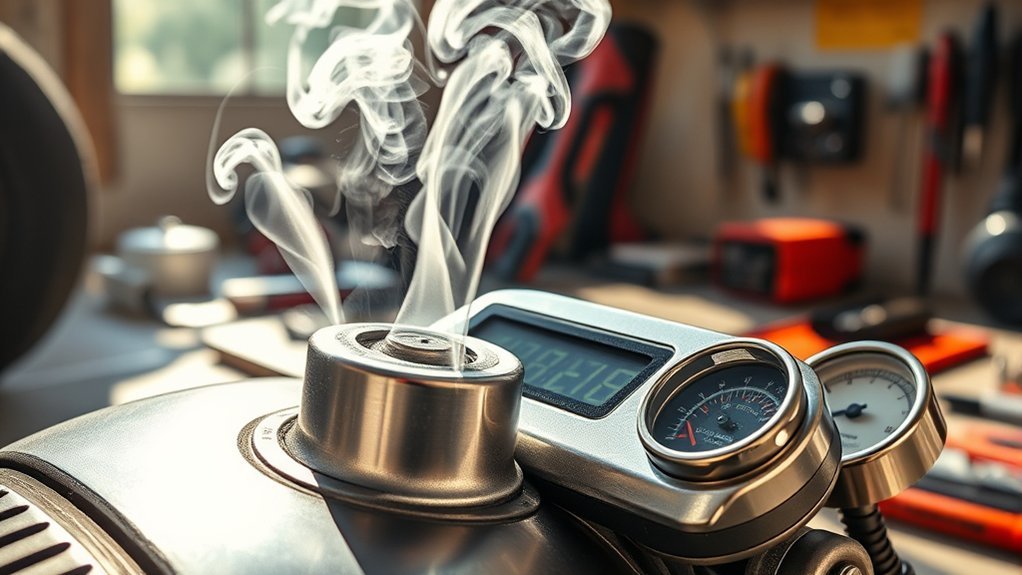
If you run the inflator for excessive periods, it can push internal temps beyond safe limits and shorten component life. Pay attention to unusual smells like melting plastic or burning electrical components, which point to severe overheating. Odd noises — grinding or rattling — also indicate mechanical stress from failing gears or bearings and mean you should stop operation and inspect immediately.
Excessive Run Time
When you run a tire inflator too long, its internal temperature will climb noticeably and can cause a range of clear warning signs. You’ll sense excess heat within the housing and feel the casing become too hot to touch—an immediate cue to stop and prevent overheating. The unit may suddenly shut off as the thermal cutoff switch engages, indicating the compressor has reached unsafe limits. To prevent permanent damage, regularly check operating times and schedule pauses to cool the motor. Ensure vents aren’t blocked, and respect the duty-cycle ratings before extended runs.
Unusual Smells Or Noises
Although you might not see internal damage, unusual smells like melting plastic and noises such as grinding, hissing, or excessive vibration are clear signs your tire inflator is running too hot and needs immediate attention. You should stop use immediately: burnt odors often mean electrical components are overheating, while grinding points to mechanical failure. Check for tripped breakers or unexpected shutdowns. Perform regular maintenance: keep vents clean of debris and ensure the air hose is not leaking. Act quickly to avoid costly unit failure.
Quick Fixes to Cool a Hot Tire Inflator
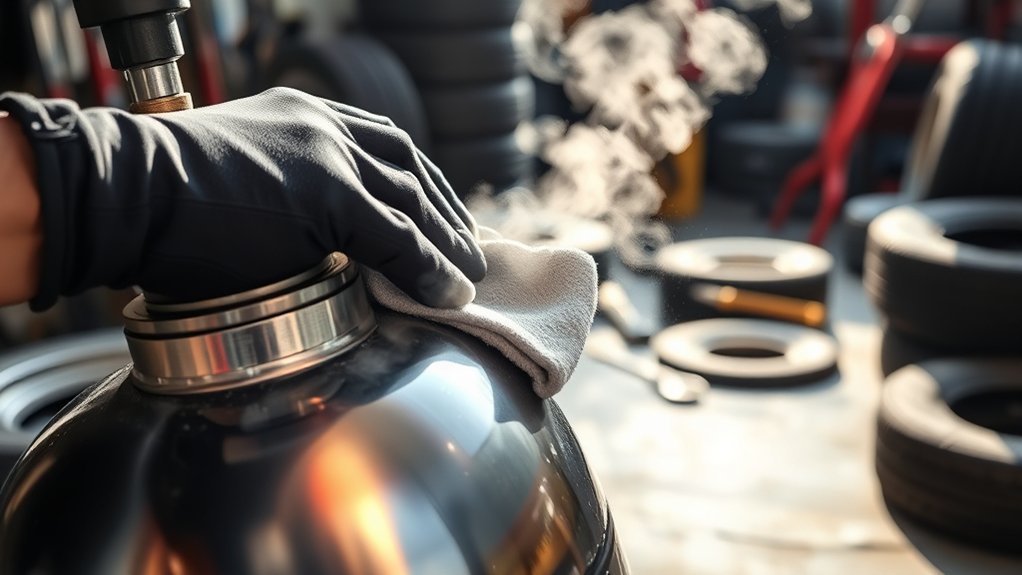
A quick way to cool a hot tire inflator is to power it down, unplug it, and let it rest for 15–30 minutes so internal components can dissipate heat. Moving the unit to a shaded or well-ventilated spot maximizes airflow and speeds temperature equalization. If you are inflating tires on the roadside, open your car doors or trunk to provide shade. Avoid running the pump beyond its stated duty cycle (often 10-15 minutes); continuous use compounds heat and triggers the thermal safety switch.
| Action | Purpose |
|---|---|
| Power down 15–30 min | Allow passive cooling and reset thermal switch |
| Move to shade / open space | Improve ambient cooling |
| Straighten air hose | Remove restrictions forcing the motor to work harder |
| Respect duty cycle | Prevent overheating recurrence |
Routine Maintenance to Prevent Overheating
To keep your tire inflator from running hot, inspect and maintain airflow and hose connections on a regular schedule. Because 99% of portable tire inflators are oil-less and use sealed bearings, focus on keeping the air intake and vents clear of dust and debris. Keep your air intake clear and operate the unit in a well-ventilated area to dissipate heat effectively. Inspect hoses, fittings, and chucks for wear or leaks that can force the motor to run longer than necessary. Strictly follow the specified continuous run times (duty cycle) and allow cooldown periods after prolonged use. These maintenance tips are practical steps you can take to extend service life and guarantee reliable, safe inflation.
When to Repair Parts vs. Replace Your Inflator
When your inflator overheats, check whether worn exterior components like hoses, air chucks, or power cords can be replaced to restore safe operation. However, if you notice strange internal noises, a burning electrical smell, or a steady drop in inflation efficiency, replacing the entire unit is often necessary for standard portable models. Also verify warranty coverage—if repairs are free under warranty, prioritize them before choosing replacement.
[Products Worth Considering]

EXTRA SET FOR CONVENIENCE: Have a complete set of replacement in case you lose the accessories that come with your Airmoto purchase.

【PACKAGE INCLUDES】: You will receive 7pcs inflator hose set, including 1x 33''/84cm extend air pump hose, 1x Presta Valve Adaptor(American type to French type), 1x Ball Pump Needle Adaptor, 2x Tapered Nozzles, 2x Converting Nuts.

【PACKAGE INCLUDES】: You will receive 5pcs inflator hose set, including 1x 21''/54cm tire inflator extension tube, 1x Presta Valve Adaptor(American type to French type), 1x Ball Needle Adaptor, 2x Tapered Nozzles.
When To Repair
If your inflator keeps overheating, weigh the cost of repairs against buying a replacement. Fix hoses, power cables, or air chucks if the unit is a high-end, heavy-duty overland compressor (like an ARB or Viair). You should repair when overheating problems trace to a simple blocked filter or a kinked hose. Prioritize simple external fixes that restore safe duty cycle and pressure stability.
When To Replace
If your standard portable tire inflator repeatedly overheats and shuts down despite cleared airflow and an unkinked hose, you should consider replacement. Portable consumer inflators are typically sealed plastic units; if the internal piston, gears, or motor fails, replacement parts are rarely sold. If the pump produces grinding noises or burning smells, internal failure has likely already occurred. Opt for a reliable, appropriately rated inflator rather than struggling with a burnt-out motor.
Safety Steps and Emergency Shutdown Procedures
Because an overheated tire inflator can quickly damage the unit or melt plastic components, you should immediately switch it off and unplug it from the 12V socket or battery. Move back to a safe distance and let the unit cool for at least 20-30 minutes before touching or inspecting it—the metal cylinder head can cause severe burns.
Keep a clear workspace and guarantee you can access the power plug easily. Once cooled, perform a systematic inspection of hoses, connectors, and ventilation paths; replace damaged external parts immediately. These safety steps minimize hazards, extend the unit’s life, and let you safely manage your equipment when overheating occurs.
Affordable Upgrades and Accessories to Reduce Heat Buildup
When you want to keep a tire inflator running cooler, focus on practical accessories that reduce the total run time of the motor. You can swap a screw-on valve for a quick-connect clip-on chuck to stop air loss and speed up connection times. Upgrading to a model with a digital pressure gauge and automatic shut-off stops overworking the motor, improving efficiency. Keep intake and exhaust vents clean to maintain airflow and prolong tool life.
| Upgrade | Benefit | How it aids cooling |
|---|---|---|
| Clip-on air chuck | Faster connection | Reduces motor running time |
| Heavy-duty power clips | Better electrical flow | Prevents electrical resistance/heat at the plug |
| Digital gauge | Auto-stop feature | Reduces run time and load automatically |
| Thermal protection switch | Safety cutoff | Prevents motor meltdown |
[Products Worth Considering]
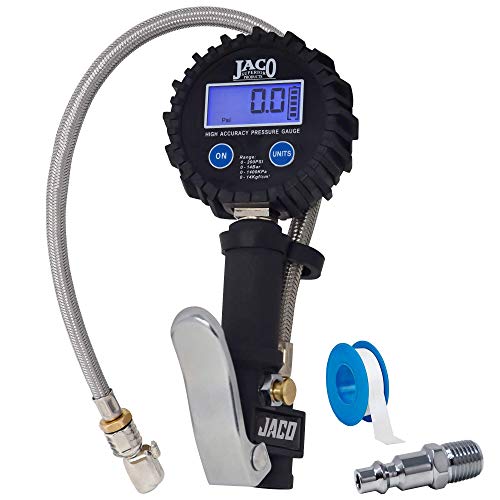
ANSI 1A ACCURACY: Performance tested & calibrated accurate to ±1% full scale with 0.5 PSI resolution for precise tire inflation. Bright 200 PSI LCD display & auto-off feature conserve battery life.

The Rapidair automatic tire inflator with shutoff feature is a professional quality handheld unit. S

QUICK & ACCURATE: Built with the highest quality materials, Airmoto is a portable tire inflator for car, trucks, SUVs, motorcycles, and bicycles. Quickly inflate your vehicle's tires in just minutes with precision accuracy up to 120 PSI. Small and compact car air pump that fits in your glove box or trunk.
Frequently Asked Questions
Why is my tire inflator getting hot?
Your tire inflator gets hot because compressing air naturally creates heat, and the internal moving parts generate friction. Poor ventilation, high outdoor temperatures, and running the pump longer than its recommended duty cycle will cause it to overheat rapidly.
How do I prevent a portable air compressor from overheating?
You can prevent overheating by respecting the duty cycle (usually resting the pump every 10-15 minutes). Keep the unit in the shade, ensure the air intake vents are clear of dust, and make sure the air hose is straight and unkinked.
What would cause a pump to overheat and fail?
Overheating failure happens when the pump is run far past its duty cycle limit, forcing the motor to melt internal plastic components or burn out the wiring. A kinked hose or blocked air filter will also force the motor to overwork.
Why is my compressor getting hot and suddenly shutting off?
Your compressor is likely shutting off because the built-in thermal cutoff switch has been triggered to prevent a fire or motor meltdown. Unplug the unit, move it to the shade, and let it rest for 20 to 30 minutes before trying to use it again.
Conclusion
You’ve learned why inflators overheat, what conditions accelerate heat, and which signs warn you that it’s running too hot. You can prevent problems by keeping vents clear, unkinking your hoses, and understanding that most portable units are oil-less and cannot run indefinitely. You’ll reduce risk by respecting the duty cycle, improving ventilation, and allowing the thermal cutoff switch to reset if it triggers. Follow these practical habits, and you’ll keep your tire inflator safe, reliable, and ready when you need it.







Leave a Reply