

Check the driver’s door jamb (or door frame, glovebox, or fuel flap) for the tire information label; your owner’s manual repeats those exact cold pressure values. Use the labeled pressures for unladen and fully laden conditions rather than the numbers on the tire sidewall. Measure pressures when tires are cold with a calibrated gauge, adjust front and rear per the sticker before trips or heavy loads, and follow the manual to preserve safety, handling, and fuel economy—more practical guidance follows.
Quick Answer: Which Tire Pressure Should I Use?
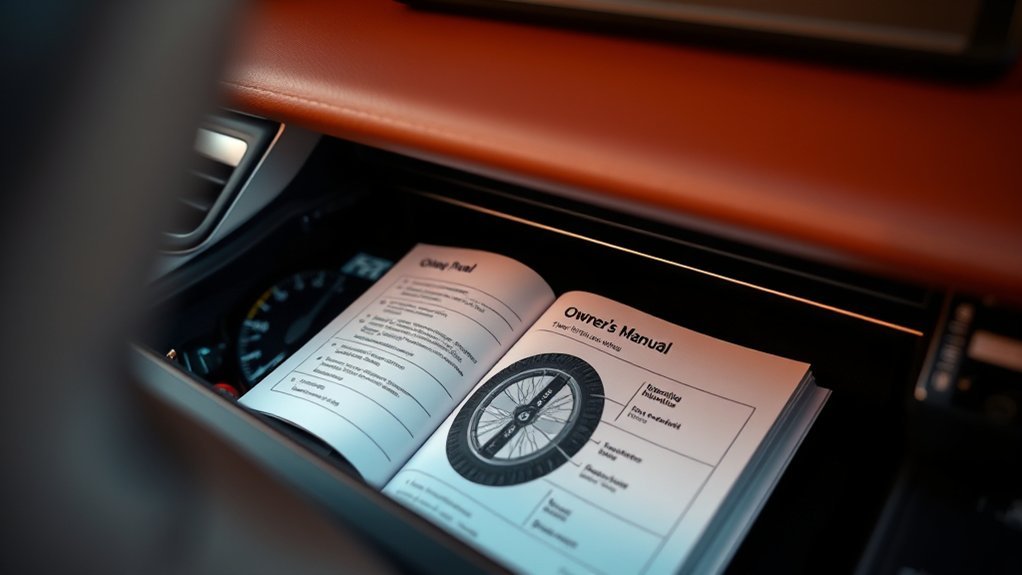
Want a quick rule of thumb? You’ll follow the owner’s manual and the tire information sticker for precise tire pressure values tied to tire size and load. The manual lists recommended pressures for front tire and rear positions — for example, about 2.3 bars unladen and 2.6 bars fully loaded — and tells you when to adjust for heavier cargo. Always measure when tires are cold to avoid false high readings from heat expansion. Locate the exact tire size on the sticker; matching that size to the manual’s chart gives the correct pressure target. You’ll check and set pressure regularly: correct inflation improves safety, steering response, and fuel efficiency, and it prevents uneven wear. If you want liberation from guesswork, be systematic: record recommended values for your tire size, inspect pressures weekly, and adjust before long trips or heavy loads. This disciplined approach maximizes control and minimizes risk.
Find the Tire Pressure Label on Your Vehicle
Look for the tire pressure label on the driver’s side door jamb first, as it’s the most common and will list recommended pressures for front and rear tires under various loads. If it’s not there, check the door frame, glovebox, or inside the fuel filler flap—manufacturers sometimes place the sticker in any of those locations. Use the label’s tire sizes and load/speed specs to set pressures correctly for performance and safety.
Location Of The Label
Start by checking the driver’s side door jamb or the inside of the fuel filler cap, where manufacturers most commonly place the tire pressure label for quick reference. You’ll find concrete data there that frees you from guessing and keeps you in control.
- Look for recommended pressures for front and rear tire under varying loads.
- Verify the listed tire size to match a different tire if you’re replacing one.
- Note load-condition specifications; they guide inflation for safety and economy.
- Check glove compartment door or lower windshield edge if label isn’t where you’d expect.
- Make it the first thing you inspect during routine maintenance to sustain ideal inflation.
Use the label as an authoritative reference so you can act decisively and maintain mobility and autonomy.
Door And Frame Areas
Having checked the glove compartment and fuel cap areas, move to the door and frame zones where manufacturers most often place the tire pressure label on the driver’s side jamb. You’ll find a durable sticker listing recommended tire pressure for front and rear, tire size (e.g., 275/40 R19), and load-based settings for unladen and laden operation. Consult it for routine vehicle maintenance and safety tips to preserve handling, fuel efficiency, and tire life. If your label’s worn, record its values and store them with your manual. Inspect the jamb area regularly during checks and after repairs.
| Location | Info Shown | Purpose |
|---|---|---|
| Door jamb | PSI/bar, sizes | Reference for inflation |
| Frame area | Load settings | Adjust for weight |
Glovebox And Fuel Flap
Check the glovebox and the inside of the fuel flap for a durable sticker that lists the vehicle’s recommended cold tire pressures, tire size, and any load-based pressure adjustments. You’ll find this glovebox location or fuel flap label as a primary manual reference when door jambs aren’t used. Read it cold — pressure values assume tires haven’t been driven on.
- It shows front and rear cold tire pressure values.
- It specifies tire size and load-related pressure changes.
- It’s designed for quick visual confirmation before driving.
- Use it to set pressures that maximize safety and fuel economy.
- Treat it as the definitive on-vehicle manual reference for inflation specs.
Locate it, document the numbers, and assert control over your vehicle’s performance and safety.
Read Your Tire Size, Load Index, and Speed Rating
Because tire markings pack several essential specifications into a compact code, you should be able to read and interpret the numbers and letters on both the tire sidewall and the vehicle’s tire information sticker. You’ll see a size like 275/40R19: 275 is width in millimeters, 40 is aspect ratio, and 19 is wheel diameter in inches. The sticker lists recommended tire specifications, including the load index and speed ratings for your vehicle’s configuration. Read the load index number to confirm each tire’s maximum supported weight and match it to your typical passenger and cargo needs. Match the speed rating letter to the vehicle’s performance limits; never fit lower-rated tires than specified. Correct interpretation frees you from uncertainty and preserves handling, safety, and legal compliance.
| Item | Meaning |
|---|---|
| 275/40R19 | Width/Aspect/Diameter |
| Load index | Max weight per tire |
| Speed rating | Max safe speed |
| Sticker | Recommended specs |
Choose Pressure: Unladen vs. Laden (How to Decide)
Now that you can read the size, load index and speed rating, decide the right inflation for the vehicle’s load state: unladen (typical driver only) or laden (passengers and cargo). You’ll use the tire information sticker or owner’s manual to select the unladen and laden pressures—commonly something like 2.3 bar unladen and 2.6 bar laden. This tire pressure adjustment responds to vehicle load considerations to preserve handling, tread wear, and fuel efficiency.
Read tire size and ratings, then set unladen or laden pressures from the door sticker—adjust before trips to protect handling and wear.
- Refer to the door-sticker or manual for both unladen and laden values.
- Use the lower pressure for routine solo driving and higher pressure when carrying full load.
- Increase pressure to the specified laden value before setting off with passengers/cargo.
- Understand safety implications: incorrect pressure degrades stability and increases wear.
- Check pressures regularly and adjust to match the expected load state.
Act deliberately: matching pressure to load is a small act of autonomy that secures predictable performance and extends tire life.
[Products Worth Considering]
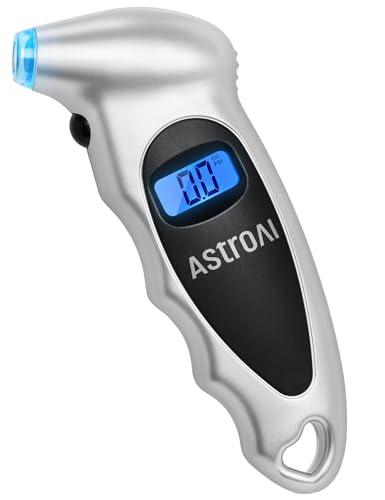
EXPERT-GRADE CALIBRATION: Each AstroAI Tire Pressure Gauge is calibrated with professional-grade tools, ensuring quick and accurate measurement results within plus-minus 1PSI. Stay prepared for any roadside emergency and travel with peace of mind.
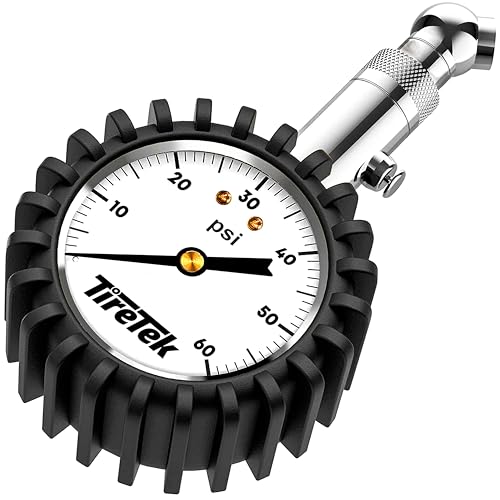
Professional Tire Pressure Gauge for Cars – This heavy duty mechanical tire pressure gauge is calibrated to ANSI B40.1 Grade A (2%) international accuracy standard so you get a precise, accurate pressure reading every time you use it. Makes great car accessories, car stuff, tire deflator, car stuff for men, cool car gadgets, car gifts for men, him, dad

PROCESS LEVEL ACCURACY: Each ETENWOLF’s digital tire pressure gauge is calibrated manually to ANSI B40.7 Grade 2A(plus-minus 1 PSI).Presta valve adapter not included, if used for bicycles, it must be purchased separately
Measure Tire Pressure: When, How, and What Tools to Use
Check tire pressure when the car is cold, ideally after at least three hours parked, to avoid heat-induced inflation. Use a calibrated portable tire pressure meter, press the nozzle firmly on the valve stem, and read the value precisely to the nearest hundredth if possible. Compare readings to the manufacturer’s recommended pressures for unladen and laden conditions and adjust for passenger or luggage load.
[Products Worth Considering]
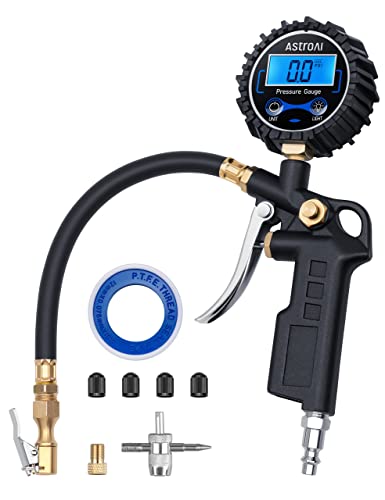
COMPATIBLE WITH both ¼” and ½” NPT air compressors outputs. COMPATIBLE WITH Standard Schrader Valves.

ADVANCED TRUEGAUGE SCREEN: This battery tire inflator includes updated sensor technology, capable of collecting pressure data from tire inflators at a frequency of 200 times per second. Its valid data rate is higher than 80%, which is 60% better than the market average. Wherever you go, accurate readings help you drive safely.

PROCESS LEVEL ACCURACY: This heavy duty tire pressure gauge is calibrated manually to ANSI B40.1 Grade A (plus-minus 1% of span)
When To Check
If you’re aiming for safe, efficient driving, measure your tire pressure at least once a month and again before any long trip, using a portable tire pressure meter while the tires are cold for the most accurate reading. You’ll compare readings to the stickered recommendations (typically ~2.3 bar unladen, ~2.6 bar laden), and act when values deviate. Consistent checks prevent wear, save fuel, and free you from avoidable breakdowns.
- Establish a tire pressure frequency: monthly and pre-trip.
- Make seasonal adjustments as temperatures shift; cold lowers pressure.
- Check after heavy loading or towing for correct inflation.
- Monitor impact on performance: handling, braking, and efficiency.
- Use cold, accurate readings and the vehicle sticker as your standard.
How To Measure
Start by measuring tire pressure when the tires are cold—before you’ve driven or at least three hours after parking—using a quality portable tire pressure meter to get an accurate reading. Check monthly and before long trips. Use measuring techniques that reference the tire information sticker, noting separate values for unladen (e.g., 2.3 bar) and laden (e.g., 2.6 bar) conditions. Record readings, then make precise pressure adjustments to match recommended values. Regular monitoring defeats tire pressure myths and frees you from avoidable wear and wasted fuel.
| Condition | Target (bar) | Action |
|---|---|---|
| Unladen | 2.3 | Inflate/deflate to spec |
| Laden | 2.6 | Re-check after loading |
Best Tools To Use
When you need a reliable reading, use a quality portable tire pressure meter—digital or dial—that’s calibrated and designed for automotive use, and always measure when the tires are cold to avoid temperature-induced error. You want tools that free you from guesswork and keep your vehicle performing efficiently.
- Use calibrated tire pressure gauges (portable meters) for precise bars or psi readings.
- Know digital vs. analog: digital offers accuracy and ease; dial/graduated analog is durable and simple.
- Integrate tire pressure monitoring checks with routine inspections before driving.
- Compare readings to load-based specs (e.g., ~2.3 bar unladen, ~2.6 bar laden); adjust accordingly.
- Measure regularly to prevent wear, maintain fuel efficiency, and reclaim control over vehicle safety.
Adjust Front and Rear Tire Pressure for Passengers and Cargo
Although it’s easy to overlook, you should set front and rear tire pressures to the manufacturer’s load-specific values—typically shown on the driver’s door jamb—so the vehicle handles predictably with different passenger and cargo loads. Consult that sticker for values (for example, 2.3 bar unladen, 2.6 bar laden) and make tire pressure adjustments whenever load variations occur. You’ll account for passenger considerations by increasing rear pressure when carrying heavier loads in the back, and by following the manufacturer’s front/rear split to preserve steering responsiveness.
Check pressures cold, use a portable tire pressure meter, and target the sticker’s readings; meters often display values like 2.59 or 2.55 bar, which you should round to the nearest specified setting. Adjust only in small increments and recheck after a few minutes. This disciplined approach guarantees predictable handling under changing loads, preserves tire life, and gives you the freedom to carry what you need without compromising vehicle dynamics.
[Products Worth Considering]

RUGGED DESIGN: The stainless steel components prevent rust and corrosion while the precision-crafted nozzle seamlessly seals onto the valve stems for highly accurate readings (±2% span). We also provide 4 valve stem caps for convenient replacement.

PROCESS LEVEL ACCURACY: Each ETENWOLF’s digital tire pressure gauge is calibrated manually to ANSI B40.7 Grade 2A(plus-minus 1 PSI).Presta valve adapter not included, if used for bicycles, it must be purchased separately

HIGH ACCURACY: Every ETENWOLF's pencil tire gauge is calibrated to ANSI B40.1 Grade B, it is accurate to 2% of span in the middle 50% of range and 3% of span in the lower and upper 25% of range. Each of ETENWOLF pencil tire pressure gauge is manually calibrated and has its unique calibration number printed on the pencil
Why Correct Tire Pressure Matters for Safety and Fuel Economy
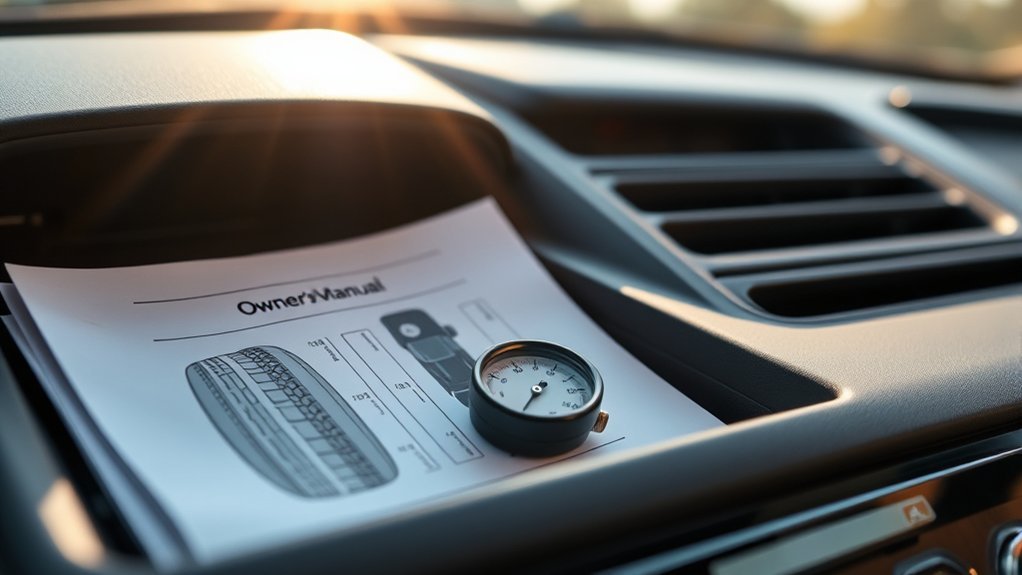
Because tire pressure directly affects contact patch, steering, and structural integrity, keeping your tires at the manufacturer’s recommended pressure is essential for both safety and fuel economy. You’ll preserve control and reduce risk by avoiding under-inflation, which lowers traction and raises blowout likelihood. Checking cold tires gives accurate readings; driving heats rubber and masks real pressure, creating safety implications.
Maintain manufacturer-recommended tire pressure: it preserves handling, reduces blowout risk, and ensures accurate cold readings for safety and fuel economy.
- Correct tire pressure optimizes contact patch for predictable handling and shorter stopping distances.
- Proper inflation reduces rolling resistance, improving fuel efficiency—often up to about 3% or more.
- Regular adjustment prevents uneven wear, extending tire life and cutting replacement costs.
- Maintaining pressure preserves steering responsiveness and minimizes the chance of sudden failures.
- Accurate, routine checks free you from avoidable risk and support mobility as a form of liberation.
Act deliberately: set pressures per the placard, verify when cold, and you’ll control safety implications and fuel economy with technical certainty.
Common Mistakes and Quick Maintenance Checklist
You’ve seen how correct pressures affect handling, wear, and economy; now focus on the common mistakes that undo those benefits and a compact checklist to prevent them. Don’t check tire pressure when tires are hot — that’s a frequent error that gives falsely high readings and risks over-inflation. Refer to the tire information sticker on the driver’s door jamb for laden vs unladen PSI; adjust when you carry passengers or luggage. Use a reliable portable tire pressure meter and target recommended values (for example 2.3 bars unladen). Regular monitoring improves fuel efficiency and tire life.
| Common errors | Cause | Quick action |
|---|---|---|
| Hot-checking | Driving heat | Wait 3+ hours or measure cold |
| Ignoring load | Wrong PSI for load | Adjust per sticker |
| Bad gauge | Inaccurate readings | Calibrate or replace |
| Neglect routine | Gradual loss | Check monthly, before trips |
Maintenance tips: check monthly, after temperature shifts, and before long trips to stay liberated from avoidable failures.
Frequently Asked Questions
How to Read a Manual Tire Pressure Gauge?
You press the manual gauge usage onto the valve stem, read the dial needle for psi, note gauge accuracy tips like cold-checking and firm seal, then adjust for tire pressure maintenance to keep you free and mobile.
How Do I Read What My Tire Pressure Should Be?
Look at the door jamb sticker for tire pressure — you’ll find ideal inflation values for laden and unladen conditions. You’ll check cold tires, use a gauge, and rely on pressure monitoring to maintain safe, efficient freedom on the road.
Is It Okay to Put Air in Nitrogen-Filled Tires?
Yes — you can add air to nitrogen-filled tires, but it dilutes nitrogen benefits. You should monitor air pressure regularly, perform diligent tire maintenance, and prefer exclusive nitrogen service when you want peak performance and liberation from frequent losses.
What Is the 5 PSI Rule?
You’re asking the 5 PSI rule: wildly simple yet essential — you compare actual pressure to the manufacturer’s recommendation, allow up to ±5 psi for psi benefits, pressure maintenance and enhanced tire safety while freeing your driving confidence.
Conclusion
You’ve got the power to keep your ride behaving like it’s on rails by following the tire-pressure guidance in your owner’s manual and vehicle placard. Check size, load and speed codes, pick unladen or laden pressure, and measure cold with a reliable gauge — then adjust front and rear for passengers and cargo. Proper pressure saves fuel, extends tread life, and reduces risk, so don’t neglect this small, sensible upkeep that keeps surprises pleasantly rare.







Leave a Reply