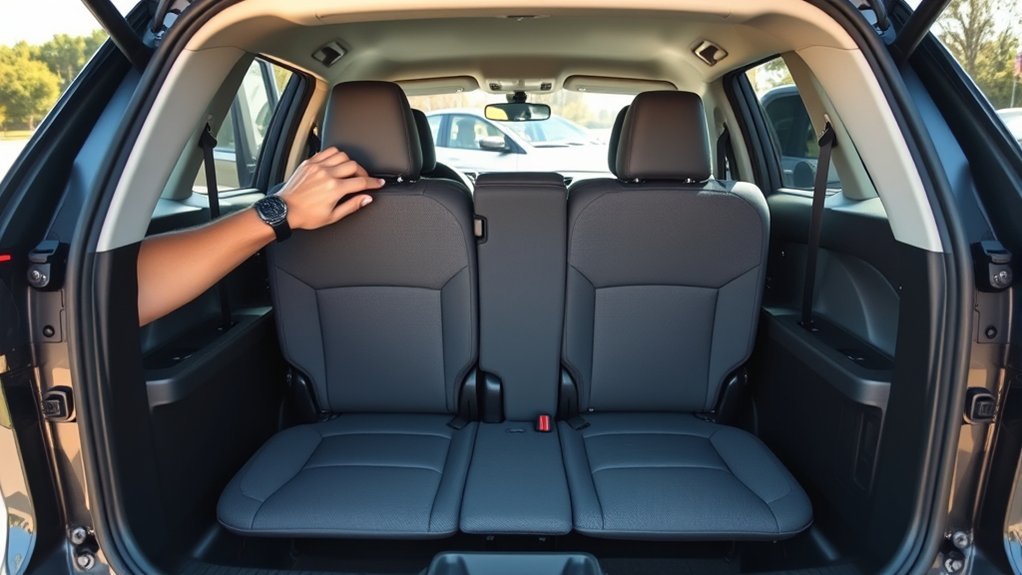
Folding the rear seats in a Toyota RAV4 takes only a minute, but a few preparation steps matter. Before pulling the seatback lever, park safely, clear the seats, lower the head restraints, move the front seats if necessary, and keep the seat belts out of the folding path. The exact control location can differ by model year, so use your vehicle’s owner’s manual when the controls do not match this guide.
Quick Answer
To fold down Toyota RAV4 rear seats, park on level ground, apply the parking brake, shift to Park, clear the seats, and lower the rear head restraints. Pull the seatback angle-adjustment or release lever and guide that section forward. To restore it, raise the seatback until it locks, check the seat belt, and test the latch.
Key Takeaways
- Park on level ground, apply the parking brake, and shift to Park before moving a rear seatback.
- Remove child restraints, cargo, and loose items from the seat before folding it.
- Lower the rear head restraints and move the front seats if they block the folding path.
- Late-model RAV4s use a 60/40 split, so either section can be folded separately.
- After raising a seatback, make sure the seat belt is clear, the red unlocked mark is hidden where equipped, and the latch passes a push-pull test.
At a Glance
| Time Required | About 1 to 2 minutes |
| Difficulty | Easy |
| Tools Needed | None |
| Cost | $0 |
Note: Release-control locations and preparation steps can differ among RAV4 generations, production markets, and body configurations. The procedure below closely follows Toyota’s late-model instructions. Check the Toyota owner’s manual library when your seat or lever looks different.
How to Fold Down the Back Seats in a Toyota RAV4
Before You Begin
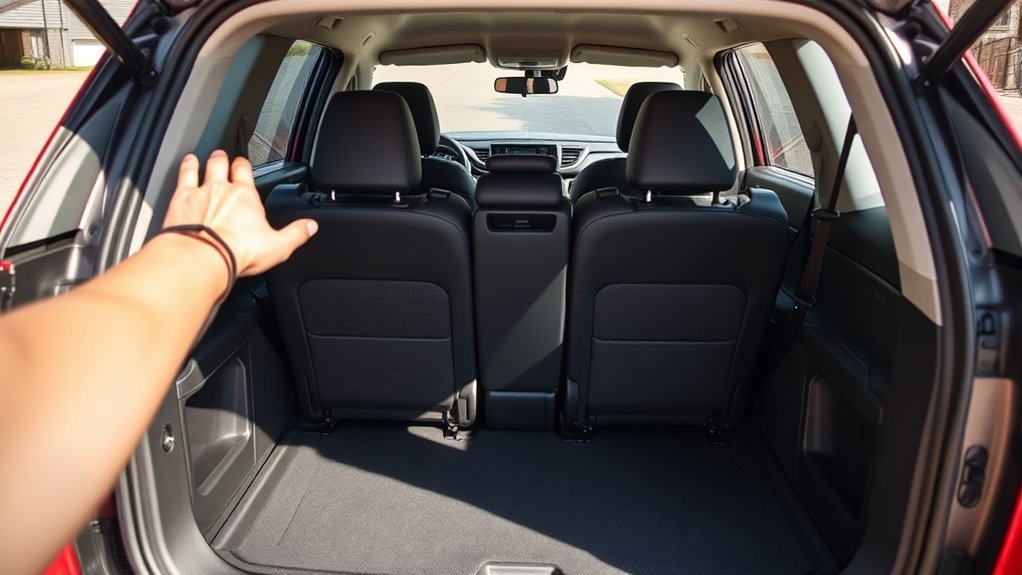
Prepare the vehicle before you touch the release lever. This prevents the seatback from hitting the front seats, trapping a belt, or falling onto an item left on the cushion.
- Park the RAV4 on level ground.
- Apply the parking brake and shift the transmission to Park.
- Remove passengers, child restraints, cargo, and loose items from the rear seat.
- Adjust the front-seat position and seatback angle if either front seat blocks the rear seatback.
- Lower the rear head restraints. On some late-model RAV4s, the outboard restraints must be lifted slightly before they can be pushed fully down.
- Stow the rear center armrest if it is extended.
- Move each rear seat belt and buckle away from the folding path.
- Keep hands and feet clear of the hinges, joints, and latch openings.
Warning: Never fold a rear seatback while driving or while someone is sitting in that seat. Do not let children operate the seat or enter the cargo compartment. Keep hands, feet, pets, and loose objects away from the moving seat and hinge areas.
Folding the Seatback Step by Step
- Open a rear door or the liftgate. Use the access point that gives you a clear view of the seat and its folding path.
- Find the seatback lever. On many late-model RAV4s, the seatback angle-adjustment or release lever is near the upper outer side of the rear seatback.
- Support the seatback with one hand. Do not let it drop freely after the latch releases.
- Pull and hold the lever. Keep the lever pulled until the seatback releases from its upright position.
- Guide the seatback forward. Lower it slowly while watching the head restraint, seat belt, buckle, front seat, and any nearby cargo.
- Check the folded position. Make sure the seatback is stable and no seat belt or buckle is pinched underneath it.
Repeat the procedure for the other seat section when you need the full cargo area. Do not force a seatback that stops suddenly. A head restraint, front seat, belt, buckle, armrest, or cargo item may be blocking it.
Where Is the RAV4 Rear Seat Release Lever?
On many 2019 through 2025 RAV4 models, the same lever used to adjust the rear seatback angle releases the seatback for folding. It is positioned on the outer side of each rear seatback, close to the shoulder area.
Older RAV4 generations can use a different lever, strap, or release arrangement. Do not pull hard on a trim panel or an unfamiliar handle. Use the seat section of the owner’s manual for the exact year, market, and powertrain of your vehicle.
Pro Tip: If the lever moves but the seatback stays locked, press the seatback slightly toward the rear of the vehicle while pulling the lever. This can remove pressure from the latch. Stop if you feel grinding or solid metal resistance.
How to Use the 60/40 Split Rear Seat Feature
Late-model Toyota RAV4s use a 60/40 split rear seat. The smaller section and larger section can be folded separately, allowing you to balance passenger seating and cargo space.
- Fold the smaller section for narrow cargo such as skis, poles, rolled rugs, or a small flat-packed item.
- Fold the larger section when you need more width but still want to keep one rear passenger seat available.
- Fold both sections for boxes, camping equipment, bicycles with removed wheels, or other bulky cargo.
Keep a rear passenger beside folded cargo only when the passenger’s seatback is fully locked, the head restraint is positioned correctly, and the lap-and-shoulder belt can be worn normally. Do not route cargo across an occupied seating position or its seat belt.
How to Return the RAV4 Rear Seats Upright
Restoring the seatbacks requires more than lifting them until they make a sound. A trapped seat belt or partly engaged latch can leave the seating position unsafe.
- Clear the latch area. Remove cargo, dirt, straps, and other items from the seatback’s path.
- Position the seat belt correctly. Keep the belt outside the seat-belt guide and away from the latch so it cannot become trapped.
- Lift the seatback. Raise it smoothly to the desired upright or reclined position.
- Push it firmly into the latch. Continue until the latch engages.
- Inspect the lock indicator. On models with a red unlocked marking near the release lever, confirm that the red mark is no longer visible.
- Perform a push-pull test. Hold the top of the seatback and move it lightly forward and backward. It should remain locked.
- Check every belt. Make sure no belt is twisted, pinched, trapped behind the seatback, or caught inside the latch.
- Restore the head restraints. Adjust them to the proper height before passengers use the seats.
Warning: Do not carry a passenger against a seatback that moves during the push-pull test, shows a red unlocked mark, or traps the seat belt. Lower it again, clear the obstruction, and relatch it before driving.
How to Pack Cargo After Folding the Rear Seats
After folding the RAV4 rear seats, place heavy items low and as far forward as practical without pressing against the front occupants. This helps limit cargo movement and keeps the vehicle’s center of gravity lower.
NHTSA reports that about 850 people are killed and almost 19,000 are injured each year in crashes involving objects or debris in the road, which is why every load should be secured before driving.
- Place heavy boxes, tools, coolers, and equipment on the cargo floor.
- Keep the heaviest items near the center of the vehicle rather than stacked high near the liftgate.
- Use rated cargo straps, tie-down points, netting, or a properly fitted cargo barrier where appropriate.
- Do not stack items high enough to block the rear window or side-window view.
- Keep cargo away from seat belts, seatback latches, child-seat anchors, and the liftgate closing path.
- Check the tire-and-loading label before carrying a heavy load, and do not exceed the vehicle’s stated occupant-and-cargo limit.
- Stop after the first few miles and recheck anything that could settle or shift.
Follow the NHTSA load-securing guidance whenever you carry loose or bulky items.
Pro Tip: Keep a compact set of rated cargo straps and a cargo net in the rear storage area. Inspect the straps for cuts, damaged hooks, or weak stitching before each use.
What to Do if the RAV4 Rear Seats Won’t Fold
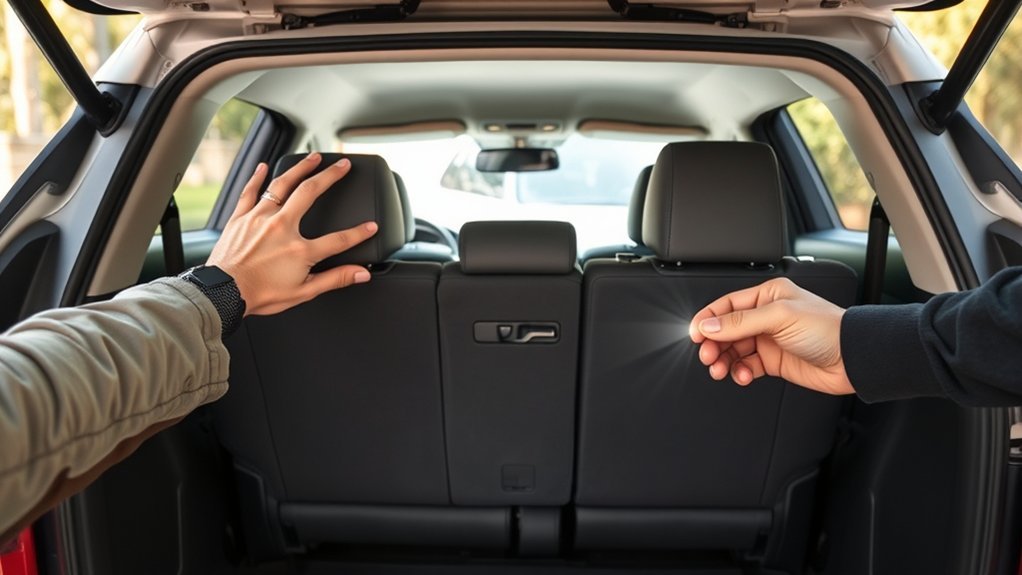
Do not pull harder as your first response. Most folding problems come from pressure on the latch, a raised head restraint, a trapped seat belt, an extended armrest, front-seat interference, or debris around the mechanism.
Common Rear Seat Problems
| Symptom | Likely Cause | What to Check |
|---|---|---|
| Lever moves, but the seat stays locked | Pressure on the latch or a damaged release cable | Push the seatback slightly rearward while pulling the lever. Stop if the lever feels loose or disconnected. |
| Seatback starts folding, then stops | Head restraint, front seat, armrest, belt, or cargo interference | Lower the head restraint, move the front seat, stow the armrest, and clear the belt path. |
| Seatback folds but will not lock upright | Trapped seat belt, cargo in the latch, or incomplete engagement | Lower it again, route the belt outside the guide, clean the latch opening, and raise it firmly. |
| Red mark remains visible | The seatback is not fully locked | Do not use the seat. Clear the latch and relock the seatback until the red mark disappears. |
| Grinding, scraping, or metal resistance | Bent, damaged, or misaligned hardware | Stop operating the seat and arrange an inspection by a qualified Toyota service technician. |
Troubleshooting Tips for Stuck Seatbacks
- Remove everything from the seat cushion and cargo area around the seatback.
- Lower all rear head restraints as far as the manual directs.
- Move the front seat forward and reduce its recline angle.
- Stow the center armrest.
- Flatten the seat belts and move the buckles away from the hinge and latch.
- Inspect the release lever and latch opening for grit, fabric, broken trim, or another obstruction.
- Apply light rearward pressure to the seatback while operating the lever.
You can wipe loose dust from exposed trim and the area around the latch with a clean cloth. Do not disassemble the latch, pry it with a screwdriver, flood it with lubricant, or pull the release lever with excessive force.
When to Get Professional Help
Arrange an inspection when the release lever is loose, the seatback moves without locking, the red mark stays visible, a seat belt is damaged, or the mechanism makes a grinding sound. Service is also appropriate after a collision or when the seatback, hinge, or latch appears bent.
Before visiting the service center, note which side is affected, whether the lever moves, whether the seatback releases under light rearward pressure, and whether the red lock indicator changes.
How to Stay Safe While Adjusting Rear Seats
Only adjust the rear seats while the RAV4 is stopped on level ground with the parking brake applied and the transmission in Park. Keep every passenger outside the seat’s moving path.
- Never fold or raise a seat while someone is sitting on it.
- Remove a child restraint before folding that seating position.
- Do not let children play in the cargo compartment or operate the release lever.
- Keep fingers, hands, feet, clothing, and pet leashes away from hinges and joints.
- Do not place a passenger on a folded seatback or in the cargo area.
- After raising the seatback, confirm that its seat belt is available and positioned correctly.
- Make sure every occupied seating position has an upright, locked seatback and a usable three-point belt.
Rear passengers should use their seat belts on every trip. NHTSA advises that occupants buckle up in the back seat as well as the front and position the lap and shoulder portions correctly.
How to Maintain RAV4 Rear Seat Functionality
Rear-seat mechanisms usually need little routine attention, but dirt, sand, pet hair, food crumbs, and small cargo items can collect around the hinges and latch openings.
Why Seat Functionality Matters
A properly operating seatback lets you change the cargo layout without compromising the seating position. A damaged or partly latched seatback can move during braking, interfere with the seat belt, or prevent a passenger from sitting securely.
- Vacuum around the hinges, seat tracks, belt guides, and latch openings.
- Inspect release levers for cracks, looseness, or unusual movement.
- Keep cargo straps and bag handles away from the latches.
- Check the folding operation after hauling sand, soil, beach equipment, or pet supplies.
- Have damaged upholstery or trim repaired if it enters the latch path.
Safe Use of Rear Seats
Before carrying passengers, raise each seatback, confirm that it locks, check any red lock indicator, and perform a light push-pull test. Inspect the seat belts for twisting, pinching, fraying, or damage caused by the seatback.
Do not modify the seatback frame, latch, hinge, seat-belt guide, lower child-seat anchors, tether anchors, or surrounding trim. Altering those parts can affect how the seating and restraint systems work.
Tips for Organizing Your RAV4 for Car Camping
Folding both rear seat sections creates a useful sleeping and storage area, but the surface may be slightly sloped or uneven depending on the RAV4’s model year, seat padding, cargo floor, and accessories. Inspect the surface before choosing a mattress or platform.
- Use separate bags or bins for sleep gear, food, clothing, and emergency supplies.
- Place a foam mattress or sleeping pad only on a stable surface that does not cover a required vent or interfere with the front seats.
- Keep the seatback latches and seat belts accessible so the seats can be restored safely.
- Store heavy equipment low and secure it before driving.
- Do not block the rear window, side windows, mirrors, doors, or emergency exit paths.
- Remove or adjust head restraints only as allowed by the owner’s manual, and reinstall them before carrying passengers.
- Use safe ventilation practices and park only where overnight vehicle use is permitted.
Note: Do not remove rear seatbacks or modify the seat structure merely to create a flatter camping platform. Seat frames, restraint components, wiring, and hybrid-related equipment can vary by model.
Frequently Asked Questions
How do you put the back seats down in a Toyota RAV4?
Park on level ground, apply the parking brake, shift to Park, remove cargo and child restraints, lower the rear head restraints, and move the front seats if necessary. Pull the seatback angle-adjustment or release lever, then guide the selected seatback forward.
How do you fold down rear seats on a Toyota?
Toyota models use different release levers, straps, and preparation steps. Clear the seat, lower the head restraints, keep the belts away from the folding path, operate the marked release control, and lower the seatback slowly. Follow the owner’s manual for the exact model and year.
How do you lower a seat in a Toyota RAV4?
To lower a rear seatback, pull its seatback angle-adjustment or release lever and guide the seatback forward. Front-seat height is adjusted with the manual height lever or power-seat switch when that feature is installed.
Do RAV4 rear seats fold flat?
Late-model RAV4 rear seats are designed to fold into the cargo area, but the finished surface may be flat or nearly flat rather than perfectly level. The slope can vary with the model year, seat design, cargo-floor position, mats, and accessories.
Why won’t my RAV4 seatback lock after I raise it?
A seat belt, buckle, cargo item, trim piece, or debris may be blocking the latch. Lower the seatback, clear the latch area, route the belt outside its guide, and raise the seatback firmly. Do not use the seat if a red unlocked mark remains visible or the seatback fails a push-pull test.
Can I fold only one side of the RAV4 rear seat?
Yes. Late-model RAV4s use a 60/40 split rear seat, so the smaller section, larger section, or both sections can be folded. Any occupied section must remain fully upright and locked with an accessible seat belt.
What does the red mark near the RAV4 seat lever mean?
On models equipped with the indicator, a visible red mark means the rear seatback is not securely locked. Clear the latch area and relatch the seatback until the red mark is hidden, then confirm the lock with a light push-pull test.
Conclusion
To fold Toyota RAV4 rear seats safely, prepare the vehicle first: park on level ground, apply the parking brake, shift to Park, clear the seat, lower the head restraints, and protect the seat belts. Pull the correct seatback lever and guide the seat forward rather than letting it fall.
When you restore the seats, route the belts correctly, raise each section until it locks, check that any red unlocked mark is hidden, and test the seatback by pushing and pulling it lightly. These checks keep the RAV4 ready for passengers after groceries, camping equipment, sports gear, or other bulky cargo has been unloaded.
Sources
- Toyota 2025 RAV4 Owner’s Manual — rear-seat preparation, folding, relocking, seat-belt, and safety instructions.
- Toyota USA Newsroom: 2025 RAV4 — 60/40 reclining fold-flat rear-seat configuration.
- Toyota 2026 RAV4 Comparison — current 60/40 split rear-seat configuration.
- NHTSA: Secure Your Load — cargo-restraint recommendations and unsecured-load safety data.
- NHTSA: Seat Belt Safety — rear-seat belt use and correct belt positioning.